
Zechariah 4:13
in Zechariah 4“Do you not know what these are?” he inquired. “No, my lord,” I replied.
BSB
The same verse in ASV and KJV ▾
ASV
And he answered me and said, Knowest thou not what these are? And I said, No, my lord.
KJV
And he answered me and said, Knowest thou not what these be? And I said, No, my lord.
⋯
This verse in Zechariah 4
Commentary
5 notes on this verseThis site's exposition
And he answered me and said, Knowest thou not
on Zechariah 4:13-14
The angel's final answer names the two olive trees plainly: these are the two anointed ones, that stand by the Lord of the whole earth. Read in its own setting the pair is Zerubbabel the governor and Joshua the high priest, king's office and priest's office standing together and both supplied by the same Spirit rather than by their own strength, the very point verse six already made. Henry and later readers also note that Revelation 11:4 borrows this same picture of two olive trees and two lampstands for its own two witnesses, a connection the bench draws without turning Zechariah's vision into a direct prediction of that later scene.
The record, by era
The Church Fathers1 voice
(Verse 11 and following) And I answered and said to him, 'What are these two olive trees on the right and the left side of the lampstand?' And I answered the second time and said to him, 'What are these two olive branches which are beside the two golden pipes, from which the golden oil pours out?' And he said to me, 'Do you not know what these are?' And I said, 'No, my lord.' And he said, 'These are the two anointed ones who stand beside the Lord of the whole earth.'
The Puritans and the Awakening3 voices
6 Then he answered and spake unto me, saying, This is the word of the L ORD unto Zerubbabel, saying, Not by might, nor by power, but by my spirit, saith the L ORD of hosts. 7 Who art thou, O great mountain? before Zerubbabel thou shalt become a plain: and he shall bring forth the headstone thereof with shoutings, crying, Grace, grace unto it.
quarantine:scripture (2026-07-29) — scripture-overlap:94%@v6-7
): " Knowest thou not what these are? If thou knowest the church to be the candlestick, canst thou think the olive-trees, that supply it with oil, to be any other than the grace of God?" But he owned he either did not fully understand it or was afraid he did not rightly understand it: I said, No, my Lord, how should I, except some one guide me?
quarantine:debris (2026-07-29) — leading-punctuation+unbalanced-parens
And he answered me, and said,.... That is, the angel answered to the prophet's questions: Knowest thou not what these be? And I said, No, my lord; See Gill on Zec 4:5.
How the passage was read
What the Jewish commentators add
On the verses either side of this one
beside the two golden vats i.e., beside the two golden vats, as in (II Sam.:30): “See, Joab’s field is near mine.”
1 more on this passage, in their own words ▾
two anointed ones The horns of the priesthood and the kingdom who are anointed with the anointing oil.
This section is reception history: how the passage was read and kept in the Jewish tradition. Where a reading parts from an essential of the Christian faith, the section says so at that point.
Texts and citation data: Sefaria; each excerpt follows its version’s licence. 4 further sources are cited on this chapter that carry no English text this site may quote or only restate the verse.
The words behind it
10 Hebrew wordsEvery Hebrew word of this verse in the order it stands, with what it means and the door to its own study. The last column counts the times a word stands in the whole Bible: the rarer the word, the more the places it appears belong together.
| Hebrew | Sound | Meaning | Word study | In the Bible |
|---|---|---|---|---|
| וַיֹּ֤אמֶר | vaiyomer | and he said | H559 → | 5305 times |
| אֵלַי֙ | ʾelai | to me | H413 → | 5510 times |
| לֵאמֹ֔ר | lemor | <to> saying | H559 → | 5305 times |
| הֲל֥וֹא | halo' | ¿ not | H3808 → | 5168 times |
| יָדַ֖עְתָּ | yada'ta | do you know | H3045 → | 945 times |
| מָה־ | mah- | what? | H4100 → | 752 times |
| אֵ֑לֶּה | ʾeleh | [are] these | H428 → | 746 times |
| וָאֹמַ֖ר | vaomar | and I said | H559 → | 5305 times |
| לֹ֥א | lo' | no | H3808 → | 5168 times |
| אֲדֹנִֽי׃ | ʾadoni | O lord my | H113 → | 333 times |
וַיֹּ֤אמֶרand he said
vaiyomerH559 →5305 times
אֵלַי֙to me
ʾelaiH413 →5510 times
לֵאמֹ֔ר<to> saying
lemorH559 →5305 times
הֲל֥וֹא¿ not
halo'H3808 →5168 times
יָדַ֖עְתָּdo you know
yada'taH3045 →945 times
מָה־what?
mah-H4100 →752 times
אֵ֑לֶּה[are] these
ʾelehH428 →746 times
וָאֹמַ֖רand I said
vaomarH559 →5305 times
לֹ֥אno
lo'H3808 →5168 times
אֲדֹנִֽי׃O lord my
ʾadoniH113 →333 times
A shaded row is a word that stands 400 times or fewer in the Bible.
The walk
5 stopsEach card is a verse this one points to, and under it the verses that one points to in turn. Where several paths arrive at the same place, that place is listed first: the text keeps returning to it.
Through
Zechariah 4:5“Do you not know what they are?” replied the angel. “No, my lord,” I answered.
it leads to
- 1 Corinthians 2:12–15
We have not received the spirit of the world, but the Spirit who is from God, that we may understand what God has freely given us.
- Mark 4:13
Then Jesus said to them, “Do you not understand this parable? Then how will you understand any of the parables?
- Zechariah 1:9
“What are these, my lord?” I asked. And the angel who was speaking with me replied, “I will show you what they are.”
- Daniel 2:30
And to me this mystery has been revealed, not because I have more wisdom than any man alive, but in order that the interpretation might be made known to the king, and that you…
- Psalms 139:6
Such knowledge is too wonderful for me, too lofty for me to attain.
- 1 Corinthians 2:12–15
Where this verse is studied
About Zechariah
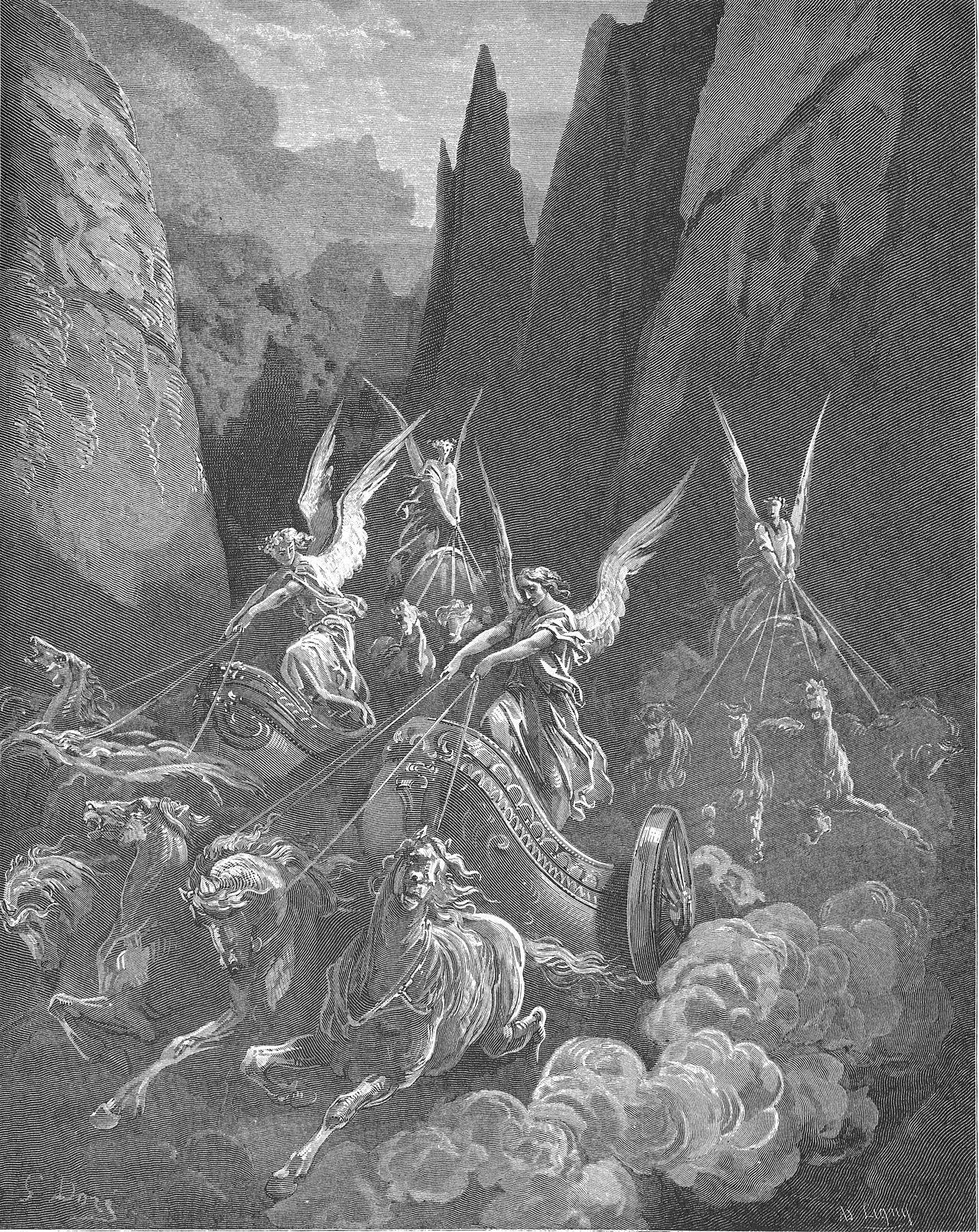
This page draws on Carl Friedrich Keil, The Twelve Minor Prophets; Jerome, Commentary on Zechariah; John Gill, Exposition of the Old Testament (1748-1763) and Matthew Henry, Commentary on the Whole Bible.