
Psalms 115:1
in Psalms 115Not to us, O LORD, not to us, but to Your name be the glory, because of Your loving devotion, because of Your faithfulness.
BSB
The same verse in ASV and KJV ▾
ASV
Not unto us, O Jehovah, not unto us, But unto thy name give glory, For thy lovingkindness, and for thy truth’s sake.
KJV
Not unto us, O Lord, not unto us, but unto thy name give glory, for thy mercy, and for thy truth’s sake.
⋯
This verse in Psalms 115
Commentary
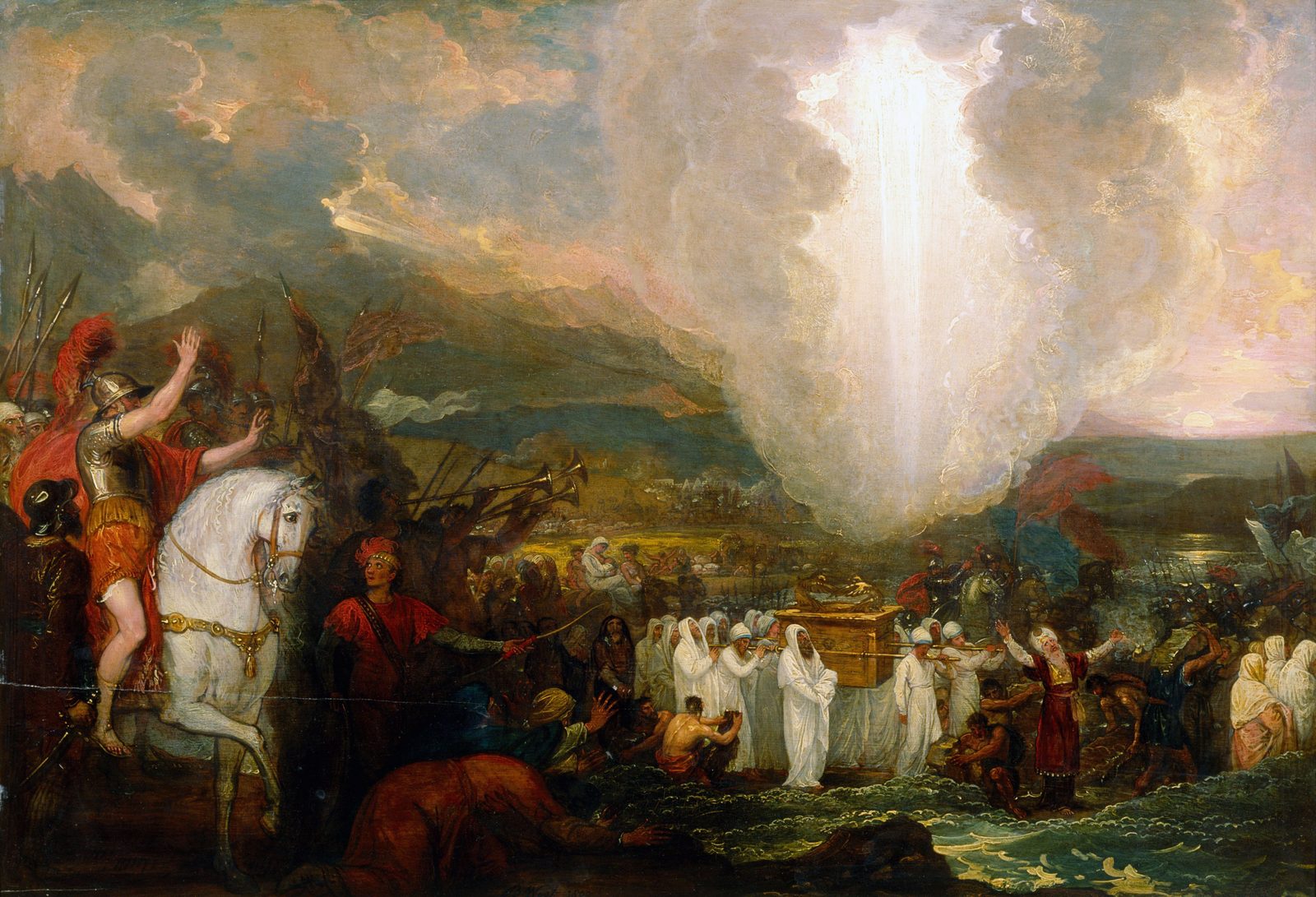
12 notes on this verseIt will be well to remember that this psalm was sung at the Passover, and therefore it bears relationship to the deliverance from Egypt. The burden of it, seems to be a prayer that the living God, who had been so glorious at the Red Sea and at the Jordan, should again for his own name's sake display the wonders of his power. Not unto us, O Lord, not unto us, but unto thy name give glory.
This site's exposition
to Your name be the glory
The glory is turned away from the singers, twice over. It belongs to the LORD's name, on the ground of His loving devotion and His faithfulness. Spurgeon read the psalm as a prayer that God would act for His own name's sake.
The record, by era
The Church Fathers2 voices
"Not unto us, O Lord, not unto us, but unto Your Name give the praise" [Psalm 115:1]. For that grace of the water that gushed from the rock ("now that rock was Christ" [1 Corinthians 10:4]), was not given on the score of works that had gone before, but of His mercy "that justifies the ungodly." [Romans 4:5] For "Christ died for sinners," that men might not seek any glory of their own, but in the Lord's Name.
When Jesus was entrusting Peter with his sheep, he was entrusting him with us. When he was entrusting Peter with us, he was entrusting the church with his members. So, Lord, entrust your church to your church, let your church entrust itself to you. After all, we say, "Not to us, Lord, not to us, but to your name give the glory." I mean, what are we without you? Only Peter when he denied you three times. To show up Peter to himself, that is to show up Peter to Peter, the Lord turned his face away from him for a while—and Peter denied him. He turned his face toward him when he looked around—and he wept. Peter washed away his fault with his tears; he poured water from his eyes and baptized his conscience.
The Puritans and the Awakening2 voices
We must not assume the glory of it to ourselves, but ascribe it wholly to God. We must not imagine that we do any thing for God by our own strength, or deserve any thing from God by our own righteousness; but all the good we do is done by the power of his grace, and all the good we have is the gift of his mere mercy, and therefore he must have all the praise.
Not unto us, O Lord, not unto us, but unto thy name give glory,....
The Nineteenth Century1 voice
A commentator
Jamieson, Fausset & Brown1802–1910
Commentary Critical and Explanatory on the Whole Bible (1871)
proposed
The vindication of God's mercy and faithfulness (Ps 25:10; 36:6) is the "glory" of His "name," which is desired to be illustrated in the deliverance of His people, as the implied mode of its manifestation. In view of the taunts of the heathen, faith in His dominion as enthroned in the heaven (Ps 2:4;
quarantine:debris (2026-07-29) — unbalanced-parens
5 more voices on this verse
The Nineteenth Century5 voices
It will be well to remember that this psalm was sung at the Passover, and therefore it bears relationship to the deliverance from Egypt. The burden of it, seems to be a prayer that the living God, who had been so glorious at the Red Sea and at the Jordan, should again for his own name's sake display the wonders of his power. Not unto us, O Lord, not unto us, but unto thy name give glory. The people undoubtedly wished for relief from the contemptuous insults of idolaters, but their main desire was that Jehovah himself should no longer be the object of heathen insults. The saddest part of all their trouble was that their God was no longer feared and dreaded by their adversaries. When Israel marched into Canaan, a terror was upon all the people round about, because of Jehovah, the mighty God; but this dread the nations had shaken off since there had been of late no remarkable display of miraculous power. Therefore Israel cried unto her God that he would again make bare his arm as in the day when he cut Rahab and wounded the dragon. The prayer is evidently tinctured with a consciousness of unworthiness; because of their past unfaithfulness they hardly dared to appeal to the covenant, and to ask blessings for themselves, but they fell back upon the honour of the Lord their God—an old style of argument which their great lawgiver, Moses, had used with such effect when he pleaded, "Wherefore should the Egyptians speak, and say, For mischief did he bring them out, to slay them in the mountains, and to consume them from the face of the earth? Turn from thy fierce wrath, and repent of this evil against thy people." Joshua also used the like argument when he said, "What wilt thou do unto thy great name?"
A commentator
Charles Spurgeon1834–1892
The Metropolitan Tabernacle Pulpit, Sermon No. 2784: “'Non Nobis, Domine!'” (lightly modernized text, CCEL edition) · Written before 1892.
proposed
EVERY careful reader can see the connection between this 115th Psalm and the one which precedes it. In the 114th Psalm we see the gracious and grateful Jews sitting around the Passover table, having eaten of the lamb and singing of the miracles of Jehovah at the Red Sea and the Jordan. It must have been a very jubilant song that they sang! I think I can hear them singing, "What ailed you, O you sea, that you fled? You Jordan, that you were driven back?"
A commentator
Charles Spurgeon1834–1892
The Metropolitan Tabernacle Pulpit, Sermon No. 2784: “'Non Nobis, Domine!'” (lightly modernized text, CCEL edition) · Written before 1892.
proposed
EVERY careful reader can see the connection between this 115th Psalm and the one which precedes it. In the 114th Psalm we see the gracious and grateful Jews sitting around the Passover table, having eaten of the lamb and singing of the miracles of Jehovah at the Red Sea and the Jordan. It must have been a very jubilant song that they sang! I think I can hear them singing, "What ailed you, O you sea, that you fled? You Jordan, that you were driven back?" When that joyful hymn was finished and the cup of wine was passed around the table, they struck another note. They remembered their sad condition, as they heard the heathen say, "Where is now their God?" They remembered that perhaps for many a year there had been no miracle, no Prophet, no open vision—and then they began to chant a prayer that God would appear—not for their sakes, but for His own name's sake, that the ancient Glory which He won for Himself at the Red Sea and the Jordan might not be lost—and that the heathen might no longer be able to tauntingly say, "Where is now their God?" because the wonders worked by God would cause them to tremble before Him.
Not unto us, O Lord - We take no merit to ourselves; as thine is the kingdom, and the power in that kingdom, so is thy glory. For thy mercy, and for thy truth’s sake - Thy mercy gave thy promise, thy truth fulfilled it.
A commentator
Albert Barnes1798–1870
Notes, Explanatory and Practical, on the Old and New Testaments (1832-1869)
proposed
Not unto us, O Lord, not unto us, but unto thy name give glory - This apparently abrupt commencement of the psalm was undoubtedly in reference to some circumstances which would be well understood at the time when the psalm was composed, but which cannot be definitely ascertained now. It seems to have been in view of some existing troubles, and the language at the same time expresses a hope of the divine interposition, and a feeling that the praise of such interposition would belong wholly to God. The phrase “give glory” means, give all the honor and praise. See the notes at Psa 29:1-2. For thy mercy - The mercy or the favor which we seek and look for - thy gracious help in the time of trouble. And for thy truth’s sake - Thy faithfulness to thy promises; thy faithfulness to thy people. The psalmist anticipated this manifestation of faithfulness with confidence; he felt that all the praise for such an anticipated interposition would belong to God.
How the passage was read
What the Jewish commentators add
Not for us Not for us or for the fitness of our deeds shall You do [this] for us.
1 more on this passage, in their own words ▾
Not on our account, o LORD, not for our merits, but for Your name, grant honor, for Your goodness and for Your truth.
This section is reception history: how the passage was read and kept in the Jewish tradition. Where a reading parts from an essential of the Christian faith, the section says so at that point.
Texts and citation data: Sefaria; each excerpt follows its version’s licence. 6 further sources are cited on this chapter that carry no English text this site may quote or only restate the verse.
The words behind it
13 Hebrew wordsEvery Hebrew word of this verse in the order it stands, with what it means and the door to its own study. The last column counts the times a word stands in the whole Bible: the rarer the word, the more the places it appears belong together.
| Hebrew | Sound | Meaning | Word study | In the Bible |
|---|---|---|---|---|
| לֹ֤א | lo' | not | H3808 → | 5168 times |
| לָ֥נוּ | lanu | to us | ||
| יְהוָ֗ה | yahweh | O Yahweh | H3068 → | 6520 times |
| לֹ֫א | lo' | not | H3808 → | 5168 times |
| לָ֥נוּ | lanu | to us | ||
| כִּֽי־ | ki- | for | H3588 → | 4482 times |
| לְ֭שִׁמְךָ | leshimkha | to name your | H8034 → | 864 times |
| תֵּ֣ן | ten | ascribe | H5414 → | 2011 times |
| כָּב֑וֹד | kavod | glory | H3519 → | 200 times |
| עַל־ | ʾal- | on | H5921 → | 5755 times |
| חַ֝סְדְּךָ֗ | chasdekha | covenant loyalty your | H2617 → | 247 times |
| עַל־ | ʾal- | on | H5921 → | 5755 times |
| אֲמִתֶּֽךָ׃ | ʾamitekha | faithfulness your | H571 → | 127 times |
לֹ֤אnot
lo'H3808 →5168 times
לָ֥נוּto us
lanu
יְהוָ֗הO Yahweh
yahwehH3068 →6520 times
לֹ֫אnot
lo'H3808 →5168 times
לָ֥נוּto us
lanu
כִּֽי־for
ki-H3588 →4482 times
לְ֭שִׁמְךָto name your
leshimkhaH8034 →864 times
תֵּ֣ןascribe
tenH5414 →2011 times
כָּב֑וֹדglory
kavodH3519 →200 times
עַל־on
ʾal-H5921 →5755 times
חַ֝סְדְּךָ֗covenant loyalty your
chasdekhaH2617 →247 times
עַל־on
ʾal-H5921 →5755 times
אֲמִתֶּֽךָ׃faithfulness your
ʾamitekhaH571 →127 times
A shaded row is a word that stands 400 times or fewer in the Bible.
The walk
8 stopsEach card is a verse this one points to, and under it the verses that one points to in turn. Where several paths arrive at the same place, that place is listed first: the text keeps returning to it.
Through
Isaiah 48:11For My own sake, My very own sake, I will act; for how can I let Myself be defamed? I will not yield My glory to another.
it leads to
- Ezekiel 20:9
But I acted for the sake of My name, that it should not be profaned in the eyes of the nations among whom they were living, in whose sight I had revealed Myself to…
Reached by 2 separate paths from here.
- Isaiah 42:8
I am the LORD; that is My name! I will not yield My glory to another or My praise to idols.
- Ezekiel 20:14
But I acted for the sake of My name, so that it would not be profaned in the eyes of the nations in whose sight I had brought them out.
- Isaiah 37:35
‘I will defend this city and save it for My own sake and for the sake of My servant David.’”
- Isaiah 43:25
I, yes I, am He who blots out your transgressions for My own sake and remembers your sins no more.
- Ezekiel 20:9
Through
Psalms 96:8Ascribe to the LORD the glory due His name; bring an offering and enter His courts.
it leads to
- Psalms 100:4
Enter His gates with thanksgiving and His courts with praise; give thanks to Him and bless His name.
- Romans 12:1
Therefore I urge you, brothers, on account of God’s mercy, to offer your bodies as living sacrifices, holy and pleasing to God, which is your spiritual service of worship.
- Exodus 34:5–9
And the LORD descended in a cloud, stood with him there, and proclaimed His name, the LORD.
- Psalms 100:4
Where this verse is studied
On this page
Studies1
About Psalms
This page draws on 10 works. Open the list of works
This page draws on Adam Clarke, Commentary on the Bible; Albert Barnes, Notes, Explanatory and Practical, on the Old and New Testaments (1832-1869); Augustine of Hippo, Exposition on Psalm 115; Augustine of Hippo, SERMON 229P.4; Charles Spurgeon, The Treasury of David, Vol. 5; Charles Spurgeon, The Treasury of David; Charles Spurgeon, The Metropolitan Tabernacle Pulpit, Sermon No. 2784: “'Non Nobis, Domine!'” (lightly modernized text, CCEL edition); Jamieson, Fausset & Brown, Commentary Critical and Explanatory on the Whole Bible; John Gill, Exposition of the Old Testament (1748-1763) and Matthew Henry, Commentary on the Whole Bible.