
Proverbs 10:19
in Proverbs 10When words are many, sin is unavoidable, but he who restrains his lips is wise.
BSB
The same verse in ASV and KJV ▾
ASV
In the multitude of words there wanteth not transgression; But he that refraineth his lips doeth wisely.
KJV
In the multitude of words there wanteth not sin: but he that refraineth his lips is wise.
⋯
This verse in Proverbs 10
Commentary
14 notes on this verseThe virtue of silence, especially in church, is very great. Let no sentence of the divine lessons escape you. If you give ear, restrain your voice, utter no word with your lips which you would wish to bring back, but let your boldness to speak be sparing. For in truth in much speaking there is abundance of sin. To the murderer it was said, "You have sinned, be silent," that he might not sin more; but to the virgin it must be said, "Be silent lest you sin."
This site's exposition
The rich man’s wealth is his strong city
on Proverbs 10:15-19
The tongue cluster keeps running through verses framed as consequence: a rich man's wealth is a fortress and a poor man's poverty is his own ruin, labour tends to life while the fruit of wickedness tends to sin, and the way of life belongs to the one who keeps instruction. Verse 18 names the liar's real trade, hiding hatred with lying lips while spreading a slander, before the cluster reaches its center at verse 19, verified: in the multitude of words there wanteth not sin, but he that refraineth his lips is wise. Bridges reads the whole run as an argument for silence over speech wherever speech is not required, since every verse in the set prices the tongue's use against its restraint.
The record, by era
The Church Fathers5 voices
A commentator
Desert FathersThe Desert Fathers, Sayings of the Early Christian Monks · Written before 500.
proposed
Arsenius always used to say this, 'Why, words, did I let you get out? I have often been sorry that I have spoken, never that I have been silent.'
A commentator
Desert FathersThe Desert Fathers, Sayings of the Early Christian Monks · Written before 500.
proposed
A brother asked Poemen, 'How ought I to behave in my cell in the place where I live?' He answered, 'Be as prudent as a stranger; and wherever you are, do not expect your words to be taken seriously when you speak, and you will …
Learn what your door is: Place, O Lord, a guard at my mouth, and a door protector around my lips. And Paul asks to be prayed for: That a door may be opened to me, he says, to speak the mystery of Christ. But as he was chosen to preach the Gospel, he rightly desired that the door of the word be opened to him; for from his mouth salvation of the nations went forth, from his mouth came forth the life of the people. But we shut the door, lest fault enter, lest any slip of speech should go out. Fault enters if a slip goes out. Listen how fault enters. In much speaking, it says, you will not avoid sin. Much speaking went out, sin entered; because in much speaking, the word that goes out is not at all examined. It slips foolishly, though speaking excessively is a great sin in itself.
I know it is written, "In the multitude of speech, thou shalt not escape sin." But O that I might speak only in preaching Thy word, and in praising Thee! Not only should I so flee from sin, but I should earn good desert, however much I so spake. For a man blessed of Thee would not enjoin a sin upon his own true son in the faith, to whom he wrote, "Preach the word: be instant in season, out of season." Are we to say that he has not spoken much, who was not silent about Thy word, O Lord, not only in season, but out of season? But therefore it was not much, because it was only what was necessary. Set me free, O God, from that multitude of speech which I suffer inwardly in my soul, wretched as it is in Thy sight, and flying for refuge to Thy mercy; for I am not silent in thoughts, even when silent in words.
A commentator
Origen of AlexandriaCOMMENTARY ON THE GOSPEL OF JOHN 5:4-5 · Written before 253.
proposed
How can teaching accomplish anything without a multitude of words, understood in the simpler sense, since even wisdom herself declares to the perishing, "I stretched out words, and you did not heed." Paul appears to have continued teaching from early morning till midnight, when indeed Eutychus, overcome with deep sleep, fell down and troubled the audience since they thought he was dead.If, then, the statement is true, "In a multitude of words you will not escape sin," and it is also true that Solomon did not sin when he recited the many words about the subjects mentioned earlier, nor did Paul when he extended his teaching until midnight, one must inquire what the multitude of words is, and from there make a transition to see what the many books are. The complete Word of God which was in the beginning with God is not a multitude of words, for it is not words. It is a single Word consisting of several ideas, each of which is a part of the whole Word.… Consequently, according to this understanding, we would say that he who utters anything hostile to religion is loquacious, but he who speaks the things of truth, even if he says everything so as to leave out nothing, always speaks the one Word. The saints are not loquacious, since they cling to the goal which accords with the one Word.
7 more voices on this verse
The Church Fathers4 voices
Stir up your soul, so that, by his wisdom, you may know what is fitting, and that, by his will, what is in the commandment may come to pass. One who is pleasing to the wicked is more evil than they. Impure words are only …
If, for the sake of silence, we ought sometimes not to speak what is good, then even more are we obliged to avoid all evil talk, for fear of the punishment due to sin. Therefore, frequent leave to talk is not to be granted to …
A commentator
Desert FathersThe Desert Fathers, Sayings of the Early Christian Monks · Written before 500.
proposed
Some brothers from Scetis wanted to visit Antony, and set out in a ship to go there. On board they met an old man who also wanted to go to Antony, but he did not belong to their party. During the voyage they talked about …
A commentator
Desert FathersThe Desert Fathers, Sayings of the Early Christian Monks · Written before 500.
proposed
They said of Agatho that for three years he kept a stone in his mouth in order to teach himself silence.
The Puritans and the Awakening1 voice
In the multitude of words there wanteth not sin,.... Where a great deal is said, without care and forethought, there will not only be many weak things uttered, but much falsehood, and at least many idle things, which cannot be excused from sin; not but that much and long speaking may be to great profit and advantage, when it is with care and judgment, and founded on close meditation and study.
The Nineteenth Century2 voices
A commentator
Albert Barnes1798–1870
Notes, Explanatory and Practical, on the Old and New Testaments (1832-1869)
There wanteth not sin - Some render this, “Sin shall not cease,” etc., i. e., many words do not mend a fault. Silence on the part both of the reprover and the offender is often better. The King James Version is, however, preferable.
In the multitude of words - It is impossible to speak much, and yet speak nothing but truth; and injure no man’s character in the mean while.
The words behind it
8 Hebrew wordsEvery Hebrew word of this verse in the order it stands, with what it means and the door to its own study. The last column counts the times a word stands in the whole Bible: the rarer the word, the more the places it appears belong together.
| Hebrew | Sound | Meaning | Word study | In the Bible |
|---|---|---|---|---|
| בְּרֹ֣ב | bero | in a multitude of | H7230 → | 149 times |
| דְּ֭בָרִים | devarim | words | H1697 → | 1440 times |
| לֹ֣א | lo' | not | H3808 → | 5168 times |
| יֶחְדַּל־ | yechdal- | it ceases | H2308 → | 58 times |
| פָּ֑שַׁע | pasha' | transgression | H6588 → | 93 times |
| וְחֹשֵׂ֖ךְ | vechosekh | and [one who] restrains | H2820 → | 28 times |
| שְׂפָתָ֣יו | sefatav | lips his | H8193 → | 176 times |
| מַשְׂכִּֽיל׃ | maskil | [is] acting prudently | H7919 → | 62 times |
בְּרֹ֣בin a multitude of
beroH7230 →149 times
דְּ֭בָרִיםwords
devarimH1697 →1440 times
לֹ֣אnot
lo'H3808 →5168 times
יֶחְדַּל־it ceases
yechdal-H2308 →58 times
פָּ֑שַׁעtransgression
pasha'H6588 →93 times
וְחֹשֵׂ֖ךְand [one who] restrains
vechosekhH2820 →28 times
שְׂפָתָ֣יוlips his
sefatavH8193 →176 times
מַשְׂכִּֽיל׃[is] acting prudently
maskilH7919 →62 times
A shaded row is a word that stands 400 times or fewer in the Bible.
The walk
8 stopsEach card is a verse this one points to, and under it the verses that one points to in turn. Where several paths arrive at the same place, that place is listed first: the text keeps returning to it.
Through
James 1:19My beloved brothers, understand this: Everyone should be quick to listen, slow to speak, and slow to anger,
it leads to
- Proverbs 17:27
A man of knowledge restrains his words, and a man of understanding maintains a calm spirit.
- Proverbs 13:3
He who guards his mouth protects his life, but the one who opens his lips invites his own ruin.
Reached by 2 separate paths from here.
- Proverbs 21:23
He who guards his mouth and tongue keeps his soul from distress.
- Proverbs 14:29
A patient man has great understanding, but a quick-tempered man promotes folly.
- Proverbs 18:13
He who answers a matter before he hears it—this is folly and disgrace to him.
- Proverbs 17:27
Through
James 3:2We all stumble in many ways. If anyone is never at fault in what he says, he is a perfect man, able to control his whole body.
it leads to
- James 1:26
If anyone considers himself religious and yet does not bridle his tongue, he deceives his heart and his religion is worthless.
- 1 Peter 3:10
For, “Whoever would love life and see good days must keep his tongue from evil and his lips from deceitful speech.
- Matthew 12:37
For by your words you will be acquitted, and by your words you will be condemned.”
- James 1:26
Where this verse is studied
On this page
About Proverbs
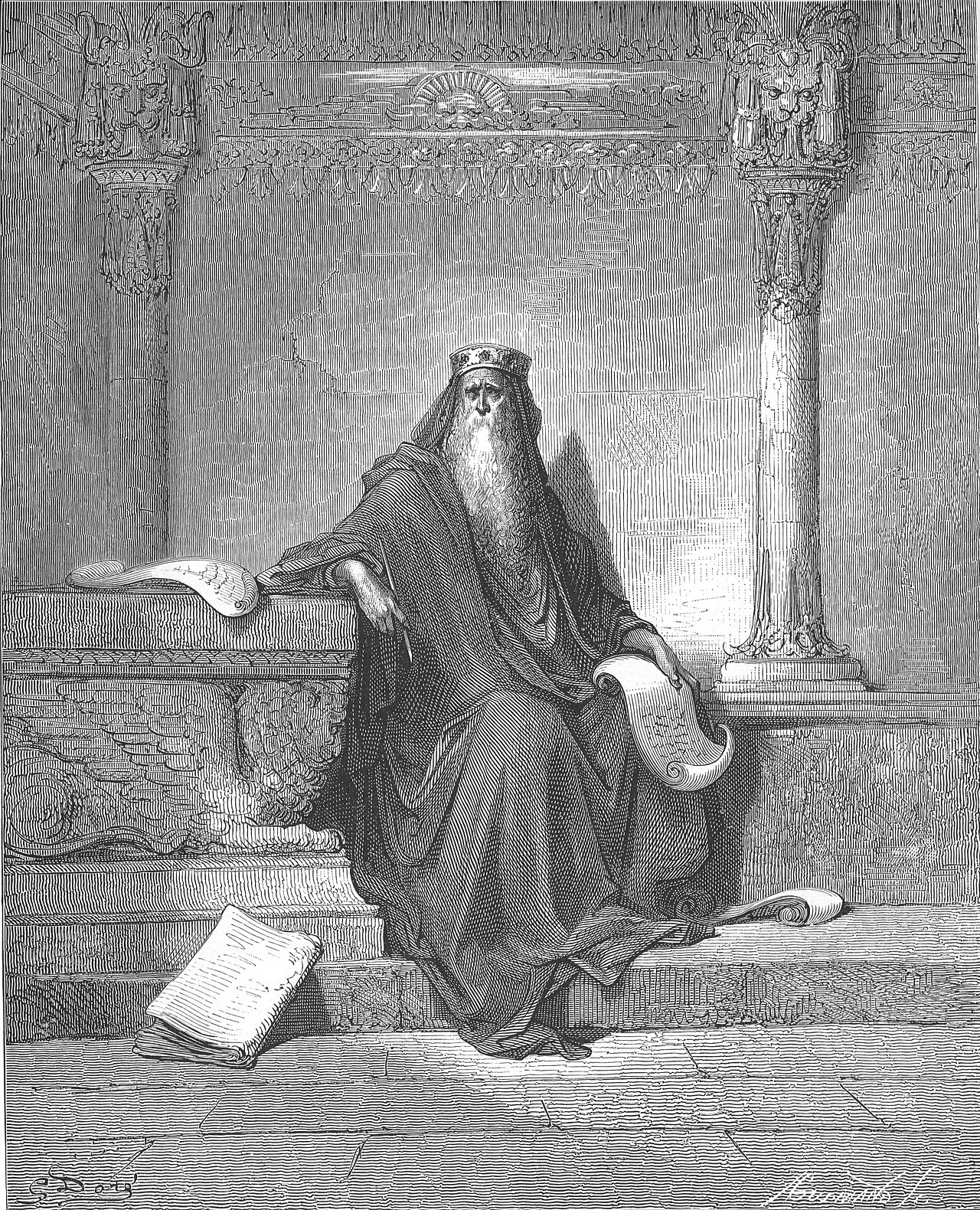
This page draws on 12 works. Open the list of works
This page draws on Adam Clarke, Commentary on the Bible; Albert Barnes, Notes, Explanatory and Practical, on the Old and New Testaments (1832-1869); Ambrose of Milan, Concerning Virginity 3.3.11; Ambrose of Milan, On Cain and Abel; Augustine of Hippo, ON THE TRINITY 15:51; Benedict of Nursia, RULE OF ST. BENEDICT 6; Charles Bridges, An Exposition of the Book of Proverbs; Desert Fathers, The Desert Fathers, Sayings of the Early Christian Monks; Ephrem the Syrian, COMMENTARY ON TATIAN'S DIATESSARON 22:4; John Gill, Exposition of the Old Testament; John Gill, Exposition of the Old Testament (1748-1763) and Origen of Alexandria, COMMENTARY ON THE GOSPEL OF JOHN 5:4-5.