
Micah 3:1
in Micah 3Then I said: “Hear now, O leaders of Jacob, you rulers of the house of Israel. Should you not know justice?
BSB
The same verse in ASV and KJV ▾
ASV
And I said, Hear, I pray you, ye heads of Jacob, and rulers of the house of Israel: is it not for you to know justice?
KJV
And I said, Hear, I pray you, O heads of Jacob, and ye princes of the house of Israel; Is it not for you to know judgment?
⋯
This verse in Micah 3
Commentary
10 notes on this verseA commentator
Albert Barnes1798–1870
Notes, Explanatory and Practical, on the Old and New Testaments (1832-1869)
And I said - God’s love for us is the great incitement, constrainer, vivifier of His creature’s love. Micah had just spoken of God’s love of Israel; how He would gather them into one fold under One Shepherd, guard them, lead them, remove all difficulties before them, be Himself their Head and enable them to follow Him. He turns then to them. These are God’s doings; this, God has in store for you hereafter. Even when mercy itself shall require chastisement, He doth not cast off forever. The desolation is but the forerunner of future mercy. What then do ye?
This site's exposition
Hear, I pray you, O heads of Jacob
on Micah 3:1-3
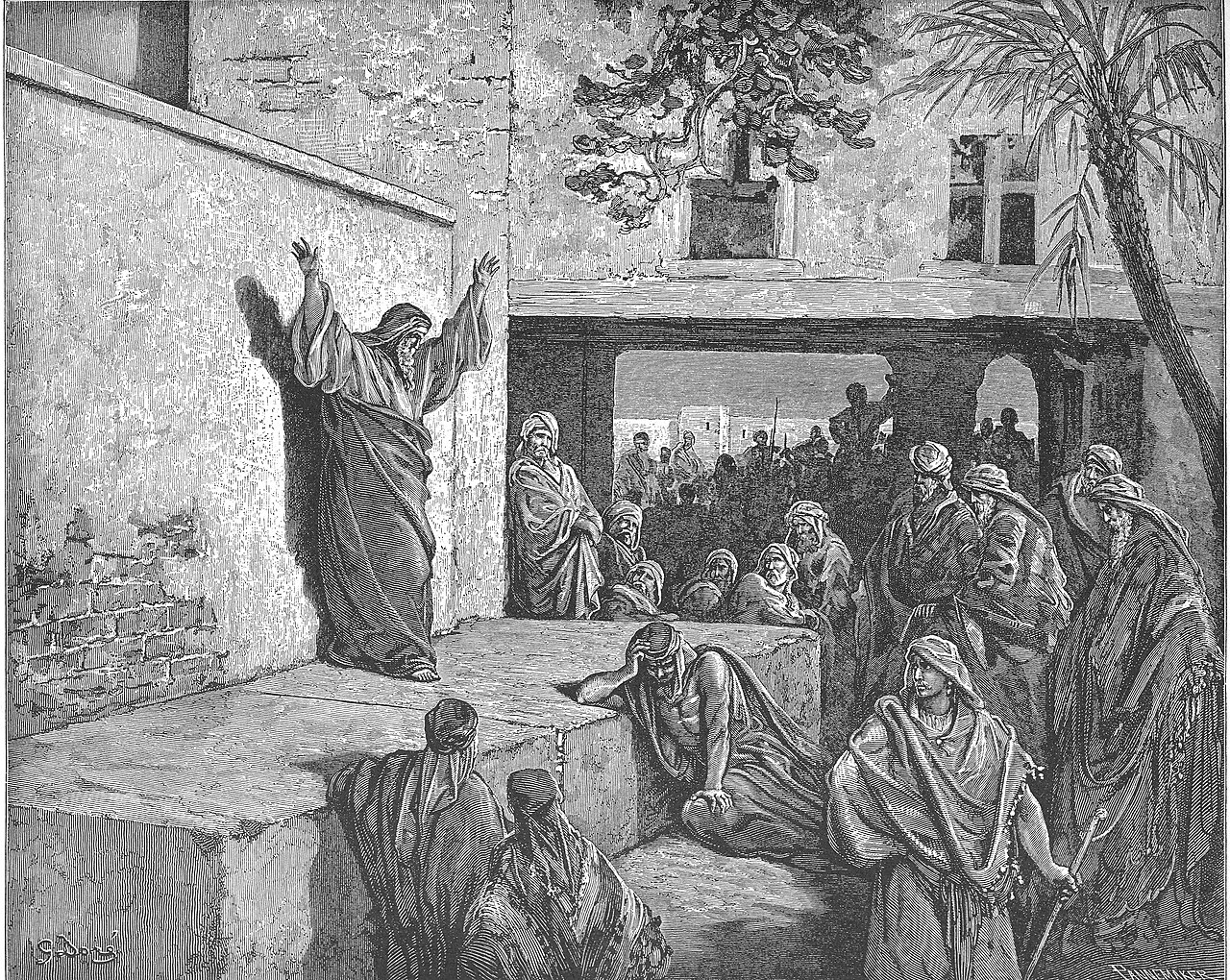
Micah turns from prophets and land-grabbers to the nation's judges themselves, heads of Jacob and princes of the house of Israel whose very office is to know judgment, to weigh right and wrong for the people. Verses 2 and 3 answer the question with an image of cannibalism, plucking skin from off my people, flaying their flesh, breaking their bones and chopping them as for the pot, the commentators reading this not as literal butchery but as legal and economic oppression described in the most visceral terms available. The horror of the figure is deliberate, judges who should protect the vulnerable instead consuming them.
The record, by era
The Church Fathers3 voices
He delivers this address to the leaders: those entrusted with judgment trampled on justice; hence he puts it in the form of a question, Was it not you who had responsibility for judging, for punishing the guilty and letting the innocent go free without blame? …
(Chapter III, verses 1 and following) And I said: Listen, leaders of Jacob, and rulers of the house of Israel. Is it not for you to know judgment, you who hate good and love evil, who violently take off their skin from them, and their flesh from their bones, who have eaten the flesh of my people, and have stripped off their skin from them, and have broken their bones and cut them up like meat in a pot.
For the Prophets ever rebuked them, saying, "Hear, ye rulers of Sodom"; and, "Thy rulers are disobedient"; and again, "Is it not for you to know judgment?" And everywhere they attack them vehemently. What then? Shall one blame God for this? Away with the thought. This blame is theirs. And what other proof can a man bring of your not knowing the Law than your not obeying it?
The Puritans and the Awakening2 voices
"Is it not for you to know judgment? Yes, it is; therefore stand still, and hear your own judgment, and judge if it be not right, whether any thing can be objected against it." 2. How wretchedly they had transgressed the rules of judgment, though they knew what they were.
Is it not for you - Ought not you to understand, and conform to, the just laws of your God. You princes, magistrates, and ruling officers, ought of all men to know and do right.
3 more voices on this verse
The Puritans and the Awakening1 voice
And I said, hear, I pray you, O heads of Jacob, and ye princes of the house of Israel,....
The Nineteenth Century2 voices
A commentator
Jamieson, Fausset & Brown1802–1910
Commentary Critical and Explanatory on the Whole Bible (1871)
proposed
princes--magistrates or judges. Is it not for you?--Is it not your special function (Jer 5:4, 5)? judgment--justice. Ye sit in judgment on others; surely then ye ought to know the judgment for injustice which awaits yourselves (Ro 2:1).
quarantine:debris (2026-07-29) — starts-lowercase
Hear - O heads of Jacob - The metaphor of the flock is still carried on. The chiefs of Jacob, and the princes of Israel, instead of taking care of the flocks, defending them, and finding them pasture, oppressed them in various ways. They are like wolves, who tear the skin of the sheep, and the flesh off their bones. This applies to all unjust and oppressive rulers. Suetonius tells us, in his Life of Tiberius, that when the governors of provinces wrote to the emperor, entreating him to increase the tributes, he wrote back: “It is the property of a good shepherd to shear his sheep, not to skin them.” Praesidibus onerandas tributo provincias suadentibus rescripsit: Boni Pastoris esse Tondere pecus, non Deglubebe. This is a maxim which many rulers of the earth do not seem to understand.
How the passage was read
What the Jewish commentators add
On the verses either side of this one
who rob their skin —[I.e., the skin] of the house of Israel, over whom they are heads and officers, as the prophet says: The heads of the house of Jacob and the officers of the house of Israel.
This section is reception history: how the passage was read and kept in the Jewish tradition. Where a reading parts from an essential of the Christian faith, the section says so at that point.
Texts and citation data: Sefaria; each excerpt follows its version’s licence. 7 further sources are cited on this chapter that carry no English text this site may quote or only restate the verse.
The words behind it
13 Hebrew wordsEvery Hebrew word of this verse in the order it stands, with what it means and the door to its own study. The last column counts the times a word stands in the whole Bible: the rarer the word, the more the places it appears belong together.
| Hebrew | Sound | Meaning | Word study | In the Bible |
|---|---|---|---|---|
| וָאֹמַ֗ר | vaomar | and I said | H559 → | 5305 times |
| שִׁמְעוּ־ | shimu- | hear | H8085 → | 1159 times |
| נָא֙ | na' | please | H4994 → | 404 times |
| רָאשֵׁ֣י | rashei | O chiefs of | H7218 → | 599 times |
| יַעֲקֹ֔ב | yaako | Jacob | H3290 → | 350 times |
| וּקְצִינֵ֖י | uketzinei | and O rulers of | H7101 → | |
| בֵּ֣ית | beit | [the] house of | H1004 → | 2046 times |
| יִשְׂרָאֵ֑ל | yisrael | Israel | H3478 → | 2507 times |
| הֲל֣וֹא | halo' | ¿ not | H3808 → | 5168 times |
| לָכֶ֔ם | lakhem | [belong] to you | ||
| לָדַ֖עַת | ladaat | [does] to know | H3045 → | 945 times |
| אֶת־ | ʾet- | <obj.> | H853 → | 10935 times |
| הַמִּשְׁפָּֽט׃ | hamishpat | <the> justice | H4941 → | 422 times |
וָאֹמַ֗רand I said
vaomarH559 →5305 times
שִׁמְעוּ־hear
shimu-H8085 →1159 times
נָא֙please
na'H4994 →404 times
רָאשֵׁ֣יO chiefs of
rasheiH7218 →599 times
יַעֲקֹ֔בJacob
yaakoH3290 →350 times
וּקְצִינֵ֖יand O rulers of
uketzineiH7101 →
בֵּ֣ית[the] house of
beitH1004 →2046 times
יִשְׂרָאֵ֑לIsrael
yisraelH3478 →2507 times
הֲל֣וֹא¿ not
halo'H3808 →5168 times
לָכֶ֔ם[belong] to you
lakhem
לָדַ֖עַת[does] to know
ladaatH3045 →945 times
אֶת־<obj.>
ʾet-H853 →10935 times
הַמִּשְׁפָּֽט׃<the> justice
hamishpatH4941 →422 times
A shaded row is a word that stands 400 times or fewer in the Bible.
The walk
8 stopsEach card is a verse this one points to, and under it the verses that one points to in turn. Where several paths arrive at the same place, that place is listed first: the text keeps returning to it.
Through
Hosea 5:1“Hear this, O priests! Take heed, O house of Israel! Give ear, O royal house! For this judgment is against you because you have been a snare at Mizpah, a net spread out on…
it leads to
- Hosea 9:8
The prophet is Ephraim’s watchman, along with my God, yet the snare of the fowler lies on all his paths. Hostility is in the house of his God!
- Hosea 9:8
Through
Amos 4:1Hear this word, you cows of Bashan on Mount Samaria, you women who oppress the poor and crush the needy, who say to your husbands, “Bring us more to drink.”
it leads to
- Psalms 22:12
Many bulls surround me; strong bulls of Bashan encircle me.
- Amos 6:1
Woe to those at ease in Zion and those secure on Mount Samaria, the distinguished ones of the foremost nation, to whom the house of Israel comes.
- Psalms 22:12
Through
Isaiah 1:10Hear the word of the LORD, you rulers of Sodom; listen to the instruction of our God, you people of Gomorrah!
it leads to
- Deuteronomy 32:32
But their vine is from the vine of Sodom and from the fields of Gomorrah. Their grapes are poisonous; their clusters are bitter.
- Revelation 11:8
Their bodies will lie in the street of the great city—figuratively called Sodom and Egypt—where their Lord was also crucified.
- Isaiah 3:9
The expression on their faces testifies against them, and like Sodom they flaunt their sin; they do not conceal it. Woe to them, for they have brought disaster upon themselves.
- Ezekiel 16:49
Now this was the iniquity of your sister Sodom: She and her daughters were arrogant, overfed, and complacent; they did not help the poor and needy.
- Jeremiah 9:26
Egypt, Judah, Edom, Ammon, Moab, and all the inhabitants of the desert who clip the hair of their temples. For all these nations are uncircumcised, and the whole house of Israel is uncircumcised in…
- Deuteronomy 32:32
About Micah
Who and where
1 name in this verse with a page on the site.
This page draws on 10 works. Open the list of works
This page draws on Adam Clarke, Commentary on the Bible; Albert Barnes, Notes, Explanatory and Practical, on the Old and New Testaments (1832-1869); Carl Friedrich Keil, The Twelve Minor Prophets; Jamieson, Fausset & Brown, Commentary Critical and Explanatory on the Whole Bible; Jerome, Commentary on Micah; John Chrysostom, HOMILIES ON JOHN 52; John Gill, Exposition of the Old Testament (1748-1763); John Wesley, Explanatory Notes upon the Old Testament; Matthew Henry, Commentary on the Whole Bible and Theodoret of Cyrus, COMMENTARY ON MICAH 3:1-4.