
Micah 3:2
in Micah 3You hate good and love evil. You tear the skin from my people and strip the flesh from their bones.
BSB
The same verse in ASV and KJV ▾
ASV
ye who hate the good, and love the evil; who pluck off their skin from off them, and their flesh from off their bones;
KJV
Who hate the good, and love the evil; who pluck off their skin from off them, and their flesh from off their bones;
⋯
This verse in Micah 3
Commentary
7 notes on this verseThis site's exposition
Hear now, O leaders of Jacob
on Micah 3:1-3
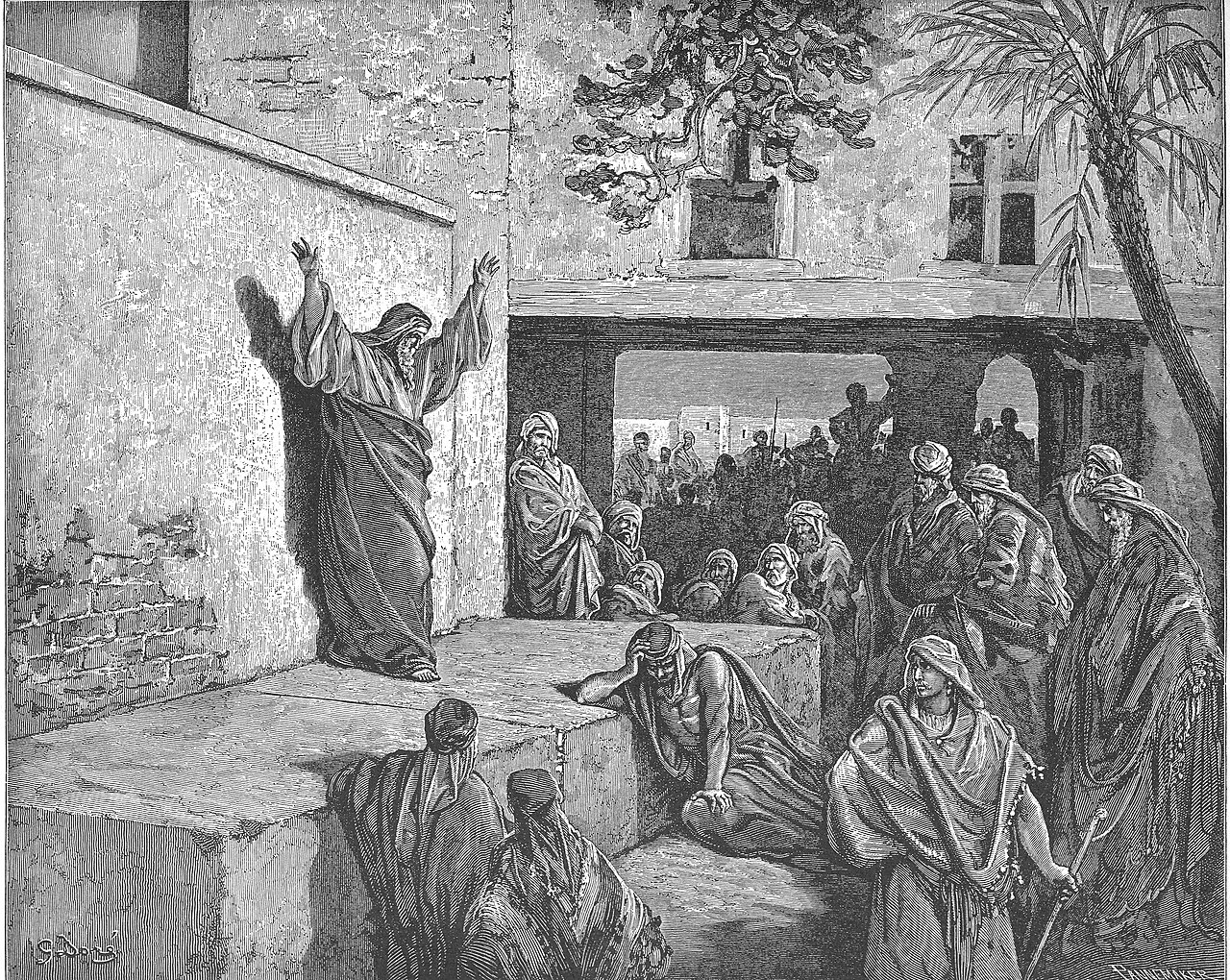
Micah turns to the nation's rulers, whose office is to "know justice". Verses 2 and 3 answer with a butcher's picture: "You tear the skin from my people". The figure describes legal and economic oppression, the rulers set to protect the weak now living off them.
This site's exposition
You hate good and love evil
The leaders' first duty was to know justice, and Micah says they have turned the moral order upside down. They hate good itself and love evil for its own sake. The pictures of flaying that follow show how they strip the poor of everything.
The record, by era
The Church Fathers2 voices
(Chapter III, verses 1 and following) And I said: Listen, leaders of Jacob, and rulers of the house of Israel. Is it not for you to know judgment, you who hate good and love evil, who violently take off their skin from them, and their flesh from their bones, who have eaten the flesh of my people, and have stripped off their skin from them, and have broken their bones and cut them up like meat in a pot.
He delivers this address to the leaders: those entrusted with judgment trampled on justice; hence he puts it in the form of a question, Was it not you who had responsibility for judging, for punishing the guilty and letting the innocent go free without blame? …
The Puritans and the Awakening2 voices
The good - Ye who hate not only to do good, but the good which is done, and those that do it. The evil - Chuse, and delight in, both evil works and evil workers.
Who hate the good, and love the evil,....
The Nineteenth Century1 voice
A commentator
Albert Barnes1798–1870
Notes, Explanatory and Practical, on the Old and New Testaments (1832-1869)
proposed
Who hate the good and love the evil - that is, they hate, for its own sake, that which is good, and love that which is evil.
How the passage was read
What the Jewish commentators add
who rob their skin —[I.e., the skin] of the house of Israel, over whom they are heads and officers, as the prophet says: The heads of the house of Jacob and the officers of the house of Israel.
This section is reception history: how the passage was read and kept in the Jewish tradition. Where a reading parts from an essential of the Christian faith, the section says so at that point.
Texts and citation data: Sefaria; each excerpt follows its version’s licence. 7 further sources are cited on this chapter that carry no English text this site may quote or only restate the verse.
The words behind it
10 Hebrew wordsEvery Hebrew word of this verse in the order it stands, with what it means and the door to its own study. The last column counts the times a word stands in the whole Bible: the rarer the word, the more the places it appears belong together.
| Hebrew | Sound | Meaning | Word study | In the Bible |
|---|---|---|---|---|
| שֹׂ֥נְאֵי | soneei | haters of | H8130 → | |
| ט֖וֹב | tov | good | H2896 → | 538 times |
| וְאֹ֣הֲבֵי | veohavei | and lovers of | H157 → | |
| רָ֑ע | raah | evil | H7451 → | 662 times |
| גֹּזְלֵ֤י | gozelei | tearers away of | H1497 → | |
| עוֹרָם֙ | oram | skin their | H5785 → | |
| מֵֽעֲלֵיהֶ֔ם | mealeihem | from on <the> them | H5921 → | 5755 times |
| וּשְׁאֵרָ֖ם | usheeram | and flesh their | H7607 → | |
| מֵעַ֥ל | meal | from on | H5921 → | 5755 times |
| עַצְמוֹתָֽם׃ | atzmotam | bones their | H6106 → |
שֹׂ֥נְאֵיhaters of
soneeiH8130 →
ט֖וֹבgood
tovH2896 →538 times
וְאֹ֣הֲבֵיand lovers of
veohaveiH157 →
רָ֑עevil
raahH7451 →662 times
גֹּזְלֵ֤יtearers away of
gozeleiH1497 →
עוֹרָם֙skin their
oramH5785 →
מֵֽעֲלֵיהֶ֔םfrom on <the> them
mealeihemH5921 →5755 times
וּשְׁאֵרָ֖םand flesh their
usheeramH7607 →
מֵעַ֥לfrom on
mealH5921 →5755 times
עַצְמוֹתָֽם׃bones their
atzmotamH6106 →
A shaded row is a word that stands 400 times or fewer in the Bible.
The walk
8 stopsEach card is a verse this one points to, and under it the verses that one points to in turn. Where several paths arrive at the same place, that place is listed first: the text keeps returning to it.
Through
Romans 12:9Love must be sincere. Detest what is evil; cling to what is good.
it leads to
- Psalms 34:14
Turn away from evil and do good; seek peace and pursue it.
- 1 Peter 4:8
Above all, love one another deeply, because love covers over a multitude of sins.
- 1 Timothy 1:5
The goal of our instruction is the love that comes from a pure heart, a clear conscience, and a sincere faith.
- 1 John 3:18–20
Little children, let us love not in word and speech, but in action and truth.
- 1 Peter 3:10–11
For, “Whoever would love life and see good days must keep his tongue from evil and his lips from deceitful speech.
- Psalms 34:14
Through
Proverbs 28:4Those who forsake the law praise the wicked, but those who keep the law resist them.
it leads to
- Romans 1:32
Although they know God’s righteous decree that those who do such things are worthy of death, they not only continue to do these things, but also approve of those who practice them.
- Ephesians 5:11
Have no fellowship with the fruitless deeds of darkness, but rather expose them.
- Matthew 14:4
because John had been telling him, “It is not lawful for you to have her.”
- Romans 1:32
About Micah
This page draws on 9 works. Open the list of works
This page draws on Albert Barnes, Notes, Explanatory and Practical, on the Old and New Testaments; Albert Barnes, Notes, Explanatory and Practical, on the Old and New Testaments (1832-1869); Carl Friedrich Keil, The Twelve Minor Prophets; Jerome, Commentary on Micah; John Gill, Exposition of the Old Testament; John Gill, Exposition of the Old Testament (1748-1763); John Wesley, Explanatory Notes upon the Old Testament; Matthew Henry, Commentary on the Whole Bible and Theodoret of Cyrus, COMMENTARY ON MICAH 3:1-4.