
Jonah 2:3
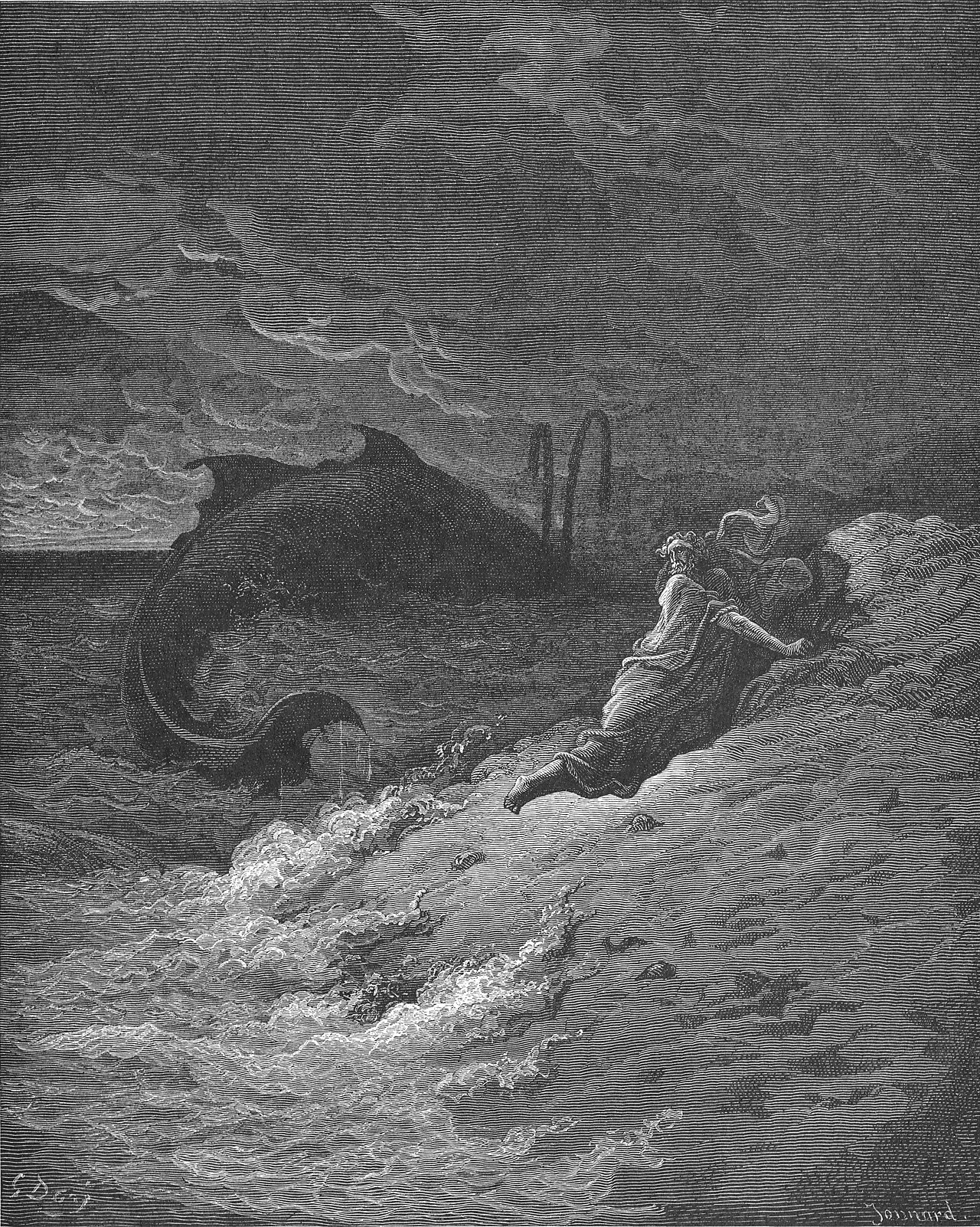
in Jonah 2For You cast me into the deep, into the heart of the seas, and the current swirled about me; all Your breakers and waves swept over me.
BSB
The same verse in ASV and KJV ▾
ASV
For thou didst cast me into the depth, in the heart of the seas, And the flood was round about me; All thy waves and thy billows passed over me.
KJV
For thou hadst cast me into the deep, in the midst of the seas; and the floods compassed me about: all thy billows and thy waves passed over me.
⋯
This verse in Jonah 2
Commentary
8 notes on this verseWhatever deeps we are cast into, it is God that casts us into them, and he it is who, after he has killed, has power to cast into hell. He was cast into the midst of the seas--the heart of the seas (so the word is), and thence Christ borrows that Hebrew phrase, when he applies it to his own lying so long in the heart of the earth.
This site's exposition
For thou hadst cast me into the deep, in the midst of the seas
on Jonah 2:3-4
For thou hadst cast me into the deep, in the midst of the seas credits the sailors' act to the Lord himself, Jonah naming God rather than the crew as the one who threw him in, since their hands only carried out what his own flight had already earned. The floods compassing him about, and every billow and wave passing over him, describe a drowning already underway, and yet in the middle of it he can still say, yet I will look again toward thy holy temple, hope stated in the same breath as the despair. Keil and Calvin both read the turn from thou hadst cast me to I will look again as the pivot of the whole psalm, judgment owned and hope kept within two verses of each other.
The record, by era
The Church Fathers1 voice
"For you had cast me into the deep, in the midst of the seas; and the floods compassed me about." LXX: 'you cast me into the deep of the heart from the sea, and the waves surrounded me'. The interpretation of the person of Jonah is not difficult: from the moment when he was closed in the stomach of the whale and found himself at the deepest and middle of the sea, he was surrounded by waves.
The Medieval Church1 voice
he cried with the whole passion of his heart, according to the Apostle who says, "You have received a spirit of adoption as sons, by virtue of which we cry, 'Abba, Father!'"
The Puritans and the Awakening1 voice
For thou hadst cast me into the deep, in the midst of the seas,....
The Nineteenth Century2 voices
A commentator
Jamieson, Fausset & Brown1802–1910
Commentary Critical and Explanatory on the Whole Bible (1871)
proposed
thou hadst cast . . . thy billows . . . thy waves--Jonah recognizes the source whence his sufferings came. It was no mere chance, but the hand of God which sent them.
quarantine:debris (2026-07-29) — starts-lowercase
All thy billows and thy waves passed over me - This may be understood literally; while the fish, in whose belly he was, sought its pleasure or sustenance in the paths of the deep, the waves and billows of the sea were rolling above. This line seems borrowed from Psa 42:7.
1 more voice on this verse
The Nineteenth Century1 voice
A commentator
Albert Barnes1798–1870
Notes, Explanatory and Practical, on the Old and New Testaments (1832-1869)
proposed
For Thou hadst (“didst”) cast me into the deep - Jonah continues to describe the extremity of peril, from which God had already delivered him. Sweet is the memory of perils past. For they speak of God’s Fatherly care. Sweet is it, to the prophet to tell God of His mercies; but this is sweet only to the holy, for God’s mercy convicts the careless of ingratitude.
How the passage was read
What the Jewish commentators add
from the belly of the grave —From the belly of the fish, which is to me as the grave.
1 more on this passage, in their own words ▾
all Your breakers and Your waves —All the breakers of the sea, since it breaks and parts the sea. [from Jonathan ]
This section is reception history: how the passage was read and kept in the Jewish tradition. Where a reading parts from an essential of the Christian faith, the section says so at that point.
Texts and citation data: Sefaria; each excerpt follows its version’s licence. 3 further sources are cited on this chapter that carry no English text this site may quote or only restate the verse.
The words behind it
11 Hebrew wordsEvery Hebrew word of this verse in the order it stands, with what it means and the door to its own study. The last column counts the times a word stands in the whole Bible: the rarer the word, the more the places it appears belong together.
| Hebrew | Sound | Meaning | Word study | In the Bible |
|---|---|---|---|---|
| וַתַּשְׁלִיכֵ֤נִי | vatashlikheni | and you have thrown me | H7993 → | |
| מְצוּלָה֙ | metzulah | [the] deep | H4688 → | |
| בִּלְבַ֣ב | bilvav | in [the] heart of | H3824 → | |
| יַמִּ֔ים | yamim | [the] seas | H3220 → | 396 times |
| וְנָהָ֖ר | venahar | and a river | H5104 → | |
| יְסֹבְבֵ֑נִי | yesoeveni | it surrounds me | H5437 → | |
| כָּל־ | kol- | all | H3605 → | |
| מִשְׁבָּרֶ֥יךָ | mishbareikha | breakers your | H4867 → | |
| וְגַלֶּ֖יךָ | vegaleikha | and waves your | H1530 → | |
| עָלַ֥י | ʾalai | over me | H5921 → | 5755 times |
| עָבָֽרוּ׃ | ʾavaru | they have passed | H5674 → |
וַתַּשְׁלִיכֵ֤נִיand you have thrown me
vatashlikheniH7993 →
מְצוּלָה֙[the] deep
metzulahH4688 →
בִּלְבַ֣בin [the] heart of
bilvavH3824 →
יַמִּ֔ים[the] seas
yamimH3220 →396 times
וְנָהָ֖רand a river
venaharH5104 →
יְסֹבְבֵ֑נִיit surrounds me
yesoeveniH5437 →
כָּל־all
kol-H3605 →
מִשְׁבָּרֶ֥יךָbreakers your
mishbareikhaH4867 →
וְגַלֶּ֖יךָand waves your
vegaleikhaH1530 →
עָלַ֥יover me
ʾalaiH5921 →5755 times
עָבָֽרוּ׃they have passed
ʾavaruH5674 →
A shaded row is a word that stands 400 times or fewer in the Bible.
The walk
8 stopsEach card is a verse this one points to, and under it the verses that one points to in turn. Where several paths arrive at the same place, that place is listed first: the text keeps returning to it.
Through
Psalms 42:7Deep calls to deep in the roar of Your waterfalls; all Your breakers and waves have rolled over me.
it leads to
- Psalms 69:14–15
Rescue me from the mire and do not let me sink; deliver me from my foes and out of the deep waters.
- Psalms 88:7
Your wrath weighs heavily upon me; all Your waves have submerged me. Selah
- Lamentations 3:53–55
They dropped me alive into a pit and cast stones upon me.
- Ezekiel 7:26
Disaster upon disaster will come, and rumor after rumor. Then they will seek a vision from a prophet, but instruction from the priests will perish, as will counsel from the elders.
- Psalms 69:14–15
Through
Lamentations 3:54The waters flowed over my head, and I thought I was going to die.
it leads to
- Jonah 2:3–5
For You cast me into the deep, into the heart of the seas, and the current swirled about me; all Your breakers and waves swept over me.
- Ezekiel 37:11
Then He said to me, “Son of man, these bones are the whole house of Israel. Look, they are saying, ‘Our bones are dried up, and our hope has perished; we are cut off.’
- 2 Corinthians 1:8–10
We do not want you to be unaware, brothers, of the hardships we encountered in the province of Asia. We were under a burden far beyond our ability to endure, so that we despaired…
- Psalms 18:4
The cords of death encompassed me; the torrents of chaos overwhelmed me.
- Jonah 2:3–5
Where this verse is studied
On this page
Studies1
About Jonah
This page draws on 9 works. Open the list of works
This page draws on Adam Clarke, Commentary on the Bible; Albert Barnes, Notes, Explanatory and Practical, on the Old and New Testaments (1832-1869); Carl Friedrich Keil, The Twelve Minor Prophets; Haimo of Auxerre, Commentary (church-history corpus); Jamieson, Fausset & Brown, Commentary Critical and Explanatory on the Whole Bible; Jerome, Commentary on Jonah, Chapter 2; John Calvin, Commentaries on the Twelve Minor Prophets; John Gill, Exposition of the Old Testament (1748-1763) and Matthew Henry, Commentary on the Whole Bible.