
Isaiah 20:2
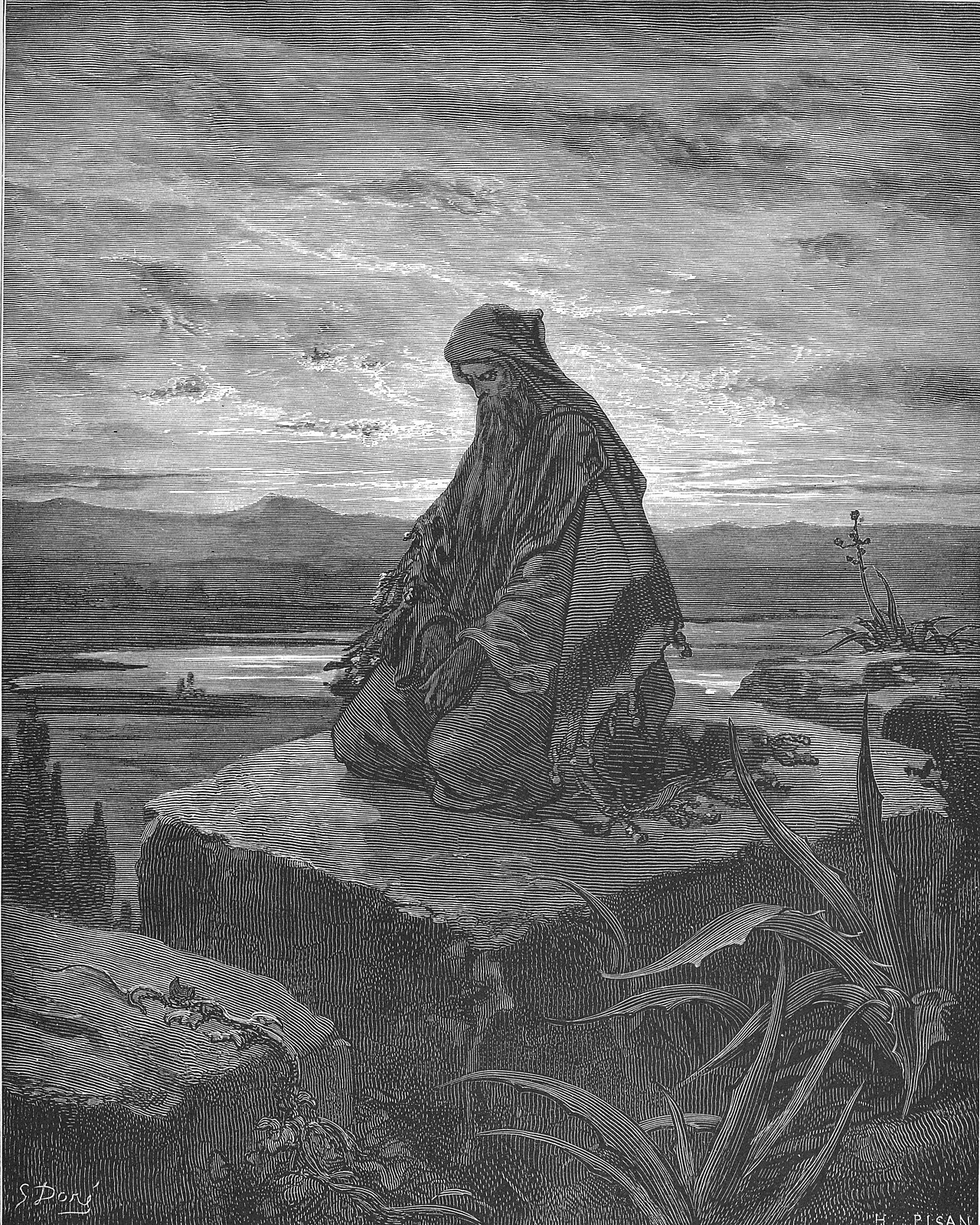
in Isaiah 20the LORD had already spoken through Isaiah son of Amoz, saying, “Go, remove the sackcloth from your waist and the sandals from your feet.” And Isaiah did so, walking around naked and barefoot.
BSB
The same verse in ASV and KJV ▾
ASV
at that time Jehovah spake by Isaiah the son of Amoz, saying, Go, and loose the sackcloth from off thy loins, and put thy shoe from off thy foot. And he did so, walking naked and barefoot.
KJV
At the same time spake the Lord by Isaiah the son of Amoz, saying, Go and loose the sackcloth from off thy loins, and put off thy shoe from thy foot. And he did so, walking naked and barefoot.
⋯
This verse in Isaiah 20
Commentary
4 notes on this verseSecond, he sets out the divine command: go, and loose: and Ezechiel shall be unto you for a sign of things to come (Ezek 24:24). Third, the fulfillment of the command: and he did so, below: and I do not resist (Isa 50:5). …
This site's exposition
Tartan came unto Ashdod
on Isaiah 20:1-3
The chapter opens with a precise anchor date, the year the Assyrian general Tartan captured Ashdod under Sargon's order, a campaign confirmed by Sargon's own annals, which fixes the sign to a real and datable moment rather than a vague future. At that same time the Lord commands Isaiah to loose the sackcloth from his body and walk naked and barefoot, and the prophet obeys, though the walking is not a single act but a state kept up three full years as a sign and wonder against Egypt and Ethiopia. Clarke and Barnes take naked in its ordinary Hebrew range as stripped of the outer garment and reduced to the plainest under-tunic, the dress of a captive, rather than complete nakedness, though the shame the sign pictures is the same either way.
The record, by era
The Puritans and the Awakening1 voice
Sackcloth - Which he wore in token of his grief for the calamities that were already come upon Israel, and were coming upon Judah. Naked - Not wholly naked, but without his upper garment, as slaves and prisoners used to do, whose posture he was to represent.
The Nineteenth Century1 voice
Walking naked and barefoot - It is not probable that the prophet walked uncovered and barefoot for three years; his appearing in that manner was a sign that within three years the Egyptians and Cushites should be in the same condition, being conquered and made captives by the king of Assyria. The time was denoted as well as the event; but his appearing in that manner for three whole years could give no premonition of the time at all.
How the passage was read
What the Jewish commentators add
On the verses either side of this one
three years shall he go in this manner as a sign and a symbol for Egypt and for Cush, that, at the end of three years the king of Assyria shall lead the captivity of Egypt..
This section is reception history: how the passage was read and kept in the Jewish tradition. Where a reading parts from an essential of the Christian faith, the section says so at that point.
Texts and citation data: Sefaria; each excerpt follows its version’s licence. 5 further sources are cited on this chapter that carry no English text this site may quote or only restate the verse.
The words behind it
23 Hebrew wordsEvery Hebrew word of this verse in the order it stands, with what it means and the door to its own study. The last column counts the times a word stands in the whole Bible: the rarer the word, the more the places it appears belong together.
| Hebrew | Sound | Meaning | Word study | In the Bible |
|---|---|---|---|---|
| בָּעֵ֣ת | baet | at the time | H6256 → | 296 times |
| הַהִ֗יא | hahi' | <the> that | H1931 → | 1879 times |
| דִּבֶּ֣ר | diber | he spoke | H1696 → | 1141 times |
| יְהוָה֮ | yahweh | Yahweh | H3068 → | 6520 times |
| בְּיַ֣ד | beyad | by [the] hand of | H3027 → | 1618 times |
| יְשַׁעְיָ֣הוּ | yesha'yahu | Isaiah | H3470 → | 39 times |
| בֶן־ | ven- | [the] son of | H1121 → | 4930 times |
| אָמוֹץ֮ | ʾamotz | Amoz | H531 → | 13 times |
| לֵאמֹר֒ | lemor | <to> saying | H559 → | 5305 times |
| לֵ֗ךְ | lekh | go | H1980 → | 1546 times |
| וּפִתַּחְתָּ֤ | ufitachta | and you will loosen | H6605 → | 144 times |
| הַשַּׂק֙ | hasak | the sackcloth | H8242 → | 49 times |
| מֵעַ֣ל | meal | from on | H5921 → | 5755 times |
| מָתְנֶ֔יךָ | mateneikha | hips your | H4975 → | 47 times |
| וְנַעַלְךָ֥ | venaalkha | and sandal[s] your | H5275 → | 22 times |
| תַחֲלֹ֖ץ | tachalotz | you will take off | H2502 → | 44 times |
| מֵעַ֣ל | meal | from on | H5921 → | 5755 times |
| רַגְלֶ֑יךָ | ragleikha | feet your | H7272 → | 247 times |
| וַיַּ֣עַשׂ | vaiyaas | and he did | H6213 → | 2628 times |
| כֵּ֔ן | ken | thus | H3651 → | 771 times |
| הָלֹ֖ךְ | halokh | he went | H1980 → | 1546 times |
| עָר֥וֹם | arom | naked | H6174 → | 16 times |
| וְיָחֵֽף׃ ס | veyachef | and barefoot | H3182 → | 5 times |
בָּעֵ֣תat the time
baetH6256 →296 times
הַהִ֗יא<the> that
hahi'H1931 →1879 times
דִּבֶּ֣רhe spoke
diberH1696 →1141 times
יְהוָה֮Yahweh
yahwehH3068 →6520 times
בְּיַ֣דby [the] hand of
beyadH3027 →1618 times
יְשַׁעְיָ֣הוּIsaiah
yesha'yahuH3470 →39 times
בֶן־[the] son of
ven-H1121 →4930 times
אָמוֹץ֮Amoz
ʾamotzH531 →13 times
לֵאמֹר֒<to> saying
lemorH559 →5305 times
לֵ֗ךְgo
lekhH1980 →1546 times
וּפִתַּחְתָּ֤and you will loosen
ufitachtaH6605 →144 times
הַשַּׂק֙the sackcloth
hasakH8242 →49 times
מֵעַ֣לfrom on
mealH5921 →5755 times
מָתְנֶ֔יךָhips your
mateneikhaH4975 →47 times
וְנַעַלְךָ֥and sandal[s] your
venaalkhaH5275 →22 times
תַחֲלֹ֖ץyou will take off
tachalotzH2502 →44 times
מֵעַ֣לfrom on
mealH5921 →5755 times
רַגְלֶ֑יךָfeet your
ragleikhaH7272 →247 times
וַיַּ֣עַשׂand he did
vaiyaasH6213 →2628 times
כֵּ֔ןthus
kenH3651 →771 times
הָלֹ֖ךְhe went
halokhH1980 →1546 times
עָר֥וֹםnaked
aromH6174 →16 times
וְיָחֵֽף׃ סand barefoot
veyachefH3182 →5 times
A shaded row is a word that stands 400 times or fewer in the Bible.
The walk
8 stopsEach card is a verse this one points to, and under it the verses that one points to in turn. Where several paths arrive at the same place, that place is listed first: the text keeps returning to it.
Through
Matthew 3:4John wore a garment of camel’s hair, with a leather belt around his waist. His food was locusts and wild honey.
it leads to
- 2 Kings 1:8
“He was a hairy man,” they answered, “with a leather belt around his waist.” “It was Elijah the Tishbite,” said the king.
Reached by 2 separate paths from here.
- Matthew 11:8
Otherwise, what did you go out to see? A man dressed in fine clothes? Look, those who wear fine clothing are found in kings’ palaces.
- Leviticus 11:22
Of these you may eat any kind of locust, katydid, cricket, or grasshopper.
- 2 Kings 1:8
Through
1 Samuel 19:24Then Saul stripped off his robes and also prophesied before Samuel. And he collapsed and lay naked all that day and night. That is why it is said, “Is Saul also among the prophets?”
it leads to
- 2 Samuel 6:20
As soon as David returned home to bless his own household, Saul’s daughter Michal came out to meet him. “How the king of Israel has distinguished himself today!” she said. “He has uncovered himself…
- 1 Samuel 10:10–12
When Saul and his servant arrived at Gibeah, a group of prophets met him. Then the Spirit of God rushed upon him, and he prophesied along with them.
- Micah 1:8
Because of this I will lament and wail; I will walk barefoot and naked. I will howl like a jackal and mourn like an ostrich.
- 2 Samuel 6:20
Through
Zechariah 13:4And on that day every prophet who prophesies will be ashamed of his vision, and he will not put on a hairy cloak in order to deceive.
it leads to
- Matthew 3:4
John wore a garment of camel’s hair, with a leather belt around his waist. His food was locusts and wild honey.
- Micah 3:6–7
Therefore night will come over you without visions, and darkness without divination. The sun will set on these prophets, and the daylight will turn black over them.
- Matthew 3:4
About Isaiah
Who and where
1 name in this verse with a page on the site.
This page draws on Adam Clarke, Commentary on the Bible; Albert Barnes, Notes on the Book of Isaiah; John Wesley, Explanatory Notes upon the Old Testament and Thomas Aquinas, Commentary on Isaiah.