
Genesis 33:9
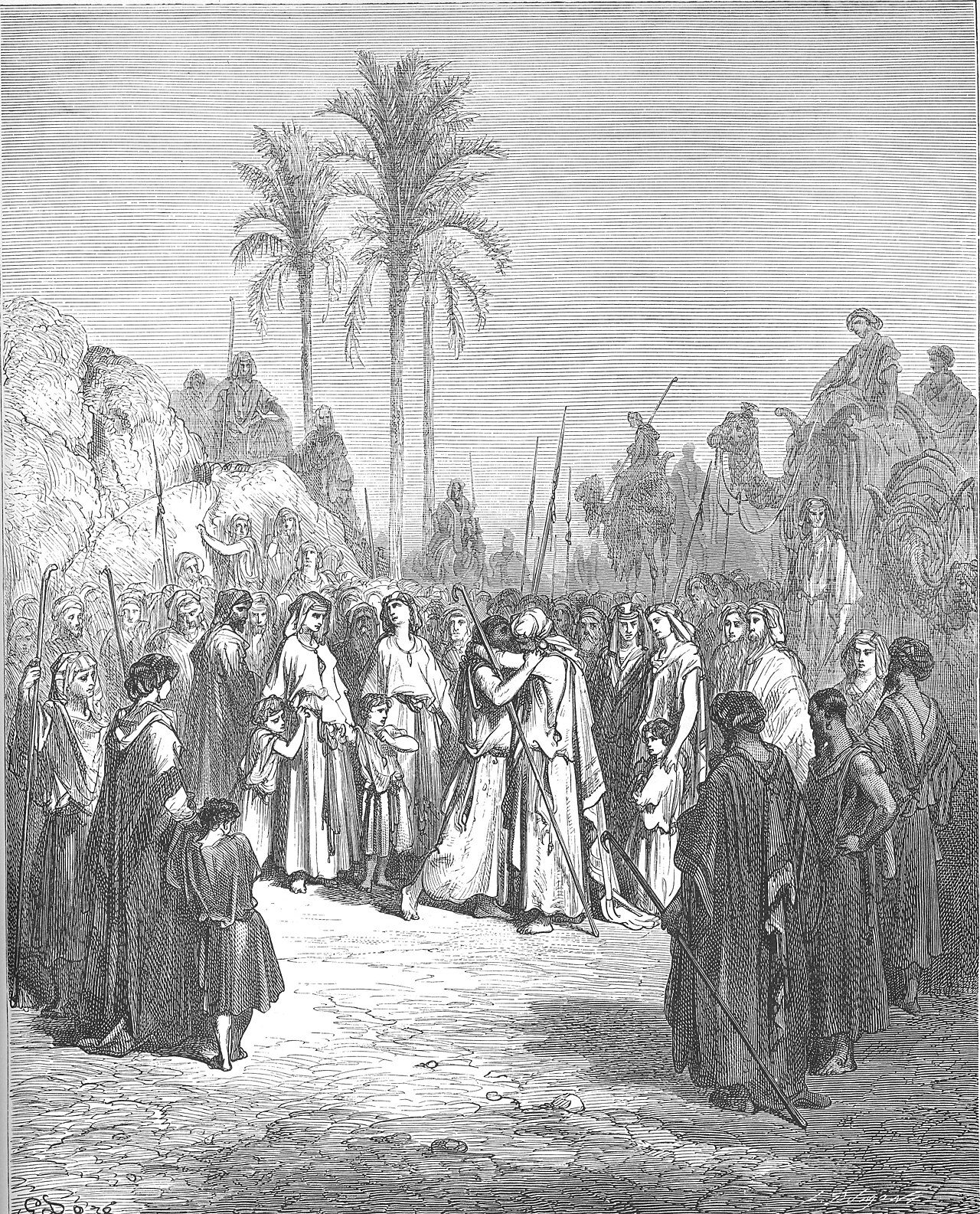
in Genesis 33“I already have plenty, my brother,” Esau replied. “Keep what belongs to you.”
BSB
The same verse in ASV and KJV ▾
ASV
And Esau said, I have enough, my brother; let that which thou hast be thine.
KJV
And Esau said, I have enough, my brother; keep that thou hast unto thyself.
⋯
This verse in Genesis 33
Commentary
6 notes on this verseAnd Esau said, I have enough, my brother,.... Or "I have much" (o), and stand in no need of this present, or have much more than thou hast: keep that thou hast unto thyself; for the use of himself and family, which is large; in this Esau showed himself not only not a covetous man, but that he was truly reconciled to his brother, and needed not anything from him, to make up the difference between them. (o) יש לי רב "est mihi multum", Pagninus, Montanus, Drusius; "plurima", V. L. "quamplurima", Vatablus.
This site's exposition
this whole company to meet me
on Genesis 33:8-9
The company is the gift Jacob sent ahead at Genesis 32. Esau has to ask what it is for, and he answers Jacob's plea for favor by calling him brother. He already has plenty, and he tells Jacob to keep what belongs to him. Gill reads the refusal of payment as the mark of a real reconciliation.
This site's exposition
I already have plenty, my brother
Esau's wealth is real. At Genesis 36:6 and 7 the brothers own so much livestock that the land cannot hold them both, and Esau moves his household away from Jacob. Abram and Lot parted for the same reason at 13:6.
The record, by era
The Puritans and the Awakening1 voice
His reason is I have enough, I have much (so the word is), so much that he was not willing to take any thing that was his brother's. Note, (1.) Many that come short of spiritual blessings, and are out of covenant, yet have much of this world's wealth. Esau had what was promised him, the fatness of the earth and a livelihood by his sword.
The Nineteenth Century2 voices
A commentator
Charles Spurgeon1834–1892
The Metropolitan Tabernacle Pulpit, Sermon No. 2739: “'I Have Enough'” (lightly modernized text, CCEL edition) · Written before 1892.
proposed
IT is a very rare thing to meet with people who say that they have enough, for those who have most generally desire more, and those who have little feel that contentment is a thing which cannot reasonably be expected from them. For any person honestly and truthfully to say, "I have enough," is so unusual a circumstance that I do not remember having heard it often. I have done so a few times, at long intervals. This being the case as a rule, it is very remarkable that there should be, in this chapter, a record of two persons who each said, "I have enough." It is specially noteworthy that this was said by two brothers, for, generally, if one of two brothers is contented, the other is of quite a different disposition. One may be of a very happy and easy-going spirit, but the other possesses enough worry and care to have stocked the two. But here are two brothers, twins, yet each one says, "I have enough." It will appear to you as a still more singular fact if you remember that these brothers differed so greatly from one another in other respects. The one was described by the Apostle Paul as a "profane person, who for one morsel of meat sold his birthright." Yet he says, "I have enough." The other was a man who had wrestled with God and who had power with God and with men as a prince! He also says, "I have enough." It seems to me as if, on that occasion, the blessing of their father Isaac rested upon them both, for you remember that, although Esau did not receive the great blessing—the Covenant blessing—that having gone to Jacob who secured it by deception, yet Esau did receive a great blessing of a temporal kind which Isaac pronounced upon him with all the fervor of a father who loved his son most ardently.
A commentator
Charles Spurgeon1834–1892
The Metropolitan Tabernacle Pulpit, Sermon No. 2739: “'I Have Enough'” (lightly modernized text, CCEL edition) · Written before 1892.
proposed
IT is a very rare thing to meet with people who say that they have enough, for those who have most generally desire more, and those who have little feel that contentment is a thing which cannot reasonably be expected from them. For any person honestly and truthfully to say, "I have enough," is so unusual a circumstance that I do not remember having heard it often. I have done so a few times, at long intervals.
The words behind it
10 Hebrew wordsEvery Hebrew word of this verse in the order it stands, with what it means and the door to its own study. The last column counts the times a word stands in the whole Bible: the rarer the word, the more the places it appears belong together.
| Hebrew | Sound | Meaning | Word study | In the Bible |
|---|---|---|---|---|
| וַיֹּ֥אמֶר | vaiyomer | and he said | H559 → | 5305 times |
| עֵשָׂ֖ו | ʾesav | Esau | H6215 → | 97 times |
| יֶשׁ־ | yesh- | there | H3426 → | 140 times |
| לִ֣י | li | [belongs] to <the> me | ||
| רָ֑ב | rav | much | H7227 → | 454 times |
| אָחִ֕י | ʾachi | O brother my | H251 → | 630 times |
| יְהִ֥י | yehi | let it be[long] | H1961 → | 3559 times |
| לְךָ֖ | lekha | to <the> you | ||
| אֲשֶׁר־ | ʾasher- | [that] which | H834 → | 5497 times |
| לָֽךְ׃ | lakh | [belongs] to <the> you |
וַיֹּ֥אמֶרand he said
vaiyomerH559 →5305 times
עֵשָׂ֖וEsau
ʾesavH6215 →97 times
יֶשׁ־there
yesh-H3426 →140 times
לִ֣י[belongs] to <the> me
li
רָ֑בmuch
ravH7227 →454 times
אָחִ֕יO brother my
ʾachiH251 →630 times
יְהִ֥יlet it be[long]
yehiH1961 →3559 times
לְךָ֖to <the> you
lekha
אֲשֶׁר־[that] which
ʾasher-H834 →5497 times
לָֽךְ׃[belongs] to <the> you
lakh
A shaded row is a word that stands 400 times or fewer in the Bible.
The walk
8 stopsEach card is a verse this one points to, and under it the verses that one points to in turn. Where several paths arrive at the same place, that place is listed first: the text keeps returning to it.
Through
Proverbs 16:7When a man’s ways please the LORD, He makes even the man’s enemies live at peace with him.
it leads to
- Romans 8:31
What then shall we say in response to these things? If God is for us, who can be against us?
- 1 John 3:22
and we will receive from Him whatever we ask, because we keep His commandments and do what is pleasing in His sight.
- 2 Chronicles 17:10
And the dread of the LORD fell upon all the kingdoms of the lands that surrounded Judah, so that they did not make war against Jehoshaphat.
- Colossians 1:10
so that you may walk in a manner worthy of the Lord and may please Him in every way: bearing fruit in every good work, growing in the knowledge of God,
- Jeremiah 15:11
The LORD said: “Surely I will deliver you for a good purpose; surely I will intercede with your enemy in your time of trouble, in your time of distress.
- Romans 8:31
Through
Philemon 1:7I take great joy and encouragement in your love, because you, brother, have refreshed the hearts of the saints.
it leads to
- 2 Corinthians 7:13
On account of this, we are encouraged. In addition to our own encouragement, we were even more delighted by the joy of Titus. For his spirit has been refreshed by all of you.
- 2 Corinthians 7:13
Through
Ecclesiastes 4:8There is a man all alone, without even a son or brother. And though there is no end to his labor, his eyes are still not content with his wealth: “For whom do I…
it leads to
- 1 John 2:16
For all that is in the world—the desires of the flesh, the desires of the eyes, and the pride of life—is not from the Father but from the world.
- Proverbs 27:20
Sheol and Abaddon are never satisfied; so the eyes of man are never satisfied.
- 1 John 2:16
Where this verse is studied
On this page
Studies1
About Genesis
Who and where
1 name in this verse with a page on the site.
This page draws on Charles Spurgeon, The Metropolitan Tabernacle Pulpit, Sermon No. 2739: “'I Have Enough'” (lightly modernized text, CCEL edition); Jamieson, Fausset & Brown, Commentary Critical and Explanatory on the Whole Bible; John Gill, Exposition of the Old Testament (1748-1763); John Gill, Exposition of the Old Testament and Matthew Henry, Commentary on the Whole Bible.