
Esther 5:2
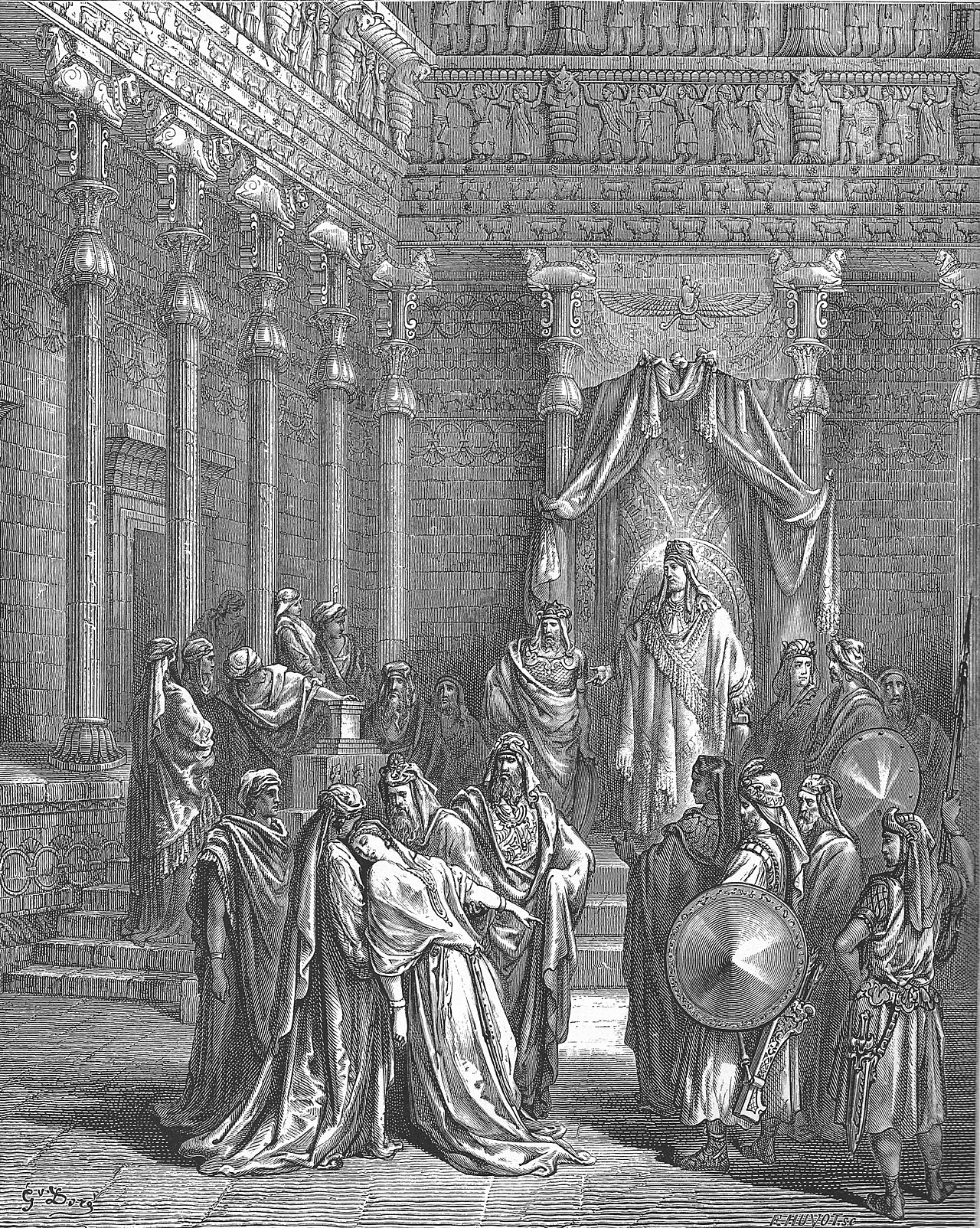
in Esther 5As soon as the king saw Queen Esther standing in the court, she found favor in his sight. The king extended the gold scepter in his hand toward Esther, and she approached and touched the tip of the scepter.
BSB
The same verse in ASV and KJV ▾
ASV
And it was so, when the king saw Esther the queen standing in the court, that she obtained favor in his sight; and the king held out to Esther the golden sceptre that was in his hand. So Esther drew near, and touched the top of the sceptre.
KJV
And it was so, when the king saw Esther the queen standing in the court, that she obtained favour in his sight: and the king held out to Esther the golden sceptre that was in his hand. So Esther drew near, and touched the top of the sceptre.
⋯
This verse in Esther 5
Commentary
8 notes on this verseShe obtained favor in his sight - The Septuagint represents “the king as being at first greatly enraged when he saw Esther, because she had dared to appear before him unveiled, and she, perceiving this, was so terrified that she fainted away; on which the king, touched with tenderness, sprung from his throne, took her up in his arms, laid the golden scepter on her neck, and spoke to her in the most endearing manner.” This is more circumstantial than the Hebrew, but is not contrary to it.
This site's exposition
Esther put on her royal attire
on Esther 5:1-3
The three days of fasting commanded at 4:16 end here. Esther goes uncalled into the inner court, her life resting on whether the king extends the scepter. The king's offer, "Even up to half the kingdom," is read as courtly idiom, since he repeats the same words at 7:2.
This site's exposition
As soon as the king saw
Wesley reads the gold scepter as pardon for Esther, who stood uncalled, and her touch on its tip as thanks and submission. Clarke notes that the Greek expands the scene, with the king angry at first and the queen fainting before he takes her up. The Hebrew keeps it brief.
The record, by era
The Medieval Church2 voices
He, who held out to that queen the golden scepter that was in his hand, showed the power of his rule, that is, the cross of his passion through which he gained authority over heaven, earth and the underworld so that "at his name every …
He extends to this queen the staff he holds in his hand when he shows her the power of his rule, or rather the cross of his passion through which he has acquired for himself power in Heaven, on earth, and below the earth; so …
The Puritans and the Awakening2 voices
Held out - In testimony that he pardoned her presumption, and was ready to grant her petition. Touched - In token of her thankful acceptance of the king's favour, and of her reverence and submission.
And it was so, when the king saw Esther the queen standing in the court, that she obtained favour in his sight,....
The Nineteenth Century1 voice
A commentator
Jamieson, Fausset & Brown1802–1910
Commentary Critical and Explanatory on the Whole Bible (1871)
On the Khorsabad reliefs the rod is painted red, doubtless to represent gold; proving that "the golden sceptre" was a simple wand of that precious metal, commonly held in the right hand, with one end resting on the ground, and that whether the king was sitting or walking. "The gold sceptre" has received little alteration or modification since ancient times [GOSS].
How the passage was read
What the Jewish commentators add
On the verses either side of this one
Up until half the empire. A thing that is in the middle and at the halfway mark of the empire; that is, the Beis Hamikdosh, which they started to build in the days of Koresh, and he reneged and commanded to discontinue the work. 3 See Maseches Megillah 15b.
This section is reception history: how the passage was read and kept in the Jewish tradition. Where a reading parts from an essential of the Christian faith, the section says so at that point.
Texts and citation data: Sefaria; each excerpt follows its version’s licence. 5 further sources are cited on this chapter that carry no English text this site may quote or only restate the verse.
The words behind it
24 Hebrew wordsEvery Hebrew word of this verse in the order it stands, with what it means and the door to its own study. The last column counts the times a word stands in the whole Bible: the rarer the word, the more the places it appears belong together.
| Hebrew | Sound | Meaning | Word study | In the Bible |
|---|---|---|---|---|
| וַיְהִי֩ | vayhi | and it was | H1961 → | 3559 times |
| כִרְא֨וֹת | khirot | when saw | H7200 → | 1300 times |
| הַמֶּ֜לֶךְ | hamelekh | the king | H4428 → | 2525 times |
| אֶת־ | ʾet- | <obj.> | H853 → | 10935 times |
| אֶסְתֵּ֣ר | ʾester | Esther | H635 → | 55 times |
| הַמַּלְכָּ֗ה | hamalkah | the queen | H4436 → | 35 times |
| עֹמֶ֙דֶת֙ | ʾomedet | standing | H5975 → | 521 times |
| בֶּֽחָצֵ֔ר | bechatzer | in the court | H2691 → | 191 times |
| נָשְׂאָ֥ה | naseah | she bore | H5375 → | 656 times |
| חֵ֖ן | chen | favor | H2580 → | 69 times |
| בְּעֵינָ֑יו | beeinav | in view his | H5869 → | 887 times |
| וַיּ֨וֹשֶׁט | vaiyooshet | and he extended | H3447 → | 3 times |
| הַמֶּ֜לֶךְ | hamelekh | the king | H4428 → | 2525 times |
| לְאֶסְתֵּ֗ר | leester | to Esther | H635 → | 55 times |
| אֶת־ | ʾet- | <obj.> | H853 → | 10935 times |
| שַׁרְבִ֤יט | sharvit | [the] scepter of | H8275 → | 4 times |
| הַזָּהָב֙ | hazahav | <the> gold | H2091 → | 389 times |
| אֲשֶׁ֣ר | ʾasher | which | H834 → | 5497 times |
| בְּיָד֔וֹ | beyado | [was] in hand his | H3027 → | 1618 times |
| וַתִּקְרַ֣ב | vatikrav | and she drew near | H7126 → | |
| אֶסְתֵּ֔ר | ʾester | Esther | H635 → | 55 times |
| וַתִּגַּ֖ע | vatiga' | and she touched | H5060 → | 150 times |
| בְּרֹ֥אשׁ | berosh | <in> [the] top of | H7218 → | 599 times |
| הַשַּׁרְבִֽיט׃ ס | hasharvit | the scepter | H8275 → | 4 times |
וַיְהִי֩and it was
vayhiH1961 →3559 times
כִרְא֨וֹתwhen saw
khirotH7200 →1300 times
הַמֶּ֜לֶךְthe king
hamelekhH4428 →2525 times
אֶת־<obj.>
ʾet-H853 →10935 times
אֶסְתֵּ֣רEsther
ʾesterH635 →55 times
הַמַּלְכָּ֗הthe queen
hamalkahH4436 →35 times
עֹמֶ֙דֶת֙standing
ʾomedetH5975 →521 times
בֶּֽחָצֵ֔רin the court
bechatzerH2691 →191 times
נָשְׂאָ֥הshe bore
naseahH5375 →656 times
חֵ֖ןfavor
chenH2580 →69 times
בְּעֵינָ֑יוin view his
beeinavH5869 →887 times
וַיּ֨וֹשֶׁטand he extended
vaiyooshetH3447 →3 times
הַמֶּ֜לֶךְthe king
hamelekhH4428 →2525 times
לְאֶסְתֵּ֗רto Esther
leesterH635 →55 times
אֶת־<obj.>
ʾet-H853 →10935 times
שַׁרְבִ֤יט[the] scepter of
sharvitH8275 →4 times
הַזָּהָב֙<the> gold
hazahavH2091 →389 times
אֲשֶׁ֣רwhich
ʾasherH834 →5497 times
בְּיָד֔וֹ[was] in hand his
beyadoH3027 →1618 times
וַתִּקְרַ֣בand she drew near
vatikravH7126 →
אֶסְתֵּ֔רEsther
ʾesterH635 →55 times
וַתִּגַּ֖עand she touched
vatiga'H5060 →150 times
בְּרֹ֥אשׁ<in> [the] top of
beroshH7218 →599 times
הַשַּׁרְבִֽיט׃ סthe scepter
hasharvitH8275 →4 times
A shaded row is a word that stands 400 times or fewer in the Bible.
The walk
8 stopsEach card is a verse this one points to, and under it the verses that one points to in turn. Where several paths arrive at the same place, that place is listed first: the text keeps returning to it.
Through
Proverbs 21:1The king’s heart is a waterway in the hand of the LORD; He directs it where He pleases.
it leads to
- Proverbs 16:9
A man’s heart plans his course, but the LORD determines his steps.
- Ezra 6:22
For seven days they kept the Feast of Unleavened Bread with joy, because the LORD had made them joyful and turned the heart of the king of Assyria toward them to strengthen their hands…
- Proverbs 20:24
A man’s steps are from the LORD, so how can anyone understand his own way?
- Acts 7:10
and rescued him from all his troubles. He granted Joseph favor and wisdom in the sight of Pharaoh king of Egypt, who appointed him ruler over Egypt and all his household.
- Proverbs 16:1
The plans of the heart belong to man, but the reply of the tongue is from the LORD.
- Proverbs 16:9
Through
Psalms 116:1I love the LORD, for He has heard my voice— my appeal for mercy.
it leads to
- 1 John 4:19
We love because He first loved us.
- Psalms 66:19–20
But God has surely heard; He has attended to the sound of my prayer.
- 1 John 4:19
Through
Nehemiah 1:11O Lord, may Your ear be attentive to my prayer and to the prayers of Your servants who delight to revere Your name. Give Your servant success this day, I pray, and grant him…
it leads to
- Nehemiah 1:6
let Your eyes be open and Your ears attentive to hear the prayer that I, Your servant, now pray before You day and night for Your servants, the Israelites. I confess the sins that…
- Nehemiah 1:6
Where this verse is studied
On this page
About Esther
Who and where
1 name in this verse with a page on the site.
This page draws on Adam Clarke, Commentary on the Bible; Jamieson Fausset and Brown, Commentary Critical and Explanatory on the Whole Bible; Jamieson, Fausset & Brown, Commentary Critical and Explanatory on the Whole Bible; John Gill, Exposition of the Old Testament (1748-1763); John Wesley, Explanatory Notes upon the Old Testament; Keil, The Books of Ezra, Nehemiah, and Esther; Rabanus Maurus, EXPLANATION ON THE BOOK OF ESTHER 8 and Rabanus Maurus, Commentary on Esther.