
Esther 4:10
in Esther 4Then Esther spoke to Hathach and instructed him to tell Mordecai,
BSB
The same verse in ASV and KJV ▾
ASV
Then Esther spake unto Hathach, and gave him a message unto Mordecai, saying:
KJV
Again Esther spake unto Hatach, and gave him commandment unto Mordecai;
⋯
This verse in Esther 4
Commentary
2 notes on this verseThis site's exposition
gave him commandment unto Mordecai
on Esther 4:10-12
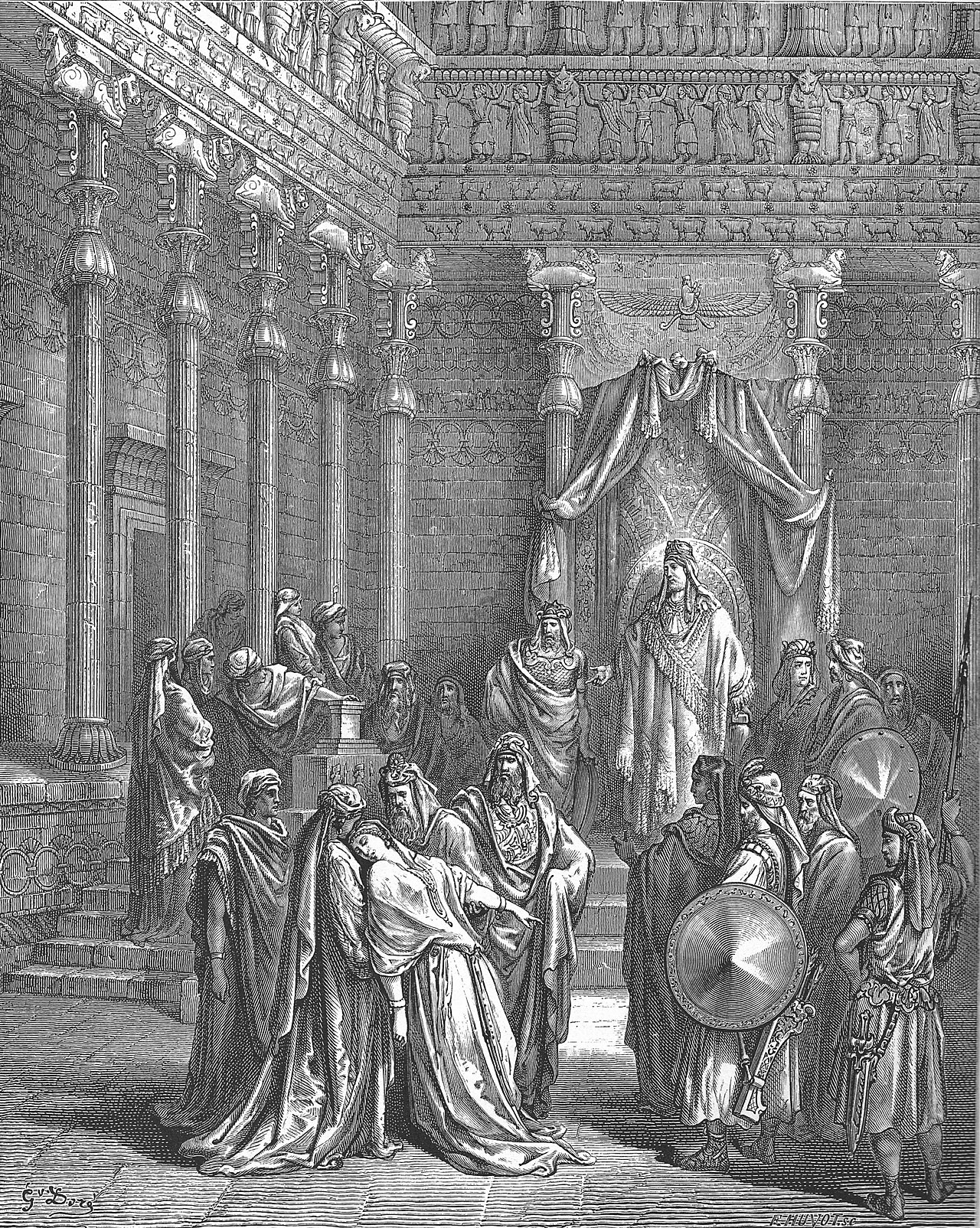
Esther's answer states the law every servant and province knows: the inner court uncalled means death, except the king hold out the golden sceptre, and the excavated court at Shushan gives the scene its real floor. Her last clause is the confession that matters, I have not been called to come in unto the king these thirty days: the favor that won a crown at 2:17 may have cooled, and she is being asked to stake her life on it. The book lets her weakness stand in full before her courage answers it.
The record, by era
The Puritans and the Awakening1 voice
Again Esther spake unto Hatach,.... For there was no other way of corresponding and conversing but by an eunuch; the wives of kings being altogether under their watch and care: and gave him commandment unto Mordecai; to go unto him, and what he should say to him from her, which is as follows.
The words behind it
6 Hebrew wordsEvery Hebrew word of this verse in the order it stands, with what it means and the door to its own study. The last column counts the times a word stands in the whole Bible: the rarer the word, the more the places it appears belong together.
| Hebrew | Sound | Meaning | Word study | In the Bible |
|---|---|---|---|---|
| וַתֹּ֤אמֶר | vatomer | and she said | H559 → | 5305 times |
| אֶסְתֵּר֙ | ʾester | Esther | H635 → | 55 times |
| לַהֲתָ֔ךְ | lahatakh | to Hathach | H2047 → | 4 times |
| וַתְּצַוֵּ֖הוּ | vatetzavehu | and she commanded him | H6680 → | 494 times |
| אֶֽל־ | ʾel- | to | H413 → | 5510 times |
| מָרְדֳּכָֽי׃ | maredokhai | Mordecai | H4782 → | 60 times |
וַתֹּ֤אמֶרand she said
vatomerH559 →5305 times
אֶסְתֵּר֙Esther
ʾesterH635 →55 times
לַהֲתָ֔ךְto Hathach
lahatakhH2047 →4 times
וַתְּצַוֵּ֖הוּand she commanded him
vatetzavehuH6680 →494 times
אֶֽל־to
ʾel-H413 →5510 times
מָרְדֳּכָֽי׃Mordecai
maredokhaiH4782 →60 times
A shaded row is a word that stands 400 times or fewer in the Bible.
Where this verse is studied
On this page
About Esther
Who and where
2 names in this verse with a page on the site.
- PersonPersian periodEstherHadassah, the orphan exile who became queen of Persia and, at the risk of "if I perish, I perish," stood between her people and Ha…
- PersonPersian periodMordecaiEsther's cousin and guardian at the gate of Susa, who refused to bow to Haman, uncovered the plot against the king, and was raised…
This page draws on Jamieson Fausset and Brown, Commentary Critical and Explanatory on the Whole Bible; John Gill, Exposition of the Old Testament (1748-1763) and Keil, The Books of Ezra, Nehemiah, and Esther.