
Amos 8:3
in Amos 8“In that day,” declares the Lord GOD, “the songs of the temple will turn to wailing. Many will be the corpses, strewn in silence everywhere!”
BSB
The same verse in ASV and KJV ▾
ASV
And the songs of the temple shall be wailings in that day, saith the Lord Jehovah: the dead bodies shall be many; in every place shall they cast them forth with silence.
KJV
And the songs of the temple shall be howlings in that day, saith the Lord God: there shall be many dead bodies in every place; they shall cast them forth with silence.
⋯
This verse in Amos 8
Commentary
9 notes on this verseAnd the songs of the temple shall be howlings in that day, saith the Lord God,.... Not the songs sung by the Levites in the temple of Jerusalem, this prophecy respects the ten tribes only; but those in imitation of them, sung in the temple at Bethel, and other idol temples; or profane songs in the palaces of princes and nobles; that is, instead of these, there should be howlings for the calamities come upon them.
This site's exposition
a basket of summer fruit
on Amos 8:1-3
The fourth vision is a basket of summer fruit, and the Lord names its meaning with a play the bench carries in the Hebrew, qayits, summer fruit, sounding against qets, the end, so the ripe basket itself becomes the pronouncement: the end is come upon my people of Israel; I will not again pass by them any more, the same refusal the plumbline vision reached but now with no plea from Amos and no reprieve given. The songs of the temple turned to howling and the dead cast forth with silence complete the picture the earlier visions were spared, worship silenced and the dead too many for the customary mourning rites.
The record, by era
The Church Fathers1 voice
(Chapter 8, verses 1 and following) This is what the Lord God showed me: Behold, a basket of summer fruit. And he said, 'Amos, what do you see?' And I said, 'A basket of summer fruit.' Then the Lord said to me, 'The end has come upon my people Israel; I will not pass by them anymore. The songs of the temple shall become wailings in that day,' declares the Lord God. 'Many shall be the dead bodies, cast out in every place. Silence!' LXX: This is what the Lord God showed me: Behold, a basket of summer fruit.
The Puritans and the Awakening3 voices
) and that shall change their note. Oppressors are here called to an account for their abusing the poor; and their destruction is foretold, which will set them a mourning,
quarantine:debris (2026-07-29) — leading-punctuation+unbalanced-parens
Property was first invaded and then liberty; it is the method of oppressors first to make men beggars and then to make them their vassals. Thus is the dignity of the human nature lost in the misery of those that are trampled on and the tenderness of it in the sin of those that trample on them. The grievousness of the punishment that shall be inflicted on them for this sin.
It is a gracious promise ( Isa. xxx. 20 ) that though they have a scarcity of bread they shall have plenty of the means of grace. God will give them the bread of adversity and the water of affliction, but their eyes shall see their teachers; and it was a common saying among the Puritans that brown bread and the gospel are good fare.
The Nineteenth Century1 voice
A commentator
Albert Barnes1798–1870
Notes, Explanatory and Practical, on the Old and New Testaments (1832-1869)
The songs of the temple shall be howlings - Literally, “shall howl.” It shall be, as when mirthful music is suddenly broken in upon, and, through the sudden agony of the singer, ends in a shriek or yell of misery. When sounds of joy are turned into wailing, all must be complete sorrow. They are not hushed only, but are turned into their opposite.
2 more voices on this verse
The Nineteenth Century2 voices
A commentator
Jamieson, Fausset & Brown1802–1910
Commentary Critical and Explanatory on the Whole Bible (1871)
proposed
songs of . . . temple-- (Am 5:23). The joyous hymns in the temple of Judah (or rather, in the Beth-el "royal temple," Am 7:13; for the allusion is to Israel, not Judah, throughout this chapter) shall be changed into "howlings." GROTIUS translates, "palace"; compare Am 6:5, as to the songs there.
quarantine:debris (2026-07-29) — starts-lowercase
The songs of the temple - Instead of שירות shiroth, songs, Houbigant reads שורות shoroth, the singing women; and Newcome follows him: “And the singing women of the palace shall howl in that day.” Instead of joyous songs, they shall have nothing but lamentation. They shall cast them forth with silence - Every place shall be filled with the dead, and a dreadful silence shall reign universally; the few that remain being afraid either to speak or complain, or even to chant a funeral dirge for the most respectable of the dead.
The words behind it
14 Hebrew wordsEvery Hebrew word of this verse in the order it stands, with what it means and the door to its own study. The last column counts the times a word stands in the whole Bible: the rarer the word, the more the places it appears belong together.
| Hebrew | Sound | Meaning | Word study | In the Bible |
|---|---|---|---|---|
| וְהֵילִ֜ילוּ | veheililu | and they will wail | H3213 → | |
| שִׁיר֤וֹת | shirot | songs of | H7892 → | 59 times |
| הֵיכָל֙ | heikhal | [the] temple | H1964 → | |
| בַּיּ֣וֹם | baiyom | on the day | H3117 → | 2304 times |
| הַה֔וּא | hahu' | <the> that | H1931 → | 1879 times |
| נְאֻ֖ם | neum | [the] utterance of | H5002 → | 376 times |
| אֲדֹנָ֣י | ʾadonai | [the] Lord | H136 → | 440 times |
| יְהוִ֑ה | yahweh | Yahweh | H3069 → | 306 times |
| רַ֣ב | rav | many | H7227 → | 454 times |
| הַפֶּ֔גֶר | hapeger | the corpse[s] | H6297 → | |
| בְּכָל־ | bekhol | in every | H3605 → | 5413 times |
| מָק֖וֹם | makom | place | H4725 → | |
| הִשְׁלִ֥יךְ | hishlikh | someone will throw | H7993 → | |
| הָֽס׃ פ | has | hush! | H2013 → |
וְהֵילִ֜ילוּand they will wail
veheililuH3213 →
שִׁיר֤וֹתsongs of
shirotH7892 →59 times
הֵיכָל֙[the] temple
heikhalH1964 →
בַּיּ֣וֹםon the day
baiyomH3117 →2304 times
הַה֔וּא<the> that
hahu'H1931 →1879 times
נְאֻ֖ם[the] utterance of
neumH5002 →376 times
אֲדֹנָ֣י[the] Lord
ʾadonaiH136 →440 times
יְהוִ֑הYahweh
yahwehH3069 →306 times
רַ֣בmany
ravH7227 →454 times
הַפֶּ֔גֶרthe corpse[s]
hapegerH6297 →
בְּכָל־in every
bekholH3605 →5413 times
מָק֖וֹםplace
makomH4725 →
הִשְׁלִ֥יךְsomeone will throw
hishlikhH7993 →
הָֽס׃ פhush!
hasH2013 →
A shaded row is a word that stands 400 times or fewer in the Bible.
The walk
8 stopsEach card is a verse this one points to, and under it the verses that one points to in turn. Where several paths arrive at the same place, that place is listed first: the text keeps returning to it.
Through
Leviticus 10:3Then Moses said to Aaron, “This is what the LORD meant when He said: ‘To those who come near Me I will show My holiness, and in the sight of all the people I…
it leads to
- Exodus 19:22
Even the priests who approach the LORD must consecrate themselves, or the LORD will break out against them.”
- Isaiah 49:3
He said to Me, “You are My Servant, Israel, in whom I will display My glory.”
- Leviticus 21:6
They must be holy to their God and not profane the name of their God. Because they present to the LORD the offerings made by fire, the food of their God, they must be…
- Numbers 20:12
But the LORD said to Moses and Aaron, “Because you did not trust Me to show My holiness in the sight of the Israelites, you will not bring this assembly into the land that…
- 1 Samuel 2:30
Therefore, the LORD, the God of Israel, declares: ‘I did indeed say that your house and the house of your father would walk before Me forever. But now the LORD declares: Far be it…
- Exodus 19:22
Through
Amos 5:23Take away from Me the noise of your songs! I will not listen to the music of your harps.
it leads to
Through
Amos 5:16Therefore this is what the LORD, the God of Hosts, the Lord, says: “There will be wailing in all the public squares and cries of ‘Alas! Alas!’ in all the streets. The farmer will…
it leads to
- Joel 1:11
Be dismayed, O farmers, wail, O vinedressers, over the wheat and barley, because the harvest of the field has perished.
- Joel 1:11
Where this verse is studied
On this page
About Amos
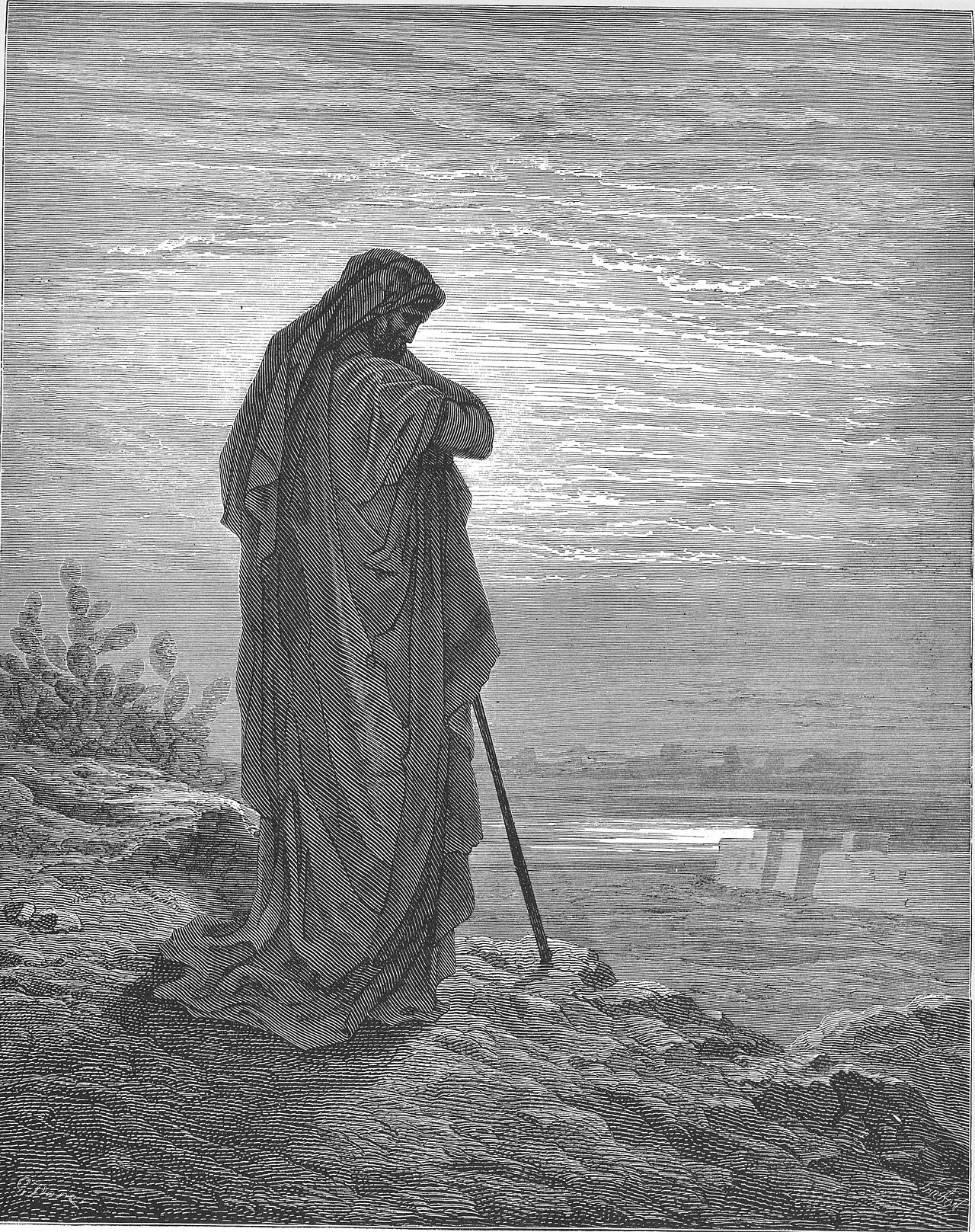
This page draws on Adam Clarke, Commentary on the Bible; Albert Barnes, Notes, Explanatory and Practical, on the Old and New Testaments (1832-1869); Carl Friedrich Keil, The Twelve Minor Prophets; Jamieson, Fausset & Brown, Commentary Critical and Explanatory on the Whole Bible; Jerome, Commentary on Amos; John Gill, Exposition of the Old Testament (1748-1763) and Matthew Henry, Commentary on the Whole Bible.