
1 Kings 5:14
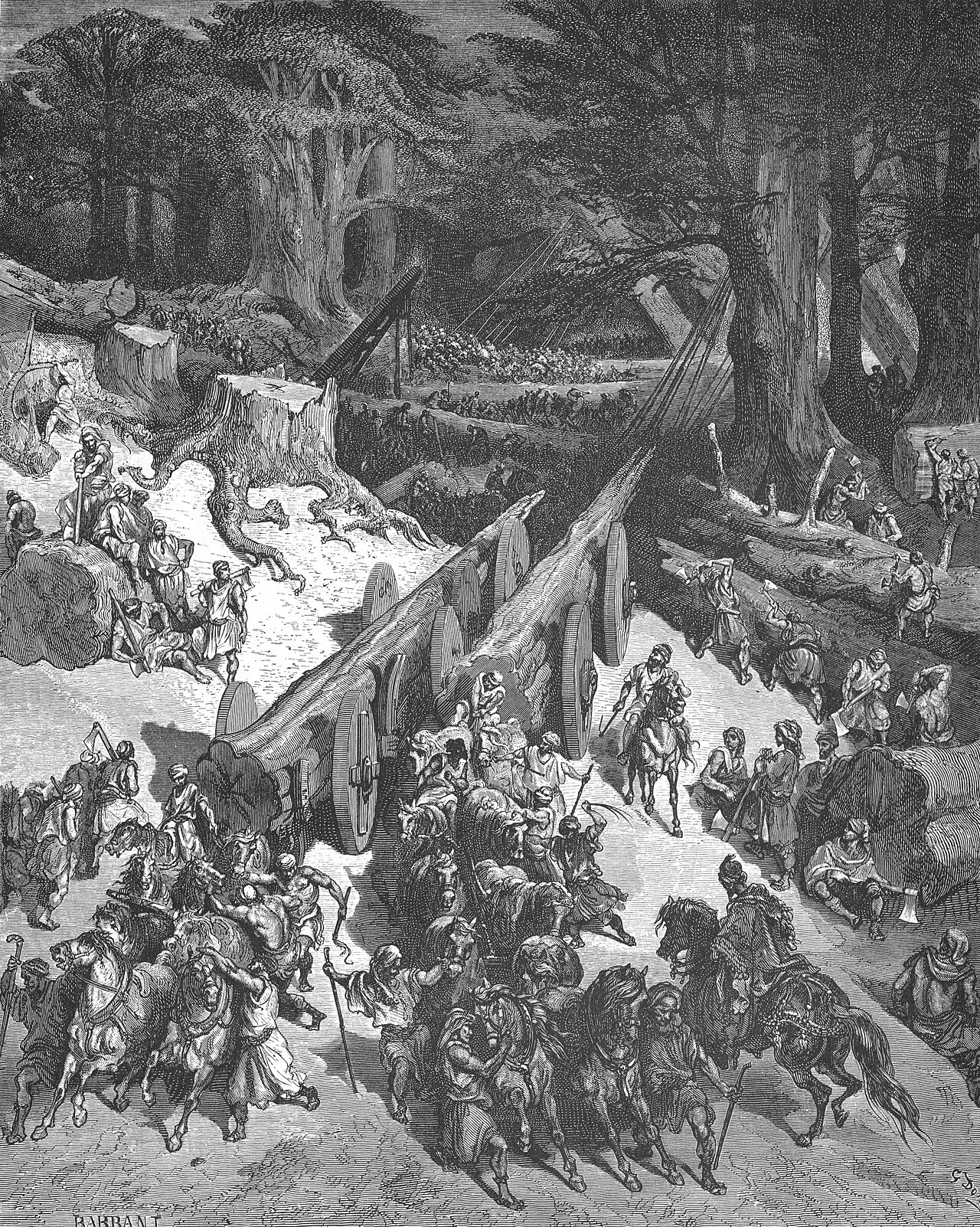
in 1 Kings 5He sent them to Lebanon in monthly shifts of 10,000 men, so that they would spend one month in Lebanon and two months at home. And Adoniram was in charge of the forced labor.
BSB
The same verse in ASV and KJV ▾
ASV
And he sent them to Lebanon, ten thousand a month by courses; a month they were in Lebanon, and two months at home: and Adoniram was over the men subject to taskwork.
KJV
And he sent them to Lebanon, ten thousand a month by courses: a month they were in Lebanon, and two months at home: and Adoniram was over the levy.
⋯
This verse in 1 Kings 5
Commentary
7 notes on this verseIt was temple service, yet Solomon takes care that they shall not be over-worked. Great men ought to consider that their servants must rest as well as they.
This site's exposition
king Solomon raised a levy
on 1 Kings 5:13-14
Barnes notes what the text does not say outright, that this is apparently the first time Israelites themselves are put under a forced levy, the very thing Samuel warned of at 1 Samuel 8:11-17 when the people asked for a king. Solomon rotates the thirty thousand a month in Lebanon and two months at home under Adoniram, a real mercy in the terms, yet it is Israelite men, not only the conquered peoples of 9:20-22, standing in the muster for the first time. The northern elders will name this same levy by memory at 12:4, asking Rehoboam to lighten the grievous service his father laid on them; the seed is planted here, chapters and a generation before it splits the kingdom.
The record, by era
The Medieval Church1 voice
The first thing to note here is that it was not for nothing that Solomon chose workmen from all Israel, nor was there any section of the people from which men fit for such a great task were not taken, because, of course, priests nowadays …
The Puritans and the Awakening2 voices
It is here said of Hiram their king that he was ever a lover of David; and we have reason to think he was a worshipper of the true God, and had himself renounced, though he could not reform, the idolatry of his city.
And he sent them to Lebanon, ten thousand a month by courses,....
The Nineteenth Century2 voices
A commentator
Charles Spurgeon1834–1892
The Metropolitan Tabernacle Pulpit, Sermon No. 3313: “A Practical Discourse” (lightly modernized text, CCEL edition) · Written before 1892.
proposed
IT was right that when a Te a levy was made and a certain number of men were chosen to work in Lebanon. It was, however, most fitting that work for a gracious God should be joyful work—not the bondage of slaves, but the delight of sons. Solomon did not demand that any Israelite should toil in the mountains and queries for years together and leave his own fields to lie waste, but he decreed that the workers should have one month in Lebanon at work on the Temple and two months at home for their own affairs.
A commentator
Charles Spurgeon1834–1892
The Metropolitan Tabernacle Pulpit, Sermon No. 3313: “A Practical Discourse” (lightly modernized text, CCEL edition) · Written before 1892.
proposed
IT was right that when a Te a levy was made and a certain number of men were chosen to work in Lebanon. It was, however, most fitting that work for a gracious God should be joyful work—not the bondage of slaves, but the delight of sons. Solomon did not demand that any Israelite should toil in the mountains and queries for years together and leave his own fields to lie waste, but he decreed that the workers should have one month in Lebanon at work on the Temple and two months at home for their own affairs. Our God is not a taskmaster—and sacred service should not sour into forced labor! Self-sacrifice is the soul of true religion, but we must not demand of others that which would turn religion into slavery. Solomon knew that the common people would grow weary of working even for Jehovah, Himself, if they were taken away from their own families and inheritance altogether and, therefore, in his wisdom he put it so—"One month in Lebanon, and two months at home." I am about to draw from this text two lessons. They are these—first, that you and I ought to be rendering service to the Lord our God and assisting to build up His spiritual Temple. But secondly, that while we labor abroad, we must be doubly careful to watch over our own households and our own souls. Marthas must also be Marys. We are bound to serve, but we must not be cumbered with much serving. We must work with Martha and yet sit with Mary at the Master's feet—there must be one month in Lebanon and two months at home! I. First, then, WE ARE BOUND TO DO SERVICE FOR OUR KING—service for the living Temple of our God. It is not enough for us to say, "I believe in the Lord Jesus Christ and, therefore, I am saved." That is notthe end of it all, otherwise religion were a grand piece of selfishness! Our souls may not be hooped in within our own ribs.
How the passage was read
What the Jewish commentators add
On the verses either side of this one
He spoke of trees. Which medical remedy is derived from each [tree], and that a particular tree is best suited for that type of building or to be planted in a particular field.
This section is reception history: how the passage was read and kept in the Jewish tradition. Where a reading parts from an essential of the Christian faith, the section says so at that point.
Texts and citation data: Sefaria; each excerpt follows its version’s licence. 4 further sources are cited on this chapter that carry no English text this site may quote or only restate the verse.
The words behind it
15 Hebrew wordsEvery Hebrew word of this verse in the order it stands, with what it means and the door to its own study. The last column counts the times a word stands in the whole Bible: the rarer the word, the more the places it appears belong together.
| Hebrew | Sound | Meaning | Word study | In the Bible |
|---|---|---|---|---|
| וַיִּשְׁלָחֵ֣ם | vaiyishlachem | and he sent them | H7971 → | 845 times |
| לְבָנ֗וֹנָה | levanonah | Lebanon towards | H3844 → | 71 times |
| עֲשֶׂ֨רֶת | ʾaseret | ten | H6235 → | 176 times |
| אֲלָפִ֤ים | ʾalafim | thousand<s> | H505 → | 505 times |
| בַּחֹ֙דֶשׁ֙ | bachodesh | in the month | H2320 → | 284 times |
| חֲלִיפ֔וֹת | chalifot | relays | H2487 → | |
| חֹ֚דֶשׁ | chodesh | a month | H2320 → | 284 times |
| יִהְי֣וּ | yihyu | they were | H1961 → | 3559 times |
| בַלְּבָנ֔וֹן | valevanon | in <the> Lebanon | H3844 → | 71 times |
| שְׁנַ֥יִם | shenayim | two | H8147 → | 768 times |
| חֳדָשִׁ֖ים | chodashim | months | H2320 → | 284 times |
| בְּבֵית֑וֹ | beveito | in home his | H1004 → | 2046 times |
| וַאֲדֹנִירָ֖ם | vaadoniram | and Adoniram | H141 → | |
| עַל־ | ʾal- | [was] over | H5921 → | 5755 times |
| הַמַּֽס׃ ס | hamas | the forced labor | H4522 → | 23 times |
וַיִּשְׁלָחֵ֣םand he sent them
vaiyishlachemH7971 →845 times
לְבָנ֗וֹנָהLebanon towards
levanonahH3844 →71 times
עֲשֶׂ֨רֶתten
ʾaseretH6235 →176 times
אֲלָפִ֤יםthousand<s>
ʾalafimH505 →505 times
בַּחֹ֙דֶשׁ֙in the month
bachodeshH2320 →284 times
חֲלִיפ֔וֹתrelays
chalifotH2487 →
חֹ֚דֶשׁa month
chodeshH2320 →284 times
יִהְי֣וּthey were
yihyuH1961 →3559 times
בַלְּבָנ֔וֹןin <the> Lebanon
valevanonH3844 →71 times
שְׁנַ֥יִםtwo
shenayimH8147 →768 times
חֳדָשִׁ֖יםmonths
chodashimH2320 →284 times
בְּבֵית֑וֹin home his
beveitoH1004 →2046 times
וַאֲדֹנִירָ֖םand Adoniram
vaadoniramH141 →
עַל־[was] over
ʾal-H5921 →5755 times
הַמַּֽס׃ סthe forced labor
hamasH4522 →23 times
A shaded row is a word that stands 400 times or fewer in the Bible.
About 1 Kings
This page draws on Albert Barnes, Notes on the Old Testament; Bede, Of the Temple of Solomon 1.3.1; Charles Spurgeon, The Metropolitan Tabernacle Pulpit, Sermon No. 3313: “A Practical Discourse” (lightly modernized text, CCEL edition); John Gill, Exposition of the Old Testament (1748-1763); John Wesley, Explanatory Notes upon the Old Testament and Matthew Henry, Commentary on the Whole Bible.