
1 Kings 5:13
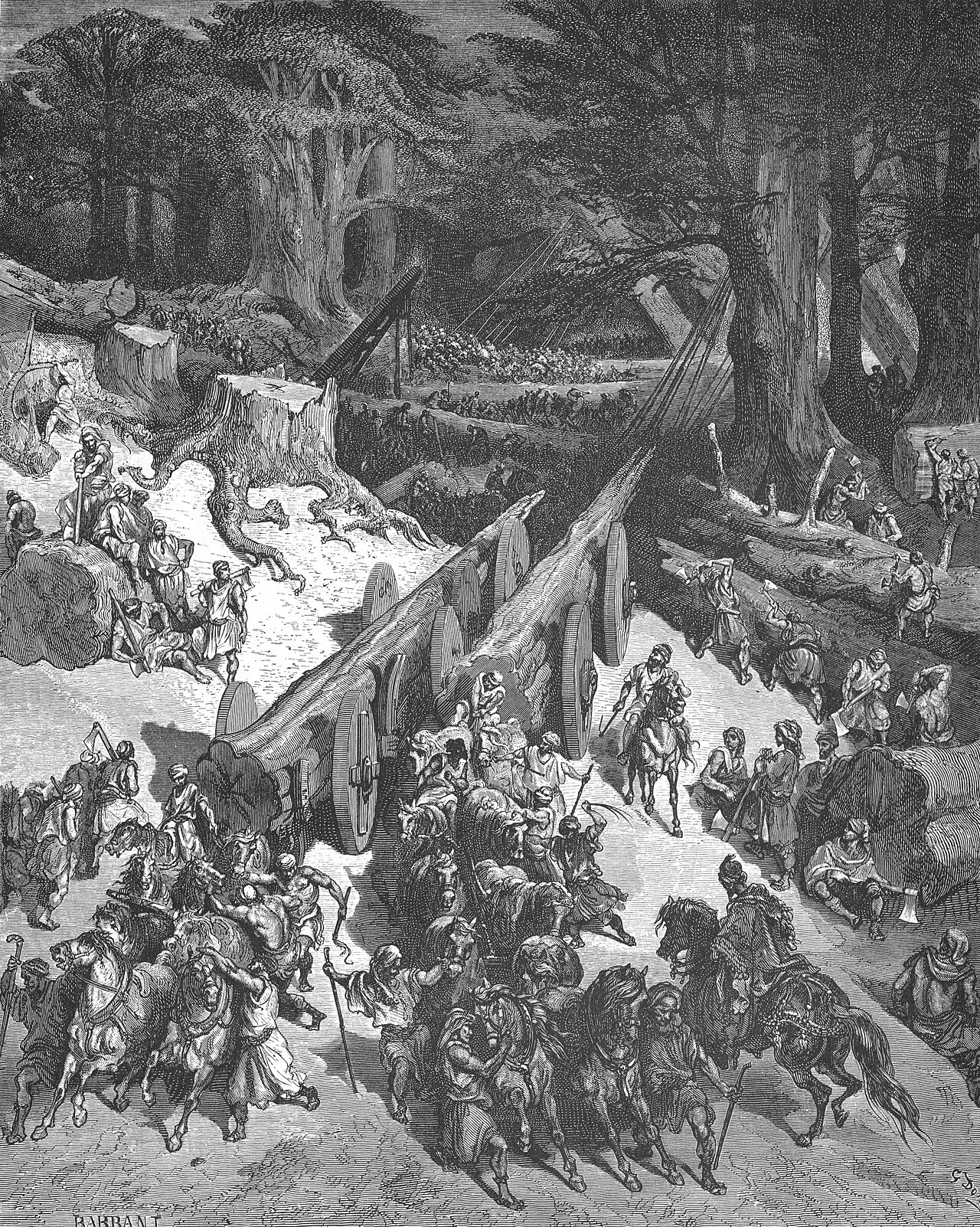
in 1 Kings 5Then King Solomon conscripted a labor force of 30,000 men from all Israel.
BSB
The same verse in ASV and KJV ▾
ASV
And king Solomon raised a levy out of all Israel; and the levy was thirty thousand men.
KJV
And king Solomon raised a levy out of all Israel; and the levy was thirty thousand men.
⋯
This verse in 1 Kings 5
Commentary
10 notes on this verseA commentator
Albert Barnes1798–1870
Notes, Explanatory and Practical, on the Old and New Testaments (1832-1869)
A levy out of all Israel - This was, apparently, the first time that the Israelites had been called upon to perform forced labor, though it had been prophesied 1Sa 8:16. David had bound to forced service “the strangers” 1Ch 22:2; but hitherto the Israelites had escaped. Solomon now, in connection with his proposed work of building the temple, with the honor of God as an excuse, laid this burden upon them.
This site's exposition
king Solomon raised a levy
on 1 Kings 5:13-14
Barnes notes what the text does not say outright, that this is apparently the first time Israelites themselves are put under a forced levy, the very thing Samuel warned of at 1 Samuel 8:11-17 when the people asked for a king. Solomon rotates the thirty thousand a month in Lebanon and two months at home under Adoniram, a real mercy in the terms, yet it is Israelite men, not only the conquered peoples of 9:20-22, standing in the muster for the first time. The northern elders will name this same levy by memory at 12:4, asking Rehoboam to lighten the grievous service his father laid on them; the seed is planted here, chapters and a generation before it splits the kingdom.
The record, by era
The Medieval Church1 voice
The first thing to note here is that it was not for nothing that Solomon chose workmen from all Israel, nor was there any section of the people from which men fit for such a great task were not taken, because, of course, priests nowadays …
The Puritans and the Awakening4 voices
If it seem strange, that so many thousands should be employed about so small a building as the temple was; it must be considered, 1. that the temple, all its parts being considered, was far larger than men imagine; 2. that it is probable, they were employed by turns, as the thirty thousand were, ver. 14, else they had been oppressed with hard and uninterrupted labours.
It is here said of Hiram their king that he was ever a lover of David; and we have reason to think he was a worshipper of the true God, and had himself renounced, though he could not reform, the idolatry of his city.
It was temple service, yet Solomon takes care that they shall not be over-worked. Great men ought to consider that their servants must rest as well as they.
And King Solomon raised a levy out of all Israel,.... Not of money, but of men, as follows: and the levy was thirty thousand men; for what purpose, and how they were employed, 1Ki 5:14 shows.
3 more voices on this verse
The Puritans and the Awakening1 voice
All external endowments and advantages shall be made serviceable to the interests of Christ's kingdom. Hiram's reception of, and return to, this message.
The Nineteenth Century2 voices
A commentator
Jamieson, Fausset & Brown1802–1910
Commentary Critical and Explanatory on the Whole Bible (1871)
proposed
Solomon raised a levy out of all Israel--The renewed notice of Solomon's divine gift of wisdom (1Ki 5:12) is evidently introduced to prepare for this record of the strong but prudent measures he took towards the accomplishment of his work.
The levy was thirty thousand men - We find from the following verse that only ten thousand were employed at once, and those only for one month at a time; and having rested two months, they again resumed their labor. These were the persons over whom Adoniram was superintendent, and were all Israelites.
How the passage was read
What the Jewish commentators add
He spoke of trees. Which medical remedy is derived from each [tree], and that a particular tree is best suited for that type of building or to be planted in a particular field.
1 more on this passage, in their own words ▾
Three thousand parables. Three parabolical studies [=אלפים]. It is written three times, “the proverbs of Shlomo,” in the book of Mishlei.
This section is reception history: how the passage was read and kept in the Jewish tradition. Where a reading parts from an essential of the Christian faith, the section says so at that point.
Texts and citation data: Sefaria; each excerpt follows its version’s licence. 4 further sources are cited on this chapter that carry no English text this site may quote or only restate the verse.
The words behind it
11 Hebrew wordsEvery Hebrew word of this verse in the order it stands, with what it means and the door to its own study. The last column counts the times a word stands in the whole Bible: the rarer the word, the more the places it appears belong together.
| Hebrew | Sound | Meaning | Word study | In the Bible |
|---|---|---|---|---|
| וַיַּ֨עַל | vaiyaal | and he raised | H5927 → | 890 times |
| הַמֶּ֧לֶךְ | hamelekh | the king | H4428 → | 2525 times |
| שְׁלֹמֹ֛ה | shelomoh | Solomon | H8010 → | 291 times |
| מַ֖ס | mas | forced labor | H4522 → | 23 times |
| מִכָּל־ | mikol | from all | H3605 → | 5413 times |
| יִשְׂרָאֵ֑ל | yisrael | Israel | H3478 → | 2507 times |
| וַיְהִ֣י | vayhi | and it was | H1961 → | 3559 times |
| הַמַּ֔ס | hamas | the forced labor | H4522 → | 23 times |
| שְׁלֹשִׁ֥ים | sheloshim | thirty | H7970 → | 172 times |
| אֶ֖לֶף | ʾelef | thousand | H505 → | 505 times |
| אִֽישׁ׃ | ʾish | man | H376 → | 1663 times |
וַיַּ֨עַלand he raised
vaiyaalH5927 →890 times
הַמֶּ֧לֶךְthe king
hamelekhH4428 →2525 times
שְׁלֹמֹ֛הSolomon
shelomohH8010 →291 times
מַ֖סforced labor
masH4522 →23 times
מִכָּל־from all
mikolH3605 →5413 times
יִשְׂרָאֵ֑לIsrael
yisraelH3478 →2507 times
וַיְהִ֣יand it was
vayhiH1961 →3559 times
הַמַּ֔סthe forced labor
hamasH4522 →23 times
שְׁלֹשִׁ֥יםthirty
sheloshimH7970 →172 times
אֶ֖לֶףthousand
ʾelefH505 →505 times
אִֽישׁ׃man
ʾishH376 →1663 times
A shaded row is a word that stands 400 times or fewer in the Bible.
The walk
8 stopsEach card is a verse this one points to, and under it the verses that one points to in turn. Where several paths arrive at the same place, that place is listed first: the text keeps returning to it.
Through
1 Kings 9:15This is the account of the forced labor that King Solomon imposed to build the house of the LORD, his own palace, the supporting terraces, and the wall of Jerusalem, as well as Hazor,…
it leads to
- 1 Kings 9:24
As soon as Pharaoh’s daughter had come up from the City of David to the palace that Solomon had built for her, he built the supporting terraces.
- 2 Samuel 5:9
So David took up residence in the fortress and called it the City of David. He built it up all the way around, from the supporting terraces inward.
- Joshua 17:11
Within Issachar and Asher, Manasseh was assigned Beth-shean, Ibleam, Dor (that is, Naphath), Endor, Taanach, and Megiddo, each with their surrounding settlements.
- Joshua 11:1
Now when Jabin king of Hazor heard about these things, he sent word to Jobab king of Madon; to the kings of Shimron and Achshaph;
- Joshua 19:36
Adamah, Ramah, Hazor,
- 1 Kings 9:24
Through
1 Kings 4:6Ahishar was in charge of the palace; and Adoniram son of Abda was in charge of the forced labor.
it leads to
- 2 Samuel 20:24
Adoram was in charge of the forced labor; Jehoshaphat son of Ahilud was the recorder;
- 1 Kings 9:15
This is the account of the forced labor that King Solomon imposed to build the house of the LORD, his own palace, the supporting terraces, and the wall of Jerusalem, as well as Hazor,…
- 1 Kings 12:18
Then King Rehoboam sent out Adoram, who was in charge of the forced labor, but all Israel stoned him to death. And King Rehoboam mounted his chariot in haste and escaped to Jerusalem.
- 2 Samuel 20:24
About 1 Kings
Who and where
1 name in this verse with a page on the site.
This page draws on Adam Clarke, Commentary on the Bible; Albert Barnes, Notes, Explanatory and Practical, on the Old and New Testaments (1832-1869); Albert Barnes, Notes on the Old Testament; Bede, Of the Temple of Solomon 1.3.1; Jamieson, Fausset & Brown, Commentary Critical and Explanatory on the Whole Bible; John Gill, Exposition of the Old Testament (1748-1763); John Wesley, Explanatory Notes upon the Old Testament and Matthew Henry, Commentary on the Whole Bible.