
1 Kings 10:22
in 1 Kings 10For the king had the ships of Tarshish at sea with Hiram’s fleet, and once every three years the ships of Tarshish would arrive bearing gold, silver, ivory, apes, and peacocks.
BSB
The same verse in ASV and KJV ▾
ASV
For the king had at sea a navy of Tarshish with the navy of Hiram: once every three years came the navy of Tarshish, bringing gold, and silver, ivory, and apes, and peacocks.
KJV
For the king had at sea a navy of Tharshish with the navy of Hiram: once in three years came the navy of Tharshish, bringing gold, and silver, ivory, and apes, and peacocks.
⋯
This verse in 1 Kings 10
Commentary
7 notes on this verseA navy of Tharshish - For probable conjectures concerning this place, and the three years’ voyage, see at the end of this, 1Ki 10:29 (note) and the preceding chapter, 1 Kings 9 (note). Apes - קפים kophim; probably a species of monkey rather than ape.
This site's exposition
it was nothing accounted of
on 1 Kings 10:21-22
Silver disappears from daily use because gold has made it common; the narrator states plainly that silver was nothing accounted of in Solomon's days, the same verdict repeated almost word for word at verse 27 over the whole city. The navy of Tharshish, sailing with Hiram's fleet once every three years, brings gold, silver, ivory, apes and peacocks, a cargo list reaching past the Mediterranean trade routes toward India or east Africa by the commentators' reckoning. The Hebrew words for apes and peacocks are themselves loanwords, taken by the older commentators as evidence of the voyage's distant origin.
The record, by era
The Puritans and the Awakening2 voices
For Tharshish was the name of a place upon the sea, famous for its traffick with merchants, and it was a place very remote from Judea, as appears from the three years usually spent in that voyage. But whether it was Spain, where in those times there was abundance of gold and silver, as Strabo and others affirm; or, some place in the Indies, it is needless to determine.
For the king had at sea a navy of Tharshish, with the navy of Hiram,....
The Nineteenth Century3 voices
A commentator
Jamieson, Fausset & Brown1802–1910
Commentary Critical and Explanatory on the Whole Bible (1871)
The ascent to it was by six steps, on each of which stood lions, in place of a railing--while a lion, probably of gilt metal, stood at each side, which, we may suppose from the analogy of other Oriental thrones, supported a canopy. A golden footstool is mentioned (2Ch 9:18) as attached to this throne, whose magnificence is described as unrivalled.
A commentator
Jamieson, Fausset & Brown1802–1910
Commentary Critical and Explanatory on the Whole Bible (1871)
proposed
a navy of Tharshish--Tartessus in Spain. There gold, and especially silver, was obtained, anciently, in so great abundance that it was nothing accounted of in the days of Solomon. But "Tarshish" came to be a general term for the West (Jon 1:3). at sea--on the Mediterranean. once in three years--that is, every third year.
quarantine:debris (2026-07-29) — starts-lowercase
A commentator
Albert Barnes1798–1870
Notes, Explanatory and Practical, on the Old and New Testaments (1832-1869)
proposed
This is given as the reason of the great plentifulness of silver in the time of Solomon. The “navy of Tharshish” (not the same as the navy of Ophir, 1Ki 9:26) must therefore have imported very large quantities of that metal. Tharshish, or Tartessus, in Spain, had the richest silver mines known in the ancient world, and had a good deal of gold also; apes and ivory were produced by the opposite coast of Africa; and, if north Africa did not produce “peacocks,” which is uncertain, she may have produced the birds called here “tukkiyim,” which some translate “parrots,” others “guinea-fowl” - the latter being a purely African bird. The etymology of the Hebrew words here rendered “ivory,” “apes,” and “peacocks,” is uncertain; but even if of Indian origin, the Jews may have derived their first knowledge of ivory, apes, and peacocks, through nations which traded with India, and may thus have got the words into their language long before the time of Solomon. The names once fixed would be retained, whatever the quarter from where the things were procured afterward.
The words behind it
20 Hebrew wordsEvery Hebrew word of this verse in the order it stands, with what it means and the door to its own study. The last column counts the times a word stands in the whole Bible: the rarer the word, the more the places it appears belong together.
| Hebrew | Sound | Meaning | Word study | In the Bible |
|---|---|---|---|---|
| כִּי֩ | ki | for | H3588 → | 4482 times |
| אֳנִ֨י | ʾoni | [the] ship[s] of | H590 → | 7 times |
| תַרְשִׁ֤ישׁ | tarshish | Tarshish | H8659 → | 28 times |
| לַמֶּ֙לֶךְ֙ | lamelekh | [belonged] to the king | H4428 → | 2525 times |
| בַּיָּ֔ם | baiyam | on the sea | H3220 → | 396 times |
| עִ֖ם | ʾim | with | H5973 → | 1050 times |
| אֳנִ֣י | ʾoni | [the] ship[s] of | H590 → | 7 times |
| חִירָ֑ם | chiram | Hiram | H2438 → | 22 times |
| אַחַת֩ | ʾachat | one [time] | H259 → | 971 times |
| לְשָׁלֹ֨שׁ | leshalosh | to three | H7969 → | 432 times |
| שָׁנִ֜ים | shanim | years | H8141 → | 877 times |
| תָּב֣וֹא׀ | tavo' | it came | H935 → | 2568 times |
| אֳנִ֣י | ʾoni | [the] ship[s] of | H590 → | 7 times |
| תַרְשִׁ֗ישׁ | tarshish | Tarshish | H8659 → | 28 times |
| נֹֽשְׂאֵת֙ | noseet | carrying | H5375 → | 656 times |
| זָהָ֣ב | zahav | gold | H2091 → | 389 times |
| וָכֶ֔סֶף | vakhesef | and silver | H3701 → | 403 times |
| שֶׁנְהַבִּ֥ים | shenhabim | ivori<es> | H8143 → | |
| וְקֹפִ֖ים | vekofim | and monkeys | H6971 → | |
| וְתֻכִּיִּֽים׃ | vetukiyim | and apes | H8500 → |
כִּי֩for
kiH3588 →4482 times
אֳנִ֨י[the] ship[s] of
ʾoniH590 →7 times
תַרְשִׁ֤ישׁTarshish
tarshishH8659 →28 times
לַמֶּ֙לֶךְ֙[belonged] to the king
lamelekhH4428 →2525 times
בַּיָּ֔םon the sea
baiyamH3220 →396 times
עִ֖םwith
ʾimH5973 →1050 times
אֳנִ֣י[the] ship[s] of
ʾoniH590 →7 times
חִירָ֑םHiram
chiramH2438 →22 times
אַחַת֩one [time]
ʾachatH259 →971 times
לְשָׁלֹ֨שׁto three
leshaloshH7969 →432 times
שָׁנִ֜יםyears
shanimH8141 →877 times
תָּב֣וֹא׀it came
tavo'H935 →2568 times
אֳנִ֣י[the] ship[s] of
ʾoniH590 →7 times
תַרְשִׁ֗ישׁTarshish
tarshishH8659 →28 times
נֹֽשְׂאֵת֙carrying
noseetH5375 →656 times
זָהָ֣בgold
zahavH2091 →389 times
וָכֶ֔סֶףand silver
vakhesefH3701 →403 times
שֶׁנְהַבִּ֥יםivori<es>
shenhabimH8143 →
וְקֹפִ֖יםand monkeys
vekofimH6971 →
וְתֻכִּיִּֽים׃and apes
vetukiyimH8500 →
A shaded row is a word that stands 400 times or fewer in the Bible.
The walk
8 stopsEach card is a verse this one points to, and under it the verses that one points to in turn. Where several paths arrive at the same place, that place is listed first: the text keeps returning to it.
Through
Psalms 72:10May the kings of Tarshish and distant shores bring tribute; may the kings of Sheba and Seba offer gifts.
it leads to
- Isaiah 60:6
Caravans of camels will cover your land, young camels of Midian and Ephah, and all from Sheba will come, bearing gold and frankincense and proclaiming the praises of the LORD.
- Psalms 68:29
Because of Your temple at Jerusalem kings will bring You gifts.
- Isaiah 49:7
Thus says the LORD, the Redeemer and Holy One of Israel, to Him who was despised and abhorred by the nation, to the Servant of rulers: “Kings will see You and rise, and princes…
- Psalms 45:12
The Daughter of Tyre will come with a gift; men of wealth will seek your favor.
- 1 Kings 10:1
Now when the queen of Sheba heard about the fame of Solomon concerning the name of the LORD, she came to test him with difficult questions.
- Isaiah 60:6
Through
1 Kings 22:48Jehoshaphat built ships of Tarshish to go to Ophir for gold, but they never set sail, because they were wrecked at Ezion-geber.
it leads to
- 1 Kings 9:26
King Solomon also assembled a fleet of ships at Ezion-geber, which is near Eloth in Edom, on the shore of the Red Sea.
- 1 Kings 9:26
Through
Psalms 48:7With a wind from the east You wrecked the ships of Tarshish.
it leads to
- Jeremiah 18:17
I will scatter them before the enemy like the east wind. I will show them My back and not My face in the day of their calamity.”
- 1 Kings 22:48
Jehoshaphat built ships of Tarshish to go to Ophir for gold, but they never set sail, because they were wrecked at Ezion-geber.
- Jeremiah 18:17
Where this verse is studied
On this page
Studies1
About 1 Kings
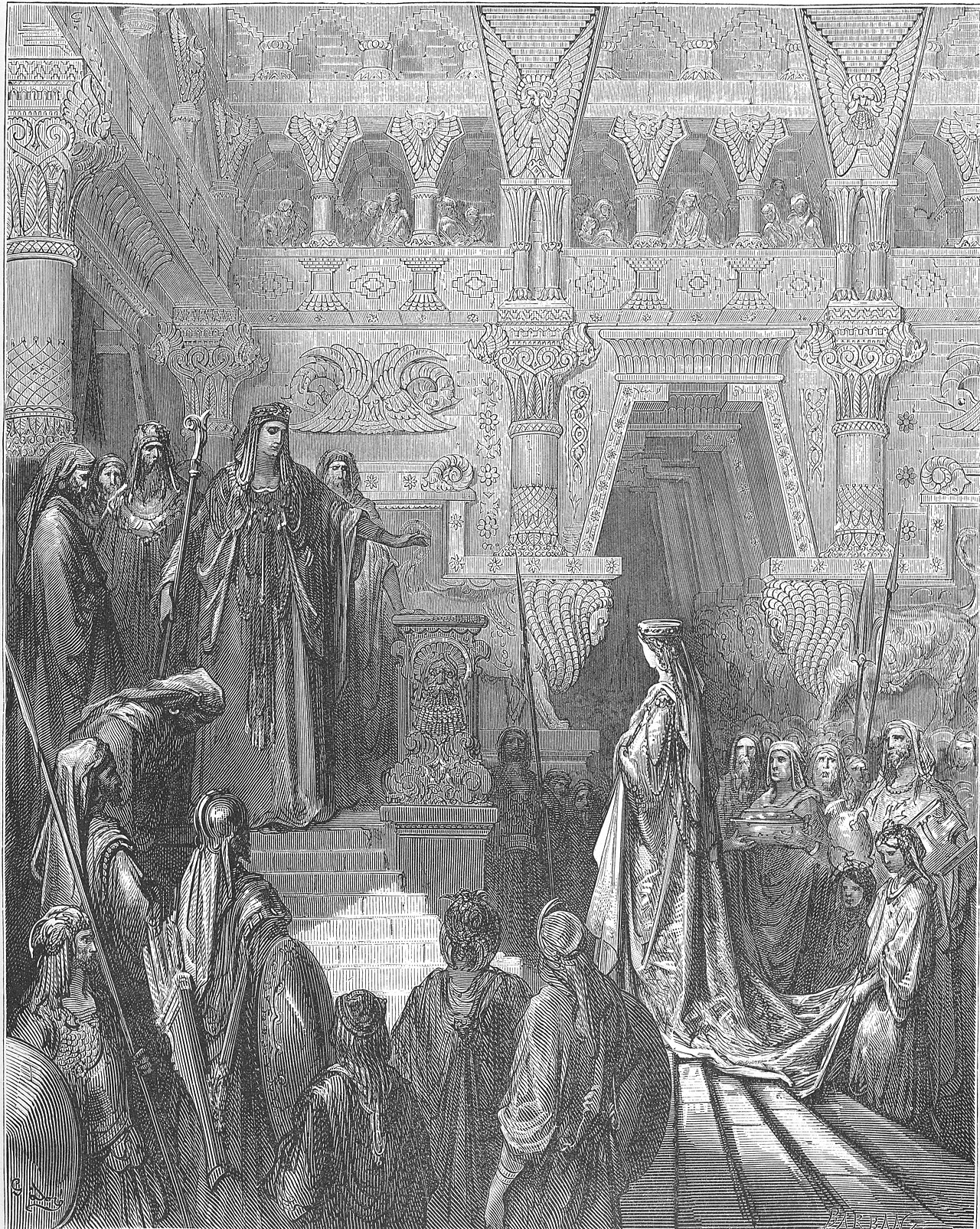
This page draws on Adam Clarke, Commentary on the Bible; Albert Barnes, Notes on the Old Testament; Albert Barnes, Notes, Explanatory and Practical, on the Old and New Testaments (1832-1869); Jamieson, Fausset & Brown, Commentary Critical and Explanatory on the Whole Bible; John Gill, Exposition of the Old Testament (1748-1763); John Wesley, Explanatory Notes upon the Old Testament and Keil, The Books of the Kings.