
Psalm 85
13 verses · Communal lament
I will listen to what God the LORD will say; for He will surely speak peace to His people and His saints; He will not let them return to folly.
Introduction
The sons of Korah, the Unfinished Return, Book 3: The crisis of the throne, Poetry, Psalms Overview.
The sons of Korah wrote this prayer for the whole people, most likely in the years after the first exiles came home from Babylon. They had been given what they prayed for, and it had turned out smaller and harder than they hoped. The psalm stands in that gap, thanking God for what He has already done and asking Him to finish it. Listen for the change in tense between the opening lines and the middle, and then for a single voice that answers the prayer. Read it as a prayer for people whose answered prayers left them still waiting.
Context
- Who
- People who got what they prayed for and found it smaller than they expected
- What
- A prayer of the whole people that thanks God for a restoration and asks Him to complete it.
- Where
- The land of Judah, rebuilt in part, with short harvests and a modest temple
- When
- Most likely the years after the first return from Babylon in 538 BC, though the psalm states no date.
- Why
- To teach a disappointed generation to keep asking God for the whole of what He had begun.
Historical context
The psalm is headed for the sons of Korah, the sanctuary's gatekeepers and singers, so it was written for public worship. It gives no date, and its own tenses place it: it opens by saying that God has shown favour to the land, restored Jacob and forgiven the people, and then asks Him to turn and put away His displeasure, so something good has happened and has not settled everything. The natural fit is the generation that came home from Babylon under the Persian decree and found a ruined city, a modest temple, hostile neighbours and poor crops, which is what the prophets of that period describe, though other readers take the restoration more broadly and the psalm does not say. The meeting of loving devotion and faithfulness, and the kiss of righteousness and peace, is a scene from a road, where travellers who met embraced and kissed in greeting. In Israel's law the fertility of the land was tied to the covenant, so a thin harvest was read as a message, and asking for the land to yield its increase was asking for the whole arrangement to work again.
Significance
To people home from exile and quietly disappointed by it, this song said that the return had begun and was unfinished. Asking whether God will revive them again is a prayer for more than the ruins they had managed to rebuild, and it taught a shrunken generation to keep asking for the whole thing.
This chapter in Jewish lifeWhat this chapter is in Jewish life and reading.
How it is read
Rashi reads the psalm's opening verbs as a condition rather than a report. If God has brought back the captivity of Jacob and forgiven the iniquity and turned from His anger, then the land is appeased and the world with it. While He has not done so the land waits (Rashi on Psalms 85:2:1). That reading puts the whole psalm in the mouth of a people still waiting. Verse 7 follows it, asking whether God will at last return and revive them as He promised through the prophet (Rashi on Psalms 85:7:1). The listening of verse 9 he reads as a privilege to be earned, to hear God speak peace to His people (Rashi on Psalms 85:9:1). The four qualities of verses 11 and 12, which meet and kiss, he divides between earth and heaven. Israel speaks truth below, and kindness from heaven comes to meet it, and the charity done on earth is what heaven looks down upon (Rashi on Psalms 85:11:1 and 85:12:1). The good God gives in verse 13 he keeps plain, the opening of the treasury of heaven for rain so that the land yields its produce (Rashi on Psalms 85:13:1). Ibn Ezra, Radak and Metzudat David stand in the corpus on this psalm fifteen times between them, cited by reference alone. Rashi is quoted here from the Judaica Press complete Tanach with Rashi, translated by A. J. Rosenberg, under CC-BY.
What the rabbis say
The corpus records forty places where the Midrash and the Talmud draw on this psalm, cited here by reference. Verse 12, truth springing from the earth, is drawn into the Babylonian Talmud at Bava Batra 11a:3, and verse 11, where kindness and truth meet, into Avot DeRabbi Natan 37:8 and Bereshit Rabbah 8:5. Verse 14 stands at Berakhot 14a:16 and Midrash Tehillim 5:5. Verse 3, on the forgiven iniquity, is read in the Jerusalem Talmud at Peah 1:1:57, Sanhedrin 10:1:7 and Shevuot 1:6:11, and at Kohelet Rabbah 4:6:1. Verse 9, on the peace God speaks, is carried into Midrash Tanchuma, Nasso 17:1 and 25:1, and into Devarim Rabbah 5:15. Midrash Tehillim treats the psalm at 85:1 and cites its verses at 44:1.
Sources: Rashi, Rashi on Psalms 85:2 to 85:14, the Judaica Press complete Tanach with Rashi, translated by A. J. Rosenberg, CC-BY, 1040 to 1105; Babylonian Talmud, Bava Batra 11a:3 and Berakhot 14a:16, cited by reference; Jerusalem Talmud, Peah 1:1:57, Sanhedrin 10:1:7 and Shevuot 1:6:11, cited by reference; Avot DeRabbi Natan, 37:8, cited by reference; Midrash Tehillim, 85:1, 44:1 and 5:5, cited by reference; The Sefaria corpus, scripts/data/sources/sefaria/psalms/85.json, fetched 2026-09-19, 2026.
Psalms 85:1-3
You showed favor to Your land: Every verb in these three verses is a finished act: favor shown, Jacob restored, iniquity forgiven, sin covered, anger turned away. The land is named first and the people's guilt second. The prayer of verse 4 rests on that record.
Psalms 85:1
“You have blessed, O Lord, Your land. This is spoken of the coming of the Savior. This properly according to the history; but according to the tropology, after we have spoken of the history, we shall discourse afterwards. You have blessed, O Lord, Your land. This we have said of the coming of the Savior. The land which had offended You, which had been defiled with idolatries, was saved when You came. You have blessed, O Lord, Your land. Let the sinner speak, and then, having obtained pardon: You have blessed, O Lord, Your land.”
Jerome · written before 420 · Homily 17, on Psalm 84patristic
1 more voice on this verseWhat preachers and commentators have said about this verse, in their own words.
Psalms 85:1
“Lord, thou hast been favourable unto thy land. The self existent, all sufficient Jehovah is addressed: by that name he revealed himself to Moses when his people were in bondage, by that name he is here pleaded with. It is wise to dwell upon that view of the divine character which arouses the sweetest memories of his love. Sweeter still is that dear name of "Our Father, "with which Christians have learned to commence their prayers.”
Charles Spurgeon · The Treasury of David, Vol. 4 (1874)Particular Baptist
You covered all their sin: Adam Clarke rendered forgave as bore or carried away, an allusion to the scapegoat. Albert Barnes found the same pair of words at Psalm 32:5. Matthew Henry noted that when God covers the sin of His people, He covers it all.
Psalms 85:2
“You have remitted the iniquity of Your people. No one remits anything except what is owed. You have covered all their sins. You have covered them with virtues, and therefore the sins do not appear. For example, You have covered iniquity with righteousness, You have covered unchastity with chastity, You have covered blackness with whiteness.”
Jerome · written before 420 · Homily 17, on Psalm 84patristic
1 more voice on this verse
Psalms 85:2
IN THESE two texts we have man's covering, which is worthless and culpable, and God's covering, which is profitable, and worthy of all acceptation. No sooner had man disobeyed his Maker's will in the garden of Eden than he discovered, to his surprise and dismay, that he was naked, and he set about at once to make himself a covering. It was a poor attempt which our first parents made, and it proved a miserable failure. "They sewed fig-leaves together."
Charles Spurgeon · written before 1892 · The Metropolitan Tabernacle Pulpit, Sermon No. 3500: “Two Coverings and Two Consequences” (lightly modernized text, CCEL edition)Particular Baptist
You withheld all Your fury: Adam Clarke read withheld as gathered up, so the fury is collected and carried away with the sin of verse 2. Charles Spurgeon saw the order. Once the sin was removed, the anger was removed with it.
Psalms 85:3
“Thou hast taken away all thy wrath. Having removed the sin, the anger is removed also. How often did the longsuffering of God take away from Israel the punishments which had been justly laid upon them! How often also has the Lord's chastising hand been removed from us when our waywardness called for heavier strokes! Thou hast turned thyself from the fierceness of thine anger. Even when judgments had been most severe, the Lord had in mercy stayed his hand. In mid volley he had restrained his thunder.”
Charles Spurgeon · The Treasury of David, Vol. 4 (1874)Particular Baptist
1 more voice on this verse
Psalms 85:3
“You have mitigated all your wrath, you have turned away from the wrath of your indignation. See what penance avails: it holds off the imminent wrath of God.”
Jerome · written before 420 · Homily 64, on Psalm 84 (Alternate Series)patristic
Psalms 85:4-7
Restore us, O God of our salvation: The psalm turns to the present and asks God to restore the people and put His displeasure away. Two questions follow, whether the anger will last forever and run through all generations. The end named is joy in God.
Psalms 85:4
“Turn us, O God of our salvations. See what he says. You, for Your part, have turned away from wrath on account of Your clemency. Turn us, O God. You have turned away from wrath; turn us away from sins. Turn us, O God of our salvations. Why did he not say, "of our salvation," but, "of our salvations"? If we sinned but once, we would need one salvation. We have sinned in many things, therefore we need many salvations.”
Jerome · written before 420 · Homily 17, on Psalm 84patristic
1 more voice on this verse
Psalms 85:4
“Turn us, O God of our salvation. This was the main business. Could the erring tribes be rendered penitent all would be well. It is not that God needs turning from his anger so much as that we need turning from our sin; here is the hinge of the whole matter. Our trials frequently arise out of our sins, they will not go till the sins go. We need to be turned from our sins, but only God can turn us: God the Saviour must put his hand to the work: it is indeed a main part of our salvation.”
Charles Spurgeon · The Treasury of David, Vol. 4 (1874)Particular Baptist
Will You draw out Your anger: Albert Barnes took draw out as prolong, and saw in it a settled purpose to keep the anger going. Adam Clarke heard a generation that had inherited its fathers' suffering. The questions set the anger of the present against the anger turned away in verse 3.
Psalms 85:5
“Wilt thou be angry with us for ever? See how the psalmist makes bold to plead. We are in time as yet and not in eternity, and does not time come to an end, and therefore thy wrath! Wilt thou be angry always as if it were eternity? Is there no boundary to thine indignation? Will thy wrath never have done? And if for ever angry, yet wilt thou be angry with us, thy favoured people, the seed of Abraham, thy friend?”
Charles Spurgeon · The Treasury of David, Vol. 4 (1874)Particular Baptist
Will You not revive us again: Albert Barnes gave the Hebrew as will You not turn and make us live, so again is God's own turning back. Revive means to bring to life, as if the nation were dead. Augustine credited both the turning and the life to God.
Psalms 85:6
“Wilt thou not revive us again? Hope here grows almost confident. She feels sure that the Lord will return in all his power to save. We are dead or dying, faint and feeble, God alone can revive us, he has in other times refreshed his people, he is still the same, he will repeat his love. Will he not? Why should he not? We appeal to him—Wilt thou not? That thy people may rejoice in thee.”
Charles Spurgeon · The Treasury of David, Vol. 4 (1874)Particular Baptist
Show us Your loving devotion: The prayer asks to see what the people had lost sight of. Charles Spurgeon put it plainly: they had seen God's anger and now asked to see His loving devotion. Albert Barnes took salvation here as rescue from their present trouble.
Psalms 85:7
“Show us, O Lord, your mercy, and give us your salvation. What in Latin is called "salvation" (salutare), in Hebrew is called "Jesus." Therefore in Hebrew it is said thus: Show us, O Lord, your mercy, and give us your salvation: Unless you first be merciful toward the human race, your Jesus will not be given to us.”
Jerome · written before 420 · Homily 64, on Psalm 84 (Alternate Series)patristic
1 more voice on this verse
Psalms 85:7
“They pray that God would, graciously to them and gloriously to himself, appear on their behalf: " Grant us thy salvation; grant it by thy promise, and then, no doubt, thou wilt work it by thy providence." Note, The vessels of God's mercy are the heirs of his salvation; he shows mercy to those to whom he grants salvation; for salvation is of mere mercy.”
Matthew Henry · Commentary on the Whole Bible (1707-1721)puritan
Psalms 85:8-9
what God the LORD will say: The prayer stops and listens. The word coming is peace for His people, with a guard on it, that they will not go back to folly. Glory in verse 9 is kavod, a word that plainly means weight, and it is to dwell in the land.
Psalms 85:8
“Will speak - What answer God will give to my prayers. Peace - He will give an answer of peace. Saints - Not to all that are called God's people, but only to those who are truly such.”
John Wesley · Explanatory Notes upon the Old Testament (1765)evangelical
2 more voices on this verse
Psalms 85:8
I will hear what the Lord God will speak in me. Many think, when Moses speaks and says, "Thus says the Lord," and Isaiah, and the rest, and when it is said, "The word of the Lord came to Isaiah" or "to Ezekiel the prophet," that the speech comes from outside, and that the prophet hears through these ears of his what is spoken by the Lord. It is not so. Indeed, what does our Lord Himself say to the Pharisees and the Jews? "He who has ears to hear, let him hear."
Jerome · written before 420 · Homily 17, on Psalm 84patristic
Psalms 85:8
“I will hear what God the Lord will speak. When we believe that God hears us, it is but natural that we should be eager to hear him. Only from him can come the word which can speak peace to troubled spirits; the voices of men are feeble in such a case, a plaister far too narrow for the sore; but God's voice is power, he speaks and it is done, and hence when we hear him our distress is ended.”
Charles Spurgeon · The Treasury of David, Vol. 4 (1874)Particular Baptist
His salvation is near: The nearness is promised to those who fear Him. Adam Clarke read the glory dwelling in the land as worship restored and the temple rebuilt. Matthew Henry saw it reach further, to the Messiah who came and dwelt among His people.
Psalms 85:9
Nevertheless his salvation is near to those who fear him. See what he says. Those who fear the Lord have the Lord near, since fear does not yet possess perfection: "For perfect love casts out fear." Therefore we who love the Lord have him not nearby, but within. "For I will dwell in them, and walk among them, and I will be their God, and they shall be my people." That glory may dwell in our land. This is the land of which he says in another place, "The earth has given its fruit."
Jerome · written before 420 · Homily 64, on Psalm 84 (Alternate Series)patristic
3 more voices on this verse
Psalms 85:9
“Surely his salvation is nigh them that fear him. Faith knows that a saving God is always near at hand, but only (for such is the true rendering) to those who fear the Lord, and worship him with holy awe. In the gospel dispensation this truth is conspicuously illustrated. If to seeking sinners salvation is nigh, it is assuredly very nigh to those who have once enjoyed it, and have lost its present enjoyment by their folly; they have but to turn unto the Lord and they shall enjoy it again.”
Charles Spurgeon · The Treasury of David, Vol. 4 (1874)Particular Baptist
Psalms 85:9
“And the psalmist might well say this salvation was nigh, because the seventy weeks determined by Daniel were begun. Glory - The glorious presence of God, and the God of glory himself, even Christ, who is the brightness of his father's glory.”
John Wesley · Explanatory Notes upon the Old Testament (1765)evangelical
Psalms 85:9
“They are here termed "them that fear him"; and grace produces glory (Ps 84:11).”
Jamieson, Fausset & Brown · Commentary Critical and Explanatory on the Whole Bible (1871)reformed
Psalms 85:10-11
Loving devotion and faithfulness: The four words are chesed and emet, covenant kindness and faithfulness, then righteousness and peace, drawn as people who meet and kiss. Verse 11 puts one on the ground and one in heaven, faithfulness sprouting from the earth and righteousness looking down. Augustine read the meeting as happening in Christ.
Psalms 85:10
Mercy and truth have met each other: justice and peace have kissed. Mercy and truth have met. I see two things, which by coming together and meeting become one. Justice and peace have kissed. All this is fitted to the mystery of the Lord and Savior: this is the Son of God and of man, who is for us truth, mercy, peace, and justice, in whom the justice of the former people and the mercy of the latter are joined together into one peace. "For he himself," says the Apostle, "is our peace, who has made both one."
Jerome · written before 420 · Homily 64, on Psalm 84 (Alternate Series)patristic
3 more voices on this verse
Psalms 85:10
“Mercy and truth are met together. In answer to prayer, the exulting psalmist sees the attributes of God confederating to bless the once afflicted nation. Mercy comes hand in hand with Truth to fulfil the faithful promise of their gracious God; the people recognise at once the grace and the veracity of Jehovah, he is to them neither a tyrant nor a deceiver. Righteousness and peace have kissed each other. The Lord whose just severity inflicted the smart, now in pity sends peace to bind up the wound.”
Charles Spurgeon · The Treasury of David, Vol. 4 (1874)Particular Baptist
Psalms 85:10
“In him who is both our salvation and our glory mercy and truth have met together; God's mercy and truth, and his righteousness and peace, have kissed each other; that is, the great affair of our salvation is so well contrived, so well concerted, that God may have mercy upon poor sinners, and be at peace with them, without any wrong to his truth and righteousness.”
Matthew Henry · Commentary on the Whole Bible (1707-1721)puritan
Psalms 85:10
“God's promises of "mercy" will be verified by His "truth" (compare Ps 25:10; 40:10); and the "work of righteousness" in His holy government shall be "peace" (Isa 32:17). There is an implied contrast with a dispensation under which God's truth sustains His threatened wrath, and His righteousness inflicts misery on the wicked.”
Jamieson, Fausset & Brown · Commentary Critical and Explanatory on the Whole Bible (1871)reformed
Faithfulness sprouts from the earth: Sprouts is the word used of plants, Albert Barnes noted. Charles Spurgeon saw God's promises as buried seeds that would come up in a harvest, which verse 12 goes on to name. In his picture, righteousness leans out of heaven's window to watch a people who have turned back.
Psalms 85:11
“Truth shall spring out of the earth. Promises which lie unfulfilled, like buried seeds, shall spring up and yield harvests of joy; and men renewed by grace shall learn to be true to one another and their God, and abhor the falsehood which they loved before. And righteousness shall look down from heaven, as if it threw up the windows and leaned out to gaze upon a penitent people, whom it could not have looked upon before without an indignation which would have been fatal to them. This is a delicious scene.”
Charles Spurgeon · The Treasury of David, Vol. 4 (1874)Particular Baptist
2 more voices on this verse
Psalms 85:11
“Truth has sprung up out of the earth. "I am the way and the truth and the life." He who said, I am the truth, has sprung up out of the earth. What is this truth, which has sprung up out of the earth? "There shall come forth a rod out of the root of Jesse, and a flower shall rise up from his root." And in another place: "For God has wrought salvation in the midst of the earth." What do you say, Manichaean, who deny that the Savior had flesh?”
Jerome · written before 420 · Homily 17, on Psalm 84patristic
Psalms 85:11
“Earth and heaven shall abound with the blessings of this government; 12, 13. and, under this, the deserted land shall be productive, and men be "set," or guided in God's holy ways. Doubtless, in this description of God's returning favor, the writer had in view that more glorious period, when Christ shall establish His government on God's reconciled justice and abounding mercy.”
Jamieson, Fausset & Brown · Commentary Critical and Explanatory on the Whole Bible (1871)reformed
Psalms 85:12-13
will indeed provide what is good: The stanza comes down to a harvest, the land yielding its increase. Righteousness walks ahead of God in verse 13 and makes the road ready for His steps. The last picture is God walking a prepared road.
Psalms 85:12
“Yea, the Lord shall give that which is good. Being himself pure goodness, he will readily return from his wrath, and deal out good things to his repenting people. Our evil brings evil upon us, but when we are brought back to follow that which is good, the Lord abundantly enriches us with good things. Material good will always be bestowed where it can be enjoyed in consistency with spiritual good. And our land shall yield her increase. The curse of barrenness will fly with the curse of sin.”
Charles Spurgeon · The Treasury of David, Vol. 4 (1874)Particular Baptist
1 more voice on this verse
Psalms 85:12
“For indeed the Lord will give kindness. For this reason these kisses were given, that the Lord might give kindness. And our land will give its fruit. What was promised at that time, we now see fulfilled. Our land gives its fruit, when it is tilled with the plow of justice, when by fastings, when by abstinence and the other virtues it is uprooted from its old vices, so that it may render the grain of the gospel seed which it received into a hundredfold fruit.”
Jerome · written before 420 · Homily 64, on Psalm 84 (Alternate Series)patristic
prepare the way for His steps: Charles Spurgeon saw the path as a track God's people follow behind Him. Matthew Henry and Albert Barnes heard in it the work of John the Baptist. He preached righteousness ahead of Christ and prepared His way.
Psalms 85:13
“All these things, indeed, we have said concerning the mercy of the Lord, since He came for this purpose, to save the human race. Nevertheless we ought to know that He Himself is to judge the living and the dead, He Himself will come to judge. Righteousness shall walk before Him. Do not be negligent: Righteousness shall walk before Him. And He shall set His steps in the way. See what it says, His steps: where there are no stones, where there are no thorns and thistles, where the way is level, where He can walk, where He cannot stumble.”
Jerome · written before 420 · Homily 17, on Psalm 84patristic
2 more voices on this verse
Psalms 85:13
“Righteousness shall go before him; and shall set us in the way of his steps. God's march of right will leave a track wherein his people will joyfully follow. He who smote in justice will also bless in justice, and in both will make his righteousness manifest, so as to affect the hearts and lives of all his people. Such are the blessings of our Lord's first advent, and such shall be yet more conspicuously the result of his second coming. Even so, come Lord Jesus.”
Charles Spurgeon · The Treasury of David, Vol. 4 (1874)Particular Baptist
Psalms 85:13
“Christ, the sun of righteousness, shall bring us to God, and put us into the way that leads to him. John Baptist, a preacher of righteousness, shall go before Christ to prepare his way. Righteousness is a sure guide both in meeting God and in following him.”
Matthew Henry · Commentary on the Whole Bible (1707-1721)puritan
How this psalm is built
The form: A psalm of the sons of Korah, under whose title Jerome says nothing sorrowful stands, as Jerome classes it.
The patterns in this chapter
| Device | What it does | Where to see it |
|---|---|---|
| The past tense that fills the first three verses | Verses 1 to 3 are six completed acts laid end to end: You showed favour, You restored, You forgave, You covered, You withheld Your fury, You turned from Your anger. Nothing is asked for until verse 4. The psalm establishes a record before it makes a request. | Psalm 85:1, Psalm 85:2, Psalm 85:3 |
| The pause before the answer | Verse 8 breaks the prayer to say that the speaker will listen to what God the LORD will say. Everything from verse 9 to verse 13 is what he hears. The psalm marks the turn from asking to receiving with one sentence and changes its whole grammar after it. | Psalm 85:8, Psalm 85:9 |
| The four qualities that meet | Verses 10 and 11 pair four terms twice over: loving devotion with faithfulness, righteousness with peace, then faithfulness sprouting from the earth with righteousness looking down from heaven. The second pairing crosses the first, since the two terms that met on the ground are now set one below and one above. | Psalm 85:10, Psalm 85:11 |
| Restore, said of the past and then asked for | Verse 1 says that God restored Jacob from captivity. Verse 4 asks Him to restore us. The same act stands once as a finished fact and once as a petition, and the psalm's argument is the distance between the two uses. | Psalm 85:1, Psalm 85:4 |
The psalm is the third of the second Korah collection, Psalms 84 to 88, and it shares with Psalm 84 the sense of a people whose relation to God is settled and whose circumstances are not. Psalm 84 wants to be at the sanctuary; Psalm 85 wants the land to be what it was.
8 more paragraphs on the patterns
Inside the psalm the pattern is a reversal of direction between verses 10 and 11. In verse 10 the four qualities meet each other on level ground, loving devotion with faithfulness and righteousness with peace. In verse 11 two of the same words are separated and given opposite positions, faithfulness sprouting up from the earth and righteousness looking down from heaven. What was a meeting becomes a traffic between two places, and verse 12 puts a harvest at the end of it.
The last verse gives the whole movement its direction. Righteousness goes before Him to prepare the way for His steps, which makes the four qualities of verse 10 into an approach rather than a tableau.
The New Testament's use
No verse of Psalm 85 is quoted in the New Testament. Verse 9, that His salvation is near to those who fear Him so that His glory may dwell in our land, stands close to the language of John 1:14 about the Word dwelling among us, and the fathers read the two together. The psalm is not cited by chapter and verse anywhere in the New Testament.
The debated point
Which restoration verse 1 refers to is disputed and the psalm does not say. The phrase about restoring Jacob from captivity is read by many of the commentators of the return from Babylon, which makes the psalm a prayer from the unfinished stage of that return. Others read the same phrase more generally, of any turning of the nation's fortunes, on the ground that the Hebrew idiom is used of reversals that have nothing to do with exile. The psalm names no king, no empire and no year, and the argument it makes works on either reading, since what it asks is that the God who has done this once do it again.
Where to go deeper
The return the psalm may be praying from is set out at the exile and return. The peace of verse 8 and the qualities of verse 10 stand with justice and righteousness and reconciliation. The glory of verse 9 is set out at the glory departed.
Keep studying
People and groups1
Sources for this chapter
The summary
Jamieson, Fausset & Brown, Commentary Critical and Explanatory; John Calvin, Commentaries; John Wesley, Notes on the Old Testament and Matthew Henry, Complete Commentary.
The form and classifications
Charles Spurgeon, The Treasury of David, Vol. 4, 1874, on Psalm 85:8; Jerome, Homily on Psalm 84, 420 and Matthew Henry, Commentary on the Whole Bible, 1710, on Psalm 85:1.
The exposition
Adam Clarke, Commentary on the Bible; Albert Barnes, Notes on the Book of Psalms; Augustine, Expositions on the Psalms; Augustine of Hippo, Expositions on the Psalms; Charles Spurgeon, The Treasury of David; Franz Delitzsch, Biblical Commentary on the Psalms; John Calvin, Commentary on the Book of Psalms; John Gill, Exposition of the Old Testament and Matthew Henry, Commentary on the Whole Bible.
The painting
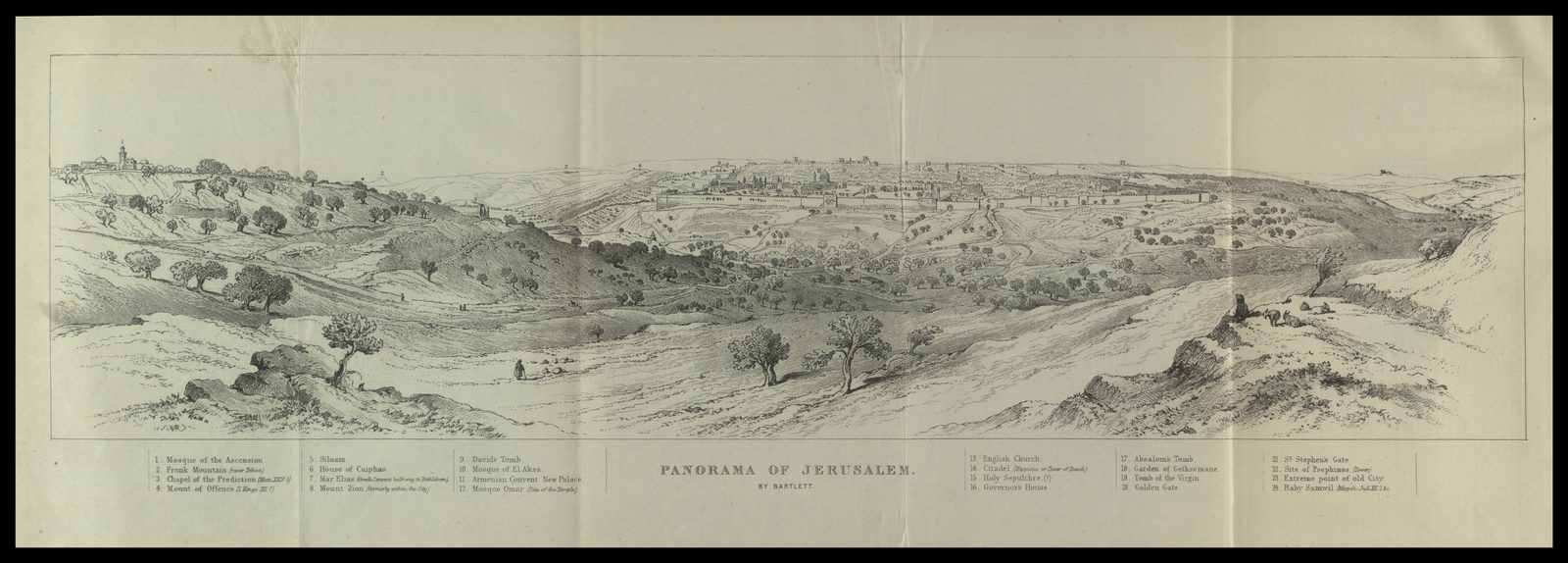
Panorama of Jerusalem. William Henry Bartlett, not stated on the file page. Wikimedia Commons. Public domain.