
Psalm 129
8 verses · Song of Ascents, community psalm of trust
The LORD is righteous; He has cut me from the cords of the wicked.
Introduction
Author unstated, the Plowed Back, Book 5: The return and the great Hallelujah, Poetry, Psalms Overview.
This psalm names no writer, and the one who speaks in it is the nation of Israel looking back over its whole history of being attacked. It was sung by pilgrims walking up to a city that had been destroyed and rebuilt. The first half tells the story of survival and the second half asks that the enemies of Zion come to nothing. Listen for the farming pictures, a ploughed field, a grassy roof and a harvest greeting held back.
Context
- Who
- Israelites who could list, generation by generation, the powers that had tried to destroy them
- What
- A song in which Israel recounts a long history of attack and asks that those who hate Zion wither.
- Where
- The land of Israel, pictured as a ploughed field and a village roof.
- When
- Undated; its look back over the nation's whole history fits the years after the exile.
- Why
- To let a much attacked nation say that its enemies have not prevailed.
Historical context
No name stands in the heading. The speaker is the nation itself, so the youth of verse 1 means Israel's early history, and the nation's youth means Egypt. An ancient plough was a wooden beam with an iron point dragged by oxen, cutting long parallel furrows through the dirt. The plowmen on the back picture a scourged man and a nation used as farmland by whoever owned it that century. Roofs were beams covered with brush and a thick layer of packed earth, and after the rains that earth sprouted a green fuzz that withered in days. Passers by called out a blessing to reapers in a field as ordinary courtesy, and Ruth 2:4 records Boaz and his harvesters exchanging it.
Significance
Pilgrims walking up to a city that had been sacked and rebuilt were singing a survival song, that they have not prevailed against me. The bitterness is handed over to God. The enemies are left to wither on their own roof, and the singers keep walking toward the temple.
This chapter in Jewish lifeWhat this chapter is in Jewish life and reading.
What is done
Psalm 129 is the tenth of the fifteen Songs of Ascents, sung within the collection whose setting this site records at /featured/psalms-of-ascent from Mishnah Middot 2:5 and Mishnah Sukkah 5:4. The psalm speaks for a people afflicted from its youth, and the rabbinic locators on it turn almost entirely toward Egypt, which is where Jewish reading has placed the affliction it names.
How it is read
The corpus holds three comments of Rashi on this chapter, and all three are on wording rather than on doctrine. He reads the furrow of the third verse against the measure used in the book of Samuel, glosses the withering of the rooftop grass in the sixth as a withering that happens before the grass is plucked, and reads the word for the reaper's arm in the seventh against its use in Isaiah and Nehemiah, giving the Old French word for the armpit beside it. Radak comments on seven verses, Ibn Ezra on six, Metzudat David on six and Malbim on two. The corpus holds no English version of any of theirs on this chapter under a licence permitting quotation, so they stand as citations: Radak on Psalms 129:1:1, Ibn Ezra on Psalms 129:1:1, Metzudat David on Psalms 129:1:1, Malbim on Psalms 129:1:1.
What the rabbis say
The corpus records twenty-seven locators on this chapter, twenty-one Midrash and six Talmud. The opening line about affliction from youth is taken up at Midrash Tehillim 129:1, Bereshit Rabbah 79:2, Midrash Tanchuma, Eikev 3:1 and a run of eight passages in Aggadat Bereshit. The third verse, where plowmen plow on the back of the afflicted, is the verse the rabbis worked hardest, and they took it to Egypt: the locators there include Shemot Rabbah 1:12, Shemot Rabbah 1:13, Pirkei DeRabbi Eliezer 1:1, Sifra, Bechukotai, Chapter 3 6 and Sotah 11b:8. The closing lines about the reaper and the passer-by are taken up at Jerusalem Talmud Peah 3:6:2, Jerusalem Talmud Sheviit 5:4:7 and Jerusalem Talmud Gittin 5:10:6. The corpus carries each of these as a locator without text.
Sources: Rashi, Rashi on Psalms 129:3:1, 129:6:1 and 129:7:1, the Judaica Press complete Tanach with Rashi, translated by A. J. Rosenberg, CC-BY; Radak, Radak on Psalms 129:1:1, cited only, no English version in the corpus; Ibn Ezra, Ibn Ezra on Psalms 129:1:1, cited only; Metzudat David, Metzudat David on Psalms 129:1:1, cited only; Malbim, Malbim on Psalms 129:1:1, cited only; Midrash, Midrash Tehillim 129:1, Bereshit Rabbah 79:2, Midrash Tanchuma, Eikev 3:1, Shemot Rabbah 1:12 and 1:13, Pirkei DeRabbi Eliezer 1:1, Sifra, Bechukotai, Chapter 3 6; Babylonian Talmud, Sotah 11b:8; Jerusalem Talmud, Peah 3:6:2, Sheviit 5:4:7 and 4:3:3, Gittin 5:10:6, Avodah Zarah 4:10:4; Mishnah, Middot 2:5 and Sukkah 5:4, as /featured/psalms-of-ascent records them; MannaFest, the Songs of Ascents, at /featured/psalms-of-ascent, 2026.
Psalms 129:1-2
they have persecuted me: Israel is told to declare it. The clause about being persecuted from youth stands in verse 1 and again in verse 2 with no change. Many a time is the psalm's own count, and the second time the line ends with they have not prevailed.
Psalms 129:1
“Many a time have they afflicted me from my youth, may Israel now say. In her present hour of trial she may remember her former afflictions and speak of them for her comfort, drawing from them the assurance that he who has been with her for so long will not desert her in the end. The song begins abruptly. The poet has been musing, and the fire burns, therefore speaks he with his tongue; he cannot help it, he feels that he must speak, and therefore "may now say" what he has to say.”
Charles Spurgeon · The Treasury of David, Vol. 7 (1885)Particular Baptist
1 more voice on this verseWhat preachers and commentators have said about this verse, in their own words.
Psalms 129:1
They often attacked me from my youth — let Israel now say — they often attacked me from my youth. Two things are said: both that they often attacked me, and that they attacked me from my youth. If I, for example, at forty years of age, in the middle of my life, should begin to serve the Lord, I cannot say, "They have attacked me from my youth." But what do I say? "They have slain me from my youth, they have wounded me from my youth, they have trampled me from my youth."
Jerome · written before 420 · Homily 43, on Psalm 128patristic
but they have not prevailed against me: The verb for prevailed means to be able: many a time they persecuted Israel from youth, and never once were they able. Genesis 32:28 uses the same verb when Jacob is named Israel, who struggled with God and with men and prevailed. Spurgeon tied the persecuted nation to that wrestler.
Psalms 129:2
“Many a time have they afflicted, me from my youth. Israel repeats her statement of her repeated afflictions. The fact was uppermost in her thoughts, and she could not help soliloquizing upon it again and again. These repetitions are after the manner of poetry: thus she makes a sonnet out of her sorrows, music out of her miseries. "Yet they have not prevailed against me." We seem to hear the beat of timbrels and the clash of cymbals here: the foe is derided; his malice has failed.”
Charles Spurgeon · The Treasury of David, Vol. 7 (1885)Particular Baptist
Psalms 129:3-4
The plowmen plowed over my back: The back is treated as a field. One Hebrew root gives both the plowmen and their plowing, and the word for a furrow stands only twice in the Hebrew Bible. Verse 4 answers the long furrows with a righteous LORD who chopped off the cords of the wicked.
Psalms 129:3
“The plowers plowed up on my back. The scourgers tore the flesh as ploughmen furrow a field. The people were maltreated like a criminal given over to the lictors with their cruel whips; the back of the nation was scored and furrowed by oppression. It is a grand piece of imagery condensed into few words. A writer says the metaphor is muddled, but he is mistaken: there are several figures, like wheel within wheel, but there is no confusion.”
Charles Spurgeon · The Treasury of David, Vol. 7 (1885)Particular Baptist
The LORD is righteous: Spurgeon called the LORD is righteous the hinge of Israel's distress. He set the cut cords beside Psalm 124:7, where the net is torn and Israel escapes like a bird. Henry read the LORD as righteous both in keeping Israel as He promised and in repaying those who persecuted it.
Psalms 129:4
“The Lord is righteous. Whatever men may be, Jehovah remains just, and will therefore keep covenant with his people and deal out justice to their oppressors. Here is the hinge of the condition: this makes the turning point of Israel's distress. The Lord bears with the long furrows of the wicked, but he will surely make them cease from their ploughing before he has done with them. He hath cut asunder the cords of the wicked.”
Charles Spurgeon · The Treasury of David, Vol. 7 (1885)Particular Baptist
1 more voice on this verse
Psalms 129:4
“Righteous - Faithful or merciful. The cords - Wherewith the plow was drawn.”
John Wesley · Explanatory Notes upon the Old Testament (1765)evangelical
Psalms 129:5-8
all who hate Zion: Israel asks God to turn back everyone who hates Zion. Spurgeon read the rooftop grass as growth with no earth or moisture under it, up and gone before a reaper could fill his hand. Verse 8 withholds the harvest greeting of Ruth 2:4.
Psalms 129:5
“It is true, they brought their troubles upon themselves by their sins; it was for them that God punished them; but it was for the peculiarity of their covenant, and the singularities of their religion, that their neighbours hated and persecuted them.”
Matthew Henry · Commentary on the Whole Bible (1707-1721)puritan
like grass on the rooftops: Gill described grass on flat rooftops, which withers in the sun before it can grow. Isaiah 37:27 gives the same picture for those Assyria overran, grass on the rooftops, scorched before it is grown. Barnes had it wither before any hand pulls it.
Psalms 129:6
“Let them be as the grass upon the housetops,.... The tops of the houses in Judea were flat, and so grass grew upon them, being covered with plaster of terrace; though it was but small and weak, and being on high was exposed to the scorching sun, and soon withered (b); and Menochius says (c) he saw such roofs in the island of Corsica, flat, and having earth upon them, smoothed and pressed, on which grass grew of its own accord; but being burnt up in summertime by the sun, soon withered, as here said.”
1 more voice on this verse
Psalms 129:6
“Let them be as the grass upon the housetops, which withereth afore it groweth up. Grass on the housetop is soon up and soon down. It sprouts in the heat, finds enough nutriment to send up a green blade, and then it dies away before it reaches maturity, because it has neither earth nor moisture sufficient for its proper development. Before it grows up it dies; it needs not to be plucked up, for it hastens to decay of itself. Such is and such ought to be the lot of the enemies of God's people.”
Charles Spurgeon · The Treasury of David, Vol. 7 (1885)Particular Baptist
unable to fill the hands of the reaper: Barnes pictured the reaper grasping with one hand and cutting with the other, and the binder of sheaves, who would fill his arms. The word for arms, the bosom between them, stands only here. Psalm 126:6 ends with sheaves carried home.
Psalms 129:7
“Wherewith the mower filleth not his hand,.... Such grass never rises high enough to be mowed, nor is of that account to have such pains taken with it; nor the quantity so large as to fill a mower's hand, and carry it away in his arms; nor he that bindeth sheaves his bosom; when corn is mowed or reaped, the binders come and gather it up in their arms, and bind it in sheaves, and then bring it into the barn; but nothing of this kind is done with grass on the housetops.”
1 more voice on this verse
Psalms 129:7
“Wherewith the mower filleth not his hand; nor he that bindeth sheaves his bosom. When with his sickle the husbandman would cut down the tufts, he found nothing to lay hold upon: the grass promised fairly enough, but there was no fulfilment, there was nothing to cut or to carry, nothing for the hand to grasp, nothing for the lap to gather. Easterners carry their corn in their bosoms, but in this case there was nothing to bear home. Thus do the wicked come to nothing. By God's just appointment they prove a disappointment.”
Charles Spurgeon · The Treasury of David, Vol. 7 (1885)Particular Baptist
May none who pass by say to them: Psalm 128:5 and Psalm 134:3 bless from Zion, and here that blessing is withheld from all who hate Zion. Henry set 2 John 11 beside it: to wish evildoers well is to share in their evil deeds. The Songs of Ascents end on the blessing from Zion.
Psalms 129:8
“If we wish them God speed, we are partakers of their evil deeds, 2 John 11 . When it is said, None will bless them, and show them respect, more is implied, namely, that all wise and good people will cry out shame on them, and beg of God to defeat them; and woe to those that have the prayers of the saints against them.”
Matthew Henry · Commentary on the Whole Bible (1707-1721)puritan
How this psalm is built
The form: A song of the ascents in which Israel speaks in the first person singular about what was done to it, as Henry classes it.
The patterns in this chapter
| Device | What it does | Where to see it |
|---|---|---|
| The line the congregation says back | Verse 1 gives the clause and the instruction, let Israel now declare, and verse 2 repeats the clause word for word before adding what the first one held back, that they have not prevailed. The congregation says the complaint twice and gets the answer only on the second pass.Matthew Henry, Commentary on the Whole Bible, 1710, on Psalm 129:1. | Psalm 129:1, Psalm 129:2 |
| The back as a field | Verse 3 treats a man's back as ground under the plough. One Hebrew root gives both the plowmen and their plowing, and the word for the furrow they cut stands only twice in the Hebrew Bible. Verse 4 answers the long furrows with a LORD who cut the cords of the wicked.Franz Delitzsch, Biblical Commentary on the Psalms, on Psalm 129:3. | Psalm 129:3, Psalm 129:4 |
| Grass on a roof | Verses 6 and 7 ask that the haters of Zion be like grass on a rooftop. Charles Spurgeon read it as growth with no earth and no moisture under it. It springs up on a flat mud roof after rain and is gone before a reaper could fill his hand or a binder his arms.Charles Spurgeon, The Treasury of David, Vol. 7, 1885, on Psalm 129:6. | Psalm 129:6, Psalm 129:7 |
| The greeting withheld | Verse 8 ends the psalm by refusing a greeting rather than by calling down a blow. The blessing passers by would call to reapers in a field stands at Ruth 2:4, and here nobody says it, because there is no harvest on the roof to say it over.Matthew Henry, Commentary on the Whole Bible, 1710, on Psalm 129:8. | Psalm 129:8 |
The structure
14 more paragraphs on the patterns
Eight verses in two halves of four. Verses 1 to 4 are the memory, opened by a line the congregation says back. Verses 5 to 8 are the prayer against the haters of Zion, and it is built entirely out of a failed harvest.
Verse 1 gives the clause and the instruction, let Israel now declare, and verse 2 repeats the clause word for word before adding what the first one held back, that they have not prevailed. The congregation says the complaint twice and gets the answer only on the second pass.
Verse 3 treats a man's back as ground under the plough. One Hebrew root gives both the plowmen and their plowing, and the word for the furrow they cut stands only twice in the Hebrew Bible.
Across the canon
The opening call stands word for word at Psalm 124:1. There the subject is a single escape and here it is a persecution that never stopped, and the same congregation answers in the same way both times.
The field of this psalm answers the field of Psalm 126. There a man sows in tears and comes back with sheaves, and here the enemies of Zion grow where there is no soil and fill nobody's hands. The collection uses the same farm twice for opposite ends.
The harvest greeting withheld in verse 8 is the greeting given at Ruth 2:4.
In the New Testament
No New Testament writer quotes this psalm.
What is debated
How a Christian prays verses 5 to 8 is the standing question over this psalm and over the other imprecations. One position reads them as prayers handing judgment to God rather than taking it, so that the singer asks for nothing by his own hand; on that reading the psalm is the opposite of revenge. Another reads them as covenant language, the curses of Deuteronomy asked against those who set themselves against the covenant people. A third takes them as belonging to the old covenant and answered in the New by the command to bless those who persecute.
The psalm itself asks for no more than that the haters of Zion come to nothing, and it asks it by describing a crop that fails rather than a punishment that falls. The site's feature page on the imprecatory psalms and on praying the hard psalms sets the positions out in full.
The Songs of Ascents
Psalm 129 is the tenth of the fifteen songs of ascents, and like Psalm 124 it tells Israel to declare its line aloud. Albert Barnes records the reading that takes the title Songs of Degrees from an ascent of thought in these psalms (Notes on the Book of Psalms, on Psalm 124:2). On that reading a line takes up the words of the line before and carries them one step further. Here the step is as plain as anywhere in the collection. Verse 1 says many a time they have persecuted me from my youth. Verse 2 says the same words again and adds the step, but they have not prevailed against me.
Keep studying
Sources for this chapter
The summary
Jamieson, Fausset & Brown, Commentary Critical and Explanatory; John Calvin, Commentaries; John Wesley, Notes on the Old Testament and Matthew Henry, Complete Commentary.
The form and classifications
Albert Barnes, Notes, Explanatory and Practical, on the Old and New Testaments (1832 to 1869), on Psalm 129:2; Charles Spurgeon, The Treasury of David, Vol. 7, 1885, on Psalm 129:6 and Matthew Henry, Commentary on the Whole Bible, 1710, on Psalm 129:1.
The exposition
Albert Barnes, Notes on the Book of Psalms; Charles Spurgeon, The Treasury of David; Franz Delitzsch, Biblical Commentary on the Psalms; Jamieson, Fausset & Brown, Commentary Critical and Explanatory on the Whole Bible; John Gill, Exposition of the Old Testament and Matthew Henry, Commentary on the Whole Bible.
The painting
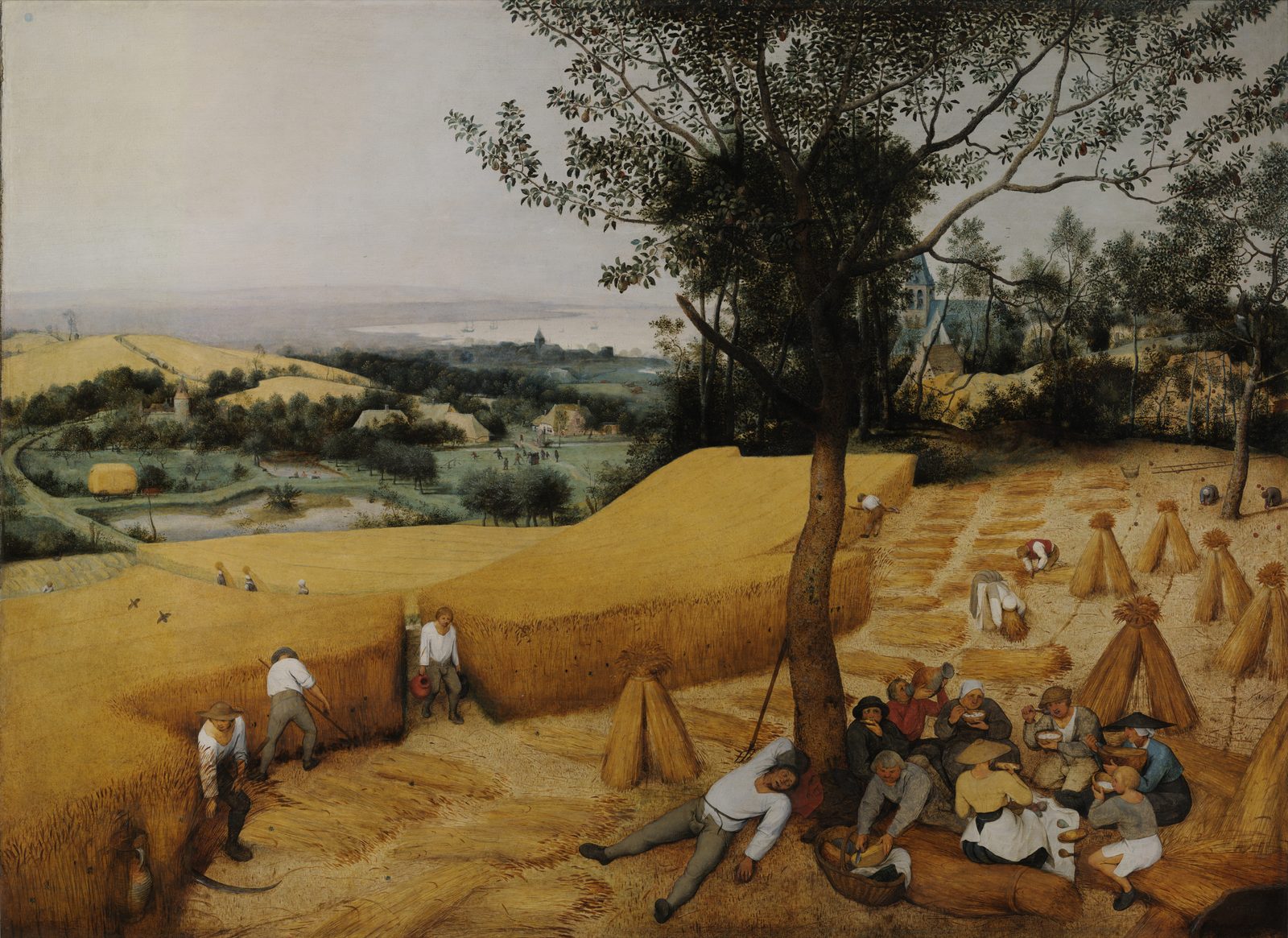
The Harvesters. Pieter Brueghel the Elder, 1565. Wikimedia Commons. Public domain.