
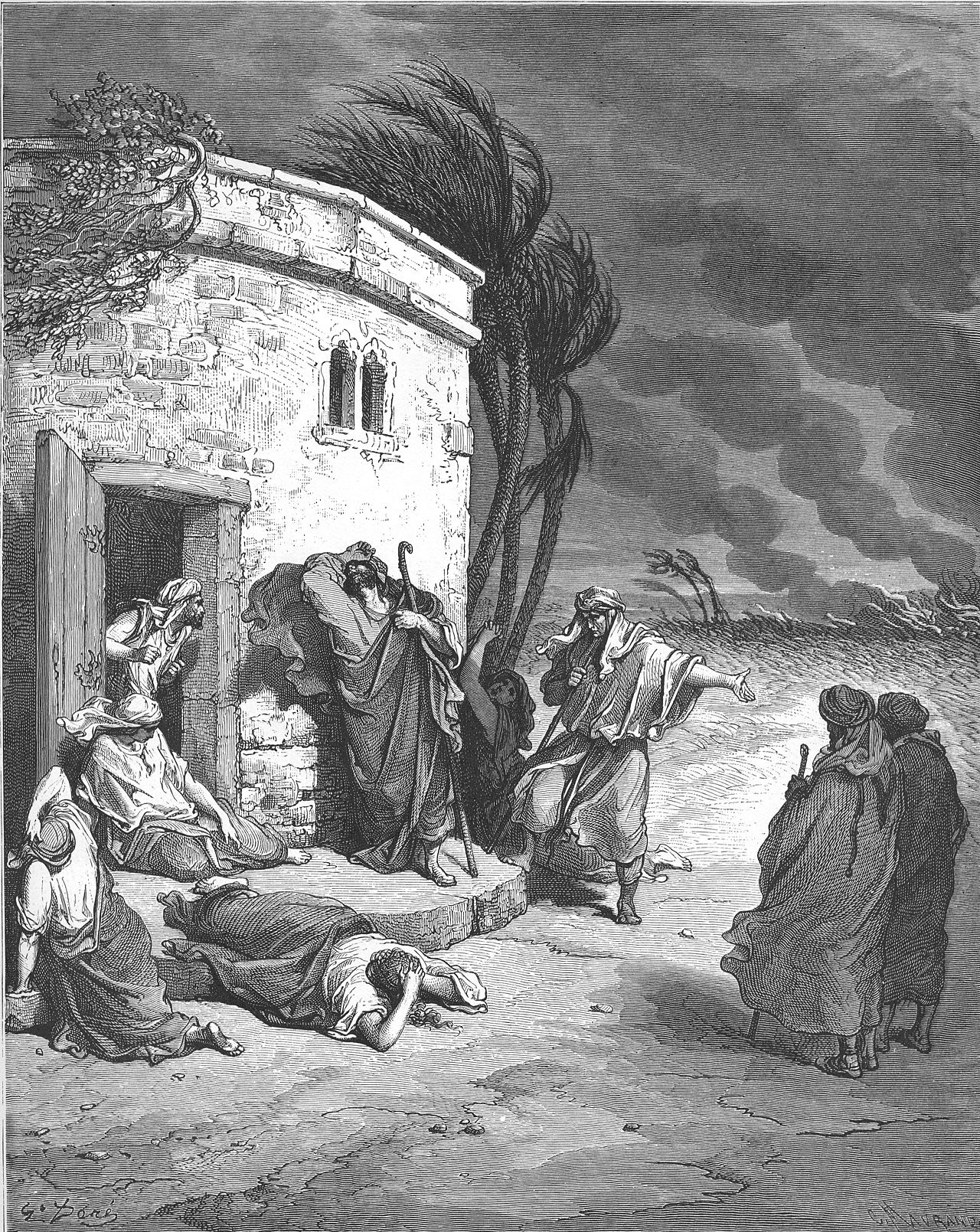
Jobchapter 33
33 verses · unknown · 10th century BC · Wisdom and poetry
The Spirit of God has made me, and the breath of the Almighty gives me life.
Introduction
unknown, Wisdom and poetry, Job Overview.
Elihu now speaks to Job directly and calls him by name. He presents himself as a man formed from clay like Job, an answer to Job's complaint that he could never meet God on equal ground. His hearers believed that a dream could carry a warning and that pain could carry a message. The chapter argues that God does speak, and it names the ways. Listen for the figure of a mediator who stands between God and a man, and for the word ransom. Job has asked for such a mediator since chapter 9.
Context
- Who
- Hearers who believed dreams could carry a message and pain could carry a warning
- What
- Elihu's first argument to Job, that God speaks to people through dreams and through pain.
- Where
- The ash heap outside the town, with Elihu facing Job.
- When
- The book sets Job in the age of the patriarchs, commonly placed about 2000 to 1800 BC, and it gives no date.
- Why
- To answer Job's charge that God will not answer him, and to show how a sufferer is brought back from the Pit.
Historical context
Elihu is the only speaker in the book who calls Job by name, and he opens by putting them on the same footing: I also am formed out of the clay; behold, my terror shall not make thee afraid. That is a direct answer to Job's complaint in chapter 9 that God's overwhelming power made a fair hearing impossible. Elihu offers himself as the human counterpart Job asked for.
Show the rest of the historical context, 3 more paragraphs
His first point is that Job is wrong to say God never answers. God speaks once, and twice, though man does not perceive it. The two channels he names were both taken seriously in that world. The first is the dream or night vision, when deep sleep falls on men, a recognised means of divine warning across the ancient Near East, and one the Bible reports repeatedly. The second is pain: a man chastened on his bed, his appetite gone until his flesh wastes and his bones stick out, drawing near to the grave.
Then Elihu introduces a figure. If there be a messenger with him, an interpreter, one among a thousand, to show a man what is right for him, then God is gracious and says, deliver him from going down to the pit, I have found a ransom. The word for ransom is the ordinary term for the price paid to release someone from a penalty or from slavery, and 'one among a thousand' means a rare and qualified go-between.
The result he describes is physical restoration in the language of that culture: his flesh shall be fresher than a child's, and he shall return to the days of his youth. Then the man prays, sees God's face with joy, and tells other people what happened, the public testimony expected of anyone God had delivered.
Significance
Elihu is the first speaker to suggest that suffering might be God speaking rather than God punishing, that pain can be a warning shouted at a man walking toward a cliff.
Show the rest of the significance, 1 more paragraph
And for hearers, that third figure keeps the book's deepest thread running. Job asked for an umpire, a witness, and a redeemer. Elihu adds a mediator who names a ransom. Nobody in the book fills the role, and the hearers were left with the outline of it.
This chapter in Jewish lifeWhat this chapter is in Jewish life and reading.
What is done
This chapter has no place in the synagogue year. The site's own table in src/lib/hebraic/readings.ts printed parashot total 0 and haftarah uses total 0 for the book of Job, and no festival reading.
The corpus joins it to the study of the Torah portions through the Midrash arranged by them. Under the fifteenth verse it carries Midrash Tanchuma Buber, Balak 10:1. Under the fifteenth verse it carries Midrash Tanchuma, Balak 7:1. Under the fifteenth verse it carries Midrash Tanchuma, Balak 8:1. Under the sixteenth verse it carries Bereshit Rabbati, Parashat Vayera 39. Under the sixteenth verse it carries Midrash Tanchuma, Vayera 6:6. Under the sixteenth verse it carries Midrash Tanchuma, Vayera 6:9. Under the twenty-second verse it carries Midrash Tanchuma Buber, Vayishlach 9:1. Under the twenty-second verse it carries Midrash Tanchuma, Mishpatim 19:5. Under the twenty-third verse it carries Bereshit Rabbati, Parashat Miketz 31. Under the thirty-third verse it carries Midrash Tanchuma, Ki Tavo 3:1. Under the thirty-third verse it carries Midrash Tanchuma, Shemot 25:2.
How it is read
Rashi and Malbim are the two commentators on this chapter whose English the corpus carries. Rashi is quoted from The Judaica Press complete Tanach with Rashi, translated by A. J. Rosenberg, which Sefaria reports as CC-BY. Malbim is quoted from Malbim's Job, trans. Jeremy I. Pfeffer. Ktav, 2003, which Sefaria reports as CC-BY. Malbim marks the turn of the chapter, since Elihu now addresses Job directly (Malbim on Job 33:1:1).
Rashi has Elihu say that the spirit of God made him and he is no stronger than Job (Rashi on Job 33:4:1). Job had asked to debate with one who would not terrify him. So Elihu stands in place of the Holy One, blessed be He, and on His behalf, to speak His words (Rashi on Job 33:6:1). In the seventh verse Rashi glosses the Hebrew word as coercion, from Proverbs 16:26 (Rashi on Job 33:7:1).
Malbim reads the eighth verse as a move in a court. "As is the custom of lawyers, Elihu opens his own argument by summarizing Job’s case against God." (Malbim on Job 33:8:1). Rashi glosses Job's claim to be clean from uses in the Talmud at Bezah 35b and Shabbath 50a, where the verb means to cleanse (Rashi on Job 33:9:1). The pretenses of the tenth verse are pretexts for turning away from the Omnipresent (Rashi on Job 33:10:1). God has more virtues than man and need not be so exact with him (Rashi on Job 33:12:1).
Rashi then reads Elihu's account of how God warns a man. He opens the ear of men as He did to Abimelech in the dream of the night (Rashi on Job 33:16:1). He restrains man in his illness (Rashi on Job 33:17:1). The sword of the eighteenth verse is the weapon of the Angel of Death, and Rashi turns the verse to Job himself. "He brought suffering upon you for your good." (Rashi on Job 33:18:1).
The sick man is reproved so that he repents of his iniquity (Rashi on Job 33:19:1). His soul and his life make him abhor all food (Rashi on Job 33:20:1). His flesh withdraws from sight, a sense Rashi supports from Lamentations 2:11 and Leviticus 26:16 (Rashi on Job 33:21:1).
At the twenty-third verse Rashi reads the intercessor as one among a thousand who testify to the man's guilt, who pleads for him by his uprightness (Rashi on Job 33:23:1). The one who is gracious to him in the next verse is the Omnipresent (Rashi on Job 33:24:1). A Christian reader who brings his own tradition's reading to these two verses should hear Rashi's reading as the Jewish tradition's own.
The corpus carries eight further notes on this chapter without an English text, each marked linked because Sefaria holds no English version of the ref. They stand cited by ref and unquoted. Four stand at Metzudat David on Job 33:2:1, 33:5:1, 33:13:1 and 33:15:1. Four stand at Ibn Ezra on Job 33:3:1, 33:11:1, 33:14:1 and 33:22:1.
What the rabbis say
The corpus carries forty rabbinic locators on this chapter and the text of none, so each is cited and linked here rather than quoted. On the third verse it holds Ein Yaakov (Glick Edition), Pesakhim 1:1, Ein Yaakov, Pesakhim 1:6, Midrash Sekhel Tov, Shemot 12:20:42 and Midrash Tehillim 90:2. On the fourth verse it holds Otzar Midrashim, Midrash Temurah 1:5. On the sixth verse it holds Jerusalem Talmud Yoma 3:4:3. On the ninth verse it holds Otzar Midrashim, Midrashim of Rabbi Akiba, The Small Letters and their Purposes 10.
On the fourteenth verse it holds Bamidbar Rabbah 20:12 and Mekhilta DeRabbi Shimon Ben Yochai, Additions 8:2. On the fifteenth verse it holds Bamidbar Rabbah 20:11, Midrash Tanchuma Buber, Balak 10:1, Midrash Tanchuma, Balak 7:1 and Midrash Tanchuma, Balak 8:1. On the sixteenth verse it holds Bereshit Rabbati, Parashat Vayera 39, Midrash Tanchuma, Vayera 6:6, Midrash Tanchuma, Vayera 6:9 and Midrash Yelamdenu, Selections from Yalkut Talmud Torah 81:1. On the eighteenth verse it holds Bereshit Rabbah 79:3.
On the twenty-second verse it holds Bamidbar Rabbah 11:7, Mekhilta DeRabbi Shimon Ben Yochai, Additions 9:1, Midrash Tanchuma Buber, Vayishlach 9:1 and Midrash Tanchuma, Mishpatim 19:5. On the twenty-third verse it holds Bereshit Rabbati, Parashat Miketz 31, Ein Yaakov (Glick Edition), Shabbat 2:19 and Ein Yaakov, Shabbat 2:28. On the twenty-fourth verse it holds Mekhilta DeRabbi Shimon Ben Yochai 16:14, Mekhilta DeRabbi Yishmael, Tractate Vayassa 4:16 and Midrash Sekhel Tov, Shemot 16:31:6. On the twenty-fifth verse it holds Ein Yaakov (Glick Edition), Nedarim 4:12, Ein Yaakov, Nedarim 4:13 and Midrash Sekhel Tov, Bereshit 24:43:2.
On the twenty-seventh verse it holds Ein Yaakov (Glick Edition), Yoma 8:29, Ein Yaakov, Yoma 8:37 and Jerusalem Talmud Bava Kamma 8:7:3. On the twenty-ninth verse it holds Ein Yaakov (Glick Edition), Yoma 8:20, Ein Yaakov, Yoma 8:28 and Jerusalem Talmud Kiddushin 1:9:4. On the thirtieth verse it holds Avot DeRabbi Natan 34:11. On the thirty-third verse it holds Midrash Tanchuma, Ki Tavo 3:1 and Midrash Tanchuma, Shemot 25:2. What each of them teaches is a saying of the rabbis, and is reported as theirs wherever this site quotes one. The quotations wait on a fetch that carries the text.
Sources: Malbim, Malbim on Job 33:1:1 to 33:8:1, Malbim's Job, trans. Jeremy I. Pfeffer. Ktav, 2003, reported CC-BY; Rashi, Rashi on Job 33:4:1 to 33:24:1, The Judaica Press complete Tanach with Rashi, translated by A. J. Rosenberg, reported CC-BY; Metzudat David, Metzudat David on Job 33:2:1, 33:5:1, 33:13:1 and 33:15:1, cited by ref because the corpus carries no English text; Ibn Ezra, Ibn Ezra on Job 33:3:1, 33:11:1, 33:14:1 and 33:22:1, cited by ref because the corpus carries no English text; The Sefaria corpus, scripts/data/sources/sefaria/job/33.json, the 40 Talmud and Midrash locators of this chapter; The site's own files, src/lib/hebraic/readings.ts, printing no portion, no Haftarah and no festival reading for this book.
The heads below are this chapter's scenes. The numbered points under each are its verses.
Elihu: Behold, I Am Toward God Even as Thou Art
Job 33:1-4
O Job, hear my speech: “But now, O Job, hear my speech” addresses Job by name, the first speaker in the book to do so. Gill reads “My words are from an upright heart” as sincerity against the friends' speeches. Henry notes that Elihu asks only the honest hearing Job had asked of his friends.
Job 33:1
“Wherefore, Job, hear my speeches, and hearken to all my words. Behold, I have opened my mouth; let my tongue speak in my throat. But in the midst of these sentences which he utters, based on solid truth, he again bursts out into words of pride, saying, Wherefore, Job, hear my speeches, and hearken to all my words. Behold, I have opened my mouth; let my tongue speak in my throat.”
Gregory the Dialogist · written before 604 · Morals on the Book of Job, Book XXIIIpatristic
1 more voice on this verseWhat preachers and commentators have said about this verse, in their own words.
Job 33:1
“Wherefore, Job, I pray thee - In the next chapter he addresses the three friends of Job. This is addressed particularly to him. My speeches - Hebrew, “my words” - מלה millâh. This is the usual word in the Aramaen languages to express a saying or discourse, though in Hebrew it is only a poetic form. The meaning is, not that he would address separate speeches, or distinct discourses, to Job, but that he called on him to attend to what he had to say.”
the tip of my tongue: Jamieson, Fausset and Brown read mouth as palate. A man who will open his mouth should first try his words, as the palate tries food, before they reach the tip of his tongue. Aquinas adds that respect for his elders had kept that mouth closed.
Job 33:2
“My tongue hath spoken in my mouth - Margin, “palate.” The meaning is, that since he had ventured to speak, and had actually commenced, he would utter only that which was worthy to be heard. This is properly the commencement of his argument, for all that he had before said was merely an introduction. The word palate - “in my palate” (בחכי bechêkiy) is used here because of the importance of that organ in the act of speaking.”
My words are from an upright heart: Aquinas sets this against Job 19:2, where Job said the friends crushed him with words. These lips speak sincerely what they know. Chrysostom adds that the friends said much the same, yet in another spirit and without the aim of defending God.
Job 33:3
“My words are from my simple heart, and my lips shall speak a pure sentence. To say that speech is simple, is a praise of great weight. But because the haughty possess it not, they assert the more anxiously that they possess it, in order that they may be heard with less apprehension. And they declare that they are going to speak with pure intention, because they are afraid of their wicked duplicity being discovered.”
Gregory the Dialogist · written before 604 · Morals on the Book of Job, Book XXIIIpatristic
the breath of the Almighty: Clarke hears Genesis 2:7 in this verse. The Hebrew for breath is nishmath, the breath God breathed into the first man. Henry adds that the young speaker is the work of the same hand as his elders.
Job 33:4
“The Spirit of God hath made me, and the breath of the Almighty hath given me life. Intending to subjoin truth, he first uttered boastful words, and being about to state the sound opinions he held, he first made known how huge was his swelling. The minds of the arrogant are doubtless so very mad, that even in what they think rightly, they are disfigured by the deformity of their pride. And hence even their sound opinions do not instruct their hearers, because in truth they lead them by their haughty sentiments not to reverence but to despise them.”
Gregory the Dialogist · written before 604 · Morals on the Book of Job, Book XXIIIpatristic
3 more voices on this verse
Job 33:4
The Spirit of God hath made me - Another plain allusion to the account of the creation of man, Gen 2:7, as the words נשמת nishmath, the breath or breathing of God, and תחיני techaiyeni, hath given me life, prove: “He breathed into his nostrils the breath of lives, and he became a living soul.”
Adam Clarke · Commentary on the Bible (1810-1826)evangelical
Job 33:4
“He owns himself unfit to enter into the lists with his seniors, yet he desires they will not despise his youth, for that he is God's workmanship as well as they, made by the same hand, endued with the same noble powers and faculties, and designed for the same great end; and therefore why may not the God that made him make use of his as an instrument of good to Job?”
Matthew Henry · Commentary on the Whole Bible (1707-1721)puritan
Job 33:4
“On the other hand, "the breath of the Almighty hath inspired me" (as Job 32:8); not as English Version, "given me life"; therefore "I am according to thy wish (Job 9:32, 33) in God's stead" to thee; a "daysman," umpire, or mediator, between God and thee. So Elihu was designed by the Holy Ghost to be a type of Jesus Christ (Job 33:23-26).”
Jamieson, Fausset & Brown · Commentary Critical and Explanatory on the Whole Bible (1871)reformed
Job 33:5-7
Refute me if you can: “Refute me if you can; prepare your case and confront me” invites the reply Job could never draw from God. Barnes reads the offer as Elihu posing as the arbiter Job wished for at 9:33, a claim the speech does not fully sustain.
Job 33:5
“If thou canst answer me - The meaning of this verse is this: “The controversy between you and me, if you choose to reply, shall be conducted in the most equitable manner, and on the most equal terms. I will not attempt, as your three friends have done, to overwhelm you with reproaches; nor will I attempt to overawe you as God would do, so that you could not reply.”
formed from clay: Older versions have the speaker stand in God's stead according to Job's wish, and Barnes gives the Hebrew behind wish as mouth. The Berean reads just like you before God. Henry notes that some render the second clause as formed of the same clay.
Job 33:6
“I am according to thy wish in God’s stead: I also am formed out of the clay - Mr. Good, and before him none other that I have seen, has most probably hit the true meaning: - “Behold, I am thy fellow. I too was formed by God out of the clay.” The word כפיך kephicha, which we translate according to thy wish, and which, if Hebrew, would mean like to thy mouth; he considers as pure Arabic, with a Hebrew postfix, (Arabic) kefoo, signifying fellow, equal, like.”
Adam Clarke · Commentary on the Bible (1810-1826)evangelical
2 more voices on this verse
Job 33:6
"I," says Elihu, "am formed out of the clay as well as thou," formed of the same clay, so some read it. It is good for us all to consider that we are formed out of the clay; and well for us it is that those who are to us in God's stead are so, that he speaks to us by men like ourselves, according to Israel's wish upon a full trial, Deut. v. 24 .
Matthew Henry · Commentary on the Whole Bible (1707-1721)puritan
Job 33:6
“Behold, God made me as well as thee, and I am also formed of the same clay; yet let not my wonder terrify thee, and my eloquence be burdensome to thee. What then is meant by Eliu acknowledging the order of his true creation, and not knowing the limits of proper speech? What by his putting himself on a level with Job when created, and setting himself above him when about to speak?”
Gregory the Dialogist · written before 604 · Morals on the Book of Job, Book XXIIIpatristic
my hand be heavy upon you: Barnes explains the offer. Job had longed to bring his case before God, yet feared the divine majesty would overawe him. A man formed from clay holds no such terror, and Clarke adds that an equal could never overawe him.
Job 33:8-12
Surely you have spoken in my hearing: “Surely you have spoken in my hearing” begins Elihu's quotation. He answers, “you are not right in this matter”, “for God is greater than man”. Wesley reads verse 12 as the thesis stated early, the argument still to come, and Henry notes the quotation is fair to Job's words.
Job 33:8
“Surely thou hast spoken - What Elihu speaks here, and in the three following verses, contains, in general, simple quotations from Job’s own words, or the obvious sense of them, as the reader may see by referring to Job 13:27 (note); Job 14:16 (note), and Job 31:4 (note), and also to the notes on those passages.”
Adam Clarke · Commentary on the Bible (1810-1826)evangelical
2 more voices on this verse
Job 33:8
“Those that sin before all rebuke before all. When we hear any thing said that tends to God's dishonour we ought publicly to bear our testimony against it. What is said amiss in our hearing we are concerned to reprove; for you are my witnesses, saith the Lord, to confront the accuser.”
Matthew Henry · Commentary on the Whole Bible (1707-1721)puritan
Job 33:8
“13:23, Job had acknowledged sin; but the general spirit of his words was to maintain himself to be "clean," and to charge God with injustice. He went too far on the opposite side in opposing the friends' false charge of hypocrisy. Even the godly, though willing to confess themselves sinners in general, often dislike sin in particular to be brought as a charge against them.”
Jamieson, Fausset & Brown · Commentary Critical and Explanatory on the Whole Bible (1871)reformed
Barnes and Henry both note that Job never used these exact words about being pure and clean. Job had owned himself a sinner, as at Job 9:20. Wesley says Job claimed only that no transgression of his deserved so severe a punishment from God.
Job 33:9
“Clean - Not absolutely, for he often confesses himself to be a sinner, but no such transgression, as might give God just occasion to punish him so severely, as is implied, where he blames God for finding occasions against him, implying that he had given him none by his sins.”
John Wesley · Explanatory Notes upon the Old Testament (1765)evangelical
He counts me as His enemy: Barnes finds the first clause close to Job's meaning though never quite his words. The charge is that God searches for grounds to oppose him. Henry notes that Job had said outright, in chapter 13, that God counts him as His enemy.
Job 33:10
“Behold, he findeth occasions against me - That is, God. This is not exactly the language of Job, though much that he had said had seemed to imply this. The idea is, that God sought opportunity to oppose him; that he was desirous to find in him some ground or reason for punishing him; that he wished to be hostile to him, and was narrowly on the watch to find an opportunity which would justify his bringing calamity upon him.”
1 more voice on this verse
Job 33:10
“16, 17 , Dost thou not watch over my sin? He counteth me for his enemy; so he had expressly said, ch. xiii. 11 . " He putteth my feet in the stocks, that, as I cannot contend with him, so I may not be able to flee from him;" this he had said, ch. xiii.”
Matthew Henry · Commentary on the Whole Bible (1707-1721)puritan
He puts my feet in the stocks: Both clauses come almost word for word from Job 13:27, as Barnes and Clarke note. Aquinas reads the stocks as a judge binding the accused. A man in the stocks cannot walk his paths or make his defense.
Job 33:11
“He putteth my feet in the stocks - This also is language which Job had used; see Job 13:27. “He marketh all my paths;” in Job 13:27, “Thou lookest narrowly unto all my paths;” see the notes at that verse.”
God is greater than man: Jamieson, Fausset and Brown draw out the reasoning. A God greater than man has no need to watch him as an enemy, as though man were His equal. Henry adds that Job was unjust to God, withholding the acknowledgment of His goodness.
Job 33:12
“This is the thing then in which thou art not justified. I will answer thee, that God is greater than man. Blessed Job had indeed truly said, that he had been scourged without any fault. For he said of himself exactly what the Lord had said of him to the devil, Thou hast moved Me against him to afflict him without cause. But Eliu did not believe, that his fault doing nothing in it, he could be scourged as a matter of grace.”
Gregory the Dialogist · written before 604 · Morals on the Book of Job, Book XXIIIpatristic
1 more voice on this verse
Job 33:12
“Not just - Thou art in the wrong. Greater - Not only in power and majesty, but also in justice, and wisdom, and goodness, and therefore thou dost foolishly, in censuring his judgments, thou castest off that awe and reverence which thou shouldest constantly maintain towards thy sovereign Lord.”
John Wesley · Explanatory Notes upon the Old Testament (1765)evangelical
Job 33:13-15
Why do you complain to Him: Elihu answers: “God speaks in one way and in another, yet no one notices”. Delitzsch reads this as Elihu's first correction, that Job has missed the forms God's speech takes, “a dream, in a vision in the night”. Gill notes dream and vision were ordinary means in the patriarchal world.
Job 33:13
“Why dost thou strive against him? - By refusing to submit to him, and by calling in question his wisdom and goodness. For he giveth not account of any of his matters - Margin, as in Hebrew “answereth not.” The idea is, that it is as useless as it is improper to contend with God. He does his own pleasure, and deals with man as he deems best and right. The reason of his doings he does not state, nor has man any power to extort from him a statement of the causes why he afflicts us.”
1 more voice on this verse
Job 33:13
“He is not bound either to justify his own proceedings or to satisfy our demands and enquiries; his judgments will certainly justify themselves. If we do not satisfy ourselves in them, it is our own fault. It is therefore daring impiety for us to arraign God at our bar, or challenge him to show cause for what he doeth, to say unto him, What doest thou? or, Why doest thou so?”
Matthew Henry · Commentary on the Whole Bible (1707-1721)puritan
Elihu: God Speaketh in a Dream, in a Vision of the Night
in one way and in another: Jamieson, Fausset and Brown, after Umbreit, read the verse as God speaking a second time when no one notices the first. Henry takes it as again and again. Spurgeon compares a father who must speak to his child once more.
Job 33:14
“HOW persevering is Divine love! "God speaks once." I have heard many a father say to his child, "Do not let me have to speak to you again." But the great Father has to speak again and when it is written, "God speaks once, yes twice, yet man perceives it not," we see how great is the stubbornness of the human heart! And we also see the gentleness of Divine love. When Elihu said, "God speaks once, yes twice," he meant that the Lord speaks repeatedly. Divine loving kindness has many voices. God often speaks to us in our childhood.”
Charles Spurgeon · written before 1892 · The Metropolitan Tabernacle Pulpit, Sermon No. 2453: “A Hard Case” (lightly modernized text, CCEL edition)Particular Baptist
1 more voice on this verse
Job 33:14
“This he does once, yea, twice, that is, again and again; when one warning is neglected he gives another, not willing that any should perish. Precept must be upon precept, and line upon line; it is so, that sinners may be left inexcusable.”
Matthew Henry · Commentary on the Whole Bible (1707-1721)puritan
in a vision in the night: Barnes points back to Job 4:12 to 17, where Eliphaz told of a vision in the night. Jamieson, Fausset and Brown separate the deep sleep from lighter slumber. Henry calls the bed a good place for a man to commune with his own heart.
Job 33:15
“In a dream, in a vision of the night, when sleep falleth upon men, and they sleep on their bed. What is meant by the word of God being made known to us in a dream, except that we do not learn the secret things of God, if we are kept awake by worldly desires? For in a dream the outward senses are at rest, and inward objects are discerned. If we wish then to contemplate things within, let us rest from outward engagements.”
Gregory the Dialogist · written before 604 · Morals on the Book of Job, Book XXIIIpatristic
1 more voice on this verse
Job 33:15
“In a dream - This was one of the methods by which the will of God was made known in the early periods of the world; see the notes at Job 4:12-17. And for a fuller account of this method of communicating the divine will, see the introduction to Isaiah, Section 7 (2). In a vision of the night - Notes, Job 4:13; compare the introduction to Isaiah, Section 7 (4). When deep sleep falleth upon men - This may be designed to intimate more distinctly that it was from God.”
Job 33:16-18
He opens their ears: “He opens their ears and terrifies them with warnings” names the purpose of the dream: correction before the act. The goal is “to preserve his soul from the Pit”. Henry reads these verses as a mercy at work in Job's life that Job has not credited, God speaking to prevent.
Job 33:16
“Literally, "sealeth (their ears) to Himself by warnings," that is, with the sureness and secrecy of a seal He reveals His warnings [UMBREIT]. To seal up securely (Job 37:7).”
Jamieson, Fausset & Brown · Commentary Critical and Explanatory on the Whole Bible (1871)reformed
keep him from pride: Gill gives wrongdoing as work, a wicked work a man has begun or planned, as the Targum reads it. Henry and Wesley explain how God keeps him from pride. God sets His majesty before a man, so the man stops admiring himself.
Job 33:17
“That He may withdraw man from the things that he has done, and may deliver him from pride. For what has man done of himself but sin? And it is written, Pride is the beginning of all sin. It is rightly said, then, that when man is withdrawn from what he has done, he is freed from pride. To transgress the commands of our Creator by sin, is to be haughty against Him; because a man casts off, as it were, the yoke of His authority, to Whom he scorns to submit by obedience.”
Gregory the Dialogist · written before 604 · Morals on the Book of Job, Book XXIIIpatristic
2 more voices on this verse
Job 33:17
“Particularly, God does, by this means, hide pride from man, that is, hide those things from him which are the matter of his pride, and take his mind off from dwelling upon them, by setting before him what reason he has to be humble. That he may take away pride from man (so some read it), that he may pluck up that root of bitterness which is the cause of so much sin.”
Matthew Henry · Commentary on the Whole Bible (1707-1721)puritan
Job 33:17
“That he may withdraw a man from his purpose,.... Or "work" (m), his wicked work, as the Targum; either which he has begun upon, or which he designed to do.”
perishing by the sword: Barnes notes that soul in Hebrew often means the self, so the warning keeps the man himself from the Pit. Clarke lists dangers escaped this way, a sudden accident or the sword of an assassin. The dream of Job 33:15 is the means.
Job 33:18
“Rescuing his soul from corruption, and his life from passing to the sword. For every sinner, in consequence of his corruption by sin here, is compelled to pass thither to the sword of punishment; that he may be justly punished in that world, by the very sins in which he delighted in this. We must observe therefore, that God, speaking to us in a dream, delivers us first from corruption, and afterwards from the sword: because in truth He delivers the 'life' of that person from avenging punishment there, whose mind He here withdraws from the allurement of sin.”
Gregory the Dialogist · written before 604 · Morals on the Book of Job, Book XXIIIpatristic
Job 33:19-22
A man is also chastened on his bed: “A man is also chastened on his bed with pain” introduces the second way God speaks, through suffering. Elihu describes it in sickbed terms close to Job's state: “he detests his bread”. Barnes reads the chastening as communication, pain sent as a message, which is Elihu's whole argument in small.
Job 33:19
“He chastens him also with pain upon his bed, and makes all his bones to waste away. By bed, or pallet, or couch in holy Scripture, is understood, sometimes carnal pleasure, sometimes a resting in good works, sometimes temporal rest; for what is meant by what our Lord said in the Gospel to a certain one who was healed, Arise, take up thy bed, and go unto thine house, except that bodily pleasure is signified by bed?”
Gregory the Dialogist · written before 604 · Morals on the Book of Job, Book XXIIIpatristic
2 more voices on this verse
Job 33:19
“He is chastened also with pain - As another means of checking and restraining him from the commission of sin. When the warnings of the night fail, and when he is bent on a life of sin, then God lays him on a bed of pain, and he is brought to reflection there. There he has an opportunity to think of his life, and of all the consequences which must follow from a career of iniquity. This involves the main inquiry before the disputants. It was, why people were afflicted.”
Job 33:19
“When man does not heed warnings of the night, he is chastened, &c. The new thought suggested by Elihu is that affliction is disciplinary (Job 36:10); for the good of the godly. multitude--so the Margin, Hebrew (Keri). Better with the text (Chetib), "And with the perpetual (strong) contest of his bones"; the never-resting fever in his bones (Ps 38:3) [UMBREIT].”
Jamieson, Fausset & Brown · Commentary Critical and Explanatory on the Whole Bible (1871)reformed
he detests his bread: Jamieson, Fausset and Brown read life here as the appetite that sustains life. Clarke recognizes the loathing of food that the sick feel. Henry draws a warning from Proverbs 23 against a love of dainties.
Job 33:20
“His life abhorreth bread - These expressions strongly and naturally point out that general nausea, or loathing which sick persons feel in almost every species of disorder.”
Adam Clarke · Commentary on the Bible (1810-1826)evangelical
1 more voice on this verse
Job 33:20
“This is a good reason why we should not be desirous of dainties, because they are deceitful meat, Prov. xxiii. We may be soon made as sick of them as we are now fond of them; and those who live in luxury when they are well, if ever they come, by reason of sickness, to loathe dainty meat, may, with grief and shame, read their sin in their punishment.”
Matthew Henry · Commentary on the Whole Bible (1707-1721)puritan
his hidden bones protrude: Jamieson, Fausset and Brown mark the reversal. Flesh that once stood out now wastes away from sight, and bones once hidden now protrude. Henry says a few days of sickness can leave a man with ribs that may be counted.
Job 33:21
“His flesh is consumed away, that it cannot be seen - He wastes away. His flesh, once vigorous, beautiful, and fair, now disappears. This is not a mere description of the nature of his sickness, but it is a description of the disciplinary arrangements of God. It is an important part of his affliction, as a part of the discipline, that his flesh vanishes, and that his appearance is so changed that he becomes repulsive to the view. And his bones that were not seen, stick out - His bones were before invisible.”
1 more voice on this verse
Job 33:21
“His flesh once prominent "can no more be seen." His bones once not seen now appear prominent. stick out--literally, "are bare." The Margin, Hebrew (Keri) reading. The text (Chetib) reads it a noun "(are become) bareness." The Keri was no doubt an explanatory reading of transcribers.”
Jamieson, Fausset & Brown · Commentary Critical and Explanatory on the Whole Bible (1871)reformed
the messengers of death: Henry reads the messengers of death as the pangs of death, ready to seize the dying man. Clarke gives the Pit as shachath, corruption. These messengers stand beside the messenger of Job 33:23, one sent for death and one for life.
Job 33:22
“His soul draweth near unto the grave - נפש nephesh, soul, is here taken for the immortal spirit, as it is distinguished from חיה chaiyah, the animal life. The former draws near to the pit, שחת shachath, corruption; perhaps he meant dissipation, considering it merely as the breath. The latter draws near לממתים lamemithim, to the dead; i.e., to those who are already buried.”
Adam Clarke · Commentary on the Bible (1810-1826)evangelical
1 more voice on this verse
Job 33:22
“His soul shall draw near to corruption, and his life to the destroyers. For the soul of every just man when tempted is said to draw near to corruption, when, for fear his virtue should elate him, he is compelled by the rod to feel what he is in his own natural infirmity. He approaches, in truth, to corruption, because he learns that by his own strength he is not far from destruction, in order that he may ascribe not to himself but to the Lord, that he is far from that destruction.”
Gregory the Dialogist · written before 604 · Morals on the Book of Job, Book XXIIIpatristic
Elihu: If There Be an Angel, a Ransom: His Flesh Renewed as a Child's
Job 33:23-24
if there is a messenger on his side: “Yet if there is a messenger on his side, one mediator in a thousand” is the chapter's crux. Gregory and his followers read Christ, others an angel or a human intercessor. Delitzsch places ransom beside the arbiter of 9:33, the witness in heaven of 16:19 and the redeemer of 19:25.
Job 33:23
"One among a thousand" is a man rarely to be found. So Jesus Christ (So 5:10). Elihu, the God-sent mediator of a temporal deliverance, is a type of the God-man Jesus Christ the Mediator of eternal deliverance: "the messenger of the covenant" (Mal 3:1).
Jamieson, Fausset & Brown · Commentary Critical and Explanatory on the Whole Bible (1871)reformed
4 more voices on this verse
Job 33:23
“If there shall be an Angel, speaking for him one of like things to shew the righteousness of man, he will pity him. For who is this Angel, but He who is called by the Prophet, The Angel of mighty counsel? [Is. 9, 6. lxx.] For because to declare is called 'evangelize' in Greek, the Lord in announcing Himself to us is called 'Angel.' [as Is. 63, 9] And he well says, If there shall be a messenger [or Angel] speaking for him; [Rom. 8, 26] because, as the Apostle says, He even intercedes for us.”
Gregory the Dialogist · written before 604 · Morals on the Book of Job, Book XXIVpatristic
Job 33:23
“His business at such a time is to show unto man his uprightness, that is, God's uprightness, that in faithfulness he afflicts him and does him no wrong, which it is necessary to be convinced of in order to our making a due improvement of the affliction: or, rather, it may mean man's uprightness, or rectitude.”
Matthew Henry · Commentary on the Whole Bible (1707-1721)puritan
Job 33:23
“If there be a messenger with him - This part of the speech of Elihu has given rise to scarcely less diversity of opinion, and to scarcely less discussion, than the celebrated passage in Job 19:25-27. Almost every interpreter has had a special view of its meaning, and of course it is very difficult, if not impossible, to determine its true sense.”
Job 33:23
“WHEN God has distinct and definite purposes of mercy towards an individual, He often begins with stern discipline and brings him low by affliction and sorrow. As the good farmer cuts down the trees and makes a clearance of the soil before he sows the grain and prepares for a harvest, so does our God cut down all our goodly cedars, our pleasures, and our pride in order that the heart may be afterwards plowed, broken, harrowed and made ready to receive the good seed of the Word. Elihu describes this preparatory breaking-up process as being brought about by sickness.”
Henry names Jesus Christ as the ransom, both the price and the one who pays it. Gill reports a reading in which the gracious one is a minister at the sickbed who prays, Spare him. Spurgeon notes that God gives His reason here.
Job 33:24
“Then he is gracious unto him - He exercises mercy towards fallen man, and gives command for his respite and pardon. Deliver him from going down to the pit - Let him who is thus instructed, penitent, and afflicted, and comes to me, find a pardon; for: - VI. By an Atonement I have found a ransom - כפר copher, an atonement. Pay a ransom for him, פדעהו pedaehu, that he may not go down to the pit - to corruption or destruction, for I have found out an atonement.”
Adam Clarke · Commentary on the Bible (1810-1826)evangelical
4 more voices on this verse
Job 33:24
“A ransom - Although I might justly destroy him, yet I will spare him, for I have found out a way of ransoming sinners from death, which is the death of my son, the redeemer of the world, and with respect to which I will pardon them that repent and sue for mercy. Observe how God glories in the invention! I have found, I have found a ransom; a ransom for poor, undone sinners!”
John Wesley · Explanatory Notes upon the Old Testament (1765)evangelical
Job 33:24
LET it never be forgotten that in all that God does, He acts from good reasons. You observe that the text, speaking of the sick man, represents God as saying, "Deliver him from going down to the Pit: I have found a ransom." If I understand the passage as relating solely to a sick man and take the words just on the natural common level where some place them, I would still say that the Lord, here, gives a reason why He suspends the operations of pain and disease and raises up the sufferer—"I have found a ransom."
Charles Spurgeon · written before 1892 · The Metropolitan Tabernacle Pulpit, Sermon No. 2505: “Deliverance From the Pit” (lightly modernized text, CCEL edition)Particular Baptist
Job 33:24
“Then he is gracious to him,.... To the sick man; either the messenger or the minister that is with him, who pities his case and prays for him; and by some the following words are supposed to be a prayer of his, "deliver me", &c. since one find in the Gospel there is a ransom for such persons.”
Job 33:24
“Jesus Christ is that ransom, so Elihu calls him, as Job had called him his Redeemer, for he is both the purchaser and the price, the priest and the sacrifice; so high was the value put upon souls that nothing less would redeem them, and so great the injury done by sin that nothing less would atone for it than the blood of the Son of God, who gave his life a ransom for many.”
Matthew Henry · Commentary on the Whole Bible (1707-1721)puritan
Job 33:25-28
his flesh is refreshed like a child’s: The restored man's confession, “I have sinned and perverted what was right”, gives the words Job has refused to speak of himself through the debate. Gill reads “He redeemed my soul from going down to the Pit” as the rescue promised at verse 18 now delivered.
Job 33:25
“His flesh is consumed by punishments, let him return to the days of his youth. For when that first man fell from God, we were driven from the joys of Paradise, and were involved in the miseries of this mortal life; [Gen. 3, 23. 24.] and we feel, by the pain of our punishment, what a grievous fault we committed by the persuasion of the serpent. For having fallen into this state, we have found nothing, out of God, except affliction.”
Gregory the Dialogist · written before 604 · Morals on the Book of Job, Book XXIVpatristic
2 more voices on this verse
Job 33:25
“His flesh shall be fresher than a child’s - Margin, “childhood.” The meaning is obvious. He would be restored again to health. The calamity which had been brought upon him for purposes of discipline, would be removed. This was the theory of Elihu in regard to afflictions, and he undoubtedly meant that it should be applied to Job. If he would now, understanding the nature and design of affliction, turn to God, he would be recovered again, and enjoy the health and rigor of his youth.”
Job 33:25
“This is not always the consequence of a sick man's repentance and return to God, but sometimes it is; and recovery from sickness is a mercy indeed when it arises from the remission of sin; then it is in love to the soul that the body is delivered from the pit of corruption when God casts our sins behind his back, Isa. xxxviii.”
Matthew Henry · Commentary on the Whole Bible (1707-1721)puritan
He prays to God and finds favor: Barnes places this prayer after the sick man grasps the purpose of his affliction and repents. Wesley reads the restored righteousness as God dealing with him as one reconciled through the mediator of Job 33:23. Clarke calls prayer the breath of the new life.
Job 33:26
“He shall pray unto God, and He will be favourable unto him. He says that the Messenger implores first, and man afterwards; for did not the Lord first intercede with the Father through His Incarnation, and pray for our life, our insensibility would never rouse itself to ask for those things which are eternal. But the entreaty of His Incarnation came first, that our awakening from sloth might afterwards follow.”
Gregory the Dialogist · written before 604 · Morals on the Book of Job, Book XXIVpatristic
2 more voices on this verse
Job 33:26
“He shall pray unto God - Being now adopted into the heavenly family, and become a new creature, he shall have the spirit of prayer, which is indeed the very breath and language of the new or spiritual life. He will be favorable unto him - He shall manifest his good will to him; he shall live under the influences of Divine grace.”
Adam Clarke · Commentary on the Bible (1810-1826)evangelical
Job 33:26
“Render - He will deal with him as with one reconciled to him through the mediator, and turning from sin to righteousness.”
John Wesley · Explanatory Notes upon the Old Testament (1765)evangelical
Then he sings before men: Older versions read he looks upon men. Barnes cites Umbreit and Noyes for the reading the Berean follows, a man who sings before men with joy. His words confess that he sinned and perverted what was right, and did not get what he deserved.
Job 33:27
“He looketh upon men - Margin, “or, he shall look upon men, and say, I have sinned.” Umbreit renders this, Nun singt er jubelnd zu den Menschen - “now he sings joyfully among men.” So Noyes, “He shall sing among men, and say.” Prof. Lee “He shall fully consider or pronounce right to men, so that one shall say, I have sinned.” Coverdale, “Such a respect hath he unto men.”
1 more voice on this verse
Job 33:27
“He will look on men, and will say, I have sinned. He would not know himself to be a sinner, if he had not righteousness. For no one detects his own deformity, except when he has begun to be upright. For he who is altogether deformed, cannot perceive what he really is. But he who is conscious that he is a sinner, has begun in some measure to be righteous; and from being righteous, blames his conduct when yet unrighteous.”
Gregory the Dialogist · written before 604 · Morals on the Book of Job, Book XXIVpatristic
Gill reads the Pit two ways, the grave and the place of perdition. Wesley reads the light two ways as well. It is the restored life and also the sight and enjoyment of God.
Job 33:28
“He will deliver his soul from going into the pit,.... Into the pit of the grave; and then the soul is put for the man or for the body; or into the pit of hell or perdition: and his life shall see the light; or he shall live and enjoy outward prosperity here, and the light of eternal happiness hereafter; and so the Targum interprets it of superior light, or the light above, even the inheritance of the saints in light.”
2 more voices on this verse
Job 33:28
“He will deliver his soul - He will do that to every individual penitent sinner which he has promised in his word to do for a lost world - he will deliver his soul from going down to the pit of hell. And his life shall see the light - He shall walk in the light, as Christ is in the light; always enjoying a clear sense of his acceptance through the blood of the Lamb. See another mode of paraphrasing these verses at the end of the chapter.”
Adam Clarke · Commentary on the Bible (1810-1826)evangelical
Job 33:28
“For he hath delivered his soul from going onwards to destruction. Because when Divine Grace goes before us in good works, our free will follows it, we, who yield our consent to God Who delivers us, are said to deliver ourselves; and hence Paul when saying, I laboured more abundantly than they all, [1 Cor. 15, 1] for fear he should seem to ascribe his labours to himself, immediately added, Yet not I, but the grace of God which was with me.”
Gregory the Dialogist · written before 604 · Morals on the Book of Job, Book XXIVpatristic
Job 33:29-30
all these things God does to a man: “Behold, all these things God does to a man, two or even three times” gathers dream and pain into one repeated pattern. Henry reads two or even three times as Elihu's correction of Job's single case, God's dealings being a repeated pattern of mercy.
enlightened with the light of life: Clarke hears Job 33:28 repeated almost word for word. Gill adds Psalm 90:3 and gives bring back as turn away, a man stopped at the edge of the Pit. Aquinas pairs the two halves, rescue from evil and the gift of light.
Job 33:30
“To bring back his soul from the pit - Nearly a repetition of the promise in Job 33:28. To be enlightened with the light of the living - An echo of Psa 56:13: “Thou hast delivered my soul from death, that I may walk before God in the light of the living;” and probably quoted from it.”
Adam Clarke · Commentary on the Bible (1810-1826)evangelical
1 more voice on this verse
Job 33:30
“That he may recal their souls from corruption, and enlighten them with the light of the living. For that is the light of the dying which we behold with our bodily eyes. But they who still live for this world, are in darkness in the light of the dying.”
Gregory the Dialogist · written before 604 · Morals on the Book of Job, Book XXIVpatristic
Job 33:31-33
Pay attention, Job, and listen to me: “Pay attention, Job, and listen to me; be silent, and I will speak” closes the first argument by asking the silence Job demanded of others. Clarke reads “be quiet, and I will teach you wisdom” as courteous and confident, a young man's promise his elders in chapter 32 had doubted.
Job 33:31
“Eliu has uttered great and very powerful words. But it is a characteristic of every boastful person, that, while giving utterance to truths and mysteries, he suddenly blends with them, through pride of heart, some foolish and proud expressions. For he endeavours to please the world without, in that which he thinks with truth; and is soon despoiled of the truth, just as through haughtiness of pride he goes back from what is inward. For, because he seeks to be approved of outwardly as a man of learning, he loses inwardly the fulness of wisdom, in which he was instructed.”
Gregory the Dialogist · written before 604 · Morals on the Book of Job, Book XXIVpatristic
I would like to vindicate you: Jamieson, Fausset and Brown read vindicate as doing Job justice and declaring him innocent if the truth allows it. Henry draws the lesson. A man who rebukes another should hope to see him cleared, and should let him speak up and answer.
Job 33:32
“If thou hast any thing to say - If thou hast any objection to make against what I have already stated, now answer, now speak freely; for it is my desire that thou shouldst stand clear of all charges.”
Adam Clarke · Commentary on the Bible (1810-1826)evangelical
2 more voices on this verse
Job 33:32
“If thou hast anything to say, answer me,.... Any thing to object to what he had delivered, or any answer to return to what he had charged him with: speak, for I desire to justify thee.”
Job 33:32
“If thou hast anything to say, answer me - In the previous verse, Elihu had asked that Job would hear all that he had to say. Yet here, in view of what he had said, he asks of him that if there were any thing from which he dissented, he would now express his dissent. We may suppose that he paused at this part of his speech, and as what he had said related particularly to Job, he felt that it was proper that he should have an opportunity to reply.”
Henry says those who would learn wisdom must listen and keep silent. Job was wise and good, yet he could still grow wiser. Clarke notes that Job stayed silent, and chapter 34 turns to Job and the friends together.
Job 33:33
“If not, hearken to me,.... If he had no objection to make, nor answer to return, then he desires he would attend and listen to what he had further to lay before him: hold thy peace, and I shall teach thee wisdom. For though Job was a wise and good man, he might become wiser and more knowing; and indeed when instruction is given to a wise man, he will be yet wiser, Pro 9:9; and this may be received sometimes from persons inferior in age and abilities.”
Keep studying
Studies2
People and groups1
Sources for this chapter
The summary
Jamieson, Fausset & Brown, Commentary Critical and Explanatory; John Wesley, Notes on the Old Testament and Matthew Henry, Complete Commentary.
The exposition
Adam Clarke, Commentary on the Bible; Albert Barnes; Charles Spurgeon; Franz Delitzsch, Biblical Commentary on the Book of Job; Gregory the Great, Morals on the Book of Job; Jamieson, Fausset & Brown, Commentary Critical and Explanatory on the Whole Bible; John Chrysostom, COMMENTARY ON JOB 33:1-3; John Gill; John Wesley, Explanatory Notes upon the Old Testament; Matthew Henry, Commentary on the Whole Bible and Thomas Aquinas, Commentary on Job.