
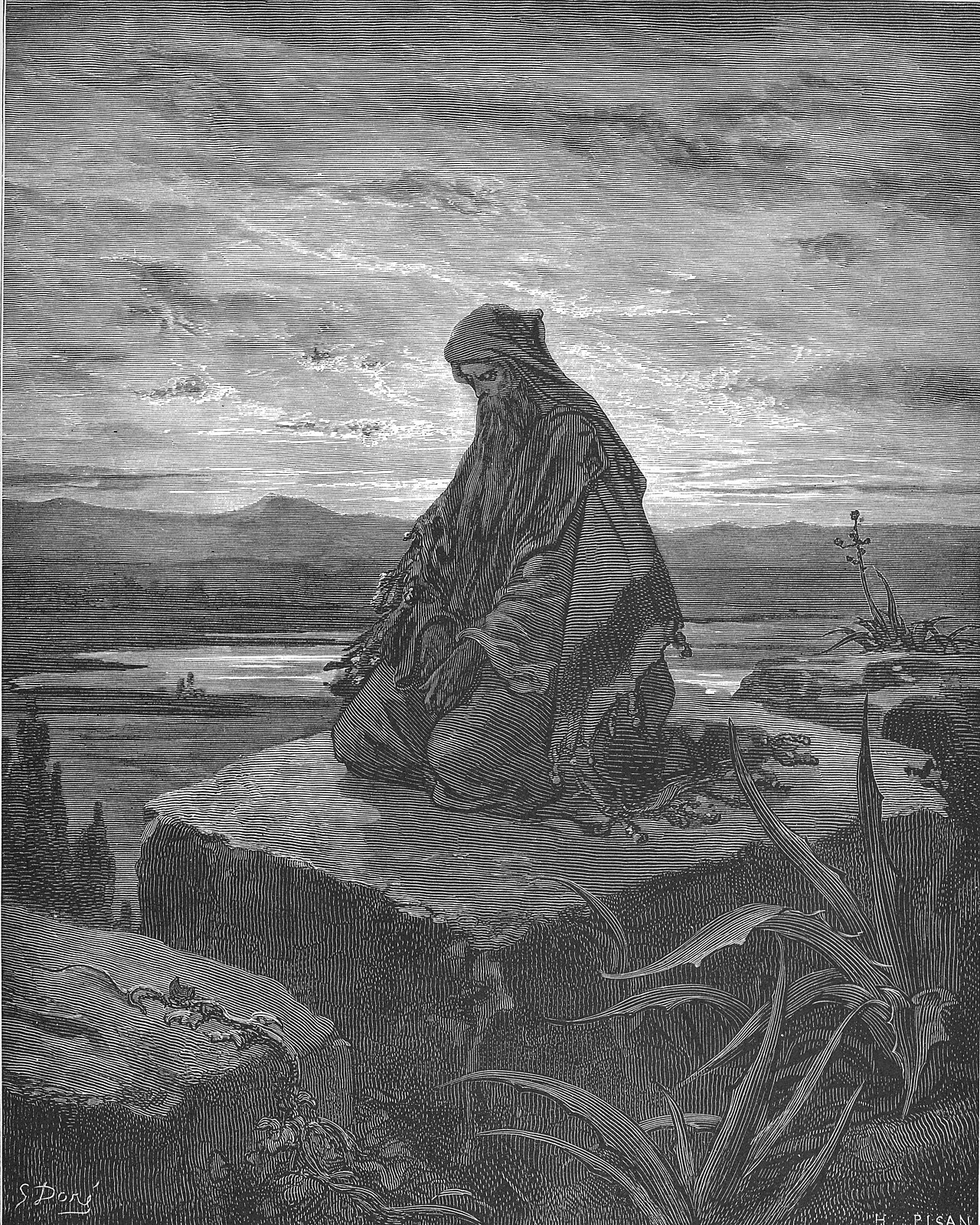
Isaiahchapter 61
11 verses · Isaiah · 8th century BC · The Prophets
The Spirit of the Lord GOD is on Me, because the LORD has anointed Me to preach good news to the poor. He has sent Me to bind up the brokenhearted, to proclaim liberty to the captives and freedom to the prisoners,
Introduction
Isaiah, The Prophets, Isaiah Overview.
Isaiah wrote this for the poor, the imprisoned, the grieving and those who had lost their land. The speaker is one anointed by the Spirit of the LORD and sent with good news. The chapter draws its words from the law of the Jubilee, the fiftieth year when debts were cancelled and land returned. It ends as a wedding. Listen for the changes of clothing, from ashes to a crown and from mourning to oil. Listen too for who does the farm work and what name the people are given. Jesus read this chapter aloud in Nazareth.
Context
- Who
- The poor, the imprisoned, the grieving, and the people who had lost their land
- What
- The announcement of an anointed messenger who proclaims release, comfort and rebuilding, with the people named priests of the LORD.
- Where
- The ruined cities of Judah, and a wedding feast.
- When
- Spoken about 700 to 690 BC on the site's reading, with its fulfilment announced by Jesus in the synagogue at Nazareth.
- Why
- To announce the LORD's favour to the broken and to promise them restoration, honour and joy in place of shame.
Historical context
The vocabulary of this chapter is Jubilee vocabulary, and it points at a specific law. Every fiftieth year, the Law of Moses required a reset: debts released, Hebrew slaves freed, and ancestral land returned to the family that had lost it. It was announced by a ram's horn blown on the Day of Atonement, and its purpose was to prevent exactly the land-grabbing that Isaiah condemned back in chapter 5. So proclaiming liberty to the captives and the acceptable year of the LORD is the announcement of a Jubilee, with no fiftieth-year limit on it.
Show the rest of the historical context, 4 more paragraphs
The mourning reversals are a wardrobe change at a funeral. Instead of ashes, a festal headdress, the words nearly rhyme in Hebrew, ashes and beauty. Instead of mourning, the oil of joy: guests at a feast were anointed with scented oil at the door, and mourners went unanointed. Instead of a spirit of heaviness, a garment of praise. The whole picture is a person walking out of a funeral into a wedding.
The employment arrangement in the middle would have astonished the first hearers. Strangers will feed your flocks, and foreigners will be your plowmen and vinedressers, while you are named the priests of the LORD. The whole nation is described as holding the office that only one tribe had held.
The chapter closes with a bride and groom being dressed. He decked me with ornaments as a bridegroom, and as a bride adorns herself with her jewels, the groom wore a garland or turban, the bride her family's jewelry, and both were the most public display of joy their culture had.
One detail matters for how the chapter was later read. When Jesus read this passage aloud in the Nazareth synagogue, he stopped mid-sentence, after the acceptable year of the LORD and before the day of vengeance of our God, and sat down. The gap he left is where the present age sits.
Significance
For people who had been foreclosed on, exiled, or bereaved, the good news announced here was not consolation. It was a legal restoration, the land back, the debt cancelled, the prisoner out.
Show the rest of the significance, 1 more paragraph
And the promise about rebuilding was the practical one. They will rebuild the old ruins, raise up the former desolations, and repair the ruined cities, the desolations of many generations. Somebody has to actually do the masonry, and the chapter names the ones who will.
This chapter in Jewish lifeWhat this chapter is in Jewish life and reading.
What is done
The site's own table in src/lib/hebraic/readings.ts sets this chapter in one prophetic reading of the annual cycle. It is read as the Haftarah of Nitzavim, Isaiah 61:10 to 63:9, in both rites, on the Sabbath of the portion Deuteronomy 29:9 to 30:20. A congregation keeping that cycle hears the verses of each reference read aloud after the Torah portion of its Sabbath.
The corpus joins the chapter to the weeks of the Torah portions through the works arranged by portion. Under the second verse it carries Midrash Tanchuma, Beshalach 16:4. Under the fifth verse it carries Bereshit Rabbati, Parashat Bereshit 17. Under the ninth verse it carries Midrash Tanchuma Buber, Appendix to Sh'lach 3:2, Midrash Tanchuma Buber, Bereshit 18:1 and Midrash Tanchuma Buber, Vayera 29:2. Under the tenth verse it carries Midrash Tanchuma Buber, Devarim 1:1.
How it is read
Two commentators on this chapter carry English in the corpus. Rashi is quoted from The Judaica Press complete Tanach with Rashi, translated by A. J. Rosenberg, which Sefaria reports as CC-BY, and every quotation of it is held to fifty words or fewer because the translation is modern. Ibn Ezra is quoted from the version Sefaria titles Commentary of Ibn Ezra on Isaiah - trans. by M. Friedlander, 1873, which it reports as Public Domain.
The anointing of the first verse Rashi reads as a title, the same way he read the anointing of Cyrus: "This anointing is nothing but an expression of nobility and greatness". The liberty proclaimed to the captives is "to bring them the tidings of the redemption" (Rashi on Isaiah 61:1:1 and 61:1:2). Ibn Ezra reads the acceptable year of the next verse as "The year of redemption". Rashi reads it as a year of appeasement and good will (Ibn Ezra on Isaiah 61:2:1; Rashi on Isaiah 61:2:1). The classical readings here take the speaker as the prophet and the year as Israel's redemption, and a Christian reader who reads the passage of Christ should hear them as the tradition's own.
The oil of joy for mourning in the third verse Ibn Ezra explains from custom: "The mourner does not anoint with oil, as may be gathered from the story of the woman of Tekoa". The priests of the Lord of the sixth verse Rashi reads as princes (Ibn Ezra on Isaiah 61:3:1; Rashi on Isaiah 61:6:1). The robbery in a burnt offering of the eighth verse he reads as the reason God does not accept the offerings of the nations, since they come from robbery (Rashi on Isaiah 61:8:1).
Ibn Ezra reads the seed known among the nations in the ninth verse as the nations coming up to keep the feast of Tabernacles, after Zechariah 14:16 (Ibn Ezra on Isaiah 61:9:1). The bridegroom of the tenth verse Rashi dresses "like a high priest" (Rashi on Isaiah 61:10:1).
The corpus carries two further notes on this chapter without an English text, each marked linked because Sefaria holds no English version of the ref. They stand cited and unquoted at Radak on Isaiah 61:9:1 and a further note of Rashi on Isaiah 61:11:1.
What the rabbis say
The corpus carries forty rabbinic locators on this chapter and the text of none, so each is cited and linked here rather than quoted. On the first verse it holds Avodah Zarah 20b:11, Eikhah Rabbah 3:17, Mekhilta DeRabbi Yishmael, Tractate Bachodesh 9:16 and Midrash Lekach Tov, Deuteronomy 23:10:1. It holds Midrash Lekach Tov, Exodus 20:18:2 there as well. On the second verse it holds Midrash Tanchuma, Beshalach 16:4. On the third verse it holds Bava Batra 60b:17, Ein Yaakov (Glick Edition), Bava Batra 3:7, Ein Yaakov, Bava Batra 3:9 and Ein Yaakov, Taanit 2:3. On the fourth verse it holds Pirkei DeRabbi Eliezer 51:7.
On the fifth verse it holds Berakhot 35b:7, Bereshit Rabbati, Parashat Bereshit 17, Ein Yaakov (Glick Edition), Berakhot 6:3 and Ein Yaakov (Glick Edition), Sanhedrin 11:12. On the sixth verse it holds Bamidbar Rabbah 8:2, Mekhilta DeRabbi Yishmael, Tractate Nezikin 18:5, Midrash Aggadah, Exodus 38:21:2 and Midrash Lekach Tov, Exodus 22:20:3. On the seventh verse it holds Bereshit Rabbah 9:5, Chagigah 15a:10, Ein Yaakov (Glick Edition), Khagigah 2:21 and Ein Yaakov, Khagigah 2:12. On the eighth verse it holds Bamidbar Rabbah 19:30, Devarim Rabbah 5:7, Ein Yaakov (Glick Edition), Sukkah 3:1 and Ein Yaakov, Sukkah 3:1.
On the ninth verse it holds Bamidbar Rabbah 16:24, Midrash Tanchuma Buber, Appendix to Sh'lach 3:2, Midrash Tanchuma Buber, Bereshit 18:1 and Midrash Tanchuma Buber, Vayera 29:2. On the tenth verse it holds Bamidbar Rabbah 13:2, Devarim Rabbah 2:37, Ein Yaakov, Moed Katan 3:35 and Midrash Tanchuma Buber, Devarim 1:1. On the eleventh verse it holds Jerusalem Talmud Kilayim 3:1:2, Jerusalem Talmud Shabbat 9:2:1, Jerusalem Talmud Shabbat 9:2:3 and Midrash Sekhel Tov, Bereshit 28:14:1. One more, Pesikta Rabbati 34:1, carries the anchor Isaiah 61:340, which this lane could not match to a verse. What each of them teaches is a saying of the rabbis, and is reported as theirs wherever this site quotes one. The quotations wait on a fetch that carries the text.
Sources: Rashi, Rashi on Isaiah 61:1:1 to 61:10:2, The Judaica Press complete Tanach with Rashi, translated by A. J. Rosenberg, reported CC-BY; Ibn Ezra, Ibn Ezra on Isaiah 61:2:1 to 61:11:1, Commentary of Ibn Ezra on Isaiah - trans. by M. Friedlander, 1873, reported Public Domain; Radak, Radak on Isaiah 61:9:1, cited by ref because the corpus carries no English text; Rashi, Rashi on Isaiah 61:11:1, cited by ref because the corpus carries no English text; The Sefaria corpus, scripts/data/sources/sefaria/isaiah/61.json, the 40 Talmud and Midrash locators of this chapter; The site's own files, src/lib/hebraic/readings.ts, the Haftarah entries for Nitzavim (Isaiah 61:10 to 63:9).
The heads below are this chapter's scenes. The numbered points under each are its verses.
The Spirit of the Lord Is Upon Me: Beauty for Ashes
The Spirit of the Lord GOD is on Me: “The Spirit of the Lord GOD is on Me, because the LORD has anointed Me” uses the anointing of judges, kings and prophets. The Hebrew verb anoint is the root of the title Messiah. At Luke 4:18 Jesus reads this verse at Nazareth and applies it to Himself.
Isaiah 61:1
“What is there to wonder at, what to disbelieve, if the Lord who gives the Spirit, is here said himself to be anointed with the Spirit, at a time when, necessity requiring it, he did not refuse in respect of his manhood to call himself inferior to the Spirit?”
Athanasius of Alexandria · written before 373 · Discourses Against the Arians 1.50patristic
2 more voices on this verseWhat preachers and commentators have said about this verse, in their own words.
Isaiah 61:1
“The Spirit of the Lord God - Hebrew, The Spirit of the Lord Yahweh.’ The Chaldee renders this, ‘The prophet said, the spirit of prophecy from the presence of Yahweh God is upon me.’ The Syriac, ‘The Spirit of the Lord God.’ The Septuagint, Πνεῦμα Κυρίου Pneuma Kuriou - ‘The Spirit of the Lord,’ omitting the word אדני 'ădonāy. So Luke quotes it in Luk 4:18. That this refers to the Messiah is abundantly proved by the fact that the Lord Jesus expressly applied it to himself (see Luk 4:21).”
Isaiah 61:1
“Anointed - Set me apart, both capacitating him with gifts, and commissioning him with authority; and yet more, as it is applied to Christ, a power to make all effectual, from whence he hath also the name of Messiah among the Hebrew, and of Christ among the Greeks; nay, Christ alone among the prophets hath obtained this name, Psalm xlv, 7.”
John Wesley · Explanatory Notes upon the Old Testament (1765)evangelical
Cross references
Isaiah 61:1
- Quoted inLuke 4:18“The Spirit of the Lord is on Me, because He has anointed Me to preach good news to the poor. He has sent Me to proclaim liberty to the captives and recovery of sight to the blind, to release the oppressed,
'The Spirit of the Lord is upon me', Nazareth synagogue reading (w/ Isa 58:6)
ConnectionsLuke 4:18
to proclaim the year of the LORD’s favor: The verse sets two announcements with no gap stated: “to proclaim the year of the LORD’s favor and the day of our God’s vengeance”. At Luke 4:19-21 Jesus stops reading after the year of favor. Delitzsch and Alexander record the older reading that sets the favor at His first coming.
Isaiah 61:2
“To proclaim the acceptable year of the Lord - (see the notes at Isa 49:8). There is probably an allusion here to the year of Jubilee, when the trumpet was blown, and liberty was proclaimed throughout all the land (so Lev 25:9-10). In like manner the Messiah would come to proclaim universal liberty - liberty to all the world from the degrading servitude of sin.”
2 more voices on this verse
Isaiah 61:2
“Vengeance - It being necessary, that where God will deliver his people, he should take vengeance on their enemies; principally on the enemies of his church, and the spiritual ones chiefly, Satan, sin, and death.”
John Wesley · Explanatory Notes upon the Old Testament (1765)evangelical
Isaiah 61:2
"Acceptable" is that year in which we were received, when we took kinship with him, having our sins washed away through holy baptism and becoming partakers of the divine nature through the sharing of the Holy Spirit. Or "acceptable" is the year in which he revealed his glory through the divine miracle attesting the message.
Cyril of Alexandria · written before 444 · Commentary on Isaiah 5:5.61:1-3patristic
beauty for ashes, the oil of joy for mourning: The verse lists three exchanges in matched pairs: “a crown of beauty for ashes, the oil of joy for mourning”. Ashes give way to a crown. The purpose reaches past the mourner: “So they will be called oaks of righteousness, the planting of the LORD”.
Isaiah 61:3
“To appoint unto them - Hebrew, ‘To place;’ that is, to place happiness before them; to give them joy arid consolation. That mourn in Zion - (See the notes at Isa 1:8). The mourners in Zion mean those who dwelt in Jerusalem; then all those who are connected with the church of God - his poor and afflicted people. To give unto them beauty for ashes - In the Hebrew there is here a beautiful paronomasia, which cannot be transferred to our language - אפר תחת פאר pe'ēr tachath 'êpher.”
Rebuilding the Old Wastes and a Double Portion
Isaiah 61:4-6
They will rebuild the ancient ruins: “They will rebuild the ancient ruins”, the returned people repairing cities ruined. Verses 5 and 6 draw a line: “Strangers will stand and feed your flocks”, while “you will be called the priests of the LORD”. The whole nation takes the title of Exodus 19:6, a kingdom of priests.
Isaiah 61:4
“And they that spring from thee” - A word is lost here likewise. After ובנו ubanu, “they shall build,” add ממך mimmecha, they that spring from thee. Four MSS. have it so, (two of them ancient), and one of mine has it in the margin, and it is confirmed by Isa 58:12, where the sentence is the very same, this word being here added.
Adam Clarke · Commentary on the Bible (1810-1826)evangelical
1 more voice on this verse
Isaiah 61:4
“For the Savior cultivates us through the holy people of faith. And these are called God's coworkers.… And the gladness will be everlasting; for we do not expect the reward to be in things of this age but in exceeding hope and life without limit for those who are noble concerning thought and speech.”
Cyril of Alexandria · written before 444 · Commentary on Isaiah 5:5.61:4-7patristic
Strangers will stand and feed your flocks: Aquinas finds a literal pattern in the Gibeonites of Joshua 9:21, foreigners set to serve Israel. Clarke reads the strangers as Gentile preachers who will one day feed the Jewish people with the salvation of Christ. Barnes notes that flocks made up much of Palestine's farming.
Isaiah 61:5
“And strangers shall stand - (See the notes at Isa 14:1-2; Isa 60:10). And feed your flocks - The keeping of flocks constituted a very considerable part of the husbandry of those who dwelt in Palestine. Of course, any considerable prosperity of a spiritual nature would be well represented by an accession of foreigners, who should come to relieve them in their toil.”
1 more voice on this verse
Isaiah 61:5
“Strangers - Gentiles, such as are not of the natural race of the Jews, but Gentile converts. Or, such as shall have no more than an outward profession.”
John Wesley · Explanatory Notes upon the Old Testament (1765)evangelical
you will boast in their riches: Barnes reads the verse as freedom from farm labour, the people left free for the service of God. Henry notes the verb feed, riches used and shared, and joins the priestly title to the royal priesthood of 1 Peter 2:9. Jamieson, Fausset & Brown render boast as taking their place.
Isaiah 61:6
“But his service is perfect freedom, nay, it is the greatest honour. When God brought Israel out of Egypt he took them to be to him a kingdom of priests, Exod. xix. And the gospel church is a royal priesthood, 1 Pet. ii.”
Matthew Henry · Commentary on the Whole Bible (1707-1721)puritan
Instead of shame, My people will have a double portion: “Instead of shame, My people will have a double portion” answers the humiliation with double honor. Isaiah 40:2 said Jerusalem had received double, and here the double is blessing. Clarke reads it as the double portion of a firstborn, and the verse ends on permanence: “everlasting joy will be theirs”.
Isaiah 61:7
“For your shame - That is, instead of the reproach and humiliation which you have been called to experience. You shall have double - A double inheritance or reward (see the notes at Isa 40:2). And for confusion - The word ‘confusion’ here means the same as a blush of shame, and refers to the scenes of humiliation and sorrow which the nation had passed through on account of its sins. They shall rejoice - There is here a change from the second to the third person - a change which is not unfrequent in Isaiah.”
2 more voices on this verse
Isaiah 61:7
“About this twin glory it is written, "they will possess double in their own land." This is written concerning the souls of the saints, for single white cloaks are given to them, and it is said that they might have rest a short time until the number of their colleagues and brothers is filled up. So they take now single cloaks, but they will have double cloaks on the day of judgment; for the first is in the way of souls only, but later they will rejoice in the glory of souls and bodies together.”
Gregory the Dialogist · written before 604 · Dialogues, Book 4, Chapter 25patristic
Isaiah 61:7
“Much more do all those rejoice whom Christ has brought into the glorious liberty of God's children, especially when the privileges of their adoption shall be completed in the resurrection of the body.”
Matthew Henry · Commentary on the Whole Bible (1707-1721)puritan
Clothed with the Garments of Salvation
Isaiah 61:8-9
For I, the LORD, love justice: “For I, the LORD, love justice; I hate robbery and iniquity” states what God prizes. The verse joins it to a promise, “make an everlasting covenant with them”. Verse 9 gives the covenant its evidence, for all who see them will know “a people the LORD has blessed”.
Isaiah 61:8
“I hate robbery for burnt-offering “Who hate rapine and iniquity” - The Syriac, and Chaldee prefix the conjunction ו vau, instead of the preposition ב beth, to עולה olah, which they render iniquity or oppression; and so the Septuagint, αδικιας. The difference lies in the punctuation; בעולה beolah, in a burnt-offering בעולה beavelah, in iniquity. The letters are the same in both words. Five of De Rossi’s MSS. confirm this reading.”
Adam Clarke · Commentary on the Bible (1810-1826)evangelical
2 more voices on this verse
Isaiah 61:8
“Robbery - All things gotten by injustice, though it be for sacrifice. Direct - I will lead them so, that they shall do all things in sincerity. Everlasting covenant - Though you have broken covenant with me, yet I will renew my ancient covenant made with your fathers, confirmed with the blood of Christ, and it shall be everlasting, never to be abrogated.”
John Wesley · Explanatory Notes upon the Old Testament (1765)evangelical
Isaiah 61:8
“Behold, to obey is better than sacrifice, to do justly and love mercy better than thousands of rams; nay, that robbery is most of all hateful to God which is covered with this pretence, for it makes the righteous God to be the patron of unrighteousness.”
Matthew Henry · Commentary on the Whole Bible (1707-1721)puritan
Their descendants will be known among the nations: Barnes takes known as honoured, the pride of a parent whose offspring are blessed, and notes that the Chaldee read offspring as children's children. Clarke expects the descendants of Jacob, once converted, to remain a people known among the nations. Aquinas allows the apostles' spiritual seed as well.
Isaiah 61:9
“And their seed - The figure here is taken from the feelings of a parent who desires his children to be esteemed, and who regards it as an honor that they become so distinguished that their fame extends to distant lands. Shall be known - Shall be distinguished or honored. For this use of the word ‘known,’ see Psa 67:2; Psa 76:1; Psa 79:10. And their offspring - (See the notes at Isa 48:19). The Chaldee and the Syriac render this, ‘Their children’s children.’ The sense is, that the true friends of the church shall be everywhere honored.”
1 more voice on this verse
Isaiah 61:9
“Some make this the song of joy and praise to be sung by the prophet in the name of Jerusalem, congratulating her on the happy change of her circumstances in the accomplishment of the foregoing promises; others make it to be spoken by Christ in the name of the New-Testament church triumphing in gospel grace.”
Matthew Henry · Commentary on the Whole Bible (1707-1721)puritan
Isaiah 61:10-11
I will rejoice greatly in the LORD: The voice turns to celebration: “He has clothed me with garments of salvation and wrapped me in a robe of righteousness”. The clothing is for a wedding, “as a bride adorns herself with her jewels”. Verse 11 ends with righteousness and praise made “to spring up before all the nations”.
Isaiah 61:10
“Christ has clothed his church with an eternal salvation (and that is truly great) by clothing it with the righteousness both of justification and sanctification. The clean linen is the righteousness of saints, Rev. xix.”
Matthew Henry · Commentary on the Whole Bible (1707-1721)puritan
ConnectionsGenesis 3:21
as a garden enables seed to spring up: Barnes ties the figure to Isaiah 45:8 and 55:10-11, where rain on the earth makes righteousness spring up. Clarke reports that the Septuagint and three manuscripts lack Adonai, the word Lord in the title Lord GOD. Henry sees the growth spreading across future ages and distant lands.
Isaiah 61:11
“For as the earth bringeth forth - This figure is several times used by the prophet (see the notes at Isa 45:8; Isa 55:10-11). The idea is an exceedingly beautiful one, that, on the coming of the Messiah, truth and righteousness would spring up and abound like grass and fruits in the vegetable world when the earth is watered with rain. Her bud - The word ‘bud’ we now apply usually to the small bunch or protuberance on the branches of a plant, containing the rudiments of the future leaf or flower.”
Keep studying
Places1
Words11
Subjects1
Sources for this chapter
The summary
Jamieson, Fausset & Brown, Commentary Critical and Explanatory; John Calvin, Commentaries; John Wesley, Notes on the Old Testament and Matthew Henry, Complete Commentary.
The exposition
Adam Clarke, Commentary on the Bible; Albert Barnes; Franz Delitzsch, Biblical Commentary on the Prophecies of Isaiah; Jamieson, Fausset & Brown, Commentary Critical and Explanatory on the Whole Bible; Jamieson, Fausset and Brown, Commentary Critical and Explanatory on the Whole Bible; John Gill, Exposition of the Old Testament; John Wesley, Explanatory Notes upon the Old Testament; Joseph Addison Alexander, Commentary on the Prophecies of Isaiah; Matthew Henry, Commentary on the Whole Bible and Thomas Aquinas, Commentary on Isaiah.