
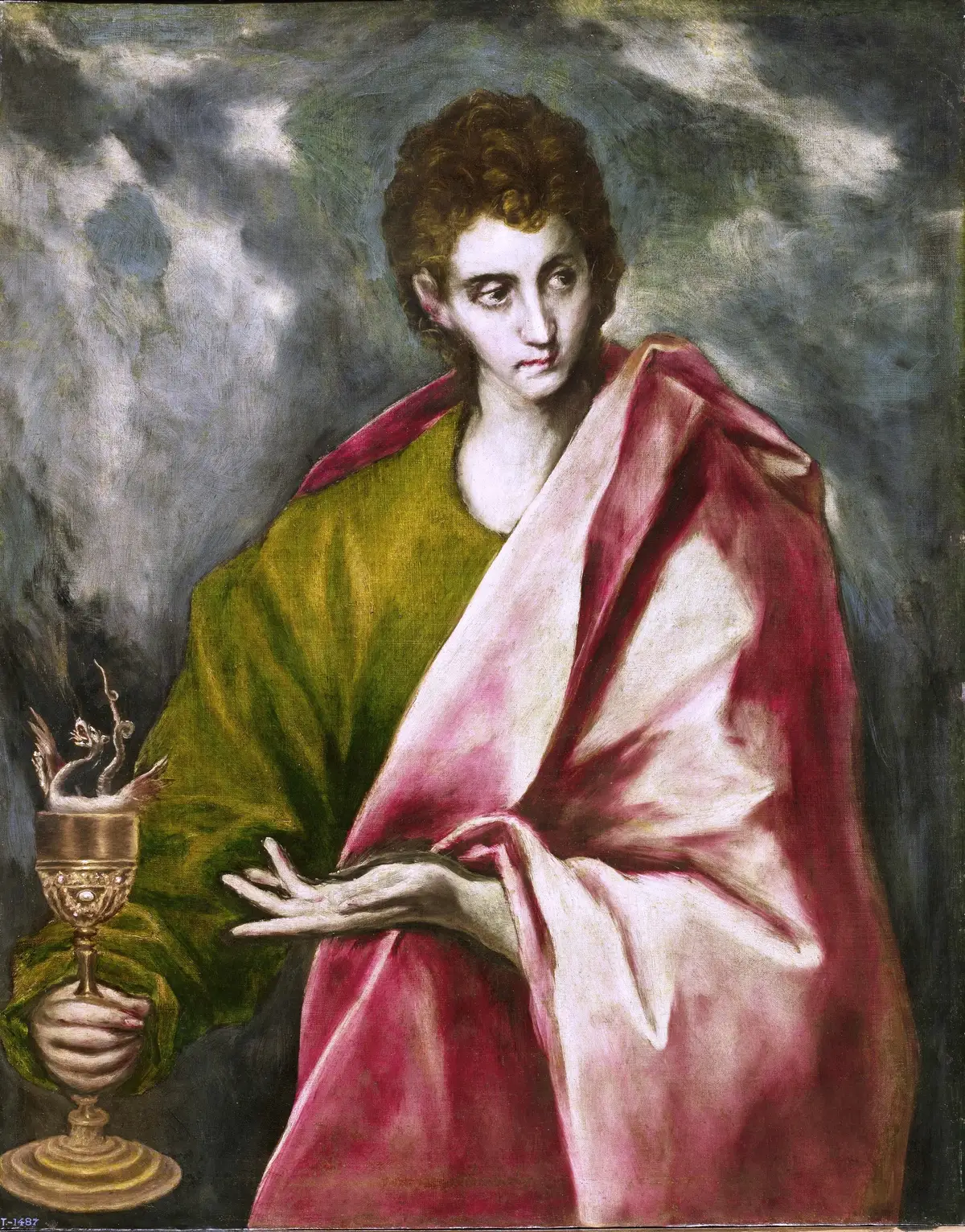
1 Johnchapter 1
10 verses · John, by tradition · AD 85 to 95 · The general letters
That which was from the beginning, which we have heard, which we have seen with our own eyes, which we have gazed upon and touched with our own hands—this is the Word of life.
Introduction
John, by tradition, The general letters, 1 John Overview.
The apostle John wrote this letter as an old man to churches he had cared for over many years. A group of teachers had left those churches, and the ones who stayed were unsure of their standing with God. The letter opens with no greeting and no name, unlike Paul's letters. Its first lines sound like the start of John's Gospel, and the likeness is deliberate. Listen for the claims people make about themselves, and for how each claim is answered. The chapter asks what it means to walk with a holy God while still a sinner.
Context
- Who
- Believers left behind after a group of teachers walked out of their fellowship
- What
- An opening witness to the Word of life, followed by the message that God is light and three false claims about sin, each answered.
- Where
- Ephesus, where the early church places John in his last years, writing to house churches in the Roman province of Asia.
- When
- About AD 85 to 95 on the traditional dating, late in the apostle John's life.
- Why
- To bring the readers into the apostles' fellowship with God, and to show that such fellowship is proved by an honest walk and the confession of sin.
Historical context
The opening piles up the senses on purpose, heard, seen with our eyes, looked at, touched with our hands. That was an argument, not a poem. Educated Greeks generally held that spirit was pure and matter was beneath it, so the idea that God had genuinely taken flesh was the offensive part of the message.
Show the rest of the historical context, 3 more paragraphs
Ephesus had a specific version of this problem. Early Christian writers report a teacher named Cerinthus active in that city who held that the Christ came upon the man Jesus and left him before he died, and they report that the apostle John would not stay under the same roof with him.
Walking in light or darkness described a physical reality. Cities had no street lighting, houses were lit by one small oil lamp, and after sundown a person either stayed in the lit room or moved by feel. Light meant safety and honesty; darkness meant where things happened that nobody would own.
The confession language is court language, to say the same thing about our sin that God says about it. It is agreement, not merely regret.
Significance
The hearers had just watched confident teachers leave, claiming a higher knowledge. The letter opens with an old man saying he touched him, and inviting them into a fellowship that runs from the Father and the Son through the eyewitnesses to them.
Show the rest of the significance, 1 more paragraph
The claim being answered in this chapter is that a spiritual person is past sinning. John's reply is double-edged: saying we have no sin is self-deception, and the blood of Jesus keeps on cleansing those who admit it.
The heads below are this chapter's scenes. The numbered points under each are its verses.
What We Heard, Saw, and Handled: The Word of Life
1 John 1:1-2
The letter opens with verbs of sense: which we have heard, seen with our own eyes, gazed upon and touched with our own hands. Against teachers who denied that the Christ truly came in the flesh, the witness rests on touch.
1 John 1:1
“That which was - Here means, He which was the Word himself; afterwards it means, that which they had heard from him. Which was - Namely, with the Father, ver. 2, before he was manifested. From the beginning - This phrase is sometimes used in a limited sense; but here it properly means from eternity, being equivalent with, "in the beginning," John i, 1.”
John Wesley · Explanatory Notes upon the New Testament (1755)evangelical
2 more voices on this verseWhat preachers and commentators have said about this verse, in their own words.
1 John 1:1
"Seen," namely, His glory, as revealed in the Transfiguration and in His miracles; and His passion and death in a real body of flesh and blood. "Looked upon" as a wondrous spectacle steadfastly, deeply, contemplatively; so the Greek. Appropriate to John's contemplative character. hands . . . handled--Thomas and the other disciples on distinct occasions after the resurrection.
Jamieson, Fausset & Brown · Commentary Critical and Explanatory on the Whole Bible (1871)reformed
1 John 1:1
“The life assumed a mouth and tongue, that he might utter words of life. The apostles not only heard of him, but they heard him himself. Above three years might they attend his ministry, be auditors of his public sermons and private expositions (for he expounded them in his house), and be charmed with the words of him who spoke as never man spoke before or since.”
Matthew Henry · Commentary on the Whole Bible (1707-1721)puritan
the life that was revealed: John names the Word of verse 1 again, this time as the life that was with the Father before it was revealed. Revealed means made visible in a man the apostles could watch. Eternal life in this letter is first a person and then His gift.
1 John 1:2
“Declare is the general term; write is the particular (1Jo 1:4). that eternal life--Greek, "the life which is eternal." As the Epistle begins, so it ends with "eternal life," which we shall ever enjoy with, and in, Him who is "the life eternal." which--Greek, "the which." the before-mentioned (1Jo 1:1) life which was with the Father "from the beginning" (compare Joh 1:1).”
Jamieson, Fausset & Brown · Commentary Critical and Explanatory on the Whole Bible (1871)reformed
1 more voice on this verse
1 John 1:2
“For its salvation is endangered, not by its being ignorant of itself, but of the word of God. "The life," says He, "was manifested," not the soul.”
Tertullian · written before 220 · On the Flesh of Christpatristic
1 John 1:3-4
so that you also may have fellowship with us: The report has a purpose, so that you also may have fellowship with us. The Greek koinonia means a shared life, and this fellowship of ours is with the Father and with His Son, Jesus Christ. The aim of complete joy echoes the words of Jesus at the supper.
1 John 1:3
“Wherefore he also exhorts us to believe in the name of His (the Father's, ) Son Jesus Christ, that "our fellowship may be with the Father, and with His Son Jesus Christ." Paul, in like manner, everywhere speaks of "God the Father, and our Lord Jesus Christ.”
Tertullian · written before 220 · Against Praxeaspatristic
3 more voices on this verse
1 John 1:3
“The repetition of "with" before the "Son," distinguishes the persons, while the fellowship or communion with both Father and Son, implies their unity. It is not added "and with the Holy Ghost"; for it is by the Holy Ghost or Spirit of the Father and Son in us, that we are enabled to have fellowship with the Father and Son (compare 1Jo 3:24).”
Jamieson, Fausset & Brown · Commentary Critical and Explanatory on the Whole Bible (1871)reformed
1 John 1:3
“That ye also may have fellowship with us - May enjoy the same fellowship which we enjoy. And truly our fellowship - Whereby he is in us and we in him. Is with the Father and with the son - Of the Holy Ghost he speaks afterwards.”
John Wesley · Explanatory Notes upon the New Testament (1755)evangelical
1 John 1:3
“The apostles could not be deceived in such long and various exercise of their sense. Sense must minister to reason and judgment; and reason and judgment must minister to the reception of the Lord Jesus Christ and his gospel. The rejection of the Christian revelation is at last resolved into the rejection of sense itself.”
Matthew Henry · Commentary on the Whole Bible (1707-1721)puritan
so that our joy may be complete: John writes these things so that joy may be complete, and the joy is the fellowship with the Father and His Son that he proclaims. Some later copies read your joy. Jesus spoke at John 15:11 so that His joy would be complete in His disciples.
1 John 1:4
VERY closely does the Apostle John resemble his Lord in the motive that prompted him to write this Epistle! You remember how Christ said in His last discourse to His disciples on the eve of His passion, "These things have I spoken unto you that your joy may be full"—and how He counseled them, "Ask and receive that your joy may be full"—and how He prayed to the Father for them, "that they might have My joy fulfilled in themselves."
Charles Spurgeon · written before 1892 · The Metropolitan Tabernacle Pulpit, Sermon No. 3406: “Fullness of Joy Our Privilege” (lightly modernized text, CCEL edition)Particular Baptist
2 more voices on this verse
1 John 1:4
“Here the joy of faith is directly intended. It is a concise expression. Your joy - That is, your faith and the joy arising from it: but it likewise implies the joy of hope and love.”
John Wesley · Explanatory Notes upon the New Testament (1755)evangelical
1 John 1:4
“So 2Jo 12, "your" in oldest manuscripts. The authority of manuscripts and versions on both sides here is almost evenly balanced. Christ Himself is the source, object, and center of His people's joy (compare 1Jo 1:3, end); it is in fellowship with Him that we have joy, the fruit of faith.”
Jamieson, Fausset & Brown · Commentary Critical and Explanatory on the Whole Bible (1871)reformed
God Is Light: Walking in It, and Confessing Sin
God is light: John gives his theme as the message we have heard from Him: God is light, and in Him there is no darkness at all. The letter sets beside it God is love at 4:8 and 4:16. The rest of the chapter asks what fellowship with such a God requires.
1 John 1:5
“Greek, "No, not even one speck of darkness"; no ignorance, error, untruthfulness, sin, or death. John heard this from Christ, not only in express words, but in His acted words, namely, His is whole manifestation in the flesh as "the brightness of the Father's glory." Christ Himself was the embodiment of "the message," representing fully in all His sayings, doings, and sufferings, Him who is LIGHT.”
Jamieson, Fausset & Brown · Commentary Critical and Explanatory on the Whole Bible (1871)reformed
3 more voices on this verse
1 John 1:5
“And this is the sum of the message which we have heard of him - The Son of God. That God is light - The light of wisdom, love, holiness, glory. What light is to the natural eye, that God is to the spiritual eye.”
John Wesley · Explanatory Notes upon the New Testament (1755)evangelical
1 John 1:5
“When John says that there is no darkness in the light of God, he proves that all the lights of others are stained by some blemish.”
Jerome · written before 420 · Against the Pelagians 2.7patristic
1 John 1:5
“This then is the message which we have heard of him - This is the substance of the announcement (ἐπαγγελία epangelia) which we have received of him, or which he made to us. The message here refers to what he communicated as the sum of the revelation which he made to man. The phrase “of him” (απ ̓ αὐτου ap' autou) does not mean respecting him, or about him, but from him; that is, this is what we received from his preaching; from all that he said.”
1 John 1:6-7
we lie and do not practice the truth: The first test exposes a claim the life contradicts: If we say we have fellowship with Him yet walk in the darkness, we lie. The standard is God, as He is in the light. The present tense of cleanses, katharizei, names a washing that goes on, since believers still sin.
1 John 1:6
“If we say that we have fellowship - Having fellowship, κοινωνια, communion, with God, necessarily implies a partaking of the Divine nature. Now if a man profess to have such communion, and walk in darkness - live an irreligious and sinful life, he lies, in the profession which he makes, and does not the truth - does not walk according to the directions of the Gospel, on the grace of which he holds his relation to God, and his communion with him.”
Adam Clarke · Commentary on the Bible (1810-1826)evangelical
2 more voices on this verse
1 John 1:6
“If we say - Either with our tongue, or in our heart, if we endeavour to persuade either ourselves or others. We have fellowship with him, while we walk, either inwardly or outwardly, in darkness - In sin of any kind. We do not the truth - Our actions prove, that the truth is not in us.”
John Wesley · Explanatory Notes upon the New Testament (1755)evangelical
1 John 1:6
“THE Apostle warns us against saying more than we have made our own by experience. He hints at the solemn difference between empty profession and gracious reality. To have fellowship with God is a great matter—but merely to say that we have fellowship with Him is a totally different thing. John warns us that if we say that which our characters do not support, we lie. He leaves it just so, without a word of softening or excuse. Between saying and being—between saying and doing—there may be all the difference in the world.”
if we walk in the light: Walking in the light means living openly before God, with nothing hidden from Him. Two results follow, fellowship among believers and the cleansing of sin. The verb cleanses is present tense, a washing that goes on as long as the walk goes on.
1 John 1:7
“The imitation of God being the only sure proof of our having fellowship with him. And the blood of Jesus Christ his Son - With the grace purchased thereby. Cleanseth us from all sin - Both original and actual, taking away all the guilt and all the power.”
John Wesley · Explanatory Notes upon the New Testament (1755)evangelical
1 more voice on this verse
1 John 1:7
“Compare Joh 13:10, Greek, "He that has been bathed, needeth not save to wash his feet, but is clean every whit." Compare 1Jo 1:9, "cleanse us from all unrighteousness," a further step besides "forgiving us our sins." Christ's blood is the cleansing mean, whereby gradually, being already justified and in fellowship with God, we become clean from all sin which would mar our fellowship with God.”
Jamieson, Fausset & Brown · Commentary Critical and Explanatory on the Whole Bible (1871)reformed
we deceive ourselves: If we say we have no sin, we deceive ourselves answers any reading of the walk in the light as sinless perfection. The present tense names sin as a present condition. The verse stands beside he cannot go on sinning, where the tense names settled practice.
1 John 1:8
“If we say - Any child of man, before his blood has cleansed us. We have no sin - To be cleansed from, instead of confessing our sins, 1 John i, 9, the truth is not in us - Neither in our mouth nor in our heart.”
John Wesley · Explanatory Notes upon the New Testament (1755)evangelical
1 more voice on this verse
1 John 1:8
“If we say that we have no sin - This is tantamount to 1Jn 1:10: If we say that we have not sinned. All have sinned, and come short of the glory of God; and therefore every man needs a Savior, such as Christ is. It is very likely that the heretics, against whose evil doctrines the apostle writes, denied that they had any sin, or needed any Savior.”
Adam Clarke · Commentary on the Bible (1810-1826)evangelical
faithful and just to forgive: Verse 9 answers the denial of verse 8 with confession. God forgives as one who is faithful and just, keeping His word, with the debt paid by the blood of Jesus His Son. The promise reaches past pardon to cleanse us from all unrighteousness.
1 John 1:9
“If we confess our sins - Pardon in the Scriptures, always supposes that there is confession, and there is no promise that it will be imparted unless a full acknowledgment has been made. Compare Ps. 51; Psa 32:1-11;; Luk 15:18 ff; Luk 7:41 ff; Pro 28:13. He is faithful - To his promises. He will do what he has assured us he will do in remitting them.”
3 more voices on this verse
1 John 1:9
“This may seem strange; but upon the evangelical principle of atonement and redemption, it is undoubtedly true; because, when the debt is paid, or the purchase made, it is the part of equity to cancel the bond, and consign over the purchased possession. Both to forgive us our sins - To take away all the guilt of them.”
John Wesley · Explanatory Notes upon the New Testament (1755)evangelical
1 John 1:9
“For see yet again: "If we say," he says, "that we have not sinned, we make Him a liar, and His word is not in us." All the more fully: "Little children, these things have I written to you, lest ye sin; and if ye shall have sinned, an Advocate we have with God the Father, Jesus Christ the righteous; and, He is the propitiation for our sins.”
Tertullian · written before 220 · On Modestypatristic
1 John 1:9
“God is faithful to his covenant and word, wherein he has promised forgiveness to penitent believing confessors. He is just to himself and his glory who has provided such a sacrifice, by which his righteousness is declared in the justification of sinners.”
Matthew Henry · Commentary on the Whole Bible (1707-1721)puritan
we make Him out to be a liar: Verse 10 turns self-deceit into a charge against God: If we say we have not sinned, we make Him out to be a liar. The chapter opened on the Word of life and closes on His word is not in us, which leads to the advocate of 2:1.
1 John 1:10
“Yet still we are to retain, even to our lives' end, a deep sense of our past sins. Still if we say, we have not sinned, we make him a liar - Who saith, all have sinned. And his word is not in us - We do not receive it; we give it no place in our hearts.”
John Wesley · Explanatory Notes upon the New Testament (1755)evangelical
2 more voices on this verse
1 John 1:10
“Our rejection of "His word" in respect to our being sinners, implies as the consequence our rejection of His word and will revealed in the law and Gospel as a whole; for these throughout rest on the fact that we have sinned, and have sin.”
Jamieson, Fausset & Brown · Commentary Critical and Explanatory on the Whole Bible (1871)reformed
1 John 1:10
“But God has given his testimony to the continued sin and sinfulness of the world, by providing a sufficient effectual sacrifice for sin, that will be needed in all ages, and to the continued sinfulness of believers themselves by requiring them continually to confess their sins, and apply themselves by faith to the blood of that sacrifice.”
Matthew Henry · Commentary on the Whole Bible (1707-1721)puritan
How this psalm is built
The form: The prologue of the letter, followed by the start of the first of its three cycles of tests, which runs to 2:28, as Law classes it.
The patterns in this chapter
| Device | What it does | Where to see it |
|---|---|---|
| If we say, three times | Verses 6, 8 and 10 each open with If we say in the Berean text, and each quotes a claim the chapter rejects: fellowship while walking in darkness, having no sin, and never having sinned. Verses 7 and 9 give the true answer to the first two, walking in the light and confessing sin.The chapter's Berean text, counted from the store, translation id 3, 1 John 1:6 to 10. | 1 John 1:6, 1 John 1:8, 1 John 1:10 |
| Heard, seen, gazed upon, touched | Verse 1 lists four acts of the senses before it names the Word of life. The list comes closer at each step, from sound to sight to the hands, and states the witness as bodily and first hand.The chapter's Berean text, counted from the store, translation id 3, 1 John 1:1. | 1 John 1:1, 1 John 1:3 |
| The Word at the start, His word at the close | The chapter opens on the Word of life at verse 1 and closes on His word at verse 10. The site's published exposition of verse 10 records the frame.This site's published exposition of 1 John 1:10, The exposition_notes row on 1 John 1:10, citing John Wesley, Explanatory Notes upon the New Testament, and Jamieson, Fausset & Brown, Commentary Critical and Explanatory on the Whole Bible. | 1 John 1:1, 1 John 1:10 |
Where the chapter stands
7 more paragraphs on the patterns
Chapter 1 opens the letter. Verses 1 to 4 are its prologue, and verses 5 to 10 begin the first of three cycles of tests that Robert Law traced through the letter, running to 2:28 (The Tests of Life, 1909). The chapter hands straight to 2:1 and 2, where the Advocate and the atoning sacrifice answer the sin confessed at 1:9.
Who the we of the opening is
Brooke Foss Westcott reads the we of verses 1 to 4 as the apostles who saw the Lord, speaking together (The Epistles of St. John, on 1 John 1:1). From verse 6 the we takes in the writer and his readers together, as the claims about sin show.
The debated reading: sin and the believer
Verse 8 and 3:9 are read together. The site's published exposition of verse 8 sets the reading from the tenses beside John Wesley's teaching on Christian perfection, and gives no verdict between them.
Where the Old Testament stands behind it
God as light stands behind Psalm 27:1, where the Lord is the psalmist's light and salvation, and Isaiah 60:19 to 20, where the Lord becomes His people's everlasting light.
Keep studying
Studies11
Sources for this chapter
The summary
Jamieson, Fausset & Brown, Commentary Critical and Explanatory; John Calvin, Commentaries; John Wesley, Explanatory Notes Upon the New Testament and Matthew Henry, Complete Commentary.
The form and classifications
Robert Law, The Tests of Life, 1909.
The exposition
Adam Clarke, Commentary on the Bible; Albert Barnes, Notes on the New Testament; Brooke Foss Westcott, The Epistles of St. John; Jamieson, Fausset & Brown, Commentary Critical and Explanatory on the Whole Bible; John Calvin, Commentary on 1 John; John Gill, Exposition of the New Testament; John Wesley, Explanatory Notes upon the New Testament and Matthew Henry, Commentary on the Whole Bible.