Skip to content
mannafest.faith

The Evidence Room · The Dig Table

Archaeology

People have been digging in the Bible's countries for two hundred years. Here is what came out of the ground, and exactly what each object says.

13 objects in this room

Each one is photographed, dated, and placed in the museum that holds it, with what it puts on the table and exactly what its text says.

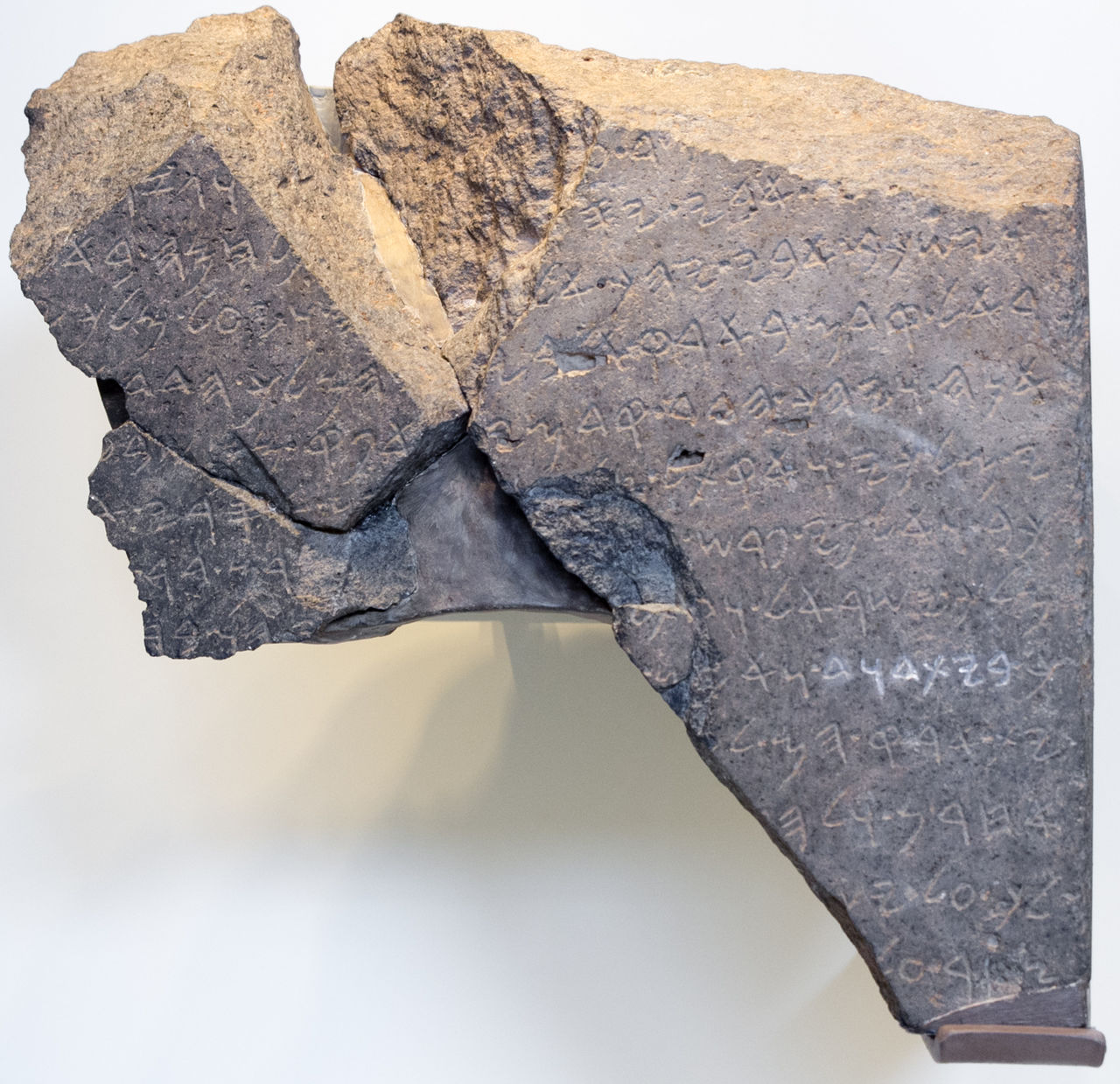
The Tel Dan Stele: Israel Museum, Jerusalem
Oren Rozen· CC BY-SA 4.0 ·Commons

c. 840–835 BC

The Tel Dan Stele

Israel Museum, Jerusalem · Tel Dan, northern Israel, 1993–94

An Aramean king boasts of killing kings of Israel and of the House of David. It is the earliest inscription outside the Bible to name David's dynasty — carved by an enemy, within about 150 years of David's lifetime.

The exact reading

The inscription names the dynasty, not the king: it says bytdwd, "house of David," not David himself.

The Mesha Stele (the Moabite Stone): Musée du Louvre, Paris
Tangopaso· Public domain ·Commons

c. 840 BC

The Mesha Stele (the Moabite Stone)

Musée du Louvre, Paris · Dhiban, Jordan, 1868

Moab's King Mesha tells his side of the war of 2 Kings 3. He names Omri king of Israel, Israel's occupation of Moab, and — in line 18 — YHWH, the earliest appearance of the divine name outside the Bible.

The exact reading

It is Moab's account: Mesha claims the victory that 2 Kings 3 records as an Israelite withdrawal.

The Merneptah Stele: Egyptian Museum, Cairo
Webscribe· CC BY-SA 3.0 ·Commons

c. 1208 BC

The Merneptah Stele

Egyptian Museum, Cairo · Thebes, 1896

Pharaoh Merneptah lists the peoples he crushed in Canaan. One of them is Israel — the earliest known mention of the name, written by an Egyptian scribe at the end of the 13th century BC.

The exact reading

The scribe marks Israel with the determinative for a people, not a city or a land — Israel is there, and not yet settled as a state.

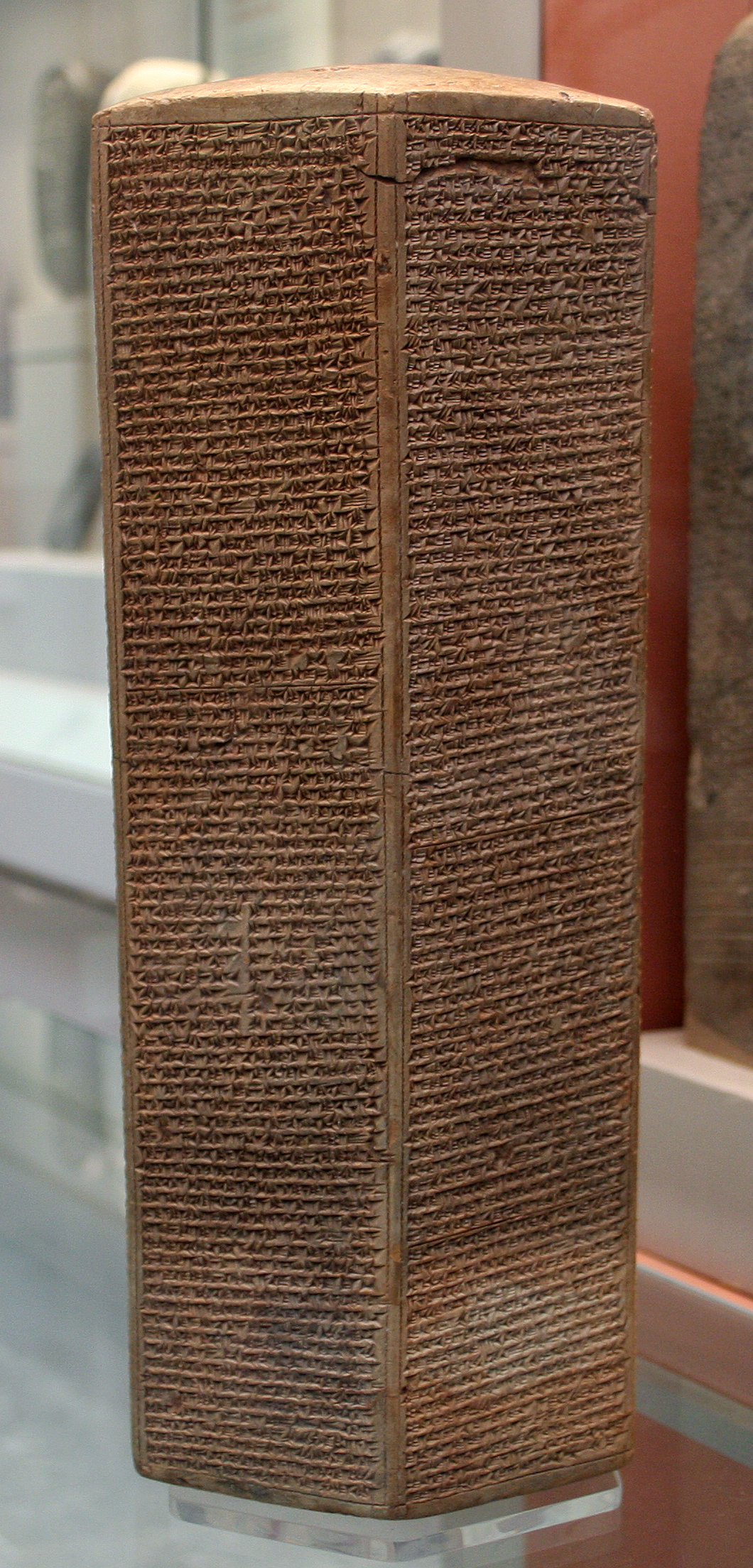
Sennacherib's Prism: British Museum, London
David Castor· Public domain ·Commons

691 BC

Sennacherib's Prism

British Museum, London · Nineveh, 1830

Assyria's own record of the 701 BC campaign against Judah: forty-six fortified cities taken, and Hezekiah shut up in Jerusalem "like a caged bird."

The exact reading

Sennacherib never claims to have taken Jerusalem — the one city his annals leave standing is the city 2 Kings 19 says was spared. The tribute totals differ from 2 Kings 18:14 (300 talents of silver on the prism, 800 in Kings).

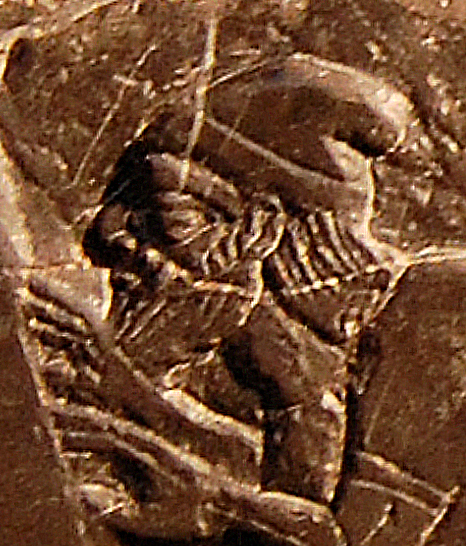
The Lachish Reliefs: British Museum, London
Mike Peel· CC BY-SA 4.0 ·Commons

c. 700–681 BC

The Lachish Reliefs

British Museum, London · Sennacherib's palace, Nineveh, 1840s

The siege of Lachish, carved by the besiegers for the walls of the Assyrian throne room: the ramp, the battering rams, the archers, the captives filing out. Judah's second city falling, in picture.

The exact reading

It is Assyrian court art — a victory panel, not a neutral report. The burnt destruction layer at Tel Lachish is the independent check on it.

The Siloam Inscription: Istanbul Archaeology Museums
Yong Woo Park· CC0 ·Commons

c. 700 BC

The Siloam Inscription

Istanbul Archaeology Museums · Hezekiah's Tunnel, Jerusalem, 1880

The tunnellers' own account, cut into the rock where the two teams met: "while there were still three cubits to be cut through… the voice of a man calling to his fellow." The tunnel of 2 Kings 20:20 still runs under Jerusalem.

The exact reading

The inscription does not name the king who ordered the work.

The Black Obelisk of Shalmaneser III: British Museum, London
Steven G. Johnson· CC BY-SA 3.0 ·Commons

825 BC

The Black Obelisk of Shalmaneser III

British Museum, London · Nimrud, 1846

A king of Israel, bowing. The second register shows tribute from "Jehu, son of Omri" — the only likely contemporary portrait of an Israelite king that survives.

The exact reading

Jehu was not Omri's son; he destroyed Omri's house. Assyria used "house of Omri" as its standing name for the northern kingdom.

The Ketef Hinnom Silver Scrolls: Israel Museum, Jerusalem
Wikimedia Commons· Public domain ·Commons

late 7th century BC

The Ketef Hinnom Silver Scrolls

Israel Museum, Jerusalem · Ketef Hinnom, Jerusalem, 1979

Two rolled silver amulets, worn around a neck, carrying the priestly blessing of Numbers 6:24–26. They are the oldest known copies of any biblical text — some four centuries older than the Dead Sea Scrolls.

The exact reading

They carry a blessing, not a book: the find dates the wording, not the whole Pentateuch. And the amulets run shorter than Numbers 6:24–26 — the clauses about God being gracious and lifting up his countenance are not on the silver.

The Cyrus Cylinder: British Museum, London
Prioryman· CC BY-SA 3.0 ·Commons

539–538 BC

The Cyrus Cylinder

British Museum, London · Babylon, 1879

Cyrus of Persia, in his own words, returning deported peoples to their cities and rebuilding their sanctuaries — the policy Ezra 1 says reached Judah, recorded by the king who set it.

The exact reading

The cylinder never names Judah, Jerusalem, or the temple. It is a Babylonian foundation text; it establishes the policy, not the specific decree.

The Pilate Stone: Israel Museum, Jerusalem (replica at Caesarea)
Fallaner· CC BY-SA 4.0 ·Commons

AD 26–36

The Pilate Stone

Israel Museum, Jerusalem (replica at Caesarea) · Caesarea Maritima, 1961

A dedication naming [Pon]tius Pilatus, [Praef]ectus Iuda[ea]e — Pilate, in stone, from his own province, with his exact title.

The exact reading

The title is prefect, not procurator: the Gospels' governor is confirmed, and Tacitus's later term for him is the looser one.

The Caiaphas Ossuary: Israel Museum, Jerusalem
deror_avi· CC BY-SA 3.0 ·Commons

1st century AD

The Caiaphas Ossuary

Israel Museum, Jerusalem · North Talpiot, Jerusalem, 1990

An ornate limestone bone-box scratched with the name Yehosef bar Qayafa — Joseph, son of Caiaphas — holding the bones of a man of about sixty.

The exact reading

Most scholars identify him with the high priest of the trial narratives; the identification rests on the name and the date, and a minority reads the inscription differently.

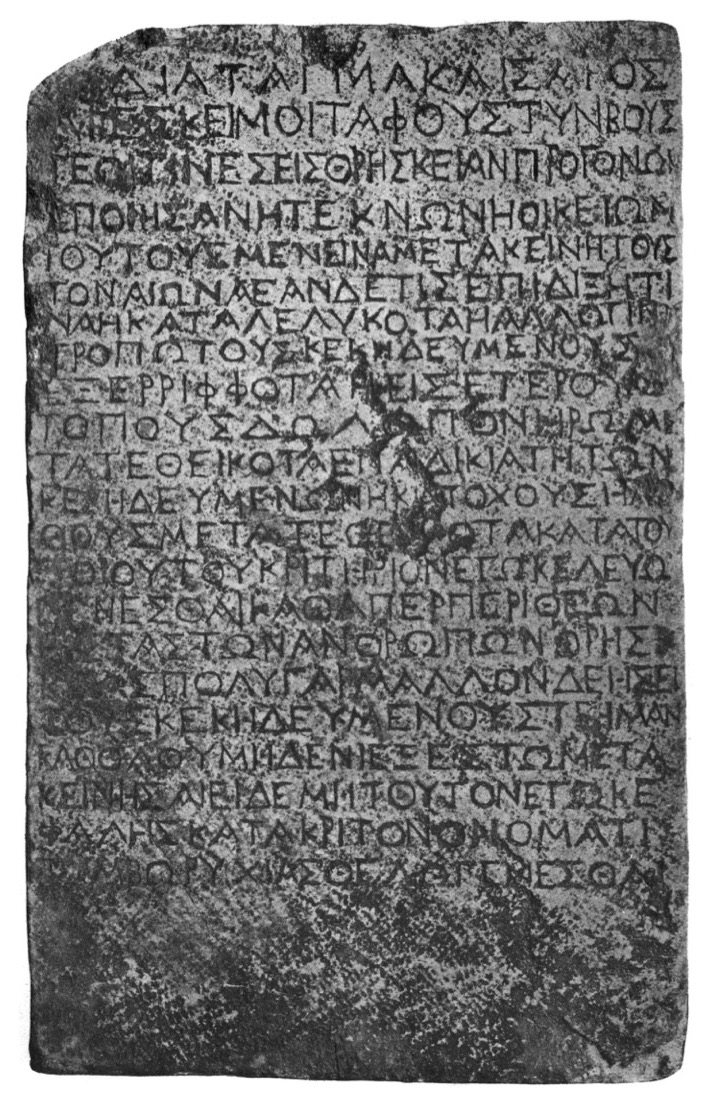
The Gallio Inscription: Archaeological Museum of Delphi
Gérard· CC BY-SA 4.0 ·Commons

AD 51–52

The Gallio Inscription

Archaeological Museum of Delphi · Delphi, 1905

A letter of the Emperor Claudius naming Gallio as proconsul of Achaia. Acts 18:12 puts Paul before Gallio in Corinth — which fixes a date, to the year, for a scene in Acts.

The exact reading

The stone dates Gallio's term, not Paul's trial; it anchors the chronology within a window of months.

The Nazareth Inscription: Cabinet des Médailles, Paris
Cumont, F.· Public domain ·Commons

1st century AD (disputed)

The Nazareth Inscription

Cabinet des Médailles, Paris · Acquired in Paris, 1878; said to come from Nazareth

An imperial rescript ordering capital punishment for anyone who breaks open a tomb or moves a body — an emperor legislating about disturbed graves.

The exact reading

Its provenance is not documented, its emperor is disputed from Augustus to Claudius, and isotope work on the marble points to Kos rather than Galilee. It is printed here as an object, not as an argument.

The questions this room answers

Does archaeology actually back up the Bible?

An enemy king carved the House of David into basalt, a Judean officer's clay note names the last two towns standing before Jerusalem fell, and Sennacherib's own prism leaves Jerusalem out of his victory list. Archaeology gives three sizes of thing, and they are kept apart here.

THE CLAIM

The ground names the Bible's people, its places, and its events.

  1. 1Three different things people mean by "backs up"The record
  2. 2Objects that name a person in the BibleArtifact
  3. 3Objects that describe an event the Bible describesArtifact
  4. 4Objects that show the world was as describedArtifact

WHERE IT STANDS

Corroboration object by object, never proof of a miracle.

strong confidence

6 steps5 objections answered at full strength16 named worksWalk it →

The exhibits behind this room

Sources: Every figure in this room is sourced and dated. Object photographs come from Wikimedia Commons with the license verified per file; the research base is excavation reports, critical editions, and peer-reviewed scholarship. Every cited work, the sources registry →