MANNAFEST

The Evidence Room · The Dig Table

Does archaeology actually back up the Bible?

It depends entirely on what you mean by back up — there are three different sizes of evidence here, and only the smallest of them does what most people are hoping for.

This question usually arrives with a hope attached. Somebody wants to hear that a spade in the ground has settled it.

That is not what this page is going to say, and it would be a poor trade anyway — a claim that impressive would need evidence this good, and the evidence is better than a slogan and smaller than a proof.

Here is the honest shape of it. Archaeology gives three different sizes of thing. It sometimes hands you an object that names a person the Bible names. It sometimes hands you an object that describes an event the Bible describes. And it very often hands you a world — customs, titles, borders, empires — that matches the world the text assumes.

Those three are not equally strong, and treating them as one pile is the single most common dishonesty in Christian popular apologetics. This page keeps them apart.

It also keeps a drawer of rejected finds, and prints it. That drawer is the most trustworthy thing on the page.

Walking it through

  1. Three different things people mean by "backs up"

    The first and strongest is naming. A stone or a seal turns up with a name on it, and the name is a person in the Bible. This is the rarest kind and the hardest to argue with.

    The second is describing. An ancient document tells the story of an event the Bible also tells — from the other side, usually, and with a different spin. Here you get two accounts to lay beside each other, which is what historians actually love.

    The third is background. The excavation shows that a people, a title, a road, or a legal custom existed exactly as the text quietly assumes. This is the most common kind by far, and it is real evidence — but of a limited sort. It removes objections. It does not confirm narratives.

    Keep those three separate as you read and the whole subject becomes clear. Mix them and you will either believe far too much or throw out far too much.

  2. Objects that name a person in the Bible

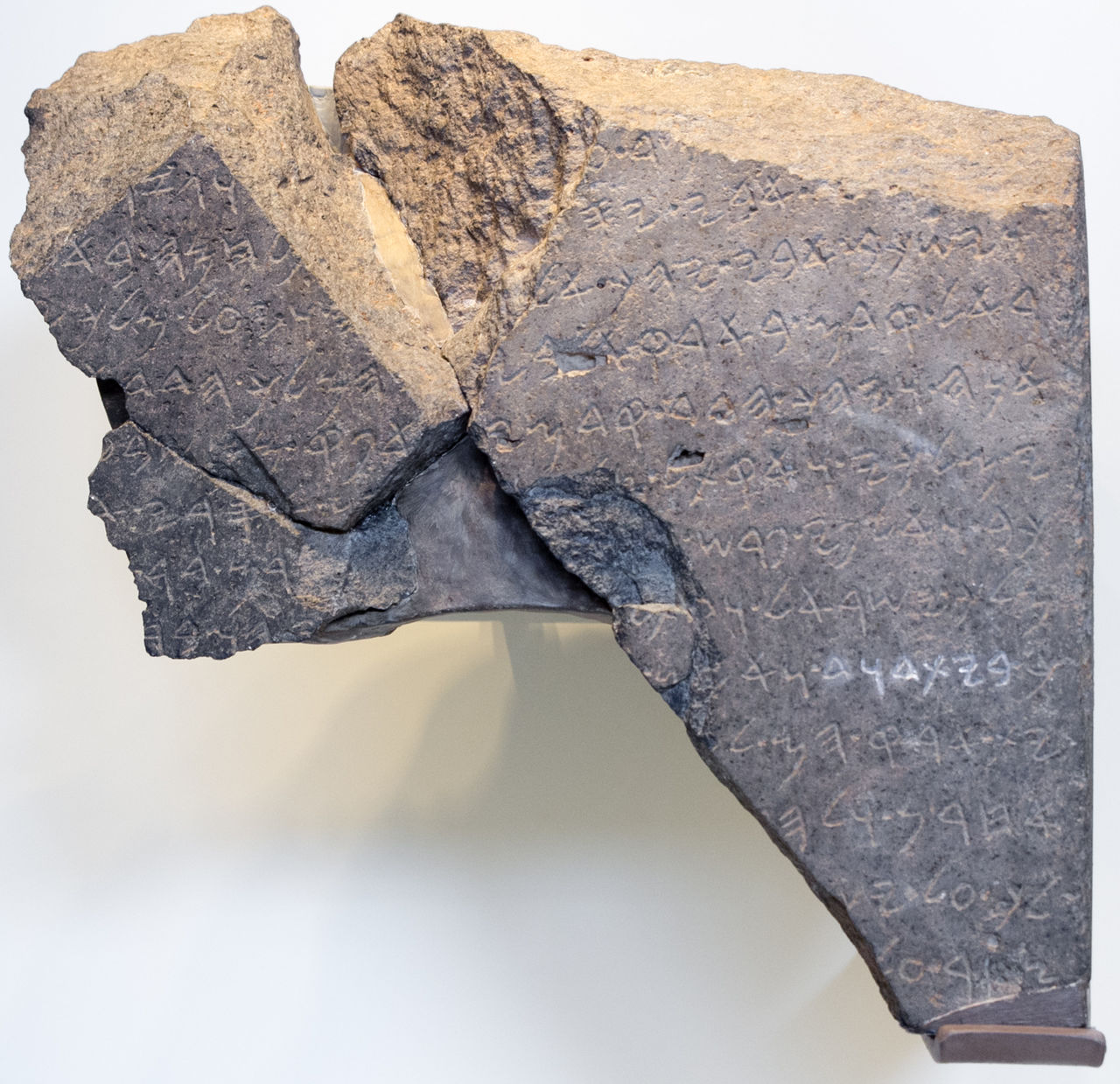
    The Tel Dan Stele, found at Tel Dan in northern Israel in 1993 during Avraham Biran's excavation, is a victory monument in Aramaic — put up by an enemy of Israel, boasting about killing its kings. Partway through, the text refers to the bytdwd: the House of David.

    That is the first known reference to the Davidic dynasty outside the Bible, and it settles something real. But be precise about what. It attests the DYNASTY, in the ninth century BC, as a thing the neighbours knew about and named. It does not attest David's own life, his psalms, or a single episode in Samuel. A dynasty called by its founder's name is strong evidence that the founder was remembered as real. It is not a photograph of him.

    Hezekiah's clay seal impression — a bulla, the lump of clay pressed with a signet to close a document — was found in the Ophel excavations in Jerusalem under Eilat Mazar, and it reads for Hezekiah, son of Ahaz, king of Judah.

    The part that matters most about that find is boring, and it is the whole point: it came out of a scientifically excavated context, in a controlled dig, with a recorded findspot. Dozens of unprovenanced Hezekiah seals circulate on the antiquities market. Every one of them is worthless as evidence, because an object with no findspot has no history — only a story told by whoever is selling it. One excavated bulla outweighs a drawer full of purchased ones.

    The Pilate Stone, found reused as a step in the theatre at Caesarea Maritima in 1961 by Antonio Frova's Italian expedition, carries a dedication naming Pontius Pilate. And it gives his title: prefect of Judaea.

    That is a small detail doing quiet work. Prefect is the military title appropriate to that province in that decade; the office was later called procurator, and Tacitus — writing generations afterward — calls Pilate a procurator, which is the natural slip of a later writer using the title of his own day. The Gospels' world requires a prefect. The stone is a prefect. Tacitus, the more famous source, is the one who is loose.

  3. Objects that describe an event the Bible describes

    The model exhibit for this whole category is Sennacherib's campaign against Judah in 701 BC, because for once we have both governments' paperwork.

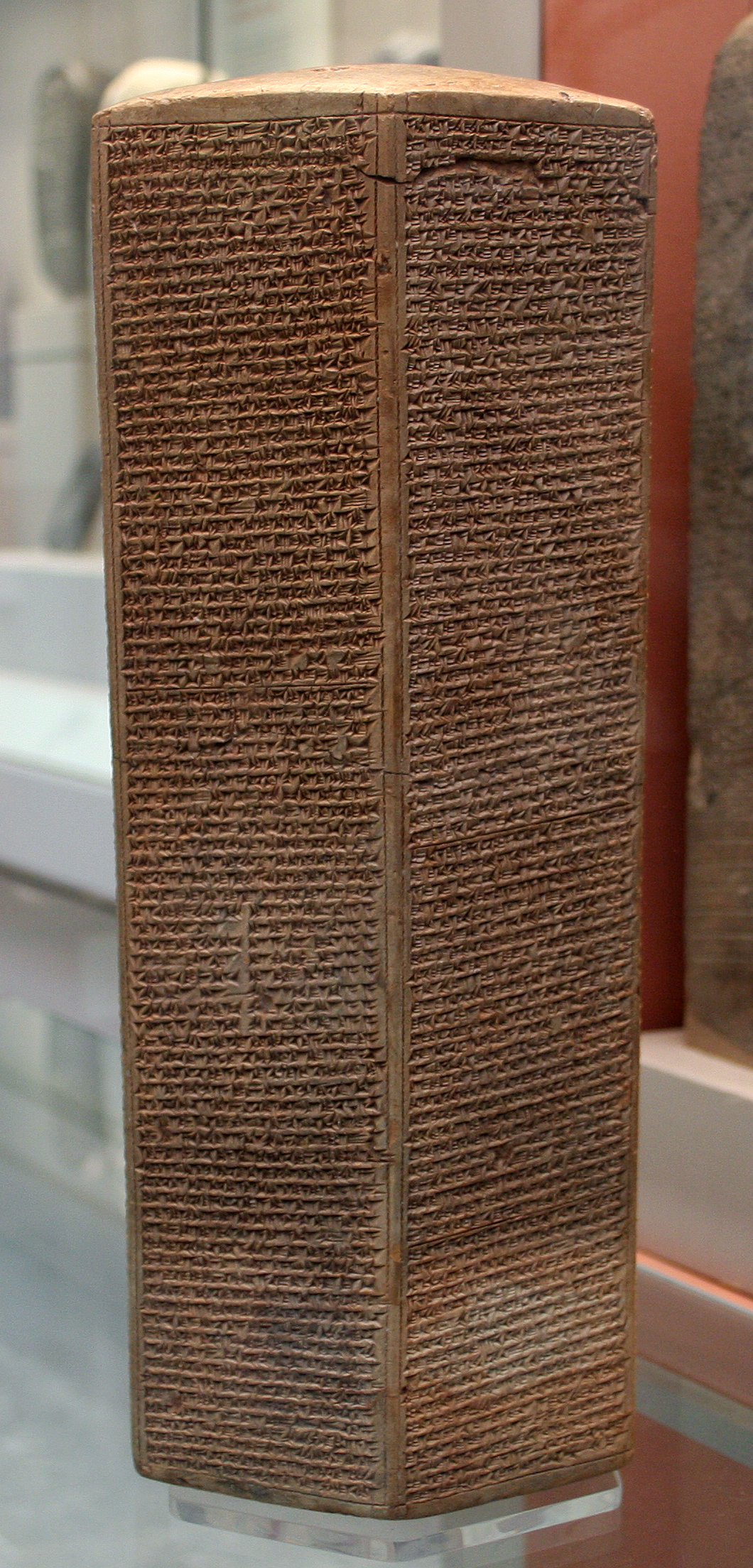
    Assyria wrote its own account on clay prisms — several survive, the best known being the Taylor Prism in the British Museum and the prism in Chicago's Institute for the Study of Ancient Cultures. Sennacherib says he took forty-six of Hezekiah's walled cities. He says he shut Hezekiah up in Jerusalem like a bird in a cage. He records the tribute Hezekiah sent, including thirty talents of gold — the same gold figure 2 Kings 18:14 gives.

    And then the prism stops. For a king whose annals exist to celebrate conquests, there is one thing conspicuously missing: any claim to have taken Jerusalem. He besieged the capital, he did not take the capital, and he wrote it up in the only way an Assyrian king could — by describing the cage and saying nothing about the bird.

    Now put the two accounts side by side and notice that each is silent exactly where it hurts. Assyria omits its failure. The biblical writer gives the tribute a single verse and gives the deliverance two chapters. Neither is neutral. Both are propaganda in the ordinary ancient sense, and reading them together is not a trick — it is what historians do with every royal inscription that survives.

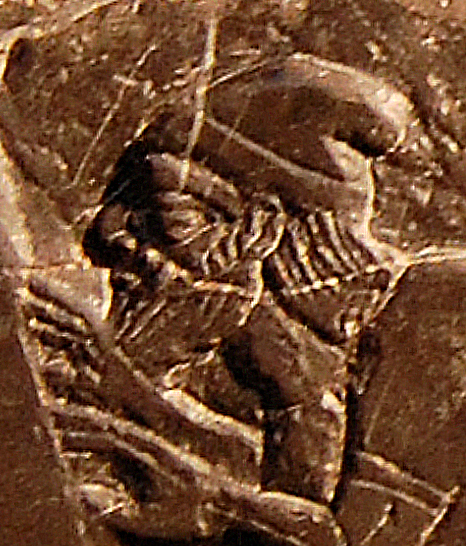
    The campaign left physical traces too. The Lachish Reliefs, carved for Sennacherib's palace at Nineveh and excavated by Austen Henry Layard, now line a room in the British Museum: the siege ramp, the archers, the battering rams, the captives going out. And at Tel Lachish itself there is a matching destruction layer, with a siege ramp on the ground where the relief puts one.

    A century later Lachish burned again, and this time somebody left a note. In 1935 James Starkey's excavation found ostraca — ink written on broken pottery — in the guardroom of the city gate. They are military correspondence from the final Babylonian advance.

    Ostracon IV is the one that stays with you. An officer reports that he is watching for the fire-signals of Lachish, according to all the signs his commander gave, because — he says — we cannot see Azekah.

    Jeremiah 34:7 names Lachish and Azekah as the last two fortified cities still holding out against Babylon. The ostracon does not mention Jeremiah and Jeremiah does not mention the ostracon. They are two men in the same collapsing country, writing about the same two towns, and one of them is watching the other's signal fire go dark.

  4. Objects that show the world was as described

    The Bible names the Hittites something like fifty times, from Abraham buying a burial cave through Uriah in David's army. For most of the nineteenth century, no other ancient source anyone could read said much of anything about them, and a confident line of criticism held that the Hittite empire was a biblical invention — a lost people that history had never lost, because they were never there.

    Then Hugo Winckler's excavations at Boğazköy in Turkey, from 1906, uncovered Hattusa: the capital of an empire, with its own royal archive in cuneiform, its own treaties, and its own law code. The Hittites were not a small tribe. They were one of the great powers of the second millennium BC.

    Now say exactly what that does and does not accomplish, because this is precisely the place where honest work and salesmanship part company.

    It removes an objection. It does not confirm a narrative. Nothing at Boğazköy says anything about Abraham or Uriah. What the dig shows is that the biblical writers were describing a real geopolitical world, casually and correctly, in a period when a later inventor would have had no way to get it right — and that a scholarly consensus about what could not have existed was simply wrong, which is worth remembering the next time you are told what could not have existed.

    Reaching that far and no farther is the difference between an argument and an advertisement.

  5. The oldest surviving text of any biblical passage

    In 1979, Gabriel Barkay was excavating burial caves at Ketef Hinnom, on the shoulder above the Hinnom Valley in Jerusalem. In one repository a volunteer found two tiny rolled sheets of silver, about the size of a cigarette butt.

    Unrolling them took years. When it was done, the scratched Hebrew letters on them turned out to carry the priestly blessing of Numbers 6 — the Lord bless you and keep you, the Lord make his face shine upon you.

    They date to around 600 BC, shortly before the Babylonian destruction. That makes them the oldest surviving text of any biblical passage in existence — roughly four centuries older than the Dead Sea Scrolls, which were themselves the previous record by a wide margin.

    Two honest qualifications belong in the same breath. These are amulets, not Scripture scrolls — they were worn, probably as protection, and the text on them is a blessing lifted into an object, not a copy of a book. And the wording is not identical to the standard Hebrew text; there are small differences, and the amulets do not include everything the passage in Numbers includes.

    What they do establish is that this specific blessing, in something very close to this specific wording, was already old and already treasured in Jerusalem before the exile — which is exactly the period a certain kind of scholarship has spent a century proposing that the material was invented.

  6. The rejected drawer — what this site leaves out, and why

    Every apologetics page has a drawer of things it quietly does not mention. This one prints it, because you cannot trust a list until you have seen what was kept off it.

    THE JAMES OSSUARY. A limestone bone-box inscribed James, son of Joseph, brother of Jesus. It surfaced on the antiquities market in 2002 with no excavation record at all, which is disqualifying before any other question is asked. A long forgery trial in Israel ended in acquittal — but acquittal on reasonable doubt is not a finding of authenticity, and the judge said as much; scholars remain divided. It is also unnecessary: James the brother of Jesus is attested by Josephus, in a passage almost nobody disputes. MannaFest does not cite the ossuary.

    THE TALPIOT "JESUS FAMILY TOMB." A first-century tomb in south Jerusalem containing ossuaries with names including Yeshua, Yosef, and Maryam. Those are among the most common names in first-century Judaea — which is why the cluster is not surprising. The statistical case built on it in a 2007 documentary was rejected by the tomb's own excavator, Amos Kloner, and by most statisticians who reviewed the method. MannaFest does not treat it as evidence for anything, in either direction.

    THE IVORY POMEGRANATE. A small ivory object with an inscription reading, in part, holy to the priests, belonging to the house of [Yahweh] — once displayed as the only surviving relic of Solomon's temple. The object itself is genuinely ancient. The inscription was judged modern by the Israel Museum's own committee. The museum published the finding against its own prize exhibit, which is what integrity looks like, and the honest response is to stop using the object.

    THE NAZARETH INSCRIPTION. A real Greek imperial edict, on marble, ordering severe punishment for anyone who disturbs a tomb or moves a body — often presented as an emperor's alarmed reaction to the empty tomb. Its provenance is unknown; it was acquired by a collector in the nineteenth century with only a note attaching it to Nazareth. A 2020 isotope study of the marble pointed to a quarry on the island of Kos, which fits a pre-Christian context entirely unrelated to Jesus. It proves nothing about the resurrection and should not be used.

    NOAH'S ARK SIGHTINGS, AND THE RON WYATT MATERIAL. Photographs of shapes on Ararat, a boat-shaped formation at Durupınar, claimed discoveries of the ark, the Red Sea chariot wheels, and the ark of the covenant. For none of it does an excavation report exist — no stratigraphy, no published finds, no independent verification. It is named here rather than ignored, because a reader who arrives having seen a video about it deserves an honest answer rather than a silence he will read as agreement.

    None of this means an excluded object is definitely a fake. It means MannaFest will not build on ground it cannot stand on. A find with no recorded findspot cannot be checked by anyone, and a claim that cannot be checked is not evidence — it is a story about an object.

  7. What archaeology cannot do at all

    It cannot show you a miracle. There is no stratum for the parting of a sea and no potsherd for a resurrection. The spade reaches the ordinary and stops.

    It cannot prove a text is true. At the absolute best, it shows that a text is at home in the world it claims to describe — which raises the plausibility of the whole and settles no individual claim.

    It cannot be commanded. Dig a site and you get what is there. Some seasons that is a seal with a king's name on it, and some seasons it is a problem for the traditional reading, and a person who only reports the first kind of season has stopped doing history.

    And it works both ways. The same discipline that produced the Tel Dan Stele produced the debates below, and this page prints them in the form their defenders would want.

The objections, at full strength

Each objection below is stated the way the people who hold it state it. If you hold one of these and think it is put unfairly here, that is a failure on our part — tell us.

None of this touches a single miracle — it is always background, never the claim

The objection

Look at the actual list. A dynasty is named. A king's seal is genuine. A governor's title is correct. Two towns really were the last ones standing. Every one of those is a fact about the ordinary furniture of the ancient world, and not one of them is the thing anybody is being asked to believe. Nobody doubts that Judah existed or that Pilate governed it. The disputed claims are that a sea opened, that a man walked out of a tomb, that a voice spoke from a mountain — and archaeology is structurally incapable of confirming any of them, since miracles by definition leave no repeatable trace. So the entire enterprise amounts to demonstrating the reliability of a book's stage directions and then hoping the reader generalizes to its plot.

The response

Grant this completely. It is correct, and any presentation that blurs it is misleading its readers. Archaeology cannot confirm a miracle, and this page will not pretend that a bulla in the Ophel says anything about the Red Sea. What can honestly be said is narrower and still worth something. First, the claim being tested by the spade is not is this miracle real but is this document the kind of document that gets things right. A text that names the correct title for a Roman governor in the correct decade, and names the correct two towns still holding out in the correct month of a siege, is a text written by people close to the events and careful about them. That does not make its supernatural claims true. It does move it out of the category of late legend composed by people with no access to the period — which is a live and serious alternative, and one that this kind of evidence genuinely bears on. Second, the direction matters. If the background had failed — if Judah's kings were unknown, if the titles were wrong, if the towns were fictional — the objector would rightly count that as damaging. Evidence that could have counted against a claim counts for something when it comes out the other way. Just not everything, and not the miracle.

The minimalists have a case: the united monarchy is not in the ground

The objection

This is the serious archaeological argument, and it is made by working excavators, not skeptics on the internet. Israel Finkelstein and Neil Asher Silberman put it plainly in The Bible Unearthed (2001): the tenth-century BC Jerusalem that has been excavated is a modest highland settlement, not the administrative capital of an empire stretching to the Euphrates. The monumental buildings once assigned to Solomon at Megiddo, Hazor, and Gezer belong on the low chronology to the ninth century — to the Omride kings of the north, whose scale is genuinely visible in the ground. On this reading the united monarchy narratives are a real memory of a real chiefdom, magnified centuries later by writers in Josiah's Jerusalem who had reasons of their own for describing a golden age. The point is not that David is a myth. The point is that the archaeological signature of the kingdom the text describes has not been found, and after a century and a half of digging in a small and heavily excavated country, absence starts to carry weight.

The response

This deserves to be reported accurately rather than dismissed, and it deserves saying that it is a scholarly dispute, not a fight between belief and unbelief — the maximalists on the other side are excavators too. Three honest observations. The chronology itself is contested: the low chronology depends on radiocarbon and pottery sequences that other specialists read differently, and the debate has moved several times in both directions rather than settling. Sites excavated more recently have complicated the picture — Khirbet Qeiyafa, excavated by Yosef Garfinkel, is a fortified tenth-century town in the Judahite lowlands with substantial walls, which is not what a tribal chiefdom is supposed to be able to build, though what it proves about Jerusalem is argued. And Jerusalem is the hardest place on earth to excavate: the relevant layers lie under a continuously inhabited, religiously contested city, and the areas one would most want to dig are the areas nobody may dig. Absence of evidence carries weight in proportion to how much looking was possible. Where this honestly lands is that the scale of the united monarchy is a genuinely open question in the field, that MannaFest will not pretend it is closed, and that the Tel Dan Stele independently establishes what matters most theologically — that a dynasty named for David was a known fact to Israel's neighbours within about a century and a half of the events.

Archaeology has also embarrassed the text, and those cases get quietly dropped

The objection

Take Jericho, the most famous case. Kathleen Kenyon excavated it in the 1950s with better stratigraphic method than anyone before her, and concluded that the city's great destruction came around 1550 BC — generations before any plausible date for Joshua — and that at the traditional conquest date the site was essentially unoccupied. Bryant Wood challenged her reading in 1990 on the basis of pottery, and the argument continues, but subsequent radiocarbon work has largely supported the earlier date. Widen the lens and the conquest as a whole has an awkward archaeological profile: a number of the cities Joshua is said to have taken show no destruction layer at the right time, and several were not fortified cities then at all. And the exodus itself leaves no trace in Egyptian records — no mention of a departure, a plague sequence, or a drowned force, from a bureaucracy that documented obsessively and kept administrative records of everything. A believer who cites Sennacherib's prism as evidence has already agreed that this sort of thing counts. He cannot then rule it out when it points the other way.

The response

The last sentence is the fair one, and it is accepted here. Evidence does not become inadmissible when it is inconvenient. So: the Jericho dating is a real problem for the traditional reconstruction, Wood's redating is a minority position among archaeologists, and this page will not present it as though it had won. The conquest's archaeological profile is genuinely mixed. And the exodus is not in the Egyptian records. What can be said in return is specific rather than sweeping. Egyptian royal inscriptions are a genre that never records defeat — Sennacherib's silence about Jerusalem, above, is the same phenomenon on the other side of the argument, and one cannot treat Assyrian omission as revealing and Egyptian omission as decisive. The book of Joshua itself describes most cities as taken rather than burned, and names only three that were burned, which changes what one should expect to find. And the Merneptah Stele, from around 1208 BC, names Israel as a people already in Canaan, which sets a real outer limit on how late the whole story can be pushed. None of that resolves Jericho. The honest position is that a believer holds the conquest chronology loosely, holds the text firmly, and does not pretend the ground has said yes when it has said something complicated.

This list was assembled by believers, and confirmation bias explains it

The objection

Consider how a page like this actually gets made. Somebody who already holds the conclusion searches for finds that support it, and the search terms themselves guarantee the result. Discoveries that fit are memorable, get their own museum placards, and circulate for decades in sermons and study Bibles. Discoveries that do not fit are technical, appear in excavation reports nobody outside the field reads, and never acquire a nickname. So the visible evidence is filtered twice before a reader ever sees it — once by what gets published prominently, once by who is doing the assembling. Add that popular Christian presentation has a long record of overstating: finds announced as proof and later withdrawn, unprovenanced objects promoted for years, television specials with a conclusion written before the dig. A reader is entitled to ask why he should trust the selection on this particular page, assembled as it was by people who wanted the answer to come out a certain way.

The response

He should not simply trust it, and this page is built on the assumption that he will not. That is what the rejected drawer is for. The way to test a curated list is not to ask whether the curator was neutral — nobody is — but to ask whether he shows you the cases that cost him something. Three of the five items in that drawer are objects Christian audiences have been shown for years as evidence; one of them was retired because the museum holding it published against its own exhibit; the whole section on the conquest and Jericho concedes the objector's point rather than managing it. The exclusions here also follow a rule stated in advance and applied without exception: no provenance, no citation. That rule threw out the James ossuary even though the inscription may well be genuine and would be striking if it were. A rule that only ever removes things you did not want anyway is not a rule. Beyond that, everything cited on this page comes from published excavations that other archaeologists — including archaeologists with no interest in the Bible being true — can and do check. The correct posture for a reader is exactly the one the objection recommends: verify the sources, notice what a page omits, and trust it in proportion to what it is willing to lose.

Even the good finds are read through the text, so the confirmation is circular

The objection

Notice how the interpretation actually runs. A fragmentary Aramaic inscription contains a sequence of consonants; because the excavators already know the biblical House of David, they read it that way — and a minority of scholars have proposed other readings of the same letters. A bulla names a Hezekiah son of Ahaz; the identification with the king depends on the biblical genealogy being brought to the object. Ostracon IV mentions signal fires and a town; Jeremiah supplies the drama. In each case the Bible is doing the interpretive work, and then the interpreted object is presented as independent confirmation of the Bible. That is a loop, and it is the standard method of the field's more traditional wing.

The response

This is a sharper objection than it first looks, and part of it must simply be granted: reading any inscription requires a framework, and biblical archaeology's framework is the Bible. But the loop is not as closed as the objection needs. First, the readings are constrained by things outside the text — palaeography dates the letter forms, stratigraphy dates the layer, and the language and orthography have to fit the period independently. An interpretation that required a ninth-century stone to use eighth-century letter shapes would be rejected regardless of what the Bible said. Second, the objections came from inside the field and were argued out in public: the alternative readings of the Tel Dan Stele were proposed by specialists, debated in journals, and are today held by a minority — not because believers outvoted them but because the epigraphic case for the standard reading held up. Third, and most importantly, the framework makes falsifiable predictions. The text says Pilate was a prefect; a stone from Caesarea could have said procurator, and if it had, that would have been reported as a problem, because that is exactly how the field treated Jericho. A framework that risks being wrong and turns out right has earned something. It has not earned everything, and where a reading is genuinely contested — as with the minority views on Tel Dan — this site says so rather than presenting the majority as unanimity.

Go further

Sources: Avraham Biran and Joseph Naveh, "An Aramaic Stele Fragment from Tel Dan," Israel Exploration Journal 43 (1993) — the excavation publication of the House of David inscription. · Eilat Mazar, The Ophel Excavations to the South of the Temple Mount (Shoham, 2015) — the Hezekiah bulla in its excavated context. · Antonio Frova, "L'iscrizione di Ponzio Pilato a Cesarea," Rendiconti dell'Istituto Lombardo 95 (1961) — the first publication of the Pilate Stone. · The Taylor Prism (British Museum) and the Sennacherib Prism (Institute for the Study of Ancient Cultures, Chicago) — Assyria's own annals of the 701 BC campaign; translated in James B. Pritchard, ed., Ancient Near Eastern Texts Relating to the Old Testament (Princeton, 1969) — the standard scholarly text collection. · The Lachish Reliefs, British Museum, from Sennacherib's palace at Nineveh; excavated by Austen Henry Layard, Nineveh and Its Remains (1849) — public domain. · Harry Torczyner (Tur-Sinai), The Lachish Letters (Oxford University Press, 1938) — the ostraca from James Starkey's 1935 excavation, including Ostracon IV. · Hugo Winckler's excavations at Boğazköy (Hattusa) from 1906; the Hittite laws and royal archive — the discovery that ended the claim that the Hittites were a biblical invention. · Gabriel Barkay et al., "The Amulets from Ketef Hinnom: A New Edition and Evaluation," Bulletin of the American Schools of Oriental Research 334 (2004) — the re-examination confirming the late pre-exilic date. · Josephus, Antiquities of the Jews 20.200 — public domain; the attestation of James the brother of Jesus that makes the ossuary unnecessary. · Israel Finkelstein and Neil Asher Silberman, The Bible Unearthed (Free Press, 2001) — cite-only; the minimalist case on the united monarchy, stated by its ablest defenders. · Kathleen Kenyon, Digging Up Jericho (Benn, 1957) — cite-only; the excavation and dating that remain the majority position. · Bryant G. Wood, "Did the Israelites Conquer Jericho? A New Look at the Archaeological Evidence," Biblical Archaeology Review 16:2 (1990) — cite-only; the minority redating, presented here as a minority position. · Yosef Garfinkel and Saar Ganor, Khirbet Qeiyafa Vol. 1 (Israel Exploration Society, 2009) — the tenth-century fortified site that complicates the low chronology. · The Merneptah Stele (Egyptian Museum, Cairo), c. 1208 BC — the earliest extrabiblical mention of Israel as a people in Canaan. · Israel Museum committee finding on the ivory pomegranate inscription (2004) — the museum publishing against its own exhibit. · Kyle Harper et al., "Establishing the provenance of the Nazareth Inscription," Journal of Archaeological Science: Reports (2020) — the isotope study pointing to Kos. Every cited work — the sources registry →