
Skip to content
mannafest.faith

The Evidence Room · The Empty Tomb File

The resurrection

Gary Habermas's survey of the critical literature since 1975 reports that a short list of facts about the weeks after the crucifixion is granted by most writers on the subject. They disagree about what explains them.

3 objects in this room

Each one is photographed, dated, and placed in the museum that holds it, with what it puts on the table and exactly what its text says.

The Pilate Stone: Israel Museum, Jerusalem (replica at Caesarea)
Fallaner· CC BY-SA 4.0 ·Commons

AD 26–36

The Pilate Stone

Israel Museum, Jerusalem (replica at Caesarea) · Caesarea Maritima, 1961

A dedication naming [Pon]tius Pilatus, [Praef]ectus Iuda[ea]e — Pilate, in stone, from his own province, with his exact title.

The exact reading

The title is prefect, not procurator: the Gospels' governor is confirmed, and Tacitus's later term for him is the looser one.

The Caiaphas Ossuary: Israel Museum, Jerusalem
deror_avi· CC BY-SA 3.0 ·Commons

1st century AD

The Caiaphas Ossuary

Israel Museum, Jerusalem · North Talpiot, Jerusalem, 1990

An ornate limestone bone-box scratched with the name Yehosef bar Qayafa — Joseph, son of Caiaphas — holding the bones of a man of about sixty.

The exact reading

Most scholars identify him with the high priest of the trial narratives; the identification rests on the name and the date, and a minority reads the inscription differently.

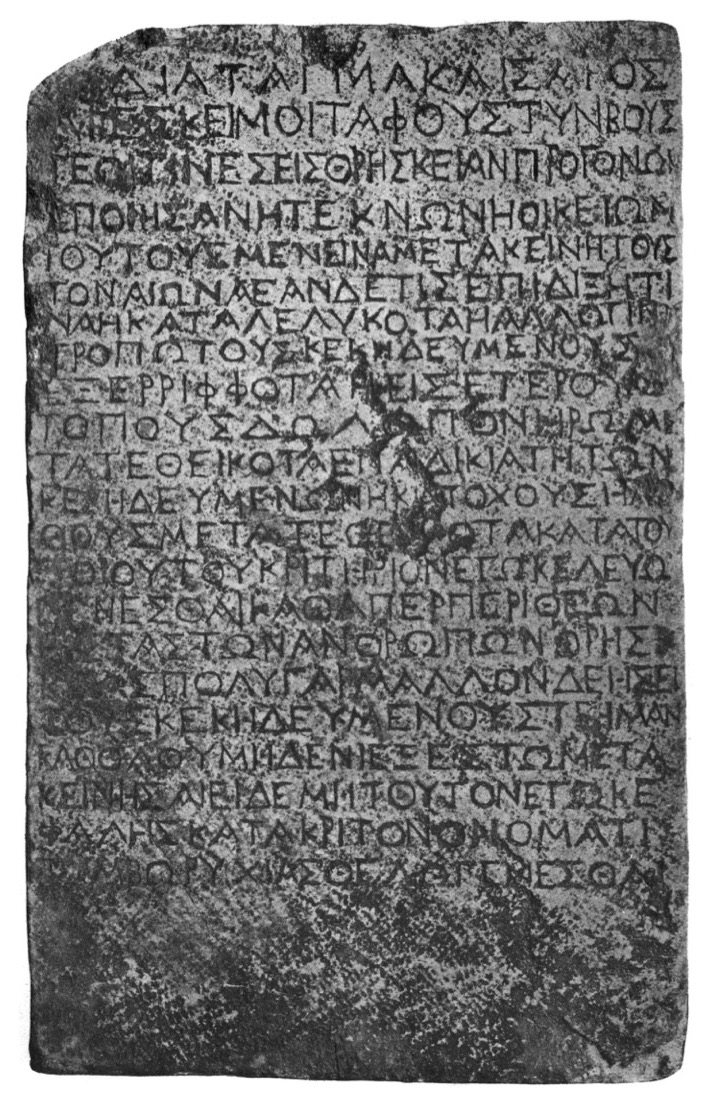
The Nazareth Inscription: Cabinet des Médailles, Paris
Cumont, F.· Public domain ·Commons

1st century AD (disputed)

The Nazareth Inscription

Cabinet des Médailles, Paris · Acquired in Paris, 1878; said to come from Nazareth

An imperial rescript ordering capital punishment for anyone who breaks open a tomb or moves a body — an emperor legislating about disturbed graves.

The exact reading

Its provenance is not documented, its emperor is disputed from Augustus to Claudius, and isotope work on the marble points to Kos rather than Galilee. It is printed here as an object, not as an argument.

The questions this room answers

Did Jesus really rise from the dead?

There is a short list of facts about the weeks after the crucifixion that nearly every historian grants (including historians who conclude no resurrection happened), and the argument is about which explanation of that list is least strained.

THE CLAIM

The empty tomb and the appearances are best explained by a resurrection.

  1. 1Start where the argument does not need the Bible to be perfectThe record
  2. 2The short list itselfThe record
  3. 3The oldest paragraph in the New TestamentManuscript
  4. 4What the creed carries, and what it does notWitness

WHERE IT STANDS

The facts are granted; the explanation is where historians part.

strong confidence

8 steps9 objections answered at full strength18 named worksWalk it →

The exhibits behind this room

Sources: Every figure in this room is sourced and dated. Object photographs come from Wikimedia Commons with the license verified per file; the research base is excavation reports, critical editions, and peer-reviewed scholarship. Every cited work, the sources registry →