
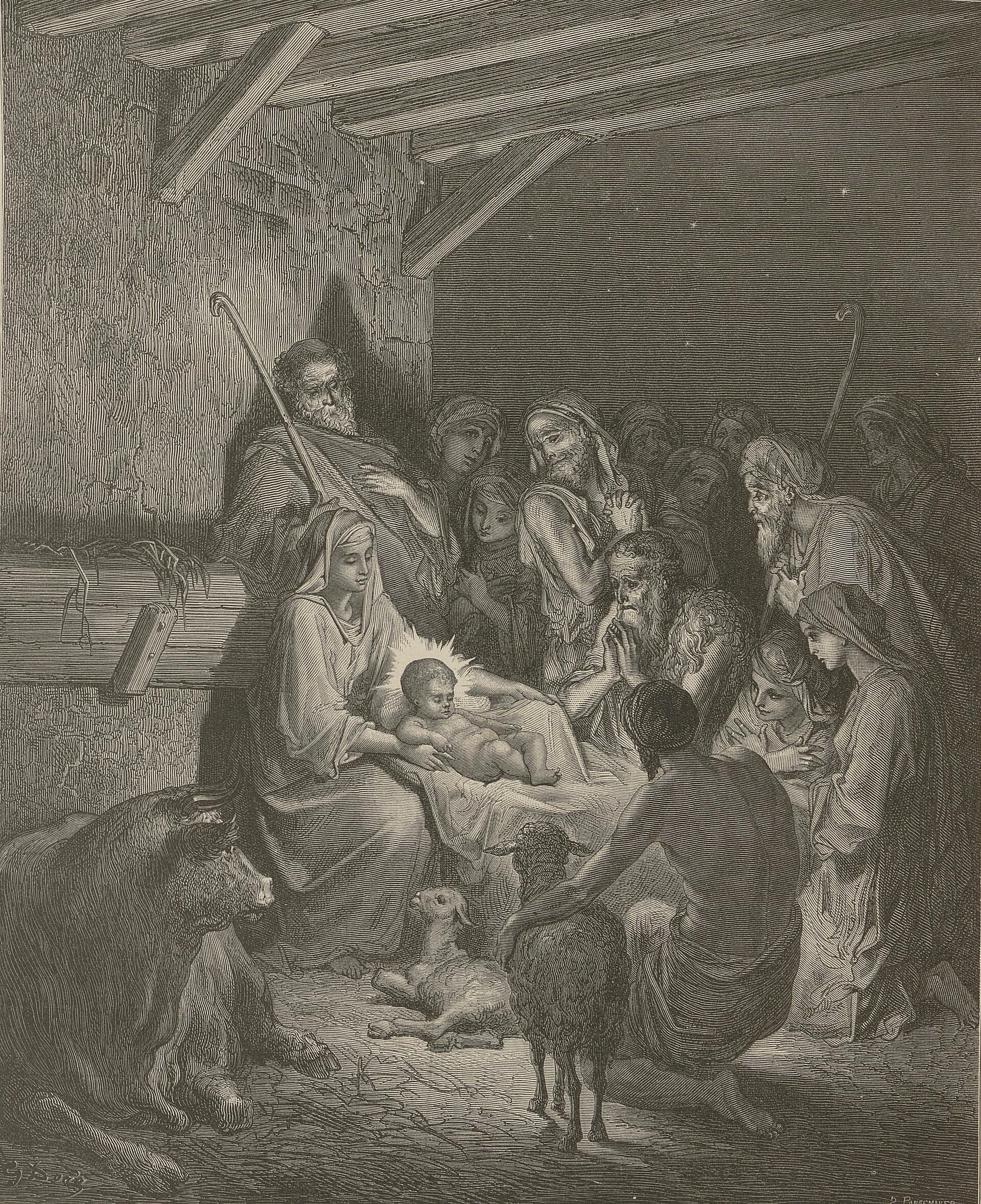
For new believers
Christianity 101
This page sets out the whole Christian faith in outline for a new believer: ten basics in plain words, each standing on its Scripture, each opening into as much depth as you want.
Not yet a believer, or not sure? Start with “What is the Gospel?” →
Summary
Ten basics of the faith, in the order a new believer needs them. Each one stands on verses printed here, and opens into more.
- God is one. He is holy and good, and He can be known.
- Jesus is God the Son. He was born a man, died, and rose.
- The Bible is God's own word, and the place the rest is learned.
- Grace is the gift, and faith is the hand that takes it.
- The Holy Spirit lives in you and gives the power to obey.
Who God is
1.There is one God, and He is good
Christianity begins with a Person. One God made everything, and He is holy, good, and personal. He can be known.
He has shown Himself as Father, Son, and Holy Spirit: one God in three Persons. Christians call that the Trinity. It is not a riddle we solved; it is what God revealed about Himself, and most of the church has confessed it since the earliest centuries.
Hear, O Israel: The LORD our God, the LORD is One.The Shema: Israel's daily confession, and the sentence Jesus called the first commandment of all.
How the church came to say “three Persons, one God”Matthew 28:19 · John 1:1 · AD 325
The doctrine is not a later invention laid on top of the Bible. It is the shortest way to hold everything the Bible says at once: the Father is God, the Son is God, the Spirit is God, and there is one God.
Jesus commands baptism into one name, singular, that is then given as three. John opens his Gospel saying the Word was with God and was God. The councils of Nicaea (325) and Constantinople (381) wrote the confession down because men were denying it, not because anyone had just thought of it.
Man's chief end is to glorify God, and to enjoy him for ever.
The Westminster Shorter Catechism· Question 1, 1647Reformed
Who Jesus is
2.Jesus is God the Son: crucified and risen
Jesus of Nazareth is God the Son. He became a real human being, lived a sinless life, died on a Roman cross carrying our sins, and rose bodily from the grave.
The resurrection is the hinge of everything. Because He is alive, His promises hold, and He can be trusted with your life today.
The Word became flesh and made His dwelling among us. We have seen His glory, the glory of the one and only Son from the Father, full of grace and truth.The Word became flesh, a real body people saw and touched. They lived alongside Him as a man.
Fully God and fully man: why both halves matterHebrews 2:17 · Colossians 2:9
If Jesus were only a man, His death would be one more death. If He were only God, He could not have died in our place as one of us.
Scripture insists on both: He grew tired, wept, and bled, and He forgave sins, took worship, and calmed a storm with a word. The church confessed it at Chalcedon (451) in one sentence: one Person, two natures, neither confused nor divided.
A man who was merely a man and said the sort of things Jesus said would not be a great moral teacher.
C. S. Lewis· Mere Christianity (quoted in brief; in copyright), 1952Anglican
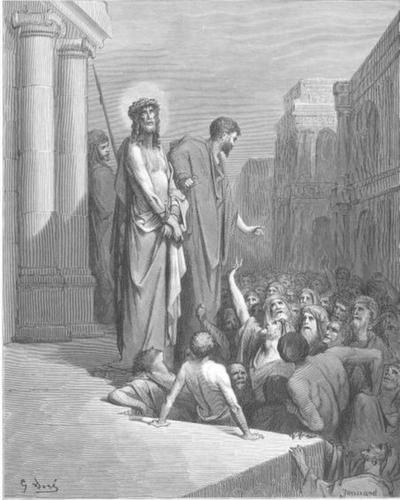
John 19:5
Christ Presented to the People (Ecce Homo)
Christ Presented to the People (Ecce Homo)
Gustave Doré (1866) · public domain
How God speaks
3.The Bible is God's Word
The Bible is one library of 66 books, written across roughly fifteen centuries by about forty authors, telling a single story that arrives at Jesus.
Christians trust it as God's own Word: true, sufficient, and worth a lifetime. Start in the Gospel of John, then Mark; add a Psalm a day. Do not worry about the parts you do not understand yet, obey the parts you do.
All Scripture is God-breathed and is useful for instruction, for conviction, for correction, and for training in righteousness,Paul coined the word “God-breathed” to describe the Bible. It tells you where Scripture came from, from God Himself, before it ever tells you what to do with it.
How we know we have what they wrote5,100+ Greek manuscripts
The originals are lost, as they are for every ancient book. What survives is roughly 5,100 to 5,300 Greek manuscripts of the New Testament, plus early translations and quotations, an embarrassment of riches next to any other work from the period.
The differences between copies are compared out in the open, and the footnotes in your Bible are where that work is reported. Nothing the church believes rests on a disputed line.
Ignorance of the Scriptures is ignorance of Christ.
Jerome· Commentary on Isaiah, prologue, c. 410Early church
How you are saved
4.You are saved by grace, through faith
You did not earn your salvation, and you do not keep it by performing. God saved you by grace. His undeserved kindness, through faith in Jesus.
Good works matter enormously, but they are the fruit of salvation, never the root. When you fail, and you will: you confess, He forgives, and you keep walking.
For it is by grace you have been saved through faith, and this not from yourselves; it is the gift of God, not by works, so that no one can boast.Grace is the source, faith is the hand, and even the hand is a gift, so no one can boast.
Justified, adopted, and being made holyThree words for one rescue
Justification is a courtroom word: God declares you righteous on the basis of Christ's record, not yours, the moment you trust Him. That verdict is final, it will never be reversed.
Adoption is a family word: you are a son or daughter with the family name. Sanctification is the slow work that follows, the Spirit making you in practice what God has already declared you to be.
I felt my heart strangely warmed. I felt I did trust in Christ, Christ alone, for salvation; and an assurance was given me that He had taken away my sins, even mine, and saved me from the law of sin and death.
John Wesley· Journal, 24 May 1738, 1738Methodist
Talking with God
5.Prayer is talking with your Father
Prayer is a child talking to a Father, in your own words: thank Him, ask Him, admit the truth, listen.
Jesus gave a model that covers everything: God's honour, His kingdom, daily bread, forgiveness, protection. Pray it slowly and mean it; then pray in your own words, every day.
So then, this is how you should pray: ‘Our Father in heaven, hallowed be Your name.“Our Father”, the first two words are the whole revolution. Read the rest of the prayer on the verse page.
A shape for prayer when you do not know how to startMatthew 6:9–13
Adoration: tell Him what He is like. Confession: name what you did, plainly, and receive the forgiveness He has already promised. Thanksgiving: count what He has given this week.
Supplication: ask: for others first, then for yourself, with real specifics. Then stop talking. Read a few verses slowly and let Him answer out of them.
Prayer is an offering up of our desires unto God, for things agreeable to his will, in the name of Christ, with confession of our sins, and thankful acknowledgment of his mercies.
The Westminster Shorter Catechism· Question 98, 1647Reformed
God in you
6.The Holy Spirit lives in you
When you believed, God the Holy Spirit came to live in you. He is God Himself, your Helper.
He comforts, convicts, teaches, and gives power to live and to witness. The Christian life is lived by cooperating with the Spirit already at work in you.
But you will receive power when the Holy Spirit comes upon you, and you will be My witnesses in Jerusalem, and in all Judea and Samaria, and to the ends of the earth.”The last promise Jesus made before He left: power, and a job, in that order.
What the Spirit actually doesJohn 16:8–14 · Galatians 5:22–23
He convicts the world of sin, points to Christ rather than to Himself, and teaches you what Jesus said. He seals you. God's own mark of ownership on you, and prays for you when you have run out of words.
His fruit is character: love, joy, peace, patience, kindness, goodness, faithfulness, gentleness, self-control. His gifts are for serving other people, not for a spiritual scoreboard. Ask Him to fill you; He is not reluctant.
And I believe in the Holy Ghost, The Lord and giver of life, Who proceedeth from the Father and the Son, Who with the Father and the Son together is worshipped and glorified, Who spake by the Prophets.
The Nicene Creed· as confessed in the Book of Common Prayer, 381 / 1662The whole church
Your new family
7.You need the church, and it needs you
Christianity is a family faith, nobody walks alone. Find a local church where the Bible is taught and Jesus is loved, and plant yourself there: show up, serve, let people know you.
You have also joined a family that runs across twenty centuries and every continent, a great cloud of witnesses who ran this race before you and are cheering you on.
Let us not neglect meeting together, as some have made a habit, but let us encourage one another, and all the more as you see the Day approaching.Written to believers who were drifting away quietly. The cure is showing up.
What a church is forActs 2:42
The first church devoted itself to four things: the apostles' teaching, fellowship, the breaking of bread, and prayer. Every healthy congregation since is recognisable by the same four.
You are not a spectator there. Every believer is given something to contribute, and the New Testament's fifty-odd “one another” commands are impossible to obey alone.
He can no longer have God for his Father, who has not the Church for his mother.
Cyprian of Carthage· On the Unity of the Church, 6, c. 251Early church
Two given signs
8.Baptism and the Lord's Supper
Jesus left His church two simple, physical acts: things you can see and touch, given so the gospel is preached to your body as well as your ears.
Baptism is your public start: down into the water and up again, picturing His death and resurrection, and yours. The Lord's Supper is the ongoing family meal: bread and cup, remembering His body and blood until He comes.
If you have believed and have not been baptized, that is your next step. Talk to your church this week.
Therefore go and make disciples of all nations, baptizing them in the name of the Father, and of the Son, and of the Holy Spirit,Baptism is not an optional extra. It is inside the commission itself.
For as often as you eat this bread and drink this cup, you proclaim the Lord’s death until He comes.The Supper looks backward to the cross and forward to His return at the same time.
What the water and the bread meanRomans 6:3–4 · 1 Corinthians 11:23–29
Baptism does not save you, the thief on the cross was never baptized and went to paradise that day. It announces what has already happened to you, the way a wedding ring announces a marriage.
At the Supper, examine yourself, put right what you can with the people around you, and come. It is not a prize for the sorted; it is food for the family, and Christ Himself is the host.
Baptize into the name of the Father, and of the Son, and of the Holy Spirit, in living water… And concerning the Thanksgiving, give thanks in this way.
The Didache· chapters 7 and 9: the earliest church manual, c. AD 100Early church
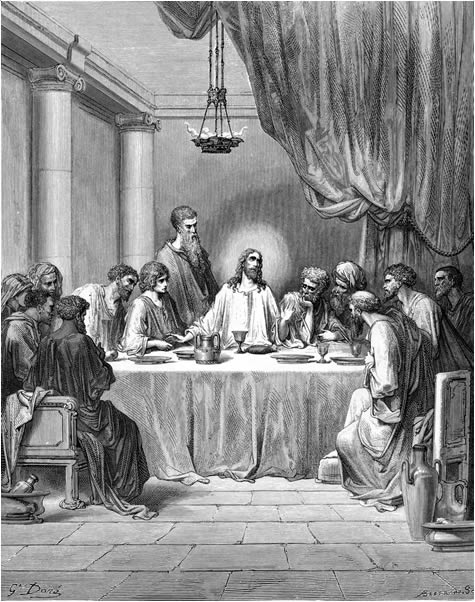
John 13 · Luke 22:19–20
Jesus and the Disciples at the Last Supper
Jesus and the Disciples at the Last Supper
Gustave Doré (1866) · public domain
The daily walk
9.Growing takes roots, not sprints
Christians grow the way trees grow: slowly, with roots. The pattern is old and simple: the Word daily, prayer daily, fellowship weekly, and quick confession when you sin.
Habits beat intentions every time. A chapter a day with a notebook will change your life inside a year.
But his delight is in the Law of the LORD, and on His law he meditates day and night.The blessed man is not the busy one. He is the one whose roots are in the water.
A first-year plan you can actually keepAbout fifteen minutes a day
Read John, then Mark, then Acts, then Romans; add a Psalm and a chapter of Proverbs when you want more. Write down one sentence a day: what this says about God, and what you will do about it.
Expect dry weeks. Feelings follow obedience far more often than they lead it. When you miss three days, start again on the fourth. Do not start over at Genesis, and do not quit.
Take time to be holy, speak oft with thy Lord; abide in Him always, and feed on His Word.
William D. Longstaff· “Take Time to Be Holy”, 1882Holiness
The story ahead
10.Tell the story, and expect Him back
The good news that found you is meant to travel. You do not need a degree; you are a witness. Tell people what Jesus did for you, and be ready to say why you trust Him.
And live looking forward. Jesus promised to return: visibly, bodily, in glory, to judge the world and set everything right. Every generation of Christians has watched for Him. So do we.
But in your hearts sanctify Christ as Lord. Always be prepared to give a defense to everyone who asks you the reason for the hope that is in you. But respond with gentleness and respect,Always ready with a reason, and Peter adds how: with gentleness and respect.
“Men of Galilee,” they said, “why do you stand here looking into the sky? This same Jesus, who has been taken from you into heaven, will come back in the same way you have seen Him go into heaven.”The angels' promise at the ascension: the same Jesus, coming the same way.
What Christians expect, and what they hold loosely1 Thess 4:16–17 · Revelation 21
The centre is settled: Christ will return in person, the dead will rise, He will judge, and He will make all things new, a real new heavens and a real new earth.
The order of events is where believers differ, and charitably so. This site's tradition, Wesleyan-Pentecostal, holds that Jesus returns before a coming time of tribulation and then rules on earth for a thousand years, and the page shows you the other views Christians hold too, with the verses each one stands on.
Expect great things from God; attempt great things for God.
William Carey· sermon at Nottingham, on Isaiah 54:2–3, 1792Baptist
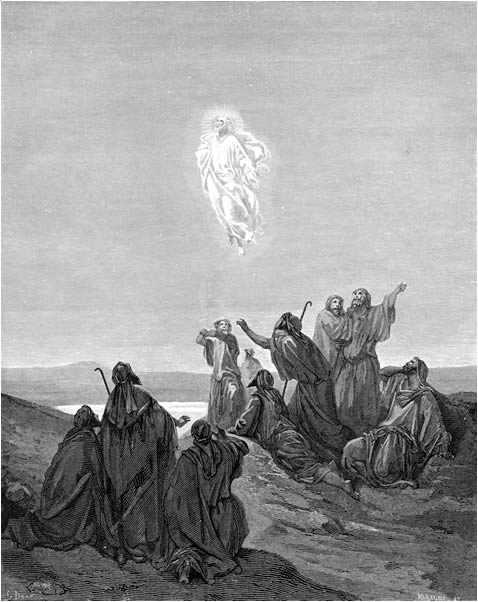
Acts 1:9–11
The Ascension: “this same Jesus… will come back in the same way”
The Ascension
Gustave Doré (1866) · public domain
What Christians have confessed together
The two creeds
Long before anyone had a printed Bible at home, converts learned the faith as a confession they could say out loud. These two are the oldest and the most widely held. Say them slowly; every clause is drawn from Scripture.
The Apostles' Creed
The baptismal confession, c. AD 200–400
I believe in God the Father Almighty, Maker of heaven and earth: And in Jesus Christ his only Son our Lord: Who was conceived by the Holy Ghost, born of the Virgin Mary: Suffered under Pontius Pilate, was crucified, dead, and buried: He descended into hell; The third day he rose again from the dead: He ascended into heaven, and sitteth on the right hand of God the Father Almighty: From thence he shall come to judge the quick and the dead. I believe in the Holy Ghost: The holy catholic Church; the Communion of Saints: The Forgiveness of sins: The Resurrection of the body: And the life everlasting. Amen.
Not written by the twelve apostles at one sitting, despite the name. It grew out of the questions asked of converts at baptism in Rome, Do you believe in God the Father? In Jesus Christ His Son? In the Holy Ghost?, and reached the wording above by the eighth century. It is still the creed most churches say at a baptism.
The Nicene Creed
The council's confession, AD 325 and 381
I believe in one God the Father Almighty, Maker of heaven and earth, and of all things visible and invisible: And in one Lord Jesus Christ, the only-begotten Son of God, begotten of his Father before all worlds, God of God, Light of Light, Very God of very God, begotten, not made, being of one substance with the Father, by whom all things were made: Who for us men and for our salvation came down from heaven, and was incarnate by the Holy Ghost of the Virgin Mary, and was made man, and was crucified also for us under Pontius Pilate. He suffered and was buried, and the third day he rose again according to the Scriptures, and ascended into heaven, and sitteth on the right hand of the Father. And he shall come again with glory to judge both the quick and the dead: whose kingdom shall have no end. And I believe in the Holy Ghost, The Lord and giver of life, who proceedeth from the Father and the Son, who with the Father and the Son together is worshipped and glorified, who spake by the Prophets. And I believe one Catholick and Apostolick Church. I acknowledge one Baptism for the remission of sins. And I look for the Resurrection of the dead, and the life of the world to come. Amen.
Two words in the creeds that trip people up“catholic” · “he descended into hell”
Catholic here means universal: the whole church, in every place and every century. It is not the name of a denomination; Baptists, Methodists, Presbyterians and Anglicans all say this line.
He descended into hell renders an older phrase for the realm of the dead. The clause is confessing that Jesus really died. He went where the dead go, not that He was punished further after the cross.
Where the creeds came fromAD 325 · 381 · Chalcedon 451
The creeds were written in response to specific denials: that Jesus was a created being, that the Spirit was less than God, that the Son only appeared to be human.
Each line is therefore a fence around something the church already believed and read in Scripture, which is why they still read like a summary of the New Testament rather than an addition to it.
Where to go from here
Works cited on this page
- The Apostles' Creed & The Nicene Creed, as confessed in the Book of Common Prayer (1662) — quoted in full below · Public domain
- The Westminster Assembly, The Shorter Catechism (1647), Q. 1 and Q. 98 — the chief end of man; the definition of prayer · Public domain
- The Didache, The Teaching of the Twelve Apostles, ch. 7 & 9 — the earliest surviving church manual, on baptism and the Supper · Public domain
- Cyprian of Carthage, On the Unity of the Church (c. 251) — the church as mother · Public domain
- Jerome, Commentary on Isaiah, prologue (c. 410) — ignorance of the Scriptures · Public domain
- John Wesley, The Journal of John Wesley, 24 May 1738 — Aldersgate: assurance by faith alone · Public domain
- William D. Longstaff, “Take Time to Be Holy” (1882) — the daily walk · Public domain
- C. S. Lewis, Mere Christianity (1952) — quoted in brief under fair use: the book is in copyright; go and read it · Cited only
- Gustave Doré, Ecce Homo; The Last Supper; The Ascension (1866) — the plates on this page · Public domain
Scripture: Berean Standard Bible (public domain, 2023); KJV and ASV are one click away on every verse page. Every cited work: the sources registry →
Questions? Write to us. Marcus Brown reads every message.