
Psalms 48:5
in Psalms 48They saw and were astounded; they fled in terror.
BSB
The same verse in ASV and KJV ▾
ASV
They saw it, then were they amazed; They were dismayed, they hasted away.
KJV
They saw it, and so they marvelled; they were troubled, and hasted away.
⋯
This verse in Psalms 48
Commentary
12 notes on this verseThey saw it,.... Either the city or the power of God, as Aben Ezra; or, as Jarchi, God himself going forth to fight against the nations.
This site's exposition
For behold, the kings assembled
on Psalms 48:4-6
For behold, the kings assembled names a deliverance the psalm never dates or locates. They saw the city, were astounded, and fled in terror. What took hold of them there was anguish like a woman in labor.
The record, by era
The Church Fathers3 voices
As he is recognized, the kings of the earth are disturbed.
This, I say, is man's real death, when souls that know not God shall be consumed in long-protracted torment with raging fire, into which certain fiercely cruel beings shall cast them, who were unknown before Christ and brought to light only by his wisdom.
"They saw it, and so they marvelled" [Psalm 48:4]. After their marvelling at the miracles and glory of Christ, what followed? "They were troubled, they were moved" [Psalm 48:5], "trembling took hold upon them." Whence took trembling hold upon them, but from the consciousness of sins? Let them run then, king after a king; kings, let them acknowledge the King. Therefore says He elsewhere, "Yet have I been set by Him a King upon His holy hill of Sion."...A King then was heard of, set up in Sion, to Him were delivered possessions even to the uttermost parts of the earth. Kings behooved to fear lest they should lose the kingdom, lest the kingdom be taken from them. As wretched Herod feared, and for the Child slew the children. [Matthew 2:16] But fearing to lose his kingdom, he deserved not to know the King. Would that he too had adored the King with the Magi: not by ill-seeking the kingdom, slain the Innocents, and perished guilty. For as concerning him, he destroyed the Innocents: but as for Christ, even a Child, the children dying for Him did He crown. Therefore behooved kings to fear when it was said, "Yet have I been set a King by Him upon His holy hill of Sion," and inheritance to the uttermost parts of the earth shall He give Him, who set Him up King....Thence also this is said to them, "Understand now therefore, O you kings; be instructed, you judges of the earth. Serve the Lord with fear, and rejoice unto Him with trembling." And what did they? "There pains as of a woman in travail." What are the pains "as of a woman in travail," but the pangs of a penitent? See the same conception of pain and travail: "Of Your fear" (says Isaiah) "we have conceived, we have travailed of the Spirit of salvation." [Isaiah 26:17-18] So then the kings conceived from the fear of Christ, that by travailing they brought forth salvation by believing on Him whom they had feared. […]
The Medieval Church1 voice
"They themselves seeing." Here he describes their integrity, and there are seven elements. The first is vision, that is, the knowledge of faith; hence he says, "They themselves seeing," that is, knowing through faith the miracles that Christ and the apostles were performing. Is. 62: …
The Puritans and the Awakening1 voice
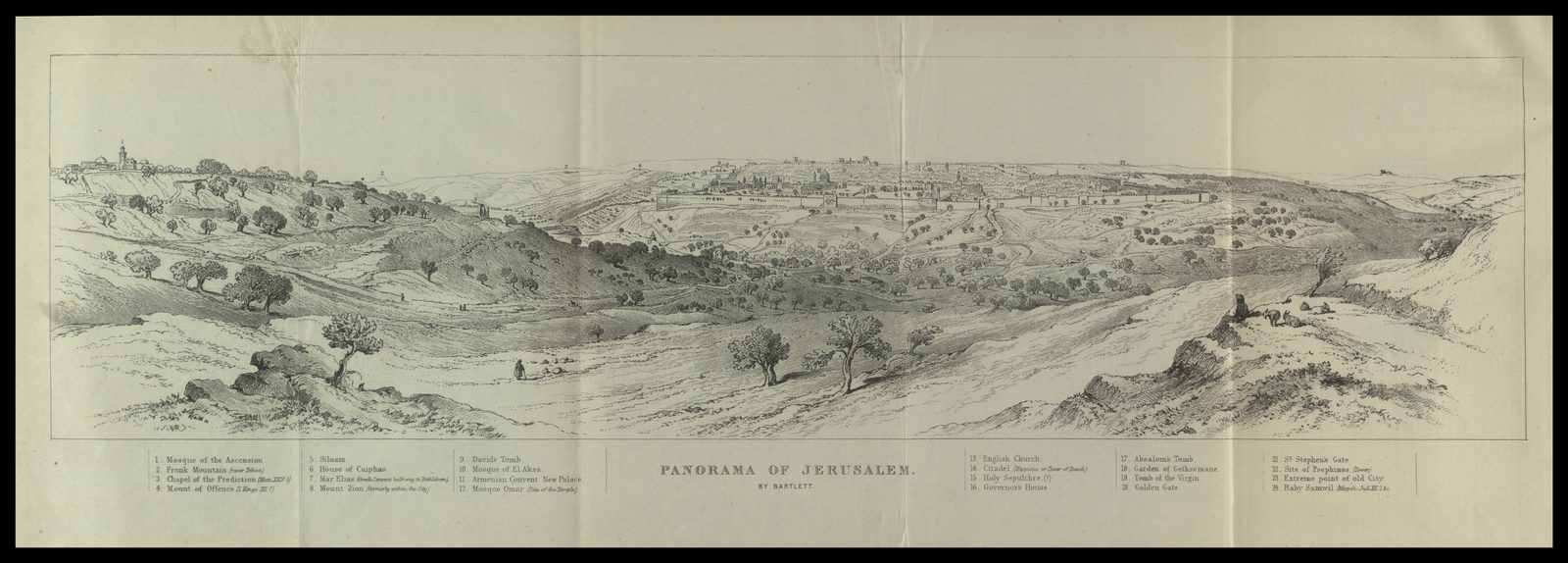
It was well enough fortified indeed both by nature and art; but its bulwarks that were mostly to be relied upon were the special presence of God in it, the beauty of holiness he had put upon it, and the promises he had made concerning it.
5 more voices on this verse
The Puritans and the Awakening1 voice
Not that there was any thing to be seen in Jerusalem that was so very formidable; but the sight of it brought to mind what they had heard concerning the special presence of God in that city and the divine protection it was under, and God impressed such terrors on their minds thereby as made them retire with precipitation.
The Nineteenth Century4 voices
They saw it, and so they marvelled. They came, they saw, but they did not conquer. There was no veni, vidi, vici for them. No sooner did they perceive that the Lord was in the Holy City, than they took to their heels. Before the Lord came to blows with them, they were faint hearted, and beat a retreat. They were troubled and hasted away. The troublers were troubled. Their haste in coming was nothing to their hurry in going. Panic seized them, horses were not fleet enough; they would have borrowed the wings of the wind.
A commentator
Jamieson, Fausset & Brown1802–1910
Commentary Critical and Explanatory on the Whole Bible (1871)
For--The reason is given. Though the kings (perhaps of Moab and Ammon, compare Ps 83:3-5) combined, a conviction of God's presence with His people, evinced by the unusual courage with which the prophets (compare 2Ch 20:12-20) had inspired them, seized on their minds, and smitten with sudden and intense alarm, they fled astonished.
They saw it, and so they marvelled. They came, they saw, but they did not conquer. There was no veni, vidi, vici for them. No sooner did they perceive that the Lord was in the Holy City, than they took to their heels. Before the Lord came to blows with them, they were faint hearted, and beat a retreat. They were troubled and hasted away. The troublers were troubled. Their haste in coming was nothing to their hurry in going. Panic seized them, horses were not fleet enough; they would have borrowed the wings of the wind. They fled ignominiously, like children in a fright. Glory be to God, it shall be even thus with the foes of his church; when the Lord cometh to our help, our enemies shall be as nothing. Could they foresee their ignominious defeat, they would not advance to the attack.
A commentator
Albert Barnes1798–1870
Notes, Explanatory and Practical, on the Old and New Testaments (1832-1869)
proposed
They saw it - That is, they looked on it; they contemplated it; they were struck with its beauty and strength, and fled. And so they marveled - It surpassed their expectations of its strength, and they saw with wonder that any attempt to conquer it was hopeless. They were troubled - They were filled with anxiety and confusion. They even began to have apprehensions about their own safety. They saw that their preparations had been made in vain, and that all hopes of success must be abandoned. And hasted away - They fled in confusion. The idea in the whole verse is that of a “panic,” leading to a disorderly flight. This “may” have occurred in the time of Jehoshaphat, 2 Chr. 20, when the kings of Moab, Edom, and others, came up to attack Jerusalem, though the immediate cause of their overthrow was a conflict among themselves 2Ch 20:22-25. It may have been, however, that they approached the city, and were dismayed by its strength, so that they turned away before the internal conflict occurred which ended in their ruin. But it is not “necessary” to adjust these accounts one to another, or even to suppose that this was the event referred to in the psalm, though the general ideas in it accord well with all which occurred on that occasion.
The words behind it
6 Hebrew wordsEvery Hebrew word of this verse in the order it stands, with what it means and the door to its own study. The last column counts the times a word stands in the whole Bible: the rarer the word, the more the places it appears belong together.
| Hebrew | Sound | Meaning | Word study | In the Bible |
|---|---|---|---|---|
| הֵ֣מָּה | hemah | they | H1992 → | 553 times |
| רָ֭אוּ | rau | they saw | H7200 → | 1300 times |
| כֵּ֣ן | ken | thus | H3651 → | 771 times |
| תָּמָ֑הוּ | tamahu | they were astonished | H8539 → | |
| נִבְהֲל֥וּ | nivhalu | they were terrified | H926 → | 39 times |
| נֶחְפָּֽזוּ׃ | nechpazu | they hurried away | H2648 → | 9 times |
הֵ֣מָּהthey
hemahH1992 →553 times
רָ֭אוּthey saw
rauH7200 →1300 times
כֵּ֣ןthus
kenH3651 →771 times
תָּמָ֑הוּthey were astonished
tamahuH8539 →
נִבְהֲל֥וּthey were terrified
nivhaluH926 →39 times
נֶחְפָּֽזוּ׃they hurried away
nechpazuH2648 →9 times
A shaded row is a word that stands 400 times or fewer in the Bible.
The walk
5 stopsEach card is a verse this one points to, and under it the verses that one points to in turn. Where several paths arrive at the same place, that place is listed first: the text keeps returning to it.
Through
Exodus 14:25He caused their chariot wheels to wobble, so that they had difficulty driving. “Let us flee from the Israelites,” said the Egyptians, “for the LORD is fighting for them against Egypt!”
it leads to
- Exodus 14:14
The LORD will fight for you; you need only to be still.”
- Jeremiah 51:21
With you I shatter the horse and rider; with you I shatter the chariot and driver.
- Job 20:24
Though he flees from an iron weapon, a bronze-tipped arrow will pierce him.
- Deuteronomy 3:22
Do not be afraid of them, for the LORD your God Himself will fight for you.”
- 1 Samuel 4:7–8
the Philistines were afraid. “The gods have entered their camp!” they said. “Woe to us, for nothing like this has happened before.
- Exodus 14:14
Where this verse is studied
On this page
Studies2
About Psalms
This page draws on 10 works. Open the list of works
This page draws on Albert Barnes, Notes, Explanatory and Practical, on the Old and New Testaments (1832-1869); Arnobius of Sicca, Against the Heathen Book 2; Arnobius the Younger, COMMENTARY ON THE PSALMS 48; Augustine of Hippo, Exposition on Psalm 48; Charles Spurgeon, The Treasury of David, Vol. 2; Jamieson, Fausset & Brown, Commentary Critical and Explanatory on the Whole Bible; John Gill, Exposition of the Old Testament (1748-1763); John Gill, Exposition of the Old Testament; Matthew Henry, Commentary on the Whole Bible and Thomas Aquinas, Exposition on the Psalms of David.