
Psalms 48:1
in Psalms 48Great is the LORD, and greatly to be praised in the city of our God, His holy mountain.
BSB
The same verse in ASV and KJV ▾
ASV
Great is Jehovah, and greatly to be praised, In the city of our God, in his holy mountain.
KJV
Great is the Lord, and greatly to be praised in the city of our God, in the mountain of his holiness.
⋯
This verse in Psalms 48
Commentary
15 notes on this verseA commentator
Ambrose of MilanCommentaries on the Twelve Davidic Psalms, On Psalm 48 · Written before 397.
He is everywhere great and powerful, but our narrow mind cannot take in the greatness of his divine power and grace. The closer our knowledge gets to God, the more wonderful his majesty appears to be.
This site's exposition
Great is the LORD
on Psalms 48:1-3
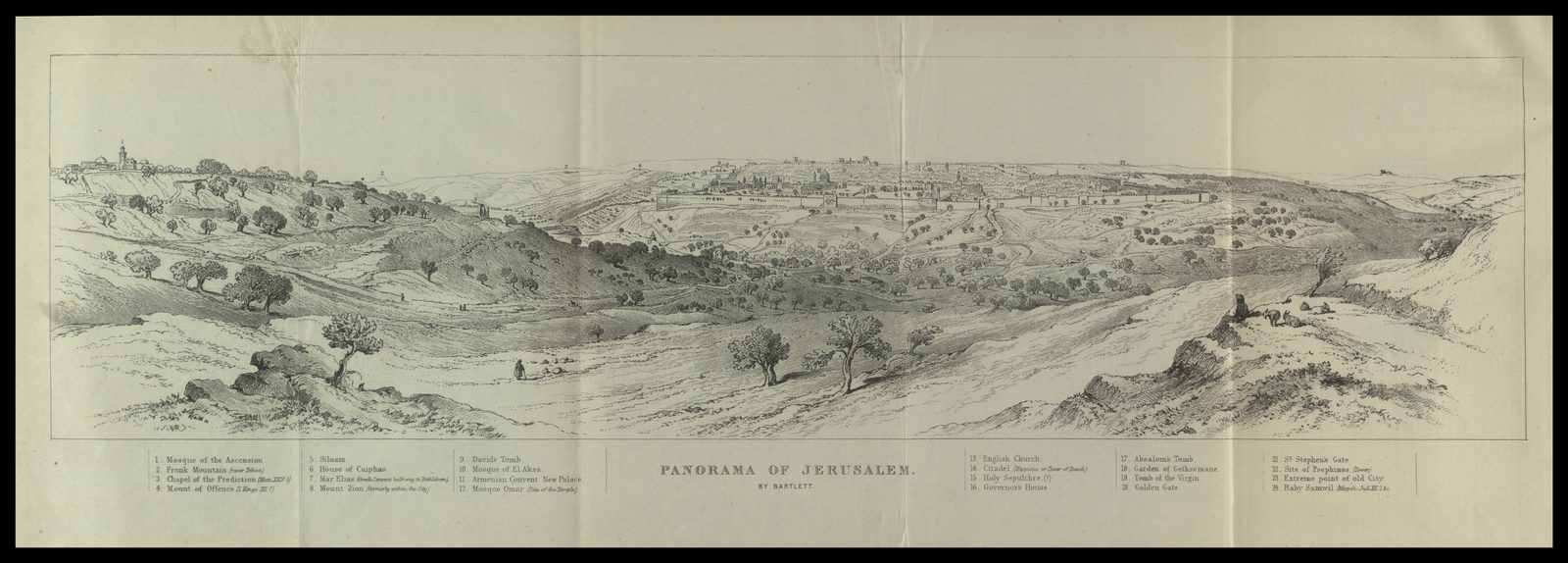
Great is the LORD, and the praise belongs to the city where He dwells, His holy mountain. Mount Zion is the city of the great King, the joy of all the earth. God is in her citadels, shown to be a fortress.
The record, by era
The Church Fathers3 voices
Often the divine Scripture gives the name "city" not to the building but to the way of life. Accordingly, here too he says the Lord of all was shown to be great through the things done by him in connection with his city, which the …
While they say "great," they do not go so far as to say how great; no one knows that, after all, so he added as well, "and highly to be praised." There is no limit, you see, to his greatness. What it means, however, is something like this: It is necessary to praise him and sing to him alone, and this to an extraordinary degree; but the need is to sing his praises both for this infinite and incomprehensible greatness of his being and for the excess of his beneficence to us.
"Great is the Lord, and greatly to be praised" [Psalm 48:1]....That is, "in the city of our God, in His holy mountain." This is the city set upon an hill, which cannot be hid: this is the candle which is not hidden under a bushel, [Matthew 5:14-15] to all known, to all proclaimed. Yet are not all men citizens thereof, but they in whom "great is the Lord, and greatly to be praised." What then is that city: let us see whether perhaps, since it is said, "In the city of our God, in His holy mountain," we ought not to enquire for this mountain where also we may be heard....What then is that mountain, brethren? One is it with great care to be enquired for, with great solicitude investigated, with labour also to be occupied and ascended. But if in any part of the earth it is, what shall we do? Shall we go abroad out of our own country, that to that mountain we may arrive? Nay, then we are abroad, when in it we are not. For that is our city, if we are members of the King, who is the head of the same city....For there was a certain corner-stone contemptible, whereat the Jews stumbled, [Romans 9:32] cut out of a certain mountain without hands, that is, coming of the kingdom of the Jews without hands, because human operation went not with Mary of whom was born Christ. [Matthew 1:16] But if that stone, when the Jews stumbled thereat, had remained there, you had not had whither to ascend. But what was done? What says the prophecy of Daniel? What but that the stone grew, and became a great mountain? How great? So that it filled the whole face of the earth. [Daniel 2:35] By growing, then, and by filling the whole face of the earth, that mountain came to us. Why then seek we the mountain as though absent, and not as being present ascend to it; that in us the Lord may be "great, and greatly to be praised"?
The Medieval Church1 voice
Above, the Psalmist invited the nations to sing praise to God for the benefits of God; here, however, he describes the great exultation of the people or of the city. The title: "A Psalm, a song of praise of the sons of Korah, for the …
The Reformation1 voice
His wonderful goodness and righteousness shine forth in the government of the whole world, so that there is no part of it void of his praise, but we are everywhere furnished with abundant matter for praising him. Here, however, the inspired poet celebrates the glory of God which is manifested in the protection of the Church.
8 more voices on this verse
The Puritans and the Awakening4 voices
Of Zion he said kinder things than ever he said of place upon earth. This is my rest for ever; here will I dwell, for I have desired it, Ps. cxxxii. It is the city of the great King (
quarantine:debris (2026-07-29) — unbalanced-parens
) who in other places was made little of, was made nothing of. Happy the kingdom, the city, the family, the heart, in which God is great, in which he is uppermost, in which he is all.
quarantine:debris (2026-07-29) — leading-punctuation+unbalanced-parens
Herein Jerusalem typified the gospel church; for what little tribute of praise God has from this earth arises from that church upon earth, which is therefore his tabernacle among men. It is taken under his special protection (
quarantine:debris (2026-07-29) — unbalanced-parens
Great is the Lord,....
The Nineteenth Century4 voices
Great is the Lord. How great Jehovah is essentially none can conceive; but we can all see that he is great in the deliverance of his people, great in their esteem who are delivered, and great in the hearts of those enemies whom he scatters by their own fears. Instead of the mad cry of Ephesus, "Great is Diana, "we bear the reasonable, demonstrable, self evident testimony, "Great is Jehovah." There is none great in the church but the Lord.
Great is the Lord. How great Jehovah is essentially none can conceive; but we can all see that he is great in the deliverance of his people, great in their esteem who are delivered, and great in the hearts of those enemies whom he scatters by their own fears. Instead of the mad cry of Ephesus, "Great is Diana, "we bear the reasonable, demonstrable, self evident testimony, "Great is Jehovah." There is none great in the church but the Lord. Jesus is "the great Shepherd, "he is "a Saviour, and a great one, "our great God and Saviour, our great High Priest; his Father has divided him a portion with the great, and his name shall be great unto the ends of the earth. And greatly to be praised. According to his nature should his worship be; it cannot be too constant, too laudatory, too earnest, too reverential, too sublime. In the city of our God. He is great there, and should be greatly praised there. If all the world beside renounced Jehovah's worship, the chosen people in his favoured city should continue to adore him, for in their midst and on their behalf his glorious power has been so manifestly revealed. In the church the Lord is to be extolled though all the nations rage against him. Jerusalem was the peculiar abode of the God of Israel, the seat of the theocratic government, and the centre of prescribed worship, and even thus is the church the place of divine manifestation. In the mountain of his holiness. Where his holy temple, his holy priests, and his holy sacrifices might continually be seen. Zion was a mount, and as it was the most renowned part of the city, it is mentioned as a synonym for the city itself. The church of God is a mount for elevation and for conspicuousness, and it should be adorned with holiness, her sons being partakers of the holiness of God.
Great is the Lord - This verse should be joined to the last verse of the preceding Psalm, as it is a continuation of the same subject; and indeed in some of Kennicott’s MSS. it is written as a part of the foregoing. That concluded with He is greatly exalted; this begins with Great is the Lord, and greatly to be praised; i.e., He should be praised according to his greatness; no common praise is suited to the nature and dignity of the Supreme God. In the city of our God - That is, in the temple; or in Jerusalem, where the temple was situated. The mountain of his holiness - Mount Moriah, on which the temple was built. The ancient city of Jerusalem, which David took from the Jebusites, was on the south of Mount Zion, on which the temple was built, though it might be said to be more properly on Mount Moriah, which is one of the hills of which Mount Zion is composed. The temple therefore was to the north of the city, as the psalmist here states, Psa 48:2: “Beautiful for situation, the joy of the whole earth, is Mount Zion, on the sides of the north, the city of the great King.” But some think that it is the city that is said to be on the north, and Reland contends that the temple was on the south of the city.
A commentator
Albert Barnes1798–1870
Notes, Explanatory and Practical, on the Old and New Testaments (1832-1869)
proposed
Great is the Lord - That is, he is high and exalted; he is a Being of great power and glory. He is not weak and feeble, like the idols worshipped by other nations. He is able to defend his people; he has shown his great power in overthrowing the mighty forces that were gathered together against the city where he dwells. And greatly to be praised - Worthy to be praised. In his own nature, he is worthy of adoration; in interposing to save the city from its foes, he has shown that he is worthy of exalted praise. In the city of our God - Jerusalem. In the city which he has chosen for his abode, and where his worship is celebrated. See the notes at Psa 46:4. This praise was especially appropriate there: (a) because it was a place set apart for his worship; (b) because he had now interposed to save it from threatened ruin. In the mountain of his holiness - His holy mountain; either Mount Zion, if the psalm was composed before the building of the temple - or more probably here Mount Moriah, on which the temple was reared. The names Zion, and Mount Zion, however, were sometimes given to the entire city. Compare the notes at Isa 2:2-3.
The words behind it
8 Hebrew wordsEvery Hebrew word of this verse in the order it stands, with what it means and the door to its own study. The last column counts the times a word stands in the whole Bible: the rarer the word, the more the places it appears belong together.
| Hebrew | Sound | Meaning | Word study | In the Bible |
|---|---|---|---|---|
| גָּ֘ד֤וֹל | gadol | [is] great | H1419 → | 526 times |
| יְהוָ֣ה | yahweh | Yahweh | H3068 → | 6520 times |
| וּמְהֻלָּ֣ל | umehulal | and [is] to be praised | H1984 → | 165 times |
| מְאֹ֑ד | meod | exceedingly | H3966 → | 300 times |
| בְּעִ֥יר | beir | in [the] city of | H5892 → | 1090 times |
| אֱ֝לֹהֵ֗ינוּ | ʾeloheinu | God our | H430 → | 2601 times |
| הַר־ | har- | [the] mountain of | H2022 → | 546 times |
| קָדְשֽׁוֹ׃ | kadesho | holiness his | H6944 → | 469 times |
גָּ֘ד֤וֹל[is] great
gadolH1419 →526 times
יְהוָ֣הYahweh
yahwehH3068 →6520 times
וּמְהֻלָּ֣לand [is] to be praised
umehulalH1984 →165 times
מְאֹ֑דexceedingly
meodH3966 →300 times
בְּעִ֥ירin [the] city of
beirH5892 →1090 times
אֱ֝לֹהֵ֗ינוּGod our
ʾeloheinuH430 →2601 times
הַר־[the] mountain of
har-H2022 →546 times
קָדְשֽׁוֹ׃holiness his
kadeshoH6944 →469 times
A shaded row is a word that stands 400 times or fewer in the Bible.
The walk
8 stopsEach card is a verse this one points to, and under it the verses that one points to in turn. Where several paths arrive at the same place, that place is listed first: the text keeps returning to it.
Through
Psalms 46:4There is a river whose streams delight the city of God, the holy place where the Most High dwells.
it leads to
- Revelation 22:1–3
Then the angel showed me a river of the water of life, as clear as crystal, flowing from the throne of God and of the Lamb
- Ezekiel 47:1–12
Then the man brought me back to the entrance of the temple, and I saw water flowing from under the threshold of the temple toward the east (for the temple faced east). The water…
- Revelation 22:1–3
Through
Micah 4:1In the last days the mountain of the house of the LORD will be established as the chief of the mountains; it will be raised above the hills, and the peoples will stream to…
it leads to
- Isaiah 2:1–4
This is the message that was revealed to Isaiah son of Amoz concerning Judah and Jerusalem:
- Jeremiah 3:17
At that time Jerusalem will be called The Throne of the LORD, and all the nations will be gathered in Jerusalem to honor the name of the LORD. They will no longer follow the…
- Isaiah 2:1–4
Through
Psalms 96:4For great is the LORD, and greatly to be praised; He is to be feared above all gods.
it leads to
- Psalms 145:3
Great is the LORD and greatly to be praised; His greatness is unsearchable.
- Revelation 15:4
Who will not fear You, O Lord, and glorify Your name? For You alone are holy. All nations will come and worship before You, for Your righteous acts have been revealed.”
- Psalms 18:3
I will call upon the LORD, who is worthy to be praised; so shall I be saved from my enemies.
- Jeremiah 10:6–7
There is none like You, O LORD. You are great, and Your name is mighty in power.
- Psalms 145:3
Where this verse is studied
On this page
Studies2
About Psalms
This page draws on 13 works. Open the list of works
This page draws on Adam Clarke, Commentary on the Bible; Albert Barnes, Notes, Explanatory and Practical, on the Old and New Testaments (1832-1869); Ambrose of Milan, Commentaries on the Twelve Davidic Psalms, On Psalm 48; Augustine of Hippo, Exposition on Psalm 48; Charles Spurgeon, The Treasury of David; Charles Spurgeon, The Treasury of David, Vol. 2; Franz Delitzsch, Biblical Commentary on the Psalms; John Calvin, Commentaries; John Chrysostom, COMMENTARY ON THE PSALMS 48:1; John Gill, Exposition of the Old Testament (1748-1763); Matthew Henry, Commentary on the Whole Bible; Theodoret of Cyrus, COMMENTARY ON THE PSALMS 48:1 and Thomas Aquinas, Exposition on the Psalms of David.