
Psalms 121:3
in Psalms 121He will not allow your foot to slip; your Protector will not slumber.
BSB
The same verse in ASV and KJV ▾
ASV
He will not suffer thy foot to be moved: He that keepeth thee will not slumber.
KJV
He will not suffer thy foot to be moved: he that keepeth thee will not slumber.
⋯
This verse in Psalms 121
Commentary
7 notes on this verseHe will not suffer thy foot to be moved. Though the paths of life are dangerous and difficult, yet we shall stand fast, for Jehovah will not permit our feet to slide; and if he will not suffer it we shall not suffer it. If our foot will be thus kept we may be sure that our head and heart will be preserved also. In the original the words express a wish or prayer, —"May he not suffer thy foot to be moved."
This site's exposition
your Protector will not slumber
on Psalms 121:3-6
One Hebrew word holds this psalm together, shamar, to guard, and it stands six times, rendered Protector, keeper, guard, preserve and watch over. Matthew Henry sets verse 4 beside verse 5, so the keeper of Israel is the keeper of each one. Verse 6 covers the sun by day and the moon by night.
The record, by era
The Church Fathers1 voice
Sing therefore what follows; if you wish to hear how you may most securely set your feet on the steps, so that you may not be fatigued in that ascent, nor stumble and fall: pray in these words: "Suffer not my foot to be moved!" [Psalm 121:3]. Whereby are feet moved; whereby was the foot of him who was in Paradise moved? But first consider whereby the feet of him who was among the Angels were moved: who when his feet were moved fell, and from an Angel became a devil: for when his feet were moved he fell. Seek whereby he fell: he fell through pride. Nothing then moves the feet, save pride: nothing moves the feet to a fall, save pride. Charity moves them to walk and to improve and to ascend; pride moves them to fall...Rightly therefore the Psalmist, hearing how he may ascend and may not fall, prays unto God that he may profit from the vale of misery, and may not fail in the swelling of pride, in these words, "Suffer not my feet to be moved!" And He replies unto him, "Let him that keeps you not sleep." Attend, my beloved. It is as if one thought were expressed in two sentences; the man while ascending and singing "the song of degrees," says, "Suffer not my foot to be moved:" and it is as if God answered, You say unto Me, Let not my feet be moved: say also, "Let Him that keeps you not sleep," and your foot shall not be moved.
The Puritans and the Awakening1 voice
He wilt not suffer thy foot to be moved,.... This is either an address of the psalmist to his own soul; or to any other good man, his friend and acquaintance, assuring of stability, and of final perseverance in grace to glory.
The Nineteenth Century3 voices
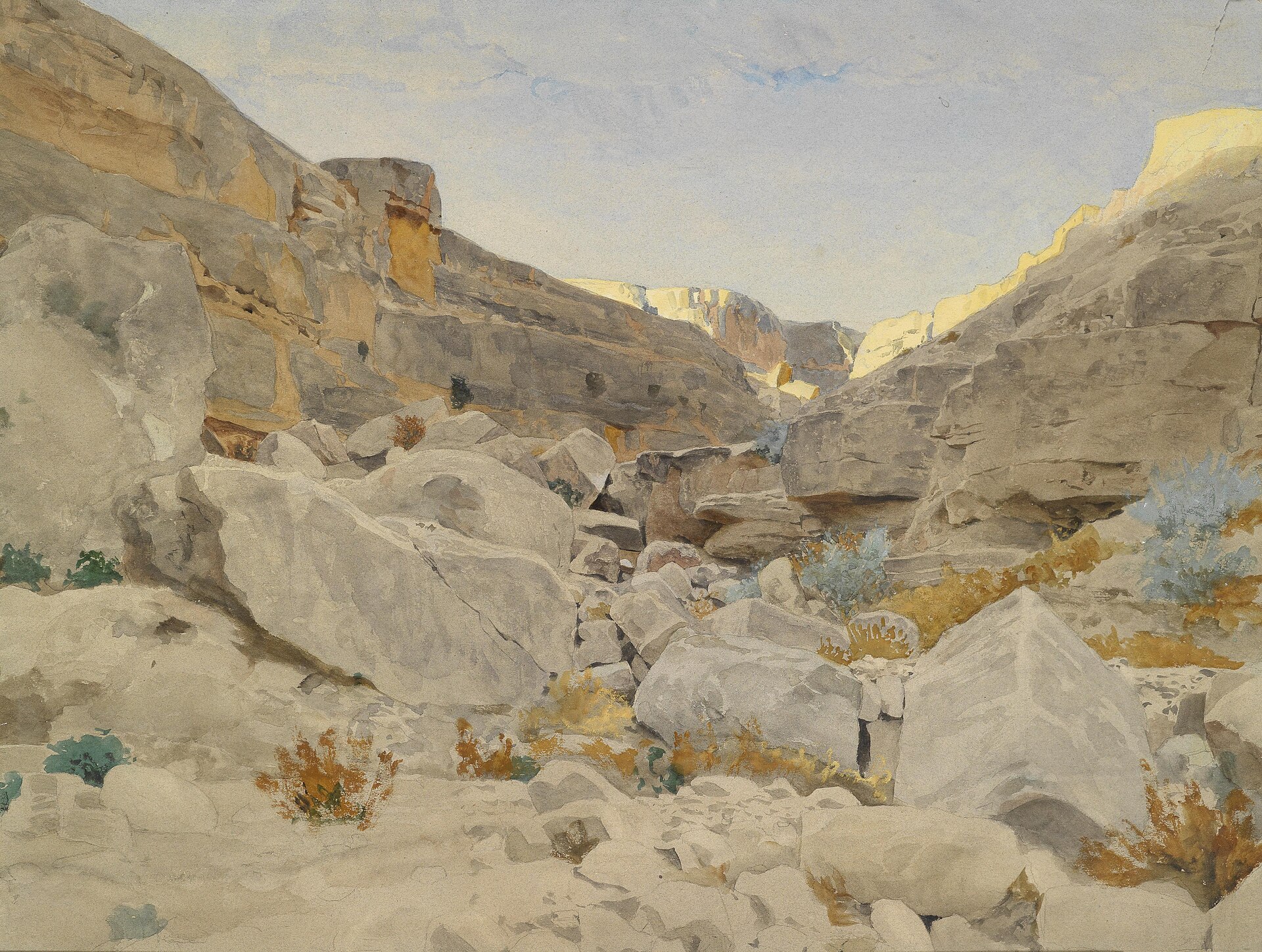
He will not suffer thy foot to be moved. Though the paths of life are dangerous and difficult, yet we shall stand fast, for Jehovah will not permit our feet to slide; and if he will not suffer it we shall not suffer it. If our foot will be thus kept we may be sure that our head and heart will be preserved also. In the original the words express a wish or prayer, —"May he not suffer thy foot to be moved." Promised preservation should be the subject of perpetual prayer; and we may pray believing; for those who have God for their keeper shall be safe from all the perils of the way. Among the hills and ravines of Palestine the literal keeping of tim feet is a great mercy; but in the slippery ways of a tried and afflicted life, the boon of upholding is of priceless value, for a single false step might cause us a fall fraught with awful danger. To stand erect and pursue the even tenor of our way is a blessing which only God can give, which is worthy of the divine hand, and worthy also of perennial gratitude. Our feet shall move in progress, but they shall not be moved to their overthrow. He that keepeth thee will not slumber, —or "thy keeper shall not slumber". We should not stand a moment if our keeper were to sleep; we need him by day and by night; not a single step can be safely taken except under his guardian eye. This is a choice stanza in a pilgrim song. God is the convoy and body guard of his saints. When dangers are awake around us we are safe, for our Preserver is awake also, and will not permit us to be taken unawares. No fatigue or exhaustion can cast our God into sleep; his watchful eyes are never closed.
He will not suffer thy foot to be moved - The foundation, God’s infinite power and goodness, on which thou standest, cannot be moved; and whilst thou standest on this basis, thy foot cannot be moved.
A commentator
Albert Barnes1798–1870
Notes, Explanatory and Practical, on the Old and New Testaments (1832-1869)
proposed
He will not suffer thy foot to be moved - He will enable you to stand firm. You are safe in his protection. Compare the notes at Psa 38:16. This, with the remainder of the psalm, seems to be of the nature of an answer to the anxious question in Psa 121:1 - an answer which the author of the psalm, in danger and trouble, makes to his own soul, imparting confidence to himself. He that keepeth thee will not slumber - He will be ever watchful and wakeful. Compare Isa 27:3. All creatures, as far as we know, sleep; God never sleeps. Compare Psa 139:11-12. His eyes are upon us by day, and in the darkness of the night - the night literally; and also the night of calamity, woe, and sorrow.
The words behind it
7 Hebrew wordsEvery Hebrew word of this verse in the order it stands, with what it means and the door to its own study. The last column counts the times a word stands in the whole Bible: the rarer the word, the more the places it appears belong together.
| Hebrew | Sound | Meaning | Word study | In the Bible |
|---|---|---|---|---|
| אַל־ | ʾal- | may not | H408 → | 724 times |
| יִתֵּ֣ן | yiten | he permit | H5414 → | 2011 times |
| לַמּ֣וֹט | lamot | to <the> slip | H4132 → | |
| רַגְלֶ֑ךָ | raglekha | foot your | H7272 → | 247 times |
| אַל־ | ʾal- | may not | H408 → | 724 times |
| יָ֝נ֗וּם | yanum | he slumber | H5123 → | 6 times |
| שֹֽׁמְרֶֽךָ׃ | shomerekha | protector your | H8104 → | 468 times |
אַל־may not
ʾal-H408 →724 times
יִתֵּ֣ןhe permit
yitenH5414 →2011 times
לַמּ֣וֹטto <the> slip
lamotH4132 →
רַגְלֶ֑ךָfoot your
raglekhaH7272 →247 times
אַל־may not
ʾal-H408 →724 times
יָ֝נ֗וּםhe slumber
yanumH5123 →6 times
שֹֽׁמְרֶֽךָ׃protector your
shomerekhaH8104 →468 times
A shaded row is a word that stands 400 times or fewer in the Bible.
The walk
8 stopsEach card is a verse this one points to, and under it the verses that one points to in turn. Where several paths arrive at the same place, that place is listed first: the text keeps returning to it.
Through
Proverbs 3:26for the LORD will be your confidence and will keep your foot from the snare.
it leads to
- 1 Samuel 2:9
He guards the steps of His faithful ones, but the wicked perish in darkness; for by his own strength shall no man prevail.
Reached by 2 separate paths from here.
- Proverbs 14:26
He who fears the LORD is secure in confidence, and his children shall have a place of refuge.
- Psalms 91:3
Surely He will deliver you from the snare of the fowler, and from the deadly plague.
- Psalms 91:9–10
Because you have made the LORD your dwelling— my refuge, the Most High—
- Habakkuk 3:17–18
Though the fig tree does not bud and no fruit is on the vines, though the olive crop fails and the fields produce no food, though the sheep are cut off from the fold…
- 1 Samuel 2:9
Through
1 Samuel 2:9He guards the steps of His faithful ones, but the wicked perish in darkness; for by his own strength shall no man prevail.
it leads to
- Psalms 91:11–12
For He will command His angels concerning you to guard you in all your ways.
Reached by 2 separate paths from here.
- Psalms 33:16–17
No king is saved by his vast army; no warrior is delivered by his great strength.
- Psalms 91:11–12
Through
Psalms 66:9He preserves our lives and keeps our feet from slipping.
it leads to
- Psalms 37:23–24
The steps of a man are ordered by the LORD who takes delight in his journey.
Reached by 2 separate paths from here.
- Psalms 37:23–24
Where this verse is studied
On this page
About Psalms
This page draws on Adam Clarke, Commentary on the Bible; Albert Barnes, Notes, Explanatory and Practical, on the Old and New Testaments (1832-1869); Augustine of Hippo, Exposition on Psalm 121; Charles Spurgeon, The Treasury of David, Vol. 6; Franz Delitzsch, Biblical Commentary on the Psalms; John Gill, Exposition of the Old Testament (1748-1763) and Matthew Henry, Commentary on the Whole Bible.