
Proverbs 24:31
in Proverbs 24Thorns had grown up everywhere, thistles had covered the ground, and the stone wall was broken down.
BSB
The same verse in ASV and KJV ▾
ASV
And, lo, it was all grown over with thorns, The face thereof was covered with nettles, And the stone wall thereof was broken down.
KJV
And, lo, it was all grown over with thorns, and nettles had covered the face thereof, and the stone wall thereof was broken down.
⋯
This verse in Proverbs 24
Commentary
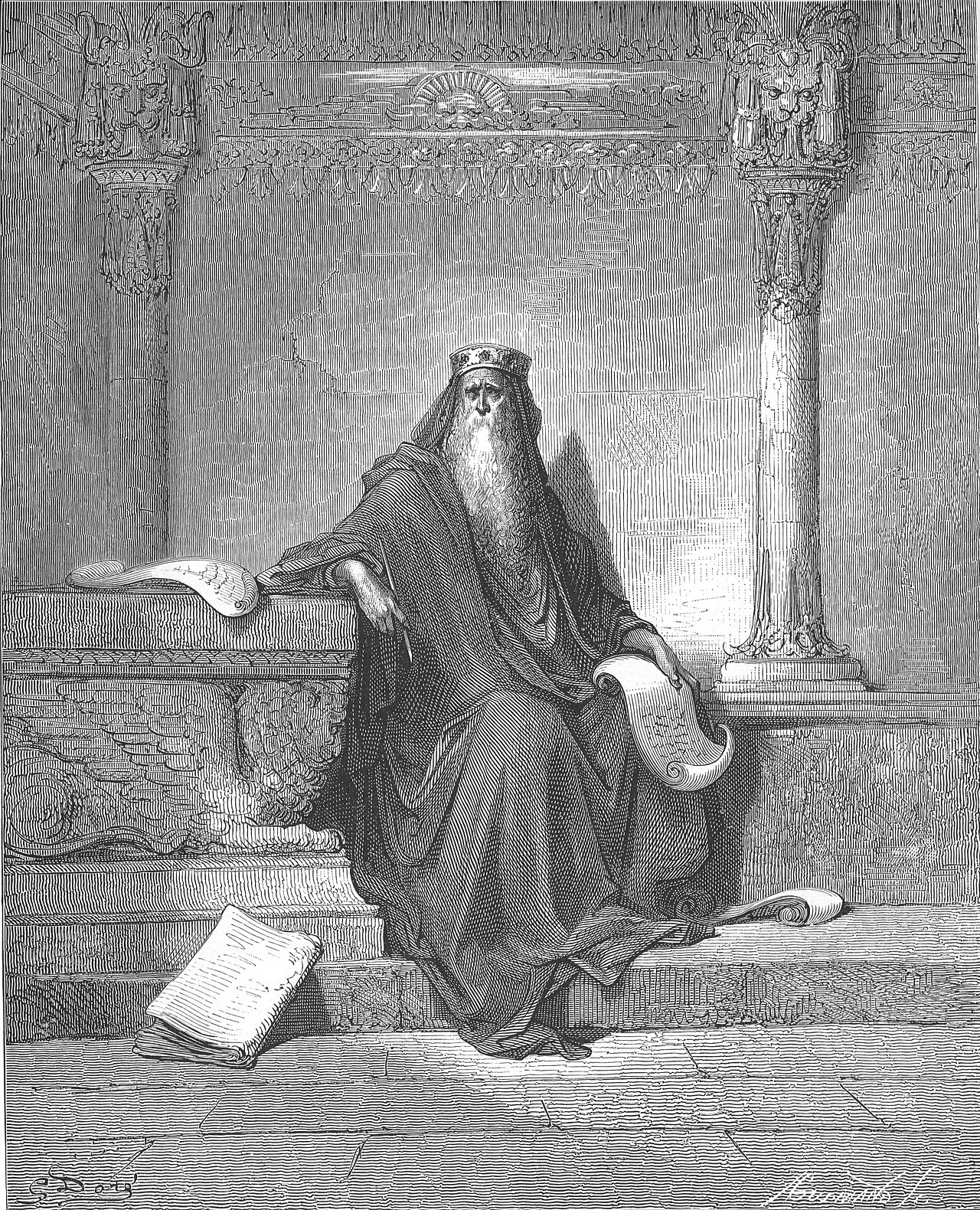
7 notes on this verseNO DOUBT Solomon was sometimes glad to lay aside the robes of State, escape from the forms of court and go through the country unknown. On one occasion, when he was doing so, he looked over the broken wall of a little estate which belonged to a farmer of his country. This estate consisted of a piece of plowed land and a vineyard. One glance showed him that it was owned by a sluggard who neglected it, for the weeds had grown right plentifully and covered all the face of the ground. From this Solomon gathered instruction.
This site's exposition
I went by the field of the slothful
on Proverbs 24:30-32
The chapter closes as an eyewitness report rather than an abstract saying: I went by the field of the slothful, and by the vineyard of the man void of understanding, and lo, it was all grown over with thorns, the stone wall broken down. Then I saw, and considered it well, I looked upon it, and received instruction states the method as much as the finding, Bridges noting that the observer learns wisdom by watching a real ruin rather than by being told a rule, the same instructive habit the book commends throughout.
The record, by era
The Medieval Church1 voice
A commentator
BonaventureCollations on the Hexaemeron, Collation 19 · Written in the 13th century.
proposed
In Proverbs: "I passed by the field of the sluggard, by the vineyard of the man without sense; and behold! it was all overgrown with thistles; its surface was covered with nettles, and its stone wall broken down." This happens when a man has good …
The Puritans and the Awakening1 voice
And, lo, it was all grown over with thorns,....
The Nineteenth Century3 voices
A commentator
Charles Spurgeon1834–1892
The Metropolitan Tabernacle Pulpit, Sermon No. 3381: “The Broken Fence” (lightly modernized text, CCEL edition) · Written before 1892.
THIS lazy man did no hurt to his fellow men—he was not a thief, nor a ruffian, nor a meddler in anybody else's business. He did not trouble himself about other men's concerns, for he did not even attend to his own—it required too much exertion. He was not grossly vicious. He had not energy enough to care for that. He was one who liked to take things easily. He always let well enough alone and, for the that matter, he let ill alone, too, as the nettles and the thistles in his garden plainly proved!
NO DOUBT Solomon was sometimes glad to lay aside the robes of State, escape from the forms of court and go through the country unknown. On one occasion, when he was doing so, he looked over the broken wall of a little estate which belonged to a farmer of his country. This estate consisted of a piece of plowed land and a vineyard. One glance showed him that it was owned by a sluggard who neglected it, for the weeds had grown right plentifully and covered all the face of the ground. From this Solomon gathered instruction. Men generally learn wisdom if they have wisdom. The artist's eye sees the beauty of the landscape because he has beauty in his mind. "To him that has shall be given" and he shall have abundance, for he shall reap a harvest even from a field that is covered with thorns and nettles. There is a great difference between one man and another in the use of the mind's eye. I have a book entitled, "The Harvest of a Quiet Eye," and a good book it is—the harvest of a quiet eye can be gathered from a sluggard's land as well as from a well-managed farm. When we were boys we were taught a little poem, called "Eyes and no Eyes." There was much truth in it for some people have eyes and see not, which is much the same as having no eyes—while others have quick eyes for spying out instruction. Some look only at the surface, while others see not only the outside shell but the living kernel of truth which is hidden in all outward things. We may find instruction everywhere. To a spiritual mind nettles have their use and weeds have their doctrine.
A commentator
Charles Spurgeon1834–1892
The Metropolitan Tabernacle Pulpit, Sermon No. 3381: “The Broken Fence” (lightly modernized text, CCEL edition) · Written before 1892.
proposed
THIS lazy man did no hurt to his fellow men—he was not a thief, nor a ruffian, nor a meddler in anybody else's business. He did not trouble himself about other men's concerns, for he did not even attend to his own—it required too much exertion. He was not grossly vicious. He had not energy enough to care for that. He was one who liked to take things easily. He always let well enough alone and, for the that matter, he let ill alone, too, as the nettles and the thistles in his garden plainly proved! What was the use of disturbing himself? It would be all the same a hundred years hence and so he took things just as they came. He was not a bad man, so some said of him, and yet, perhaps it will be found at last that there is no worse man in the world than the man who is not good, for in some respects he is not good enough to be bad! He has not enough force of character about him to serve either God or Baal. He simply serves himself, worshipping his own ease and adoring his own comfort. Yet he always meant to be right. Dear me, he was not going to sleep much longer, he would only have forty winks more and then he would be at his work—and show you what he could do! One of these days he meant to be thoroughly in earnest and make up for lost time. The time never actually came for him to begin, but it was always coming. He always meant to repent, but he went on in his sin. He meant to believe, but he died an unbeliever. He meant to be a Christian, but he lived without Christ. He halted between two opinions because he could not trouble himself to make up his mind! And so he perished of delay. This picture of the slothful man and his garden and field overgrown with nettles and weeds represents many a man who has professed to be a Christian, but who has become slothful in the things of God. Spiritual life has withered in him. He has backslidden.
The words behind it
10 Hebrew wordsEvery Hebrew word of this verse in the order it stands, with what it means and the door to its own study. The last column counts the times a word stands in the whole Bible: the rarer the word, the more the places it appears belong together.
| Hebrew | Sound | Meaning | Word study | In the Bible |
|---|---|---|---|---|
| וְהִנֵּ֨ה | vehineh | and there! | H2009 → | 843 times |
| עָ֘לָ֤ה | ʾalah | it had grown up | H5927 → | 890 times |
| כֻלּ֨וֹ׀ | khulo | all of it | H3605 → | 5413 times |
| קִמְּשֹׂנִ֗ים | kimesonim | thorns | H7063 → | |
| כָּסּ֣וּ | kasu | they were covered | H3680 → | 152 times |
| פָנָ֣יו | fanav | surface<s> its | H6440 → | 2123 times |
| חֲרֻלִּ֑ים | charulim | nettles | H2738 → | |
| וְגֶ֖דֶר | vegeder | and [the] wall of | H1444 → | |
| אֲבָנָ֣יו | ʾavanav | stones its | H68 → | 273 times |
| נֶהֱרָֽסָה׃ | neherasah | it was broken down | H2040 → | 43 times |
וְהִנֵּ֨הand there!
vehinehH2009 →843 times
עָ֘לָ֤הit had grown up
ʾalahH5927 →890 times
כֻלּ֨וֹ׀all of it
khuloH3605 →5413 times
קִמְּשֹׂנִ֗יםthorns
kimesonimH7063 →
כָּסּ֣וּthey were covered
kasuH3680 →152 times
פָנָ֣יוsurface<s> its
fanavH6440 →2123 times
חֲרֻלִּ֑יםnettles
charulimH2738 →
וְגֶ֖דֶרand [the] wall of
vegederH1444 →
אֲבָנָ֣יוstones its
ʾavanavH68 →273 times
נֶהֱרָֽסָה׃it was broken down
neherasahH2040 →43 times
A shaded row is a word that stands 400 times or fewer in the Bible.
The walk
8 stopsEach card is a verse this one points to, and under it the verses that one points to in turn. Where several paths arrive at the same place, that place is listed first: the text keeps returning to it.
Through
Jeremiah 4:3For this is what the LORD says to the men of Judah and Jerusalem: “Break up your unplowed ground, and do not sow among the thorns.
it leads to
- Hosea 10:12
Sow for yourselves righteousness and reap the fruit of loving devotion; break up your unplowed ground. For it is time to seek the LORD until He comes and sends righteousness upon you like rain.
- Luke 8:14
The seeds that fell among the thorns are those who hear, but as they go on their way, they are choked by the worries, riches, and pleasures of this life, and their fruit does…
- Luke 8:7
Other seed fell among thorns, which grew up with it and choked the seedlings.
- Galatians 6:7–8
Do not be deceived: God is not to be mocked. Whatever a man sows, he will reap in return.
- Matthew 13:7
Other seed fell among thorns, which grew up and choked the seedlings.
- Hosea 10:12
Through
Ecclesiastes 10:18Through laziness the roof caves in, and in the hands of the idle, the house leaks.
it leads to
- Proverbs 14:1
Every wise woman builds her house, but a foolish one tears it down with her own hands.
- Proverbs 24:30–34
I went past the field of a slacker and by the vineyard of a man lacking judgment.
- Proverbs 14:1
Through
Proverbs 22:13The slacker says, “There is a lion outside! I will be slain in the streets!”
it leads to
- Proverbs 26:13–16
The slacker says, “A lion is in the road! A fierce lion roams the public square!”
- Proverbs 26:13–16
About Proverbs
This page draws on Bonaventure, Collations on the Hexaemeron, Collation 19; Charles Bridges, An Exposition of the Book of Proverbs; Charles Spurgeon, The Metropolitan Tabernacle Pulpit, Sermon No. 2027: “The Sluggard's Farm” (lightly modernized text, CCEL edition); Charles Spurgeon, The Metropolitan Tabernacle Pulpit, Sermon No. 3381: “The Broken Fence” (lightly modernized text, CCEL edition); Franz Delitzsch, Biblical Commentary on the Proverbs of Solomon and John Gill, Exposition of the Old Testament (1748-1763).