
Nehemiah 1:5
in Nehemiah 1Then I said: “O LORD, God of heaven, the great and awesome God who keeps His covenant of loving devotion with those who love Him and keep His commandments,
BSB
The same verse in ASV and KJV ▾
ASV
and said, I beseech thee, O Jehovah, the God of heaven, the great and terrible God, that keepeth covenant and lovingkindness with them that love him and keep his commandments:
KJV
And said, I beseech thee, O Lord God of heaven, the great and terrible God, that keepeth covenant and mercy for them that love him and observe his commandments:
⋯
This verse in Nehemiah 1
Commentary
5 notes on this verseLord God of heaven - What was, before the captivity, Jehovah, God of hosts or armies. Great - Able to do mighty things. Terrible - able to inflict the heaviest judgments.
This site's exposition
the great and awesome God
on Nehemiah 1:5-6
Nehemiah asks that God's eyes be open and His ears attentive, then turns it on himself: "Both I and my father’s house have sinned" (1:6). He counts his own house inside Israel's guilt.
The record, by era
The Puritans and the Awakening3 voices
18 ) that he offered sacrifice, we must conclude him to have been a priest. Nehemiah's station at the court of Persia. We are here told that he was in Shushan the palace, or royal city, of the king of Persia, where the court was ordinarily kept (
quarantine:debris (2026-07-29) — leading-citation-number
And said, I beseech thee, O Lord God of heaven,....
Even the terrors of the Lord are improvable for the comfort and encouragement of those that trust in him. With a holy confidence in his grace and truth, for he keepeth covenant and mercy for those that love him, not only the mercy that is promised, but even more than he promised: nothing shall be thought too much to be done for those that love him and keep his commandments.
How the passage was read
What the Jewish commentators add
I beseech You Heb. אָנָא, an expression of request and supplication.
This section is reception history: how the passage was read and kept in the Jewish tradition. Where a reading parts from an essential of the Christian faith, the section says so at that point.
Texts and citation data: Sefaria; each excerpt follows its version’s licence. 2 further sources are cited on this chapter that carry no English text this site may quote or only restate the verse.
The words behind it
14 Hebrew wordsEvery Hebrew word of this verse in the order it stands, with what it means and the door to its own study. The last column counts the times a word stands in the whole Bible: the rarer the word, the more the places it appears belong together.
| Hebrew | Sound | Meaning | Word study | In the Bible |
|---|---|---|---|---|
| וָאֹמַ֗ר | vaomar | and I said | H559 → | 5305 times |
| אָֽנָּ֤א | ʾana' | I beg you | H577 → | |
| יְהוָה֙ | yahweh | O Yahweh | H3068 → | 6520 times |
| אֱלֹהֵ֣י | ʾelohei | [the] God of | H430 → | 2601 times |
| הַשָּׁמַ֔יִם | hashamayim | the heavens | H8064 → | 421 times |
| הָאֵ֥ל | hael | the God | H410 → | 241 times |
| הַגָּד֖וֹל | hagadol | <the> great | H1419 → | 526 times |
| וְהַנּוֹרָ֑א | vehanora' | and <the> awesome | H3372 → | 315 times |
| שֹׁמֵ֤ר | shomer | [who] keeps | H8104 → | 468 times |
| הַבְּרִית֙ | haberit | the covenant | H1285 → | 284 times |
| וָחֶ֔סֶד | vachesed | and covenant loyalty | H2617 → | 247 times |
| לְאֹהֲבָ֖יו | leohavav | to [those who] love him | H157 → | |
| וּלְשֹׁמְרֵ֥י | uleshomerei | and to [those who] keep | H8104 → | 468 times |
| מִצְוֹתָֽיו׃ | mitzvotav | <of> commandments his | H4687 → | 181 times |
וָאֹמַ֗רand I said
vaomarH559 →5305 times
אָֽנָּ֤אI beg you
ʾana'H577 →
יְהוָה֙O Yahweh
yahwehH3068 →6520 times
אֱלֹהֵ֣י[the] God of
ʾeloheiH430 →2601 times
הַשָּׁמַ֔יִםthe heavens
hashamayimH8064 →421 times
הָאֵ֥לthe God
haelH410 →241 times
הַגָּד֖וֹל<the> great
hagadolH1419 →526 times
וְהַנּוֹרָ֑אand <the> awesome
vehanora'H3372 →315 times
שֹׁמֵ֤ר[who] keeps
shomerH8104 →468 times
הַבְּרִית֙the covenant
haberitH1285 →284 times
וָחֶ֔סֶדand covenant loyalty
vachesedH2617 →247 times
לְאֹהֲבָ֖יוto [those who] love him
leohavavH157 →
וּלְשֹׁמְרֵ֥יand to [those who] keep
uleshomereiH8104 →468 times
מִצְוֹתָֽיו׃<of> commandments his
mitzvotavH4687 →181 times
A shaded row is a word that stands 400 times or fewer in the Bible.
The walk
8 stopsEach card is a verse this one points to, and under it the verses that one points to in turn. Where several paths arrive at the same place, that place is listed first: the text keeps returning to it.
Through
Deuteronomy 7:9Know therefore that the LORD your God is God, the faithful God who keeps His covenant of loving devotion for a thousand generations of those who love Him and keep His commandments.
it leads to
- Hebrews 10:23
Let us hold resolutely to the hope we profess, for He who promised is faithful.
- 2 Timothy 2:13
if we are faithless, He remains faithful, for He cannot deny Himself.
- 2 Thessalonians 3:3
But the Lord is faithful, and He will strengthen you and guard you from the evil one.
- Daniel 9:4
And I prayed to the LORD my God and confessed, “O, Lord, the great and awesome God, who keeps His covenant of loving devotion to those who love Him and keep His commandments,
- 1 Corinthians 1:9
God, who has called you into fellowship with His Son Jesus Christ our Lord, is faithful.
- Hebrews 10:23
Through
Exodus 20:6but showing loving devotion to a thousand generations of those who love Me and keep My commandments.
it leads to
- Deuteronomy 7:9
Know therefore that the LORD your God is God, the faithful God who keeps His covenant of loving devotion for a thousand generations of those who love Him and keep His commandments.
- Deuteronomy 7:9
Through
Nehemiah 4:14After I had made an inspection, I stood up and said to the nobles, the officials, and the rest of the people, “Do not be afraid of them. Remember the Lord, who is great…
it leads to
- 2 Samuel 10:12
Be strong and let us fight bravely for our people and for the cities of our God. May the LORD do what is good in His sight.”
- Numbers 14:9
Only do not rebel against the LORD, and do not be afraid of the people of the land, for they will be like bread for us. Their protection has been removed, and the LORD…
- 2 Samuel 10:12
Where this verse is studied
On this page
Studies3
About Nehemiah
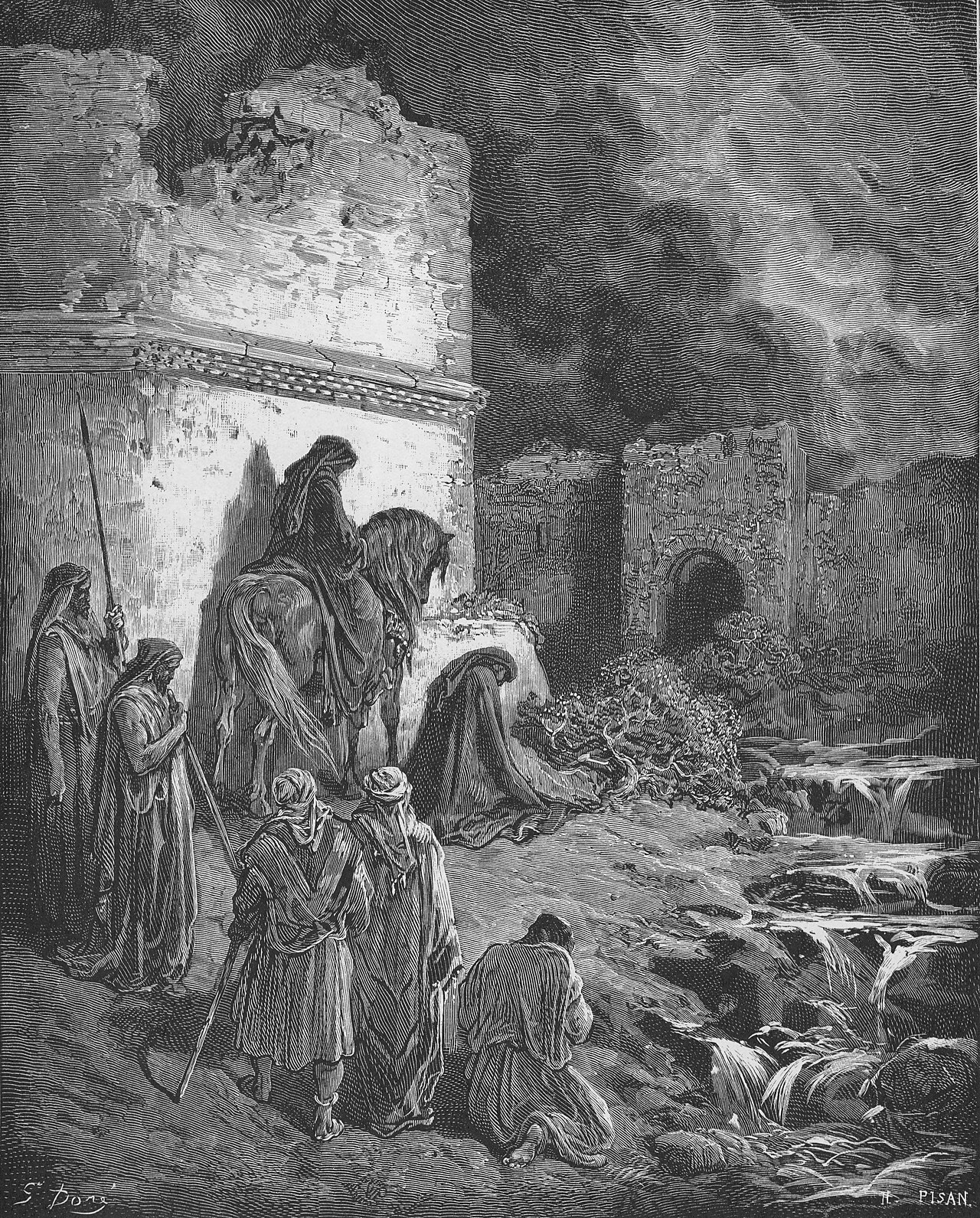
This page draws on Adam Clarke, Commentary on the Bible; John Gill, Exposition of the Old Testament (1748-1763) and Matthew Henry, Commentary on the Whole Bible.