
Micah 2:4
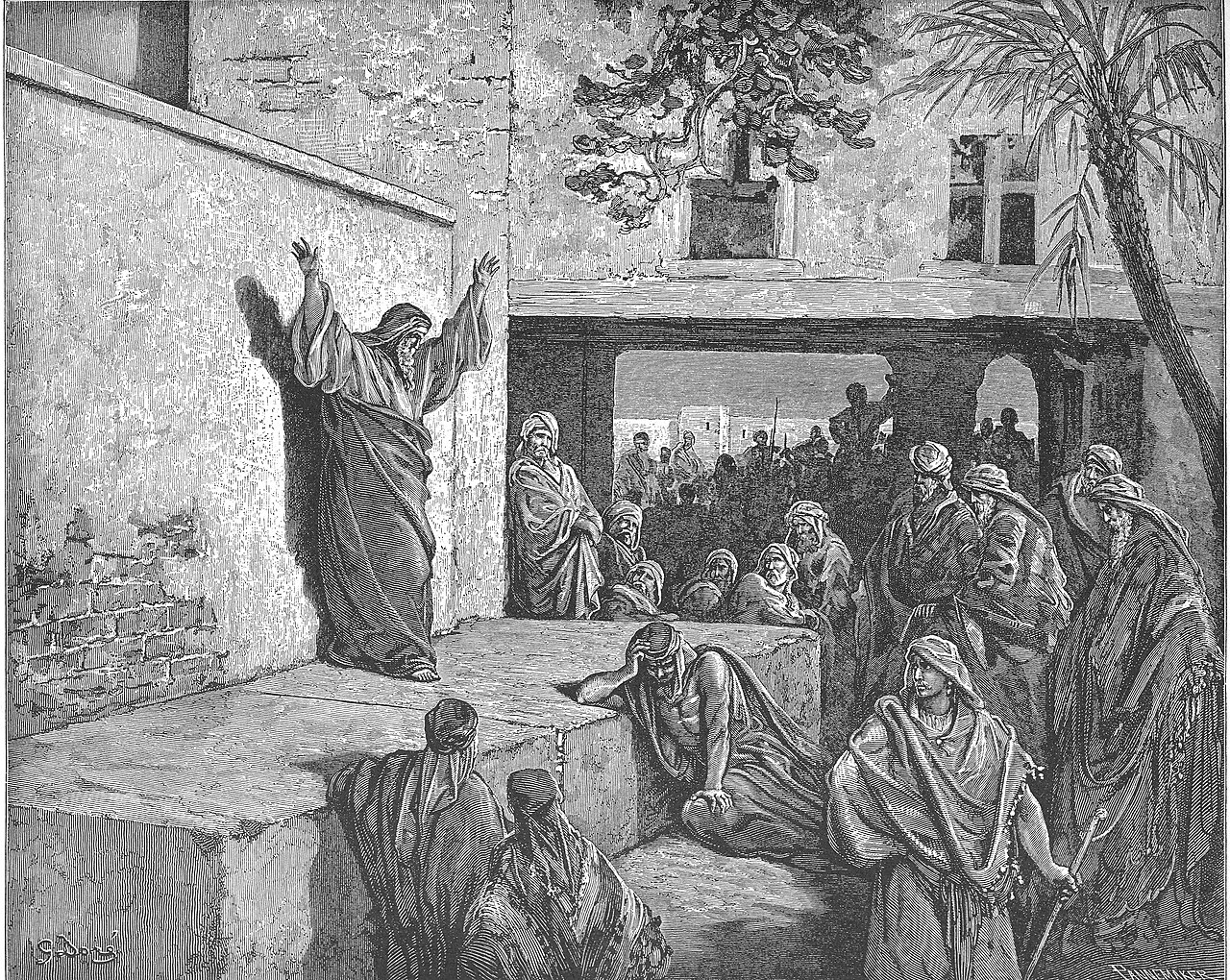
in Micah 2In that day they will take up a proverb against you and taunt you with this bitter lamentation: ‘We are utterly ruined! He has changed the portion of my people. How He has removed it from me! He has allotted our fields to traitors.’”
BSB
The same verse in ASV and KJV ▾
ASV
In that day shall they take up a parable against you, and lament with a doleful lamentation, and say, We are utterly ruined: he changeth the portion of my people: how doth he remove it from me! to the rebellious he divideth our fields.
KJV
In that day shall one take up a parable against you, and lament with a doleful lamentation, and say, We be utterly spoiled: he hath changed the portion of my people: how hath he removed it from me! turning away he hath divided our fields.
⋯
This verse in Micah 2
Commentary
8 notes on this verseTake up a parable against you - Your wickedness and your punishment shall be subjects of common conversation; and a funeral dirge shall be composed and sung for you as for the dead. The lamentation is that which immediately follows: We be utterly spoiled; and ends, Are these his doings? Mic 2:7.
This site's exposition
against this family do I devise an evil
on Micah 2:3-5
The Lord answers the schemers in their own vocabulary, devising an evil against this family in exchange for the evil they devised, a measure-for-measure judgment the prophets use often. Verse 4 pictures the mockery that will follow, a doleful parable sung over the fallen landowners, we be utterly spoiled, our fields divided away from us by another, the very reversal they inflicted on their victims now inflicted on them. Verse 5 makes the loss permanent under the old land law: none shall cast a cord by lot to remeasure an inheritance in the congregation of the Lord, because the family holding it will be gone.
The record, by era
The Church Fathers1 voice
(Chapter 2—Verse 1 onwards) Woe to those who devise wickedness and work evil upon their beds! In the morning light they practice it, because it is in the power of their hand. They covet fields, and seize them; houses, and take them away; they oppress a man and his house, a man and his inheritance. Therefore thus says the Lord: Behold, I am devising against this family an evil from which you cannot remove your necks, and you shall not walk haughtily, for it will be an evil time.
The Puritans and the Awakening3 voices
Note, If covetousness reigns in the heart, commonly all compassion is banished from it; and if any man love this world, as the love of the Father, so the love of his neighbour is not in him. The justice of God contriving the evil of punishment for this sin (
quarantine:debris (2026-07-29) — unbalanced-parens
In that day shall one take up a parable against you,.... Making use of your name, as a byword, a proverb, a taunt, and a jeer; mocking at your calamities and miseries: or, "concerning you" (c); take up and deliver out a narrative of your troubles, in figurative and parabolical expressions; which Kimchi thinks is to be understood of a false prophet, finding his prophecies and promises come to nothing; or rather a stranger, a bystander, a spectator of their miseries, an insulting enemy, mimicking and representing them; or one of themselves, in the name of the rest: and lament with a doleful lamentation; or, "lament a lamentation of lamentation" (d): a very grievous one; or, "a lamentation that is", or "shall be", or "is done" (e); a real one, and which will continue: and say, we be utterly spoiled; our persons, families, and friends; our estates, fields, and vineyards; our towns and cities, and even our whole land, all laid waste, spoiled, and plundered: he hath changed the portion of my people; the land of Israel, which was the portion of the people of it, given unto them as their portion by the Lord; but now he, or the enemy the Assyrian, or God by him, had changed the possessors of it; had taken it away from Israel, and given it to others: how hath he removed it from me! the land that was my portion, and the portion of my people; how comes it to pass that he hath taken away that which was my property, and given it to another! how strange is this! how suddenly was it done! […]
Their friends shall mourn over them, and lay to heart their calamities, and this shall be the general cry, " We are utterly spoiled; we are all undone." Note, Those that were most haughty and secure in their prosperity are commonly most dejected and most ready to despair in their adversity.
The Nineteenth Century1 voice
A commentator
Jamieson, Fausset & Brown1802–1910
Commentary Critical and Explanatory on the Whole Bible (1871)
So "backsliding," that is, backslider (Jer 49:4). English Version gives a good sense; and is quite tenable in the Hebrew.
1 more voice on this verse
The Nineteenth Century1 voice
A commentator
Albert Barnes1798–1870
Notes, Explanatory and Practical, on the Old and New Testaments (1832-1869)
proposed
In that day shall one take up a parable against you - The mashal or likeness may, in itself, be any speech in which one thing is likened to another: 1) “figured speech,” 2) “proverb,” and, since such proverbs were often sharp sayings against others, 3) “taunting figurative speech.” But of the person himself it is always said, he “is made, becomes a proverb” Deu 28:37; 1Ki 9:7; 2Ch 7:20; Psa 44:15; Psa 69:12; Jer 24:9; Eze 14:8. To take up or utter such a speech against one, is, elsewhere, followed by the speech itself; “Thou shalt take up this parable against the king of Babylon, and say, ...” Isa 14:4. “Shall not all these take up a parable against him, and say, ...” Hab 2:6. Although then the name of the Jews has passed into a proverb of reproach (Jerome, loc. cit.), this is not contained here. The parable here must be the same as the doleful lamentation, or dirge, which follows. No mockery is more cutting or fiendish, than to repeat in jest words by which one bemoans himself. The dirge which Israel should use of themselves in sorrow, the enemy shall take up in derision, as Satan does doubtless the self-condemnation of the damned. Ribera: “Men do any evil, undergo any peril, to avoid shame. God brings before us that deepest and eternal shame,” the shame and everlasting contempt, in presence of Himself and angels and devils and the good Psa 52:6-7; Isa 66:24, that we may avoid shame by avoiding evil. And lament with a doleful lamentation - The words in Hebrew are varied inflections of a word imitating the sounds of woe. It is the voice of woe in all languages, because the voice of nature. Shall wail a wail of woe, It is the funeral dirge over the dead Jer 31:15, or of the living doomed to die Eze 32:18; it is sometimes the measured mourning of those employed to call forth sorrow Amo 5:16; Jer 9:17, Jer 9:19, or mourning generally 1Sa 7:2; Jer 9:18. […]
The words behind it
20 Hebrew wordsEvery Hebrew word of this verse in the order it stands, with what it means and the door to its own study. The last column counts the times a word stands in the whole Bible: the rarer the word, the more the places it appears belong together.
| Hebrew | Sound | Meaning | Word study | In the Bible |
|---|---|---|---|---|
| בַּיּ֨וֹם | baiyom | on the day | H3117 → | 2304 times |
| הַה֜וּא | hahu' | <the> that | H1931 → | 1879 times |
| יִשָּׂ֧א | yisa' | someone will lift up | H5375 → | 656 times |
| עֲלֵיכֶ֣ם | ʾaleikhem | on you | H5921 → | 5755 times |
| מָשָׁ֗ל | mashal | a saying | H4912 → | |
| וְנָהָ֨ה | venahah | and he will wail | H5091 → | |
| נְהִ֤י | nehi | a wailing | H5092 → | |
| נִֽהְיָה֙ | nihyah | it is finished | H1961 → | 3559 times |
| אָמַר֙ | ʾamar | he will say | H559 → | 5305 times |
| שָׁד֣וֹד | shadod | utterly <devastate> | H7703 → | |
| נְשַׁדֻּ֔נוּ | neshadunu | we are devastated | H7703 → | |
| חֵ֥לֶק | chelek | [the] portion of | H2506 → | |
| עַמִּ֖י | ʾami | people my | H5971 → | 1873 times |
| יָמִ֑יר | yamir | he exchanges | H4171 → | |
| אֵ֚יךְ | ʾeikh | how! | H349 → | |
| יָמִ֣ישׁ | yamish | he removes [it] | H4185 → | |
| לִ֔י | li | for me | ||
| לְשׁוֹבֵ֥ב | leshovev | to an apostate | H7728 → | |
| שָׂדֵ֖ינוּ | sadeinu | fields our | H7704 → | 334 times |
| יְחַלֵּֽק׃ | yechalek | he apportions | H2505 → |
בַּיּ֨וֹםon the day
baiyomH3117 →2304 times
הַה֜וּא<the> that
hahu'H1931 →1879 times
יִשָּׂ֧אsomeone will lift up
yisa'H5375 →656 times
עֲלֵיכֶ֣םon you
ʾaleikhemH5921 →5755 times
מָשָׁ֗לa saying
mashalH4912 →
וְנָהָ֨הand he will wail
venahahH5091 →
נְהִ֤יa wailing
nehiH5092 →
נִֽהְיָה֙it is finished
nihyahH1961 →3559 times
אָמַר֙he will say
ʾamarH559 →5305 times
שָׁד֣וֹדutterly <devastate>
shadodH7703 →
נְשַׁדֻּ֔נוּwe are devastated
neshadunuH7703 →
חֵ֥לֶק[the] portion of
chelekH2506 →
עַמִּ֖יpeople my
ʾamiH5971 →1873 times
יָמִ֑ירhe exchanges
yamirH4171 →
אֵ֚יךְhow!
ʾeikhH349 →
יָמִ֣ישׁhe removes [it]
yamishH4185 →
לִ֔יfor me
li
לְשׁוֹבֵ֥בto an apostate
leshovevH7728 →
שָׂדֵ֖ינוּfields our
sadeinuH7704 →334 times
יְחַלֵּֽק׃he apportions
yechalekH2505 →
A shaded row is a word that stands 400 times or fewer in the Bible.
The walk
8 stopsEach card is a verse this one points to, and under it the verses that one points to in turn. Where several paths arrive at the same place, that place is listed first: the text keeps returning to it.
Through
Jeremiah 9:10I will take up a weeping and wailing for the mountains, a dirge over the wilderness pasture, for they have been scorched so no one passes through, and the lowing of cattle is not…
it leads to
- Jeremiah 12:4
How long will the land mourn and the grass of every field be withered? Because of the evil of its residents, the animals and birds have been swept away, for the people have said,…
- Hosea 4:3
Therefore the land mourns, and all who dwell in it will waste away with the beasts of the field and the birds of the air; even the fish of the sea disappear.
- Jeremiah 12:4
Through
Deuteronomy 28:29and at noon you will grope about like a blind man in the darkness. You will not prosper in your ways. Day after day you will be oppressed and plundered, with no one to…
it leads to
- Isaiah 59:10
Like the blind, we feel our way along the wall, groping like those without eyes. We stumble at midday as in the twilight; among the vigorous we are like the dead.
- Job 5:14
They encounter darkness by day and grope at noon as in the night.
- Isaiah 59:10
Through
Isaiah 6:11Then I asked: “How long, O Lord?” And He replied: “Until the cities lie ruined and without inhabitant, until the houses are left unoccupied and the land is desolate and ravaged,
it leads to
- Isaiah 1:7
Your land is desolate; your cities are burned with fire. Foreigners devour your fields before you—a desolation demolished by strangers.
- Leviticus 26:31
I will reduce your cities to rubble and lay waste your sanctuaries, and I will refuse to smell the pleasing aroma of your sacrifices.
- Psalms 94:3
How long will the wicked, O LORD, how long will the wicked exult?
- Isaiah 3:26
And the gates of Zion will lament and mourn; destitute, she will sit on the ground.
- Isaiah 1:7
Where this verse is studied
On this page
Studies1
About Micah
This page draws on Adam Clarke, Commentary on the Bible; Albert Barnes, Notes, Explanatory and Practical, on the Old and New Testaments (1832-1869); Edward Bouverie Pusey, The Minor Prophets: A Commentary; Jamieson, Fausset & Brown, Commentary Critical and Explanatory on the Whole Bible; Jerome, Commentary on Micah; John Gill, Exposition of the Old Testament; John Gill, Exposition of the Old Testament (1748-1763) and Matthew Henry, Commentary on the Whole Bible.