
Isaiah 55:2
in Isaiah 55Why spend money on that which is not bread, and your labor on that which does not satisfy? Listen carefully to Me, and eat what is good, and your soul will delight in the richest of foods.
BSB
The same verse in ASV and KJV ▾
ASV
Wherefore do ye spend money for that which is not bread? and your labor for that which satisfieth not? hearken diligently unto me, and eat ye that which is good, and let your soul delight itself in fatness.
KJV
Wherefore do ye spend money for that which is not bread? and your labour for that which satisfieth not? hearken diligently unto me, and eat ye that which is good, and let your soul delight itself in fatness.
⋯
This verse in Isaiah 55
Commentary
16 notes on this verseA commentator
Albert Barnes1798–1870
Notes, Explanatory and Practical, on the Old and New Testaments (1832-1869)
Wherefore do ye spend money - Margin, ‘Weigh.’ That is, in Hebrew, ‘weigh silver.’ Before money was coined, the precious metals were weighed, and hence, to make a payment is represented as weighing out silver Gen 23:16. For that which is not bread - The idea here is, that people are endeavoring to purchase happiness, and are disappointed. Bread is the support of life; it is therefore emblematic of whatever contributes to support and comfort. And in regard to the pursuit of happiness in the pleasures of life, and in ambition, vanity, and vice, people are as much disappointed, as he would be who should spend his money, and procure nothing that would sustain life. And your labor for that which satisfieth not - You toil, and expend the avails of your labor for that which does not produce satisfaction. What a striking description of the condition of the world! The immortal mind will not be satisfied with wealth, pleasure, or honor. It never has been. Where is the man who is satisfied with his wealth, and who says it is enough? Where is there one who is satisfied with pleasure, and vanity, and gaiety? There is a void in the heart which these things do not, cannot fill. There is a consciousness that the soul was made for higher and nobler purposes, and that nothing but God can meet its boundless desires. Where is the man who has ever been satisfied with ambition? Alexander wept on the throne of the world; and though Diocletian and Charles V descended voluntarily from the throne to private life, it was because there was nothing in royalty to satisfy the soul, and not because they found happiness enough there. […]
This site's exposition
Come, all you who are thirsty
on Isaiah 55:1-2
The invitation is open to all who thirst, whether they can pay or not, to “buy wine and milk without money and without cost”. “Listen carefully to Me, and eat what is good” carries forward the free offer that follows the servant's work in chapters 52 and 53.
This site's exposition
spend money on that which is not bread
Barnes notes that spend money is weigh silver in the Hebrew, from the days before coins, as at Genesis 23:16. Jamieson, Fausset & Brown read listen and eat as cause and result, so the one who listens will eat. Wesley reads the soul's delight as the gospel's good things.
The record, by era
The Church Fathers4 voices
Behold what [Isaiah] has shown here, before indicating the road of righteousness. For it is thanks to all-holy baptism that "we are justified freely," according to the divine apostle: "by his grace through the redemption that is in Christ Jesus." It is this the prophetic …
Therefore, the goods that are promised to the soul are not riches, and bodily health, and worldly honors, which even the philosophers call indifferent, that is, neither good nor bad, and vary according to the quality of the users.… But if the soul is said to be good, then honesty and virtues are also said to be good. Therefore, not poverty, bodily infirmity, and low social status should be considered as evils, but rather all vices that are truly bad. In conclusion, Abraham was not considered good because he was wealthy, but because he made good use of his wealth. And Lazarus, who later rested in his bosom, did not endure evils because he suffered the torment of diseases in poverty, but he attained true good through the evils that were considered in the world. And so that rich man, clothed in purple, received his good things in his life, which were good to him, who thought them good, and of Lazarus it is not said on the contrary: "He received his evil things in his life"; but he received his evil things in his life, which were not evil to him, who suffered, but seemed evil to others. The blessed Job gives us an example of both things, who was not conquered in the good things or the evils of the world, but endured everything with equal strength of mind.
How can they purchase, yet receive gifts without paying? Well, because we accept the payment in faith from Christ, and we pay for none of these things with short-term or perishable goods. For it says, "I said to my Lord, 'You are my Lord since you have no need of goods from me.' " By way of gifts and honor to Christ we offer to Christ the confession of faith in him. So without money and payment comes this drink and bountiful gift of spiritual charisms. For what could we offer and what price could we pay for such a drink? For those drinking the living water are those enriched with grace through the Holy Spirit through participation in him and purchasing this through faith, since they are sharers of the wine and suet, that is, of the holy body and the blood of Christ.
(Verse 2, 3.) Hear me, you who listen, and eat what is good, and your soul will delight in abundance. Incline your ear and come to me; listen, and your soul will live. And I will make an everlasting covenant with you, the sure mercies of David. And I will establish for you an everlasting covenant, holy and faithful to David. Lest anyone think these are hearsay of the flesh, not of the mind, to whom the divine word encourages them to listen, promising them not the goods of the flesh but of the soul.
The Medieval Church1 voice
And he recalls their former poverty, why do you spend money for that which is not bread? As if to say: why thus far have you been spending money and from it have not been able to eat bread? You have sowed much, and brought …
8 more voices on this verse
The Puritans and the Awakening2 voices
Not bread - For those things which can never nourish or satisfy you, such as worldly goods, or pleasures. Eat ye - That which is truly and solidly, and everlastingly good. In fatness - In this pleasant food of gospel-enjoyments.
Wherefore do ye spend money for that which is not bread?....
The Nineteenth Century6 voices
A commentator
Jamieson, Fausset & Brown1802–1910
Commentary Critical and Explanatory on the Whole Bible (1871)
proposed
4:8). hearken . . . and eat--When two imperatives are joined, the second expresses the consequence of obeying the command in the first (Ge 42:18). By hearkening ye shall eat. So in Isa 55:1, "buy and eat." By buying, and so making it your own, ye shall eat, that is, experimentally enjoy it (Joh 6:53).
quarantine:debris (2026-07-29) — unbalanced-parens
A commentator
Charles Spurgeon1834–1892
The Metropolitan Tabernacle Pulpit, Sermon No. 2278: “Feeding on the Word” (lightly modernized text, CCEL edition) · Written before 1892.
proposed
How important it is that we should hear God, that we should have an attentive ear to His Word and that it should, through our ears, reach our souls and become to us, consciously, the Living Word of the Living God! The great gate of commerce between Heaven and the town of Mansoul is Ear-Gate. We can see but little of the things of the Kingdom of God, but we can hear much concerning them. We are told, not only to "listen" to God, but to "listen diligently."
A commentator
Charles Spurgeon1834–1892
The Metropolitan Tabernacle Pulpit, Sermon No. 2278: “Feeding on the Word” (lightly modernized text, CCEL edition) · Written before 1892.
proposed
How important it is that we should hear God, that we should have an attentive ear to His Word and that it should, through our ears, reach our souls and become to us, consciously, the Living Word of the Living God! The great gate of commerce between Heaven and the town of Mansoul is Ear-Gate. We can see but little of the things of the Kingdom of God, but we can hear much concerning them. We are told, not only to "listen" to God, but to "listen diligently." You cannot have too much hearing of the right kind of truth, nor too much of the right kind of hearing. Some people like few sermons and those very short, but, when a soul is hungry after God and eternal life, it puts another meaning on this exhortation, "Listen diligently." It cannot hear too much! It cannot hear too often! It cannot hear too intensely. Faith comes by hearing and, therefore, Satan tries to block up that gateway of mercy. If he can persuade men not to hear, then he can keep them out of the way of Grace. But the exhortation of our text sets wide open this door of salvation at which the Lord, Himself, stands and cries, "Listen diligently to Me." You, dear Friends, love to hear the Word of the Lord, therefore I need not dwell upon that exhortation. But I do pray that no one may hear in vain. "Take heed what you hear" and "take heed how you hear." Do not be content merely to open Ear-Gate, but rest not satisfied until the King, Himself, comes riding through that gate right up to the very citadel of the town of Mansoul and takes possession of the castle of your heart! With this brief introduction, we will come to the consideration of our main text which follows upon the exhortation. We are to "listen diligently" to this message from the Lord's lips—"Eat what is good, and let your soul delight itself in fatness." Here are four things. First, the food. Next, the feeding.
A commentator
Charles Spurgeon1834–1892
The Metropolitan Tabernacle Pulpit, Sermon No. 2786: “The Soul's Best Food” (lightly modernized text, CCEL edition) · Written before 1892.
proposed
ALL life here below needs to be sustained from without by food of some kind or other. We know not how the angels live, yet the Psalmist's expression, "Man did eat angels' food," might lead us to imagine that even the/need to be supplied with nourishment from without, but, certainly, all earthly life requires appropriate nutriment. The physical life of man cannot be sustained unless he has bread to eat. His mental life, too, though that is often forgotten, cannot be in a healthy condition without an adequate supply of understanding and knowledge.
A commentator
Charles Spurgeon1834–1892
The Metropolitan Tabernacle Pulpit, Sermon No. 2786: “The Soul's Best Food” (lightly modernized text, CCEL edition) · Written before 1892.
proposed
ALL life here below needs to be sustained from without by food of some kind or other. We know not how the angels live, yet the Psalmist's expression, "Man did eat angels' food," might lead us to imagine that even the/need to be supplied with nourishment from without, but, certainly, all earthly life requires appropriate nutriment. The physical life of man cannot be sustained unless he has bread to eat. His mental life, too, though that is often forgotten, cannot be in a healthy condition without an adequate supply of understanding and knowledge. The poor creatures which have been confined in prison cells, year after year, with nothing to read or to think upon, have come forth to liberty as imbeciles— quite unfit to go into society because the mind has wasted away in starvation. You must feed the mental, as well as the physical man, if it is to be in a right and healthy state. And this is pre-eminently true of the spiritual nature which God has implanted within His people at the time of their regeneration. That higher nature must be nourished—God has been pleased to give us an ordinance on purpose to remind us of this great fact. Baptism is the symbol of the entrance upon the new life by passing through death in the type of the Savior's tomb—"buried with Him by baptism into death." And then, when that life is once obtained, there follows the sacred feast of the Lord's Supper wherein, under the emblems of the bread and the wine, we are taught that Jesus Christ must be, in a spiritual sense, both meat and drink to our souls. We derive our life from Him and He must sustain it. We receive spiritual life by hearing concerning Him and that life is to be sustained by our still hearing the truth concerning Him. Our spiritual life must have spiritual food—it cannot possibly do without it.
Wherefore do ye spend - Why should ye be so zealously attached to a doctrine from which your souls derive neither comfort nor nourishment?
How the passage was read
On Isaiah 55:1-13On Isaiah 55:1-13
How the synagogue has read this chapter
This chapter is not a shelf text in Jewish practice. A haftarah is a short reading from the Prophets that follows the Torah reading in the synagogue service, chosen long ago to match the day; and the passage beginning “Seek the LORD while He may be found” (Isaiah 55:6–56:8) is the haftarah appointed for the afternoon of public fast days in the Ashkenazi rite. A public fast day is a day the whole community goes without food to turn back to God together, the way Nineveh fasted in Jonah. So for centuries, these are the words a congregation hears at precisely the moment it is repenting.
In the Babylonian Talmud (tractate Ta’anit, compiled by about the sixth century AD), the chapter’s water is Torah, God’s teaching. “Everyone who thirsts, come to the waters” (55:1) is expounded in Ta’anit 7a: as water leaves high ground and gathers low, the words of Torah endure only in the humble. The rain of verses 10–11, which “does not return empty,” stands in the same discussions (Ta’anit 6b–7a): rain that makes the earth bear becomes the sages’ picture of a word from heaven that accomplishes what it was sent to do.
What the individual commentators add on this verse, in their own words, follows below.
What the Jewish commentators add
Why should you weigh out money Why should you cause yourselves to weigh out money to your enemies without bread?
1 more on this passage, in their own words ▾
Ho! All who thirst Heb. הוֹי. This word הוֹי is an expression of calling, inviting, and gathering, and there are many in Scripture, [e.g.,] (Zech.:10) “Ho! Ho! and flee from the north land.”
This section is reception history: how the passage was read and kept in the Jewish tradition. Where a reading parts from an essential of the Christian faith, the section says so at that point.
Sources: Ta’anit 7a (Babylonian Talmud) · Ta’anit 6b · Shulchan Arukh, Orach Chayim 566 (the fast-day rite, with Rema)
Texts and citation data: Sefaria; each excerpt follows its version’s licence. 3 further sources are cited on this chapter that carry no English text this site may quote or only restate the verse.
The words behind it
16 Hebrew wordsEvery Hebrew word of this verse in the order it stands, with what it means and the door to its own study. The last column counts the times a word stands in the whole Bible: the rarer the word, the more the places it appears belong together.
| Hebrew | Sound | Meaning | Word study | In the Bible |
|---|---|---|---|---|
| לָ֤מָּה | lamah | <to> why? | H4100 → | 752 times |
| תִשְׁקְלוּ־ | tishkelu- | do you weigh out | H8254 → | 22 times |
| כֶ֙סֶף֙ | khesef | money | H3701 → | 403 times |
| בְּֽלוֹא־ | belo'- | for not | H3808 → | 5168 times |
| לֶ֔חֶם | lechem | bread | H3899 → | 298 times |
| וִיגִיעֲכֶ֖ם | vigiakhem | and toil your | H3018 → | |
| בְּל֣וֹא | belo' | for not | H3808 → | 5168 times |
| לְשָׂבְעָ֑ה | lesaveah | to satiety | H7654 → | 6 times |
| שִׁמְע֨וּ | shimu | listen | H8085 → | 1159 times |
| שָׁמ֤וֹעַ | shamoa' | steadfastly <to listen> | H8085 → | 1159 times |
| אֵלַי֙ | ʾelai | to me | H413 → | 5510 times |
| וְאִכְלוּ־ | veikhlu- | and eat | H398 → | 810 times |
| ט֔וֹב | tov | good thing[s] | H2896 → | 538 times |
| וְתִתְעַנַּ֥ג | vetitanag | so it may take delight | H6026 → | 10 times |
| בַּדֶּ֖שֶׁן | badeshen | in <the> fatness | H1880 → | |
| נַפְשְׁכֶֽם׃ | nafshekhem | appetite your | H5315 → | 754 times |
לָ֤מָּה<to> why?
lamahH4100 →752 times
תִשְׁקְלוּ־do you weigh out
tishkelu-H8254 →22 times
כֶ֙סֶף֙money
khesefH3701 →403 times
בְּֽלוֹא־for not
belo'-H3808 →5168 times
לֶ֔חֶםbread
lechemH3899 →298 times
וִיגִיעֲכֶ֖םand toil your
vigiakhemH3018 →
בְּל֣וֹאfor not
belo'H3808 →5168 times
לְשָׂבְעָ֑הto satiety
lesaveahH7654 →6 times
שִׁמְע֨וּlisten
shimuH8085 →1159 times
שָׁמ֤וֹעַsteadfastly <to listen>
shamoa'H8085 →1159 times
אֵלַי֙to me
ʾelaiH413 →5510 times
וְאִכְלוּ־and eat
veikhlu-H398 →810 times
ט֔וֹבgood thing[s]
tovH2896 →538 times
וְתִתְעַנַּ֥גso it may take delight
vetitanagH6026 →10 times
בַּדֶּ֖שֶׁןin <the> fatness
badeshenH1880 →
נַפְשְׁכֶֽם׃appetite your
nafshekhemH5315 →754 times
A shaded row is a word that stands 400 times or fewer in the Bible.
The walk
8 stopsEach card is a verse this one points to, and under it the verses that one points to in turn. Where several paths arrive at the same place, that place is listed first: the text keeps returning to it.
Through
Psalms 36:8They feast on the abundance of Your house, and You give them drink from Your river of delights.
it leads to
- Psalms 16:11
You have made known to me the path of life; You will fill me with joy in Your presence, with eternal pleasures at Your right hand.
- Psalms 65:4
Blessed is the one You choose and bring near to dwell in Your courts! We are filled with the goodness of Your house, the holiness of Your temple.
- Isaiah 58:11
The LORD will always guide you; He will satisfy you in a sun-scorched land and strengthen your frame. You will be like a well-watered garden, like a spring whose waters never fail.
- Jeremiah 31:12–14
They will come and shout for joy on the heights of Zion; they will be radiant over the bounty of the LORD—the grain, new wine, and oil, and the young of the flocks and…
- Isaiah 25:6
On this mountain the LORD of Hosts will prepare a banquet for all the peoples, a feast of aged wine, of choice meat, of finely aged wine.
- Psalms 16:11
Through
Jeremiah 2:13“For My people have committed two evils: They have forsaken Me, the fountain of living water, and they have dug their own cisterns—broken cisterns that cannot hold water.
it leads to
- John 4:14
But whoever drinks the water I give him will never thirst. Indeed, the water I give him will become in him a fount of water springing up to eternal life.”
- John 7:37
On the last and greatest day of the feast, Jesus stood up and called out in a loud voice, “If anyone is thirsty, let him come to Me and drink.
- Jeremiah 17:13
O LORD, the hope of Israel, all who abandon You will be put to shame. All who turn away will be written in the dust, for they have abandoned the LORD, the fountain of…
- John 4:14
Where this verse is studied
About Isaiah
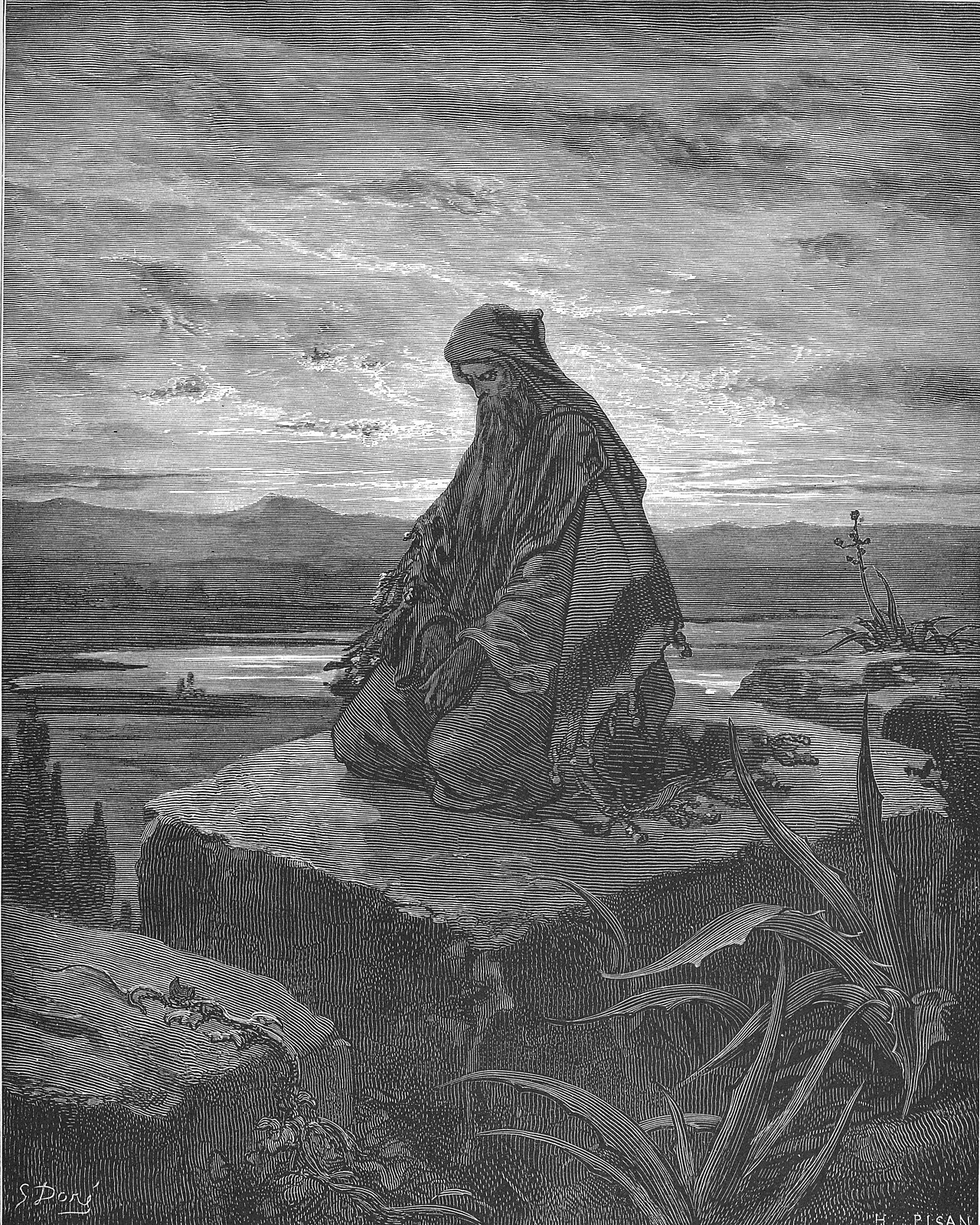
This page draws on 13 works. Open the list of works
This page draws on Adam Clarke, Commentary on the Bible; Albert Barnes, Notes, Explanatory and Practical, on the Old and New Testaments (1832-1869); Albert Barnes, Notes on the Book of Isaiah; Charles Spurgeon, The Metropolitan Tabernacle Pulpit, Sermon No. 2278: “Feeding on the Word” (lightly modernized text, CCEL edition); Charles Spurgeon, The Metropolitan Tabernacle Pulpit, Sermon No. 2786: “The Soul's Best Food” (lightly modernized text, CCEL edition); Cyril of Alexandria, COMMENTARY ON ISAIAH 5:2.55:1-2; Jamieson, Fausset & Brown, Commentary Critical and Explanatory on the Whole Bible; Jerome, Commentary on Isaiah; John Gill, Exposition of the Old Testament (1748-1763); John Wesley, Explanatory Notes upon the Old Testament; Matthew Henry, Commentary on the Whole Bible; Theodoret of Cyrus, COMMENTARY ON ISAIAH 17:55.1-2 and Thomas Aquinas, Commentary on Isaiah.