
Isaiah 55:1
in Isaiah 55“Come, all you who are thirsty, come to the waters; and you without money, come, buy, and eat! Come, buy wine and milk without money and without cost!
BSB
The same verse in ASV and KJV ▾
ASV
Ho, every one that thirsteth, come ye to the waters, and he that hath no money; come ye, buy, and eat; yea, come, buy wine and milk without money and without price.
KJV
Ho, every one that thirsteth, come ye to the waters, and he that hath no money; come ye, buy, and eat; yea, come, buy wine and milk without money and without price.
⋯
This verse in Isaiah 55
Commentary
4 notes on this verse(Chapter 55, Verse 1) All you who are thirsty, come to the waters, and you who have no money, hurry and buy and eat; come, buy wine and milk without money and without price. Why do you spend money on what is not bread, and your labor on what does not satisfy? LXX: You who are thirsty, go to the water, and you who have no money, go, buy and eat, and walk, and buy wine and fat without money and without price. Why do you spend money, and your labor not for satisfaction?
This site's exposition
without money and without price
on Isaiah 55:1-2
The invitation opens to everyone who thirsts, without regard to ability to pay, wine and milk offered without money and without price, an economy of grace set against ordinary commerce. Verse 2 asks why the hearers spend money for what is not bread and labor for what does not satisfy, turning the figure toward misplaced effort rather than mere poverty. The command to hearken diligently and eat what is good carries forward the same free offer the servant's exaltation opened in chapter 52, applied now to everyone who will come.
The record, by era
The Puritans and the Awakening1 voice
It intimates that in Christ there is enough for all and enough for each, that ministers are to make a general offer of life and salvation to all, that in gospel times the invitation should be more largely made than it had been and should be sent to the Gentiles, and that the gospel covenant excludes none that do not exclude themselves.
The Nineteenth Century1 voice
A commentator
Albert Barnes1798–1870
Notes, Explanatory and Practical, on the Old and New Testaments (1832-1869)
Ho - (הוי hôy). This word here is designed to call attention to the subject as one of importance. Every one that thirsteth - The word ‘thirst’ often indicates intense desire, and is thus applied to the sense of want which sinners often have, and to their anxious wishes for salvation. It is not improbable that the Savior had this passage in his eye when he pronounced the blessing on those who hunger and thirst after righteousness Mat 5:6. No needs are so keen, none so imperiously demand supply, as those of hunger and thirst.
How the passage was read
On Isaiah 55:1-13On Isaiah 55:1-13
How the synagogue has read this chapter
This chapter is not a shelf text in Jewish practice. A haftarah is a short reading from the Prophets that follows the Torah reading in the synagogue service, chosen long ago to match the day; and the passage beginning “Seek the LORD while He may be found” (Isaiah 55:6–56:8) is the haftarah appointed for the afternoon of public fast days in the Ashkenazi rite. A public fast day is a day the whole community goes without food to turn back to God together, the way Nineveh fasted in Jonah. So for centuries, these are the words a congregation hears at precisely the moment it is repenting.
In the Babylonian Talmud (tractate Ta’anit, compiled by about the sixth century AD), the chapter’s water is Torah, God’s teaching. “Everyone who thirsts, come to the waters” (55:1) is expounded in Ta’anit 7a: as water leaves high ground and gathers low, the words of Torah endure only in the humble. The rain of verses 10–11, which “does not return empty,” stands in the same discussions (Ta’anit 6b–7a): rain that makes the earth bear becomes the sages’ picture of a word from heaven that accomplishes what it was sent to do.
What the individual commentators add on this verse, in their own words, follows below.
What the Jewish commentators add
Ho! All who thirst Heb. הוֹי. This word הוֹי is an expression of calling, inviting, and gathering, and there are many in Scripture, [e.g.,] (Zech.:10) “Ho! Ho! and flee from the north land.”
1 more on this passage, in their own words ▾
Why should you weigh out money Why should you cause yourselves to weigh out money to your enemies without bread?
This section is reception history: how the passage was read and kept in the Jewish tradition. Where a reading parts from an essential of the Christian faith, the section says so at that point.
Sources: Ta’anit 7a (Babylonian Talmud) · Ta’anit 6b · Shulchan Arukh, Orach Chayim 566 (the fast-day rite, with Rema)
Texts and citation data: Sefaria; each excerpt follows its version’s licence. 3 further sources are cited on this chapter that carry no English text this site may quote or only restate the verse.
The words behind it
20 Hebrew wordsEvery Hebrew word of this verse in the order it stands, with what it means and the door to its own study. The last column counts the times a word stands in the whole Bible: the rarer the word, the more the places it appears belong together.
| Hebrew | Sound | Meaning | Word study | In the Bible |
|---|---|---|---|---|
| ה֤וֹי | ho | alas! | H1945 → | 51 times |
| כָּל־ | kol- | O every | H3605 → | 5413 times |
| צָמֵא֙ | tzame' | thirsty [one] | H6771 → | 9 times |
| לְכ֣וּ | lekhu | come | H1980 → | 1546 times |
| לַמַּ֔יִם | lamayim | to the waters | H4325 → | 581 times |
| וַאֲשֶׁ֥ר | vaasher | and [one] who | H834 → | 5497 times |
| אֵֽין־ | ʾein- | not | H369 → | 789 times |
| ל֖וֹ | lo | [belongs] to him | ||
| כָּ֑סֶף | kasef | money | H3701 → | 403 times |
| לְכ֤וּ | lekhu | come | H1980 → | 1546 times |
| שִׁבְרוּ֙ | shivru | buy grain | H7666 → | |
| וֶֽאֱכֹ֔לוּ | veekholu | and eat | H398 → | 810 times |
| וּלְכ֣וּ | ulekhu | and come | H1980 → | 1546 times |
| שִׁבְר֗וּ | shivru | buy grain | H7666 → | |
| בְּלוֹא־ | belo'- | with not | H3808 → | 5168 times |
| כֶ֛סֶף | khesef | money | H3701 → | 403 times |
| וּבְל֥וֹא | uvelo' | and with not | H3808 → | 5168 times |
| מְחִ֖יר | mechir | price | H4242 → | |
| יַ֥יִן | yayin | wine | H3196 → | 141 times |
| וְחָלָֽב׃ | vechalav | and milk | H2461 → | 44 times |
ה֤וֹיalas!
hoH1945 →51 times
כָּל־O every
kol-H3605 →5413 times
צָמֵא֙thirsty [one]
tzame'H6771 →9 times
לְכ֣וּcome
lekhuH1980 →1546 times
לַמַּ֔יִםto the waters
lamayimH4325 →581 times
וַאֲשֶׁ֥רand [one] who
vaasherH834 →5497 times
אֵֽין־not
ʾein-H369 →789 times
ל֖וֹ[belongs] to him
lo
כָּ֑סֶףmoney
kasefH3701 →403 times
לְכ֤וּcome
lekhuH1980 →1546 times
שִׁבְרוּ֙buy grain
shivruH7666 →
וֶֽאֱכֹ֔לוּand eat
veekholuH398 →810 times
וּלְכ֣וּand come
ulekhuH1980 →1546 times
שִׁבְר֗וּbuy grain
shivruH7666 →
בְּלוֹא־with not
belo'-H3808 →5168 times
כֶ֛סֶףmoney
khesefH3701 →403 times
וּבְל֥וֹאand with not
uvelo'H3808 →5168 times
מְחִ֖ירprice
mechirH4242 →
יַ֥יִןwine
yayinH3196 →141 times
וְחָלָֽב׃and milk
vechalavH2461 →44 times
A shaded row is a word that stands 400 times or fewer in the Bible.
The walk
8 stopsEach card is a verse this one points to, and under it the verses that one points to in turn. Where several paths arrive at the same place, that place is listed first: the text keeps returning to it.
Through
Isaiah 44:3For I will pour water on the thirsty land, and currents on the dry ground. I will pour out My Spirit on your descendants, and My blessing on your offspring.
it leads to
- Joel 2:28
And afterward, I will pour out My Spirit on all people. Your sons and daughters will prophesy, your old men will dream dreams, your young men will see visions.
- Acts 2:17
‘In the last days, God says, I will pour out My Spirit on all people. Your sons and daughters will prophesy, your young men will see visions, your old men will dream dreams.
- Isaiah 59:21
“As for Me, this is My covenant with them,” says the LORD. “My Spirit will not depart from you, and My words that I have put in your mouth will not depart from your…
- John 7:37–39
On the last and greatest day of the feast, Jesus stood up and called out in a loud voice, “If anyone is thirsty, let him come to Me and drink.
- Proverbs 1:23
If you had repented at my rebuke, then surely I would have poured out my spirit on you; I would have made my words known to you.
- Joel 2:28
Through
Revelation 22:17The Spirit and the bride say, “Come!” Let the one who hears say, “Come!” And let the one who is thirsty come, and the one who desires the water of life drink freely.
it leads to
- John 4:14
But whoever drinks the water I give him will never thirst. Indeed, the water I give him will become in him a fount of water springing up to eternal life.”
Reached by 2 separate paths from here.
- John 4:14
Through
Revelation 21:6And He told me, “It is done! I am the Alpha and the Omega, the Beginning and the End. To the thirsty I will give freely from the spring of the water of life.
it leads to
- John 7:37–38
On the last and greatest day of the feast, Jesus stood up and called out in a loud voice, “If anyone is thirsty, let him come to Me and drink.
- John 4:10
Jesus answered, “If you knew the gift of God and who is asking you for a drink, you would have asked Him, and He would have given you living water.”
- John 7:37–38
Where this verse is studied
About Isaiah
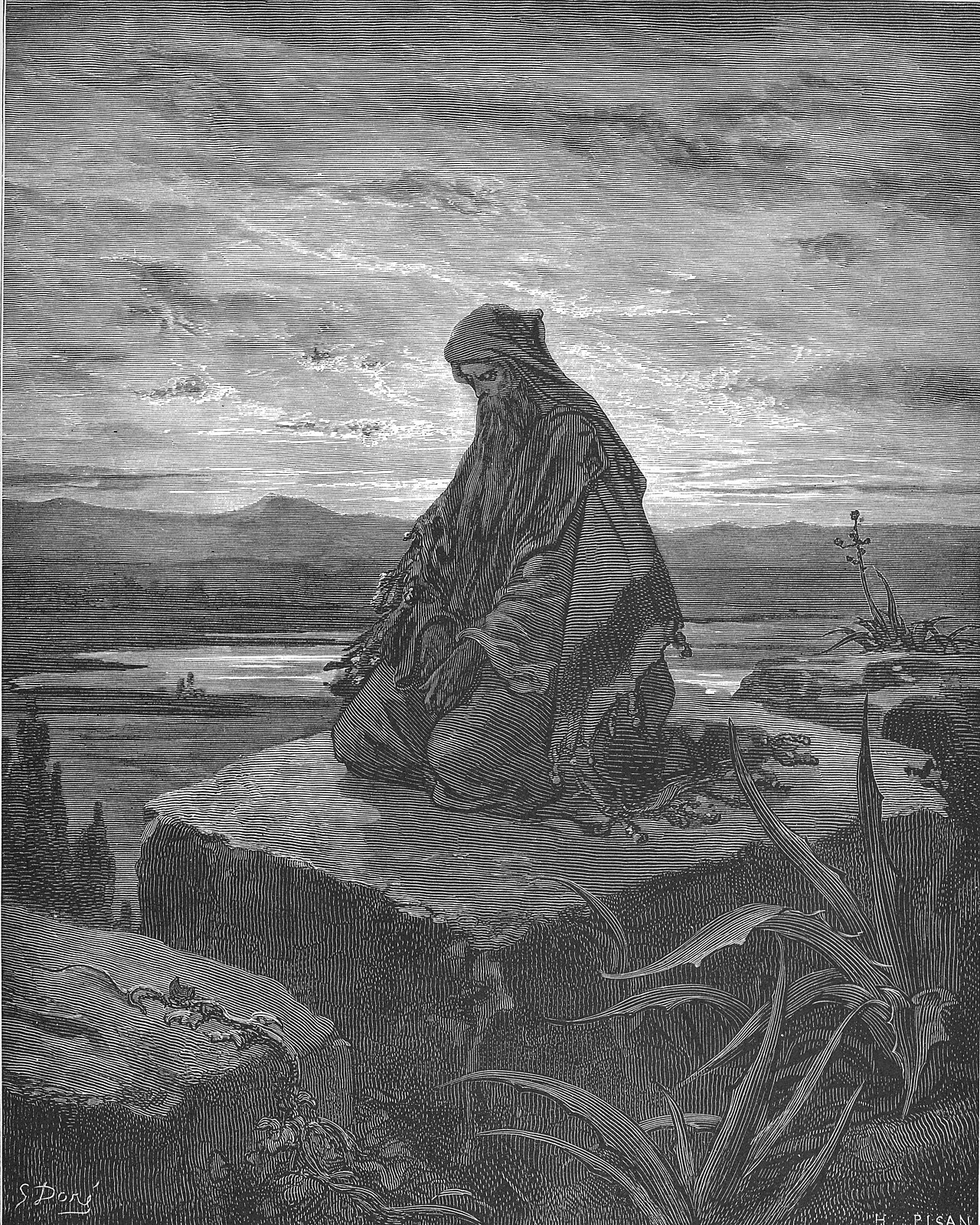
This page draws on Albert Barnes, Notes on the Book of Isaiah; Albert Barnes, Notes, Explanatory and Practical, on the Old and New Testaments (1832-1869); Jerome, Commentary on Isaiah and Matthew Henry, Commentary on the Whole Bible.