
Esther 7:1
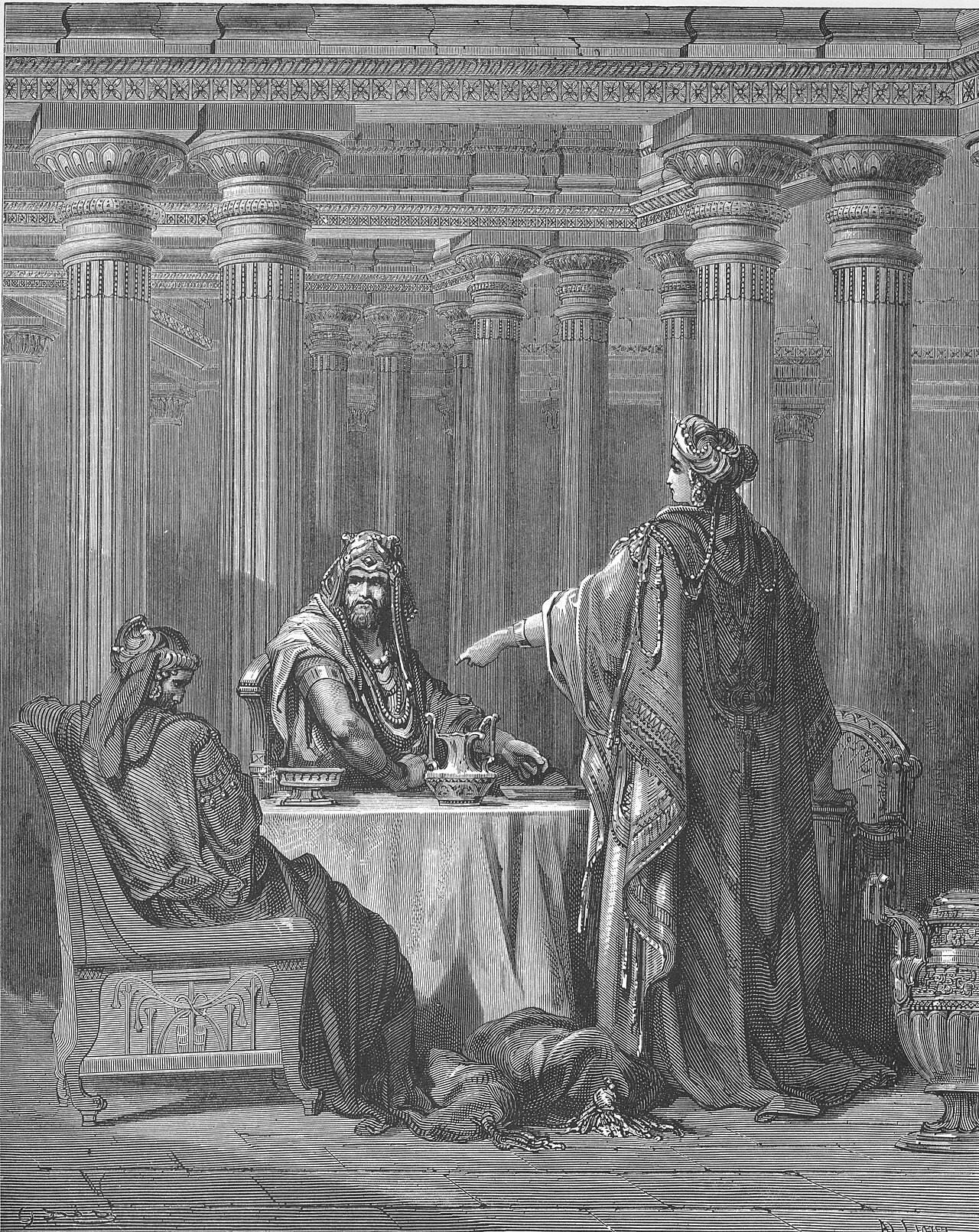
in Esther 7So the king and Haman went to dine with Esther the queen,
BSB
The same verse in ASV and KJV ▾
ASV
So the king and Haman came to banquet with Esther the queen.
KJV
So the king and Haman came to banquet with Esther the queen.
⋯
This verse in Esther 7
Commentary
2 notes on this verseSo the king and Haman came to banquet with Esther the queen. Or, "to drink with her" (e), that is, wine; for in the next verse it is called a banquet of wine; so they did according to the invitation the queen had given them, Est 5:8. (e) לשתות "ut biberent", V. L. Tigurine version; "ad bibendum", Pagninus, Montanus, Drusius, Vatablus.
This site's exposition
banquet with Esther the queen
on Esther 7:1-2
The second banquet opens on the same formula the king used at the first, to the half of the kingdom, and Esther is finally asked the petition she has twice deferred. Two banquets and one sleepless night stand between this verse and 5:8, and the narrator has let the reader watch what filled the space.
The words behind it
7 Hebrew wordsEvery Hebrew word of this verse in the order it stands, with what it means and the door to its own study. The last column counts the times a word stands in the whole Bible: the rarer the word, the more the places it appears belong together.
| Hebrew | Sound | Meaning | Word study | In the Bible |
|---|---|---|---|---|
| וַיָּבֹ֤א | vaiyavo' | and he went | H935 → | 2568 times |
| הַמֶּ֙לֶךְ֙ | hamelekh | the king | H4428 → | 2525 times |
| וְהָמָ֔ן | vehaman | and Haman | H2001 → | 54 times |
| לִשְׁתּ֖וֹת | lishtot | to drink | H8354 → | 217 times |
| עִם־ | ʾim- | with | H5973 → | 1050 times |
| אֶסְתֵּ֥ר | ʾester | Esther | H635 → | 55 times |
| הַמַּלְכָּֽה׃ | hamalkah | the queen | H4436 → | 35 times |
וַיָּבֹ֤אand he went
vaiyavo'H935 →2568 times
הַמֶּ֙לֶךְ֙the king
hamelekhH4428 →2525 times
וְהָמָ֔ןand Haman
vehamanH2001 →54 times
לִשְׁתּ֖וֹתto drink
lishtotH8354 →217 times
עִם־with
ʾim-H5973 →1050 times
אֶסְתֵּ֥רEsther
ʾesterH635 →55 times
הַמַּלְכָּֽה׃the queen
hamalkahH4436 →35 times
A shaded row is a word that stands 400 times or fewer in the Bible.
The walk
8 stopsEach card is a verse this one points to, and under it the verses that one points to in turn. Where several paths arrive at the same place, that place is listed first: the text keeps returning to it.
Through
Esther 3:15The couriers left, spurred on by the king’s command, and the edict was issued in the citadel of Susa. Then the king and Haman sat down to drink, but the city of Susa was…
it leads to
- Esther 8:15
Mordecai went out from the presence of the king in royal garments of blue and white, with a large gold crown and a purple robe of fine linen. And the city of Susa shouted…
- John 16:20
Truly, truly, I tell you, you will weep and wail while the world rejoices. You will grieve, but your grief will turn to joy.
- Esther 4:16
“Go and assemble all the Jews who can be found in Susa, and fast for me. Do not eat or drink for three days, night or day, and I and my maidens will fast…
- Proverbs 1:16
For their feet run to evil, and they are swift to shed blood.
- Esther 8:15
Through
Esther 5:8If I have found favor in the sight of the king, and if it pleases the king to grant my petition and fulfill my request, may the king and Haman come tomorrow to the…
it leads to
- Proverbs 16:9
A man’s heart plans his course, but the LORD determines his steps.
- Esther 7:3
Queen Esther replied, “If I have found favor in your sight, O king, and if it pleases the king, grant me my life as my petition, and the lives of my people as my…
- Esther 8:5
“If it pleases the king,” she said, “and if I have found favor in his sight, and the matter seems proper to the king, and I am pleasing in his sight, may an order…
- Esther 6:1–14
That night sleep escaped the king; so he ordered the Book of Records, the Chronicles, to be brought in and read to him.
- Proverbs 16:9
Where this verse is studied
On this page
About Esther
Who and where
1 name in this verse with a page on the site.
This page draws on John Gill, Exposition of the Old Testament (1748-1763); Keil, The Books of Ezra, Nehemiah, and Esther and Matthew Henry, Commentary on the Whole Bible.