
Amos 6:10
in Amos 6And when the relative who is to burn the bodies picks them up to remove them from the house, he will call to one inside, “Is anyone else with you?” “None,” that person will answer. “Silence,” the relative will retort, “for the name of the LORD must not be invoked.”
BSB
The same verse in ASV and KJV ▾
ASV
And when a man’s uncle shall take him up, even he that burneth him, to bring out the bones out of the house, and shall say unto him that is in the innermost parts of the house, Is there yet any with thee? and he shall say, No; then shall he say, Hold thy peace; for we may not make mention of the name of Jehovah.
KJV
And a man’s uncle shall take him up, and he that burneth him, to bring out the bones out of the house, and shall say unto him that is by the sides of the house, Is there yet any with thee? and he shall say, No. Then shall he say, Hold thy tongue: for we may not make mention of the name of the Lord.
⋯
This verse in Amos 6
Commentary
9 notes on this verseA man’s uncle shall take him up - Bp. Newcome says, this obscure verse seems to describe the effects of famine and pestilence during the siege of Samaria. The carcass shall be burnt, and the bones removed with no ceremony of funeral rites, and without the assistance of the nearest kinsman. Solitude shall reign in the house; and if one is left, he must be silent, (see Amo 8:3), and retired, lest he be plundered of his scanty provision!
This site's exposition
if there remain ten men in one house
on Amos 6:9-11
The scene shrinks to a single household to make the scale of death vivid, if there remain ten men in one house, that they shall die, and the survivor who comes to remove the bodies is warned into silence, hold thy tongue, for we may not make mention of the name of the Lord, a fear the bench reads as dread that even invoking God might bring further judgment down. The Lord commandeth, and he will smite the great house with breaches, and the little house with clefts extends the plague roll call from chapter 4 into total demolition, rich and poor houses struck alike. No exemption of rank or humility is left standing by the time the verse ends.
The record, by era
The Church Fathers2 voices
The passage involves deep obscurity from the viewpoint of commentary. It resembles the part in Genesis where there is mention of the treaty that Laban and Jacob made with each other about ownership of the offspring of the sheep, one man owning some, the other …
(Vers. 7 seqq.) Therefore now they will migrate to the head of the transmigrants, and the faction of the revelers will be removed.
The Puritans and the Awakening3 voices
Are there any left alive?' And he shall say, 'No, this is the last; now the whole family is cut off by death, and neither root nor branch remains.'" But that which makes the judgment the more grievous is that their hearts seem to be hardened under it.
quarantine:debris (2026-07-29) — odd-straight-quotes
The bones - The flesh being consumed, the bones are reserved to be buried. Unto him - Any one he sees near the house out of which the bones are carried. Is there yet any - Is any one living in your house.
And a man's uncle shall take him up,....
2 more voices on this verse
The Nineteenth Century2 voices
A commentator
Jamieson, Fausset & Brown1802–1910
Commentary Critical and Explanatory on the Whole Bible (1871)
proposed
a man's uncle--The nearest relatives had the duty of burying the dead (Ge 25:9; No nearer relative was left of this man than an uncle. and he that burneth him--the uncle, who is also at the same time the one that burneth him (one of the "ten," Am 6:9). Burial was the usual Hebrew mode of disposing of their dead.
quarantine:debris (2026-07-29) — starts-lowercase+unbalanced-parens
A commentator
Albert Barnes1798–1870
Notes, Explanatory and Practical, on the Old and New Testaments (1832-1869)
proposed
And a man’s uncle ... and he that burneth him - Literally, “and there shall take him up his uncle and his burner,” that is, his uncle who, as his next of kin, had the care of his interment, was himself the burner. Burial is the natural following out of the words, “dust thou art and unto dust thou shalt return.” The common burying-places (such as we find in the history of the patriarchs) were the natural expression of the belief in the Resurrection. The bodies rested together, to be raised together. The pagan burned the bodies of Christian martyrs, and scattered their ashes in mockery of the Resurrection . The pagan noticed that it was matter of piety with the Jews “to bury rather than to burn bodies.” The only exceptions are the history of Saul, and this place. Both were cases of emergency. The men of Jabesh-Gilead doubtless burned the bodies of Saul and his sons , for fear the Philistines might disinter them, if buried, and renew their insults upon them. The Israelites still buried what would not be disturbed or could be concealed - the bones. David solemnly buried their remains in the sepulchre of Kish, Saul’s father 2Sa 21:12-14. So probably here also, it is mentioned as an aggravation, that one who loved them, had to burn their bodies. He does not say, why: but mentions it, as one feature of the common suffering. Parents, brothers - all gone; a man’s uncle was his “burner.” There was no other interment than this, the most alien from their affections and religion. […]
How the passage was read
What the Jewish commentators add
And his kinsman and the one who saved him from burning shall carry him —His kinsman and his friend who saved his bones from the fire. In this manner, Jonathan rendered it: And his kinsman shall carry him out of the fire.
1 more on this passage, in their own words ▾
into splinters —That it shall be splintered into fine chips.
This section is reception history: how the passage was read and kept in the Jewish tradition. Where a reading parts from an essential of the Christian faith, the section says so at that point.
Texts and citation data: Sefaria; each excerpt follows its version’s licence. 2 further sources are cited on this chapter that carry no English text this site may quote or only restate the verse.
The words behind it
22 Hebrew wordsEvery Hebrew word of this verse in the order it stands, with what it means and the door to its own study. The last column counts the times a word stands in the whole Bible: the rarer the word, the more the places it appears belong together.
| Hebrew | Sound | Meaning | Word study | In the Bible |
|---|---|---|---|---|
| וּנְשָׂא֞וֹ | unesao | and he will lift up him | H5375 → | 656 times |
| דּוֹד֣וֹ | dodo | loved one his | H1730 → | |
| וּמְסָרְפ֗וֹ | umesarefo | and [the one who] burns him | H5635 → | |
| לְהוֹצִ֣יא | lehotzi' | to bring out | H3318 → | 1067 times |
| עֲצָמִים֮ | ʾatzamim | bones | H6106 → | |
| מִן־ | min- | from | H4480 → | 1188 times |
| הַבַּיִת֒ | habayit | the house | H1004 → | 2046 times |
| וְאָמַ֞ר | veamar | and he will say | H559 → | 5305 times |
| לַאֲשֶׁ֨ר | laasher | to [the one] who | H834 → | 5497 times |
| בְּיַרְכְּתֵ֥י | beyarketei | [is] in [the] innermost parts of | H3411 → | |
| הַבַּ֛יִת | habayit | the house | H1004 → | 2046 times |
| הַע֥וֹד | haod | ¿ still | H5750 → | 490 times |
| עִמָּ֖ךְ | ʾimakh | [is anyone] with you | H5973 → | 1050 times |
| וְאָמַ֣ר | veamar | and he will say | H559 → | 5305 times |
| אָ֑פֶס | ʾafes | no | H657 → | |
| וְאָמַ֣ר | veamar | and he will say | H559 → | 5305 times |
| הָ֔ס | has | hush! | H2013 → | |
| כִּ֛י | ki | for | H3588 → | 4482 times |
| לֹ֥א | lo' | not | H3808 → | 5168 times |
| לְהַזְכִּ֖יר | lehazkir | to bring to remembrance | H2142 → | |
| בְּשֵׁ֥ם | beshem | <in> [the] name of | H8034 → | 864 times |
| יְהוָֽה׃ | yahweh | Yahweh | H3068 → | 6520 times |
וּנְשָׂא֞וֹand he will lift up him
unesaoH5375 →656 times
דּוֹד֣וֹloved one his
dodoH1730 →
וּמְסָרְפ֗וֹand [the one who] burns him
umesarefoH5635 →
לְהוֹצִ֣יאto bring out
lehotzi'H3318 →1067 times
עֲצָמִים֮bones
ʾatzamimH6106 →
מִן־from
min-H4480 →1188 times
הַבַּיִת֒the house
habayitH1004 →2046 times
וְאָמַ֞רand he will say
veamarH559 →5305 times
לַאֲשֶׁ֨רto [the one] who
laasherH834 →5497 times
בְּיַרְכְּתֵ֥י[is] in [the] innermost parts of
beyarketeiH3411 →
הַבַּ֛יִתthe house
habayitH1004 →2046 times
הַע֥וֹד¿ still
haodH5750 →490 times
עִמָּ֖ךְ[is anyone] with you
ʾimakhH5973 →1050 times
וְאָמַ֣רand he will say
veamarH559 →5305 times
אָ֑פֶסno
ʾafesH657 →
וְאָמַ֣רand he will say
veamarH559 →5305 times
הָ֔סhush!
hasH2013 →
כִּ֛יfor
kiH3588 →4482 times
לֹ֥אnot
lo'H3808 →5168 times
לְהַזְכִּ֖ירto bring to remembrance
lehazkirH2142 →
בְּשֵׁ֥ם<in> [the] name of
beshemH8034 →864 times
יְהוָֽה׃Yahweh
yahwehH3068 →6520 times
A shaded row is a word that stands 400 times or fewer in the Bible.
The walk
8 stopsEach card is a verse this one points to, and under it the verses that one points to in turn. Where several paths arrive at the same place, that place is listed first: the text keeps returning to it.
Through
Amos 8:3“In that day,” declares the Lord GOD, “the songs of the temple will turn to wailing. Many will be the corpses, strewn in silence everywhere!”
it leads to
- Amos 6:9–10
And if there are ten men left in one house, they too will die.
- Amos 5:23
Take away from Me the noise of your songs! I will not listen to the music of your harps.
- Jeremiah 9:21–22
For death has climbed in through our windows; it has entered our fortresses to cut off the children from the streets, the young men from the town squares.
- Amos 6:9–10
Through
1 Samuel 31:12all their men of valor set out, journeyed all night, and retrieved the bodies of Saul and his sons from the wall of Beth-shan. When they arrived at Jabesh, they burned the bodies there.
it leads to
- 2 Chronicles 16:14
And he was buried in the tomb that he had cut out for himself in the City of David. They laid him on a bier that was full of spices and various blended perfumes;…
- Jeremiah 34:5
you will die in peace. As spices were burned for your fathers, the former kings who preceded you, so people will burn spices for you and lament, ‘Alas, O master!’ For I Myself have…
- 2 Chronicles 16:14
Through
Jeremiah 44:26Nevertheless, hear the word of the LORD, all you people of Judah living in Egypt: Behold, I have sworn by My great name, says the LORD, that never again will any man of Judah…
it leads to
- Hebrews 6:13
When God made His promise to Abraham, since He had no one greater to swear by, He swore by Himself,
- Ezekiel 20:39
And as for you, O house of Israel, this is what the Lord GOD says: Go and serve your idols, every one of you. But afterward, you will surely listen to Me, and you…
- Psalms 50:16
To the wicked, however, God says, “What right have you to recite My statutes and to bear My covenant on your lips?
- Hebrews 6:13
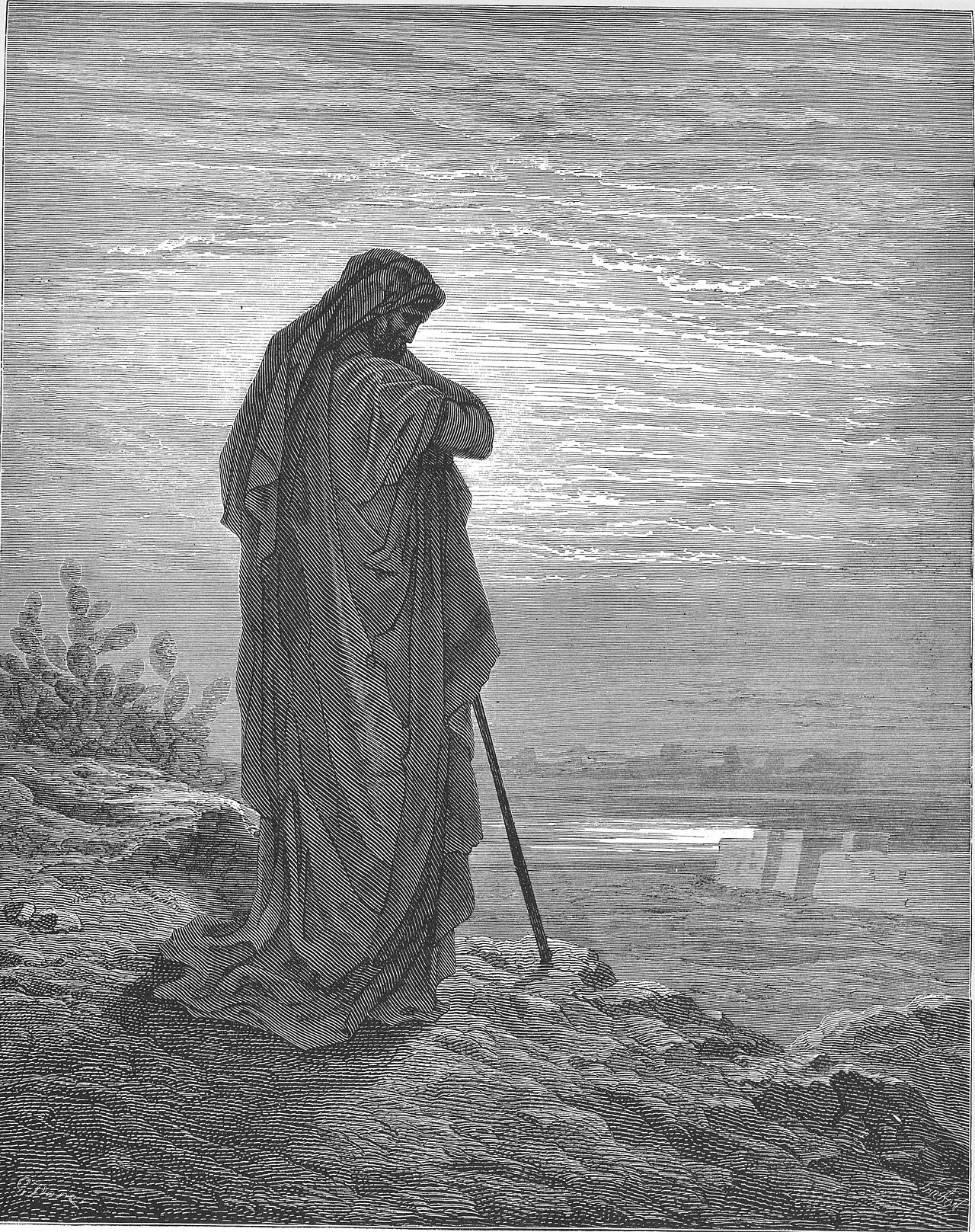
About Amos
This page draws on 9 works. Open the list of works
This page draws on Adam Clarke, Commentary on the Bible; Albert Barnes, Notes, Explanatory and Practical, on the Old and New Testaments (1832-1869); Carl Friedrich Keil, The Twelve Minor Prophets; Jamieson, Fausset & Brown, Commentary Critical and Explanatory on the Whole Bible; Jerome, Commentary on Amos; John Gill, Exposition of the Old Testament (1748-1763); John Wesley, Explanatory Notes upon the Old Testament; Matthew Henry, Commentary on the Whole Bible and Theodore of Mopsuestia, COMMENTARY ON AMOS 6:9–10.