
Amos 6:13
in Amos 6you who rejoice in Lo-debar and say, ‘Did we not take Karnaim by our own strength?’
BSB
The same verse in ASV and KJV ▾
ASV
ye that rejoice in a thing of nought, that say, Have we not taken to us horns by our own strength?
KJV
Ye which rejoice in a thing of nought, which say, Have we not taken to us horns by our own strength?
⋯
This verse in Amos 6
Commentary
4 notes on this verseWhence also we say that the holy men are just and that they are made pleasing to God after their sins not only through their merits but through the mercy of him to whom every creature is subject and stands in need of his mercy. Let heretics hear, who are lifted up by pride and say, "We have taken unto us horns by our own strength." Let them listen to what Moab heard said to him: "We have heard the pride of Moab, he is exceedingly proud.
This site's exposition
Shall horses run upon the rock
on Amos 6:12-14
Two impossibilities, horses running on bare rock and oxen plowing the sea, expose the absurdity the bench reads throughout the chapter, that a people could turn judgment into gall and righteousness into hemlock and still expect the natural order to hold steady around them. Rejoicing in a thing of nought and boasting have we not taken to us horns by our own strength is read as military pride in some minor victory mistaken for permanent security, horns being the standard Hebrew figure for strength. The Lord's answer closes the chapter and the book's whole first half, a nation raised up to afflict them from Hamath in the north to the river of the wilderness in the south, the full length of the land the boasted strength claimed to hold.
The record, by era
The Puritans and the Awakening1 voice
But those who trust in their own strength rejoice in a thing of nought, and so they will find. Probably they did not say this with their lips, totidem verbis--in so many words, but it was the language of their hearts and of their actions, both which God understands.
The Nineteenth Century1 voice
A commentator
Albert Barnes1798–1870
Notes, Explanatory and Practical, on the Old and New Testaments (1832-1869)
Who rejoice - (Literally, “the rejoicers!” Amos, as is his wont, speaks of them with contempt and wonder at their folly, “the rejoicers!” much as we say, the cowards! the renegades!) “in a thing of nought,” literally, “a non-thing,” (“no-whit, nought”) not merely in a thing valueless, but in a “non-thing,” that has no existence at all, as nothing has any substantial existence out of God. This “non-thing” was their power, strength, empire, which they thought they had, but which was soon to shrivel away as a scroll.
How the passage was read
What the Jewish commentators add
over a thing of naught —Over their greatness and their wealth, which is nought, since it will not endure.
2 more on this passage, in their own words ▾
Will horses run on the rock —I.e, will they maintain their running when they change the order of the world?
from the approach to Hamath —which is in the northwestern corner of Eretz Israel.
This section is reception history: how the passage was read and kept in the Jewish tradition. Where a reading parts from an essential of the Christian faith, the section says so at that point.
Texts and citation data: Sefaria; each excerpt follows its version’s licence. 2 further sources are cited on this chapter that carry no English text this site may quote or only restate the verse.
The words behind it
9 Hebrew wordsEvery Hebrew word of this verse in the order it stands, with what it means and the door to its own study. The last column counts the times a word stands in the whole Bible: the rarer the word, the more the places it appears belong together.
| Hebrew | Sound | Meaning | Word study | In the Bible |
|---|---|---|---|---|
| הַשְּׂמֵחִ֖ים | hasemechim | the joyful [people] | H8056 → | |
| לְלֹ֣א | lelo' | to Lo | H3810 → | |
| דָבָ֑ר | davar | Debar | H3810 → | |
| הָאֹ֣מְרִ֔ים | haomerim | who say | H559 → | 5305 times |
| הֲל֣וֹא | halo' | ¿ not | H3808 → | 5168 times |
| בְחָזְקֵ֔נוּ | vechazekenu | by own strength our | H2392 → | |
| לָקַ֥חְנוּ | lakachnu | have we taken | H3947 → | 966 times |
| לָ֖נוּ | lanu | for ourselves | ||
| קַרְנָֽיִם׃ | karnayim | Karnaim | H7161 → |
הַשְּׂמֵחִ֖יםthe joyful [people]
hasemechimH8056 →
לְלֹ֣אto Lo
lelo'H3810 →
דָבָ֑רDebar
davarH3810 →
הָאֹ֣מְרִ֔יםwho say
haomerimH559 →5305 times
הֲל֣וֹא¿ not
halo'H3808 →5168 times
בְחָזְקֵ֔נוּby own strength our
vechazekenuH2392 →
לָקַ֥חְנוּhave we taken
lakachnuH3947 →966 times
לָ֖נוּfor ourselves
lanu
קַרְנָֽיִם׃Karnaim
karnayimH7161 →
A shaded row is a word that stands 400 times or fewer in the Bible.
The walk
8 stopsEach card is a verse this one points to, and under it the verses that one points to in turn. Where several paths arrive at the same place, that place is listed first: the text keeps returning to it.
Through
James 4:16As it is, you boast in your proud intentions. All such boasting is evil.
it leads to
- Proverbs 27:1
Do not boast about tomorrow, for you do not know what a day may bring.
- 1 Corinthians 5:6
Your boasting is not good. Do you not know that a little leaven works through the whole batch of dough?
- Psalms 52:7
“Look at the man who did not make God his refuge, but trusted in the abundance of his wealth and strengthened himself by destruction.”
- Proverbs 25:14
Like clouds and wind without rain is the man who boasts of gifts never given.
- Proverbs 27:1
Through
2 Kings 14:25This Jeroboam restored the boundary of Israel from Lebo-hamath to the Sea of the Arabah, according to the word that the LORD, the God of Israel, had spoken through His servant Jonah son of…
it leads to
- Deuteronomy 3:17
The Jordan River in the Arabah bordered it from Chinnereth to the Sea of the Arabah (the Salt Sea) with the slopes of Pisgah to the east.
- Joshua 19:13
From there it crossed eastward to Gath-hepher and to Eth-kazin; it extended to Rimmon and curved around toward Neah.
- Matthew 12:39–40
Jesus replied, “A wicked and adulterous generation demands a sign, but none will be given it except the sign of the prophet Jonah.
- Deuteronomy 3:17
Through
Revelation 11:10And those who dwell on the earth will gloat over them, and will celebrate and send one another gifts, because these two prophets had tormented them.
it leads to
- 1 Kings 18:17
When Ahab saw Elijah, he said to him, “Is that you, O troubler of Israel?”
- 1 Kings 18:17
About Amos
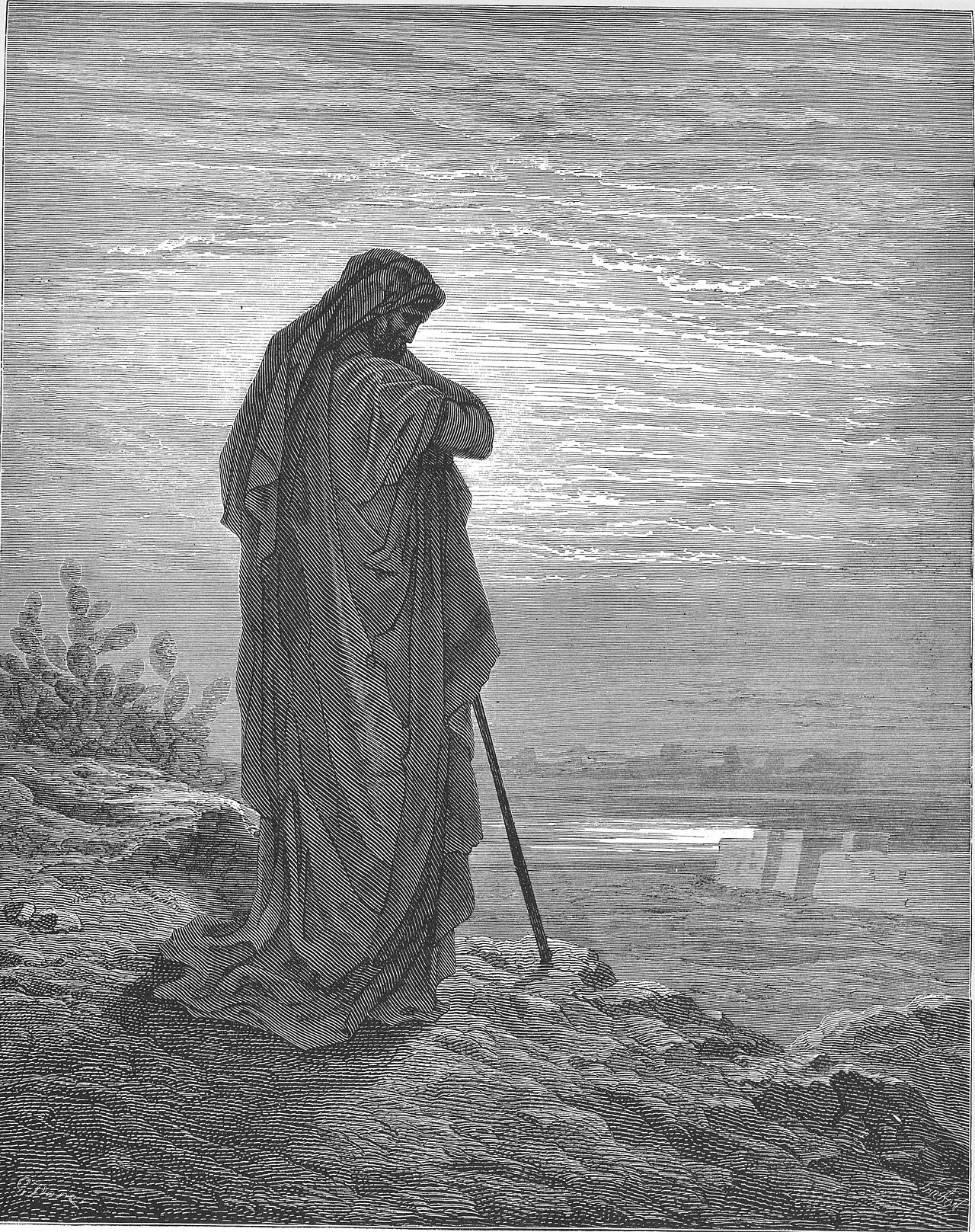
This page draws on Albert Barnes, Notes on the Old Testament; Albert Barnes, Notes, Explanatory and Practical, on the Old and New Testaments (1832-1869); Edward Bouverie Pusey, The Minor Prophets: A Commentary; Jerome, AGAINST THE PELAGIANS 2:29 and Matthew Henry, Commentary on the Whole Bible.