
2 Chronicles 4:14
in 2 Chronicles 4the stands; the basins on the stands;
BSB
The same verse in ASV and KJV ▾
ASV
He made also the bases, and the lavers made he upon the bases;
KJV
He made also bases, and lavers made he upon the bases;
⋯
This verse in 2 Chronicles 4
Commentary
1 note on this verseThis site's exposition
he set the sea on the right side
on 2 Chronicles 4:10-18
Huram, sent by the king of Tyre, finishes the whole of Solomon's bronze work: the sea set toward the southeast, the lavers, and the pillars with their pomegranates already named in chapter three, all cast in the clay ground of the Jordan plain between Succoth and Zeredathah. Verse sixteen calls him Huram his father, an honorific for a master craftsman rather than a claim of kinship, the same title the king of Tyre used of him. The metal inventory closes at verse eighteen with brass beyond any count, an abundance the book keeps stating rather than assuming.
How the passage was read
What the Jewish commentators add
And he made the bases But in I Kings (7:27), it is written: “And he made the ten bases of copper.” The bases are the bases of the laver, and there their work is explained.
1 more on this passage, in their own words ▾
And the four hundred pomegranates Above (ad loc.), he states: “and he made a hundred pomegranates.” How so?
This section is reception history: how the passage was read and kept in the Jewish tradition. Where a reading parts from an essential of the Christian faith, the section says so at that point.
Texts and citation data: Sefaria; each excerpt follows its version’s licence. 3 further sources are cited on this chapter that carry no English text this site may quote or only restate the verse.
The words behind it
8 Hebrew wordsEvery Hebrew word of this verse in the order it stands, with what it means and the door to its own study. The last column counts the times a word stands in the whole Bible: the rarer the word, the more the places it appears belong together.
| Hebrew | Sound | Meaning | Word study | In the Bible |
|---|---|---|---|---|
| וְאֶת־ | veet | and <obj.> | H853 → | 10935 times |
| הַמְּכֹנ֖וֹת | hamekhonot | the stands | H4350 → | |
| עָשָׂ֑ה | ʾasah | he made | H6213 → | 2628 times |
| וְאֶת־ | veet | and <obj.> | H853 → | 10935 times |
| הַכִּיֹּר֥וֹת | hakiyorot | the lavers | H3595 → | 23 times |
| עָשָׂ֖ה | ʾasah | he made | H6213 → | 2628 times |
| עַל־ | ʾal- | on | H5921 → | 5755 times |
| הַמְּכֹנֽוֹת׃ | hamekhonot | the stands | H4350 → |
וְאֶת־and <obj.>
veetH853 →10935 times
הַמְּכֹנ֖וֹתthe stands
hamekhonotH4350 →
עָשָׂ֑הhe made
ʾasahH6213 →2628 times
וְאֶת־and <obj.>
veetH853 →10935 times
הַכִּיֹּר֥וֹתthe lavers
hakiyorotH3595 →23 times
עָשָׂ֖הhe made
ʾasahH6213 →2628 times
עַל־on
ʾal-H5921 →5755 times
הַמְּכֹנֽוֹת׃the stands
hamekhonotH4350 →
A shaded row is a word that stands 400 times or fewer in the Bible.
About 2 Chronicles
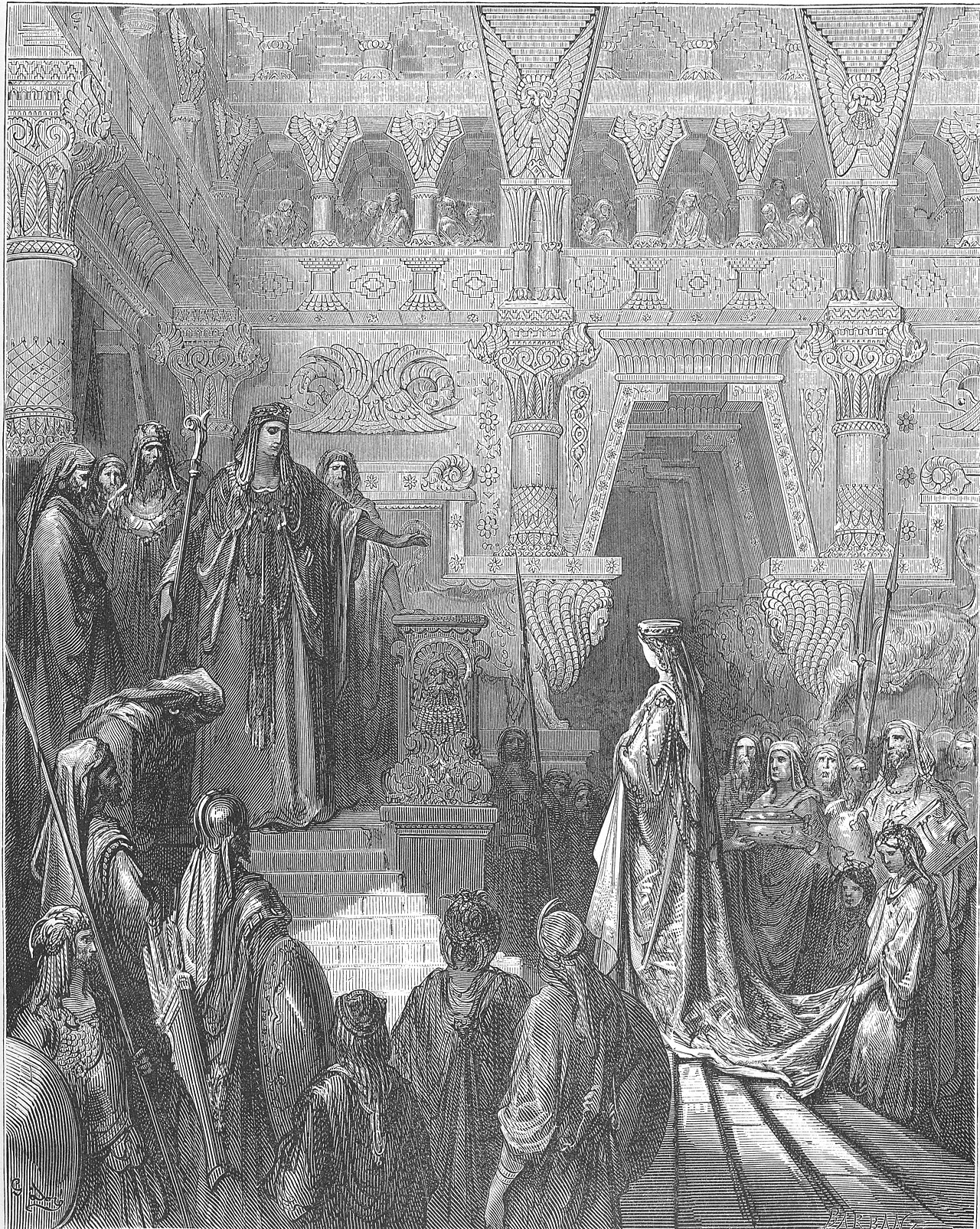
This page draws on Adam Clarke, Commentary on the Bible and John Wesley, Explanatory Notes upon the Old Testament.