
1 Samuel 7:9
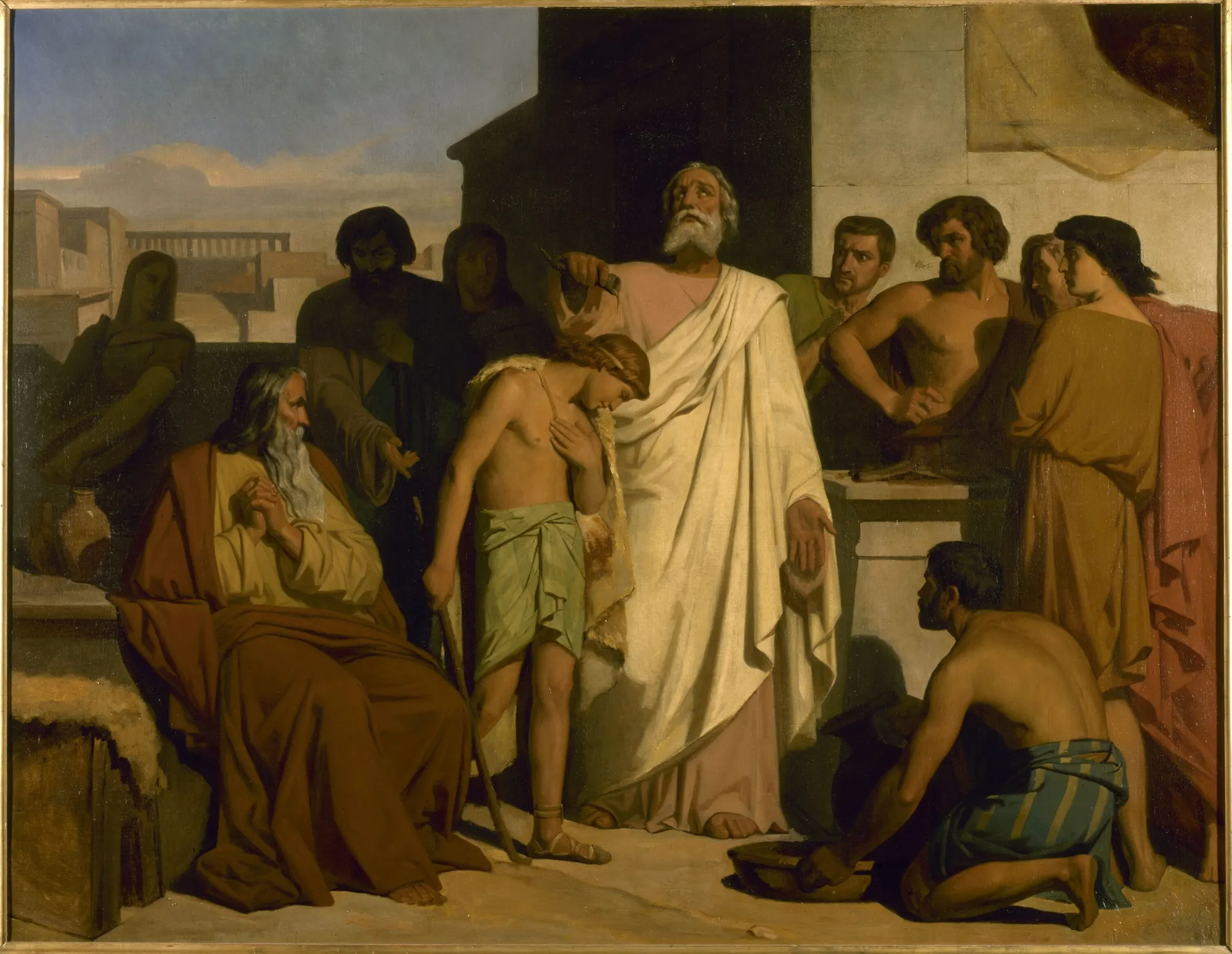
in 1 Samuel 7Then Samuel took a suckling lamb and offered it as a whole burnt offering to the LORD. He cried out to the LORD on behalf of Israel, and the LORD answered him.
BSB
The same verse in ASV and KJV ▾
ASV
And Samuel took a sucking lamb, and offered it for a whole burnt-offering unto Jehovah: and Samuel cried unto Jehovah for Israel; and Jehovah answered him.
KJV
And Samuel took a sucking lamb, and offered it for a burnt offering wholly unto the Lord: and Samuel cried unto the Lord for Israel; and the Lord heard him.
⋯
This verse in 1 Samuel 7
Commentary
13 notes on this verseA commentator
Albert Barnes1798–1870
Notes, Explanatory and Practical, on the Old and New Testaments (1832-1869)
Samuel’s preparation for intercessory prayer, namely, the offering up an atoning sacrifice, is most significant (compare Luk 1:9-10). The term here used for a “lamb” does not occur in the Pentateuch; indeed it is only found besides this place in Isa 65:25. The offering is in accordance with Lev 22:27. The Lord heard him - Better as in margin. The “answer” was not simply the granting the asked-for deliverance, but the great thunder 1Sa 7:10, which was “the voice of the Lord,” the same voice with which the Lord answered Moses Exo 19:19; Psa 99:6.
This site's exposition
their rulers marched up toward Israel
on 1 Samuel 7:7-9
The Philistines march as soon as Israel gathers, and Israel answers with fear, where in chapter four the elders sent for the ark to force a victory and lost it. Here the people ask Samuel, “Do not stop crying out to the LORD our God for us”, and he offers a lamb and prays. Obedience without the ark does what presumption with it could not.
This site's exposition
Then Samuel took a suckling lamb
Samuel offers a whole burnt offering before he cries out, and Matthew Henry read it as offered purely for the glory of God. Adam Clarke raised the question of a sacrifice offered by Samuel, a prophet, and allowed that Eleazar may have offered the lamb for him. The LORD answered him.
The record, by era
The Medieval Church2 voices
But Samuel took one suckling lamb, etc. The Lord took the innocent one, whom He had clothed in human form for the salvation of the world, and offered Him as a whole burnt offering on the altar of the cross to the Father. And it …
A commentator
Gregory the DialogistCommentary on 1 Kings, Book 3, Chapter 5 · Written before 604.
proposed
17. But good pastors also confer upon their afflicted subjects not only the aids of prayers, but also of sacrifices. Whence it is added: 'And Samuel took a suckling lamb, and offered it as a whole burnt offering to the Lord, and Samuel cried out.' What is the cry of Samuel, if not the great power of desire in the supplication of the priest? Whence to Moses, silent on his lips, yet desiring the salvation of his subject people with fervent devotion, it is said by the Lord: 'Why do you cry out to me' (Exod. XIV, 15)?
The Puritans and the Awakening3 voices
He made intercession with the sacrifice. So Christ intercedes in virtue of his satisfaction. And in all our prayers we must have an eye to his great oblation, depending on him for audience and acceptance.
It was a burnt-offering, which was offered purely for the glory of God, so intimating that the great plea he relied on in his prayer was taken from the honour of God. "Lord, help thy people now for thy name's sake." When we endeavour to give glory to God we may hope he will, in answer to our prayers, work for his own glory.
He was himself a Samuel, asked of God, and many a Samuel, many a mercy in answer to prayer, God gave him. Sons of prayer should be famous for praying, as Samuel was among those that call upon his name, Ps. xcix. The answer was a real answer: the Philistines were discomfited (
quarantine:debris (2026-07-29) — unbalanced-parens
5 more voices on this verse
The Puritans and the Awakening2 voices
And Samuel took a sucking lamb,....
It was a burnt-offering, which was offered purely for the glory of God, so intimating that the great plea he relied on in his prayer was taken from the honour of God. "Lord, help thy people now for thy name's sake." When we endeavour to give glory to God we may hope he will, in answer to our prayers, work for his own glory.
The Nineteenth Century3 voices
A commentator
Jamieson, Fausset & Brown1802–1910
Commentary Critical and Explanatory on the Whole Bible (1871)
proposed
Unprepared for resistance, they besought Samuel to supplicate the divine interposition to save them from their enemies. The prophet's prayers and sacrifice were answered by such a tremendous storm of thunder and lightning that the assailants, panic-struck, were disordered and fled.
Samuel took a sucking lamb - This sucking lamb must have been eight days under its mother before it could be offered, as the law says, Lev 22:27. Though Samuel was not a priest, yet he offered this sacrifice; or he might have ordered Eleazar to offer it, and still be said to have done it himself: Qui facit per alterum, facit per se; “He who procures a thing to be done, may be said to do it himself.” His not sacrificing at the tabernacle was justified by the necessity of the case; neither tabernacle nor ark was at hand.
Samuel took a sucking lamb - This sucking lamb must have been eight days under its mother before it could be offered, as the law says, Lev 22:27. Though Samuel was not a priest, yet he offered this sacrifice; or he might have ordered Eleazar to offer it, and still be said to have done it himself: Qui facit per alterum, facit per se; “He who procures a thing to be done, may be said to do it himself.” His not sacrificing at the tabernacle was justified by the necessity of the case; neither tabernacle nor ark was at hand.
The words behind it
17 Hebrew wordsEvery Hebrew word of this verse in the order it stands, with what it means and the door to its own study. The last column counts the times a word stands in the whole Bible: the rarer the word, the more the places it appears belong together.
| Hebrew | Sound | Meaning | Word study | In the Bible |
|---|---|---|---|---|
| וַיִּקַּ֣ח | vaiyikach | and he took | H3947 → | 966 times |
| שְׁמוּאֵ֗ל | shemuel | Samuel | H8050 → | 141 times |
| טְלֵ֤ה | teleh | a lamb of | H2924 → | |
| חָלָב֙ | chalav | milk | H2461 → | |
| אֶחָ֔ד | ʾechad | one | H259 → | 971 times |
| וַיַּעֲלֵ֧הוּ | vaiyaalehu | and he offered up it | H5927 → | 890 times |
| עוֹלָ֛ה | olah | a burnt offering | H5930 → | 287 times |
| כָּלִ֖יל | kalil | a whole offering | H3632 → | |
| לַֽיהוָ֑ה | layahweh | to Yahweh | H3068 → | 6520 times |
| וַיִּזְעַ֨ק | vaiyizak | and he cried out | H2199 → | 73 times |
| שְׁמוּאֵ֤ל | shemuel | Samuel | H8050 → | 141 times |
| אֶל־ | ʾel- | to | H413 → | 5510 times |
| יְהוָה֙ | yahweh | Yahweh | H3068 → | 6520 times |
| בְּעַ֣ד | bead | for | H1157 → | 105 times |
| יִשְׂרָאֵ֔ל | yisrael | Israel | H3478 → | 2507 times |
| וַֽיַּעֲנֵ֖הוּ | vaiyaanehu | and he answered him | H6030 → | 331 times |
| יְהוָֽה׃ | yahweh | Yahweh | H3068 → | 6520 times |
וַיִּקַּ֣חand he took
vaiyikachH3947 →966 times
שְׁמוּאֵ֗לSamuel
shemuelH8050 →141 times
טְלֵ֤הa lamb of
telehH2924 →
חָלָב֙milk
chalavH2461 →
אֶחָ֔דone
ʾechadH259 →971 times
וַיַּעֲלֵ֧הוּand he offered up it
vaiyaalehuH5927 →890 times
עוֹלָ֛הa burnt offering
olahH5930 →287 times
כָּלִ֖ילa whole offering
kalilH3632 →
לַֽיהוָ֑הto Yahweh
layahwehH3068 →6520 times
וַיִּזְעַ֨קand he cried out
vaiyizakH2199 →73 times
שְׁמוּאֵ֤לSamuel
shemuelH8050 →141 times
אֶל־to
ʾel-H413 →5510 times
יְהוָה֙Yahweh
yahwehH3068 →6520 times
בְּעַ֣דfor
beadH1157 →105 times
יִשְׂרָאֵ֔לIsrael
yisraelH3478 →2507 times
וַֽיַּעֲנֵ֖הוּand he answered him
vaiyaanehuH6030 →331 times
יְהוָֽה׃Yahweh
yahwehH3068 →6520 times
A shaded row is a word that stands 400 times or fewer in the Bible.
The walk
8 stopsEach card is a verse this one points to, and under it the verses that one points to in turn. Where several paths arrive at the same place, that place is listed first: the text keeps returning to it.
Through
James 5:16Therefore confess your sins to each other and pray for each other so that you may be healed. The prayer of a righteous man has great power to prevail.
it leads to
- Jeremiah 29:12–13
Then you will call upon Me and come and pray to Me, and I will listen to you.
- Proverbs 15:29
The LORD is far from the wicked, but He hears the prayer of the righteous.
- Matthew 21:22
If you believe, you will receive whatever you ask for in prayer.”
- Psalms 34:15
The eyes of the LORD are on the righteous, and His ears are inclined to their cry.
- John 9:31
We know that God does not listen to sinners, but He does listen to the one who worships Him and does His will.
- Jeremiah 29:12–13
Through
Psalms 50:15Call upon Me in the day of trouble; I will deliver you, and you will honor Me.”
it leads to
- Psalms 107:28
Then they cried out to the LORD in their trouble, and He brought them out of their distress.
- Psalms 91:15
When he calls out to Me, I will answer him; I will be with him in trouble. I will deliver him and honor him.
- Psalms 107:28
Through
Jeremiah 15:1Then the LORD said to me: “Even if Moses and Samuel should stand before Me, My heart would not go out to this people. Send them from My presence, and let them go.
it leads to
- Ezekiel 14:14
then even if these three men—Noah, Daniel, and Job—were in it, their righteousness could deliver only themselves, declares the Lord GOD.
- Ezekiel 14:14
Where this verse is studied
On this page
Studies1
About 1 Samuel
Who and where
1 name in this verse with a page on the site.
This page draws on 9 works. Open the list of works
This page draws on Adam Clarke, Commentary on the Bible; Albert Barnes, Notes, Explanatory and Practical, on the Old and New Testaments (1832-1869); Bede, Commentary on Samuel; Gregory the Dialogist, Commentary on 1 Kings, Book 3, Chapter 5; Jamieson, Fausset & Brown, Commentary Critical and Explanatory on the Whole Bible; John Gill, Exposition of the Old Testament (1748-1763); John Wesley, Explanatory Notes upon the Old Testament; Matthew Henry, Commentary on the Whole Bible and W. G. Blaikie, The First Book of Samuel (Expositor's Bible).