
Psalm 150
6 verses · Hallelujah psalm of praise
Praise Him with the sound of the horn; praise Him with the harp and lyre.
Introduction
Author unstated, the Final Hallelujah, Book 5: The return and the great Hallelujah, Poetry, Psalms Overview.
The last psalm closes the whole book with praise and nothing else. Its writer is not named. It answers the first psalm, which began with one person reading God's instruction in quiet, by ending with the full music of the temple and every breathing creature joining in. Listen for the questions it answers in order: where God is praised, why, with what, and by whom. After a book full of trouble and complaint, it leaves the reader with praise alone.
Context
- Who
- Israelites finishing a book that began with one man reading the law by himself
- Where
- The temple courts with the full orchestra playing, and the sky above them
- When
- The closing Hallelujah psalms, the end of the whole book. No author and no event are named; it is the doxology that closes the fifth book and the Psalter
Historical context
The psalm names no author. Its subject is the temple's own music, and 1 Chronicles 25:1 records David and the commanders of the army setting apart the sons of Asaph, Heman and Jeduthun to prophesy with lyres, harps and cymbals. Where and why come before the equipment, the sanctuary below and the heavens above, and God's mighty acts and His greatness. The horn is the ram's horn, a signal instrument that announced the new moon, the year of release and the alarm. The harp and lyre are the wooden framed string instruments the Levites played, the tambourine is a small frame drum carried by dancing women, and two kinds of cymbals are named, plates that clash and larger ones that ring. The final line drops the instruments, and breath, the one thing every living creature has, is the last requirement the book asks for.
Significance
The Psalter opened with one man meditating quietly on God's law day and night. It ends with the entire temple orchestra going at once and every breathing thing on earth joining in. For the first hearers that arc was the promise, since the private, difficult and often tearful road of the earlier psalms was always headed somewhere loud.
This chapter in Jewish lifeWhat this chapter is in Jewish life and reading.
What is done
Psalm 150 closes the final Hallel and the whole Psalter. The book's structure file records it as the doxology of the fifth book, and the site's page at /featured/the-hallel gives the final Hallel as Psalms 146 to 150. The psalm names the instruments one after another, the ram's horn, the harp and lyre, the timbrel, strings and flute, and the two kinds of cymbal, and then closes on everything that has breath. The corpus holds no liturgical locator for this chapter beyond the rabbinic references below, so this site records the place it holds in the book and the reading.
How it is read
The corpus is at its thinnest here for what may be quoted. Rashi's three comments are all on the instruments and the pointing of the Hebrew. He glosses the stringed instrument and the flute of the fourth verse as kinds of musical instrument, and reads the resounding cymbals of the fifth as cymbals that let a sound be heard. His third comment is on grammar, that the word for the sound is a noun which takes a long vowel because of the pause, so that its accent falls on the first syllable. Ibn Ezra, Malbim, Metzudat David and Radak each comment across the psalm, Radak and Ibn Ezra on all six verses. The corpus holds no English version of any of theirs on this chapter under a licence permitting quotation, so they stand as citations: Ibn Ezra on Psalms 150:1:1, Malbim on Psalms 150:1:1, Metzudat David on Psalms 150:1:1, Radak on Psalms 150:1:1.
What the rabbis say
The corpus records forty locators on this chapter, thirty-one Midrash and nine Talmud, and the weight of them falls on the first verse and the last. The call to praise God in His sanctuary and in the firmament of His power is taken up at Midrash Tehillim 150:1, 113:3 and 18:8, Shemot Rabbah 17:1, Pesikta Rabbati 21:1, Sifrei Devarim 343:2, Tractate Soferim 16:12, Jerusalem Talmud Shabbat 16:1:7 and Jerusalem Talmud Rosh Hashanah 4:7:2. The blast of the ram's horn is taken up at Rosh Hashanah 32a:17 and Ein Yaakov, Rosh Hashanah 4:5. The closing line about everything that has breath is the most worked line in the chapter, with twenty-two locators on it, among them Bereshit Rabbah 14:9 and 14:10, Vayikra Rabbah 19:2, Devarim Rabbah 2:37, Midrash Tanchuma, Bereshit 1:1, Shir HaShirim Rabbah 5:11:2, Midrash Tehillim 18:2, 62:3 and 89:1, Berakhot 25a:3, Berakhot 43b:3 and Eruvin 18b:17. Each is a locator without text in the corpus.
Sources: Rashi, Rashi on Psalms 150:4:1, 150:5:1 and 150:5:2, the Judaica Press complete Tanach with Rashi, translated by A. J. Rosenberg, CC-BY; Ibn Ezra, Ibn Ezra on Psalms 150:1:1, cited only, no English version in the corpus; Malbim, Malbim on Psalms 150:1:1, cited only; Metzudat David, Metzudat David on Psalms 150:1:1, cited only; Radak, Radak on Psalms 150:1:1, cited only; Midrash, Midrash Tehillim 150:1, 113:3, 18:8, 18:2, 62:3 and 89:1, Shemot Rabbah 17:1, Pesikta Rabbati 21:1, Sifrei Devarim 343:2, Bereshit Rabbah 14:9 and 14:10, Vayikra Rabbah 19:2, Devarim Rabbah 2:37, Midrash Tanchuma, Bereshit 1:1, Shir HaShirim Rabbah 5:11:2, Eikhah Rabbah 1:52; Babylonian Talmud, Rosh Hashanah 32a:17, Berakhot 25a:3 and 43b:3, Eruvin 18b:17, Tractate Soferim 16:12; Jerusalem Talmud, Shabbat 16:1:7, Rosh Hashanah 4:7:2, Bikkurim 3:2:4, Sukkah 5:6:3; MannaFest, the final Hallel and the doxology of the fifth book, at /featured/the-hallel and in src/components/book/dossier-content/psalms-structure.ts, 2026.
Psalms 150:1-2
Praise God in His sanctuary: Two places are named for the praise, the sanctuary and the mighty heavens. Charles Spurgeon notes that the name changes here to El, the strong one, and the Hebrew of the second clause reads firmament of His strength. The reasons come first, God's mighty acts and His excellent greatness.
Psalms 150:1
“Praise ye the Lord,.... Or, "hallelujah"; which, in the Targum, Septuagint, and Vulgate Latin versions, is the title of the psalm; and expresses the subject of it, the praise of the Lord; praise God in his sanctuary; in the temple, the house of his sanctuary as the Targum and R Judah; or in heaven, as R. Moses, his holy place, where he is praised by holy angels and glorified saints; or in the church below, of which the sanctuary or temple was a type.”
2 more voices on this verseWhat preachers and commentators have said about this verse, in their own words.
Psalms 150:1
“Praise ye the Lord. Hallelujah! The exhortation is to all things in earth or in heaven. Should they not all declare the glory of him for whose glory they are, and were created? Jehovah, the one God, should be the one object of adoration. To give the least particle of his honour to another is shameful treason; to refuse to render it to him is heartless robbery. Praise God in his sanctuary. Praise El, or the strong one, in his holy place. See how power is mentioned with holiness in this change of names. Praise begins at home.”
Charles Spurgeon · The Treasury of David, Vol. 7 (1885)Particular Baptist
Psalms 150:1
“Praise God in his sanctuary. This psalm in general commends the spiritual worship of God, which consists in sacrifices of praise. By the sanctuary there is little doubt that heaven is here meant, as is often the case elsewhere.”
John Calvin · Commentaries (1554)reformed
praise Him for His excellent greatness: Matthew Henry gives the word for mighty acts as mightinesses, every instance of God's power in creation, government and redemption. Albert Barnes gives the second clause as the multitude of His greatness, and asks for praise to match it. So every instrument follows in verses 3 to 5.
Psalms 150:2
“Praise him for his mighty acts. Here is a reason for praise. In these deeds of power we see himself. These doings of his omnipotence are always on behalf of truth and righteousness. His works of creation, providence, and redemption, all call for praise; they are his acts, and his acts of might, therefore let him be praised for them. Praise him according to his excellent greatness. His being is unlimited, and his praise should correspond therewith. He possesses a multitude or a plenitude of greatness, and therefore he should be greatly praised.”
Charles Spurgeon · The Treasury of David, Vol. 7 (1885)Particular Baptist
Psalms 150:3-6
Praise Him with the sound of the horn: The Hebrew verb for praise stands eight times here. Seven instruments carry it: horn, harp, lyre, tambourine, strings, flute, and cymbals, clashing and resounding. Verse 6 widens the call to everything that has breath, and Spurgeon reads YHWH as made of breathings, since all breath comes from God.
Psalms 150:3
“Praise him with the sound of the trumpet. With the loudest, clearest note call the people together. Make all men to know that we are not ashamed to worship. Summon them with unmistakable sound to bow before their God. The sound of trumpet is associated with the grandest and most solemn events, such as the giving of the law, the proclamation of jubilee, the coronation of Jewish kings, and the raging of war. It is to be thought of in reference to the coming of our Lord in his second advent and the raising of the dead.”
Charles Spurgeon · The Treasury of David, Vol. 7 (1885)Particular Baptist
1 more voice on this verse
Psalms 150:3
“Nor was it without reason that God under the law enjoined this multiplicity of songs, that he might lead men away from those vain and corrupt pleasures to which they are excessively addicted, to a holy and profitable joy.”
John Calvin · Commentaries (1554)reformed
praise Him with strings and flute: Charles Spurgeon finds all three kinds of instrument here: the tambourine that is struck, the strings, and the flute that is blown. With the dancing, hands and feet both join. Albert Barnes notes that the Hebrew word for strings comes from a verb meaning to divide.
Psalms 150:4
“The timbrel represents the death of fleshly desire because of honesty itself. Dancing is the agreement of reasonable spirits all saying the same thing and in which there are no divisions. The stringed instruments suggest the unison of the voices of moral excellence and the unity of the organ which is the church of God resting on reflective and active minds.”
Origen of Alexandria · written before 253 · Commentary on the Psalms 150:3-5patristic
1 more voice on this verse
Psalms 150:4
“Praise him with the timbrel and dance. Associated with the deliverance at the Red Sea, this form of worship set forth the most jubilant and exultant of worship. The hands and the feet were both employed, and the entire body moved in sympathy with the members. Are there not periods of life when we feel so glad that we would fain dance for joy? Let not such exhilaration be spent upon common themes, but let the name of God stir us to ecstasy.”
Charles Spurgeon · The Treasury of David, Vol. 7 (1885)Particular Baptist
praise Him with resounding cymbals: Adam Clarke describes cymbals as two hollow brass plates struck together. He guessed that the resounding pair were larger ones, struck above the head for a louder sound. Charles Spurgeon hears them as praise's last effort, loud enough to wake the heaviest sleeper.
Psalms 150:5
“Praise high upon the loud cymbals: praise him upon the high sounding cymbals. Let the clash of the loudest music be the Lord's: let the joyful clang of the loftiest notes be all for him. Praise has beaten the timbrel, swept the harp, and sounded the trumpet, and now for a last effort, awakening the most heavy of slumberers, and startling the most indifferent of onlookers, she dashes together the disks of brass, and with sounds both loud and high proclaims the glories of the Lord.”
Charles Spurgeon · The Treasury of David, Vol. 7 (1885)Particular Baptist
Let everything that has breath: Jamieson, Fausset and Brown read the turn as living voices taking up the failing sounds of the instruments. Albert Barnes sees the whole Psalter closing here, its trials, conflicts and sorrows ending in joy and triumph. Matthew Henry holds that breath is meant to praise God.
Psalms 150:6
“Let everything that hath breath praise the Lord. "Let all breath praise him": that is to say, all living beings. He gave them breath, let them breathe his praise. His name is in the Hebrew composed rather of breathings than of letters, to show that all breath comes from him: therefore let it be used for him. Join all ye living things in the eternal song. Be ye least or greatest, withhold not your praises. What a day will it be when all things in all places unite to glorify the one only living and true God!”
Charles Spurgeon · The Treasury of David, Vol. 7 (1885)Particular Baptist
1 more voice on this verse
Psalms 150:6
“Now that the gospel is ordered to be preached to every creature, to every human creature, it is required that every human creature praise the Lord. What have we our breath, our spirit, for, but to spend it in praising God; and how can we spend it better? Prayers are called our breathings, Lam. iii.”
Matthew Henry · Commentary on the Whole Bible (1707-1721)puritan
ConnectionsPsalms 1:1
How this psalm is built
The form: A closing doxology commending the spiritual worship of God, which consists in sacrifices of praise, as Calvin classes it.
The patterns in this chapter
| Device | What it does | Where to see it |
|---|---|---|
| Where, why, how, who | The psalm answers four questions in order. Verse 1 is where, in His sanctuary and in His mighty heavens. Verse 2 is why, for His mighty acts and His excellent greatness. Verses 3 to 5 are how, the instruments one after another. Verse 6 is who, everything that has breath. Nothing in the psalm is outside that order.Albert Barnes, Notes, Explanatory and Practical, on the Old and New Testaments, 1832 to 1869, on Psalm 150:2. | Psalm 150:1, Psalm 150:2, Psalm 150:3, Psalm 150:6 |
| The word praise, in every line | The verb carries the psalm and the store's own count over the Berean text puts it at eleven occurrences in six verses. There is no argument, no complaint and no request anywhere in the chapter, which is the only psalm in the book of which that is true.Charles Spurgeon, The Treasury of David, Vol. 7, 1885, on Psalm 150:2. | Psalm 150:1, Psalm 150:3, Psalm 150:5, Psalm 150:6 |
| The orchestra, named piece by piece | Verses 3 to 5 list the instruments in order: the horn, the harp and lyre, the tambourine, strings and flute, clashing cymbals and resounding cymbals. Clarke identifies the horn as the shophar, named from its noble and cheering sound, and the loud cymbals as two hollow plates of brass struck together for a sharp clanging note. Spurgeon reads the trumpet as the call that gathers the people before the music starts.Adam Clarke, Commentary on the Bible, 1832, on Psalm 150:5. | Psalm 150:3, Psalm 150:4, Psalm 150:5 |
| The instruments dropped at the end | After three verses of equipment the last verse names none of it. Let everything that has breath praise the LORD. Jamieson, Fausset and Brown put the movement as living voices taking up the failing sounds of dead instruments, and the psalm opens and closes on Hallelujah with the whole orchestra inside that frame.Jamieson, Fausset and Brown, Commentary Critical and Explanatory on the Whole Bible, 1871, on Psalm 150:6. | Psalm 150:5, Psalm 150:6 |
The structure
5 more paragraphs on the patterns
Six verses and eleven occurrences of the word praise, counted over the Berean text in the site's store. The psalm has no petition, no complaint and no argument in it. Its frame is Hallelujah at the opening and Hallelujah at the close, and inside that frame it answers where, why, how and who, in that order, with the answer to who standing last and alone.
The prophecy and the New Testament's use
No New Testament writer quotes Psalm 150. The scene it calls for is the scene Revelation 5:13 reports. Every creature in heaven and on earth and under the earth and in the sea gives praise to the One on the throne and to the Lamb. The psalm's final requirement, breath, is the one qualification the New Testament's own doxologies also assume.
Where it sits
The book opens with one man reading the law by himself day and night at Psalm 1 and ends with the whole temple orchestra playing at once and every breathing thing joining in. Read the five closing psalms in order to see the widening. One voice at 146, one city at 147, the whole creation at 148, the assembly with its hard commission at 149, the sanctuary and the sky at 150.
Keep studying
Sources for this chapter
The summary
Jamieson, Fausset & Brown, Commentary Critical and Explanatory; John Calvin, Commentaries; John Wesley, Notes on the Old Testament and Matthew Henry, Complete Commentary.
The form and classifications
Charles Spurgeon, The Treasury of David, Vol. 7, 1885, on Psalm 150:1; John Calvin, Commentaries, 1554, on Psalm 150:1 and Matthew Henry, Commentary on the Whole Bible, 1710, on Psalm 150:3.
The exposition
Adam Clarke, Commentary on the Bible; Albert Barnes, Notes, Explanatory and Practical, on the Old and New Testaments; Charles Spurgeon, The Treasury of David; Franz Delitzsch, Biblical Commentary on the Psalms; Jamieson, Fausset & Brown, Commentary Critical and Explanatory on the Whole Bible and Matthew Henry, Commentary on the Whole Bible.
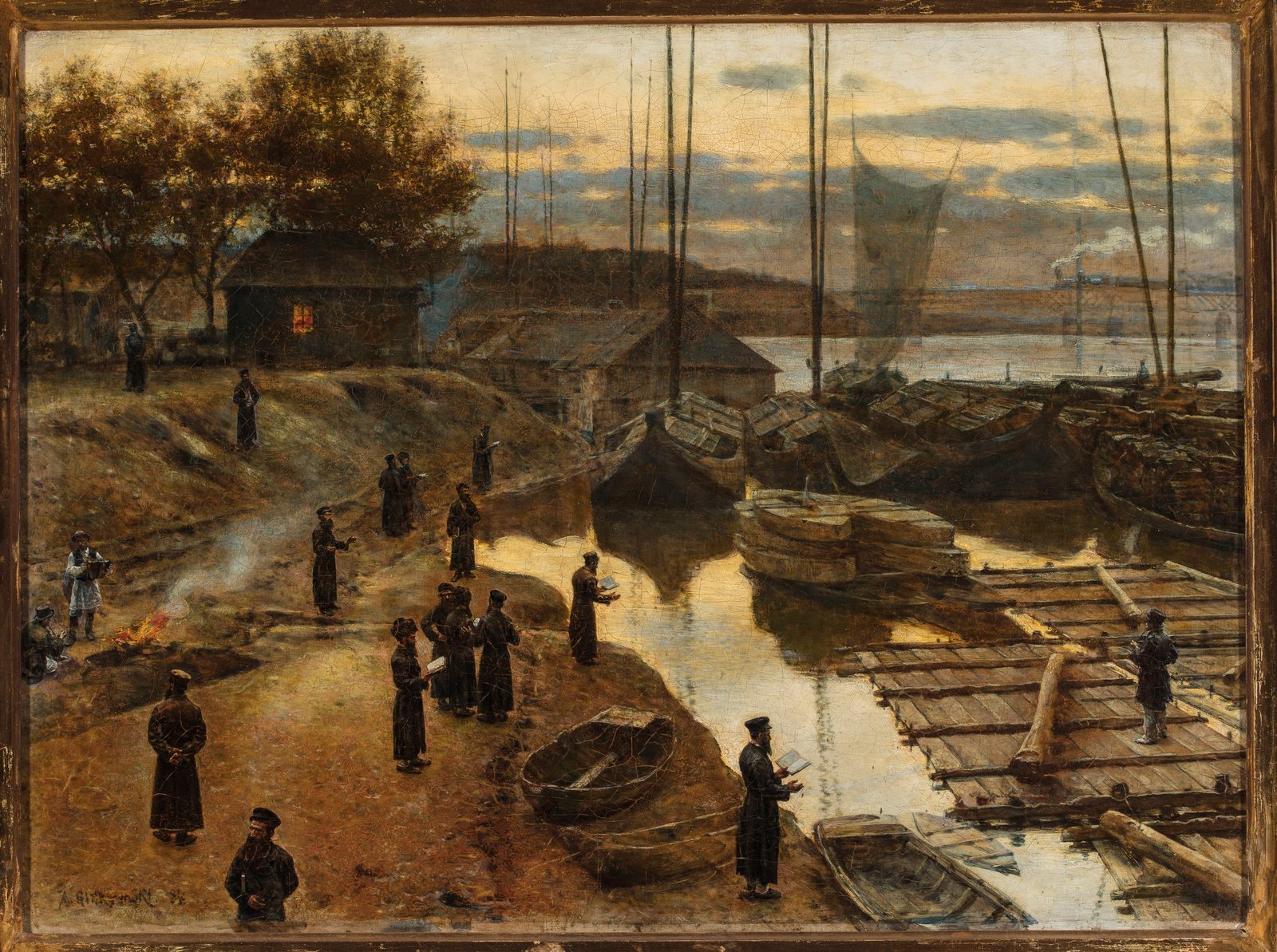
The painting
Feast of Trumpets I. Aleksander Gierymski, 1884. National Museum in Warsaw. Public domain.