
Psalm 138
8 verses · Psalm of thanksgiving
Though the LORD is on high, He attends to the lowly; but the proud He knows from afar.
Introduction
David, Thanks before the Gods, Book 5: The return and the great Hallelujah, Poetry, Psalms Overview.
David wrote this as thanks after God had answered a prayer on a day he remembered. It opens the last group of psalms that bear his name, and it speaks in a world crowded with rival gods and powerful kings. He gives thanks openly in front of them all, and he expects the rulers of the earth to join him one day. Listen for the contrast between how high God is and whom He chooses to notice. The psalm ends with a quiet request that God finish what He has begun in the one who prays.
Context
- Who
- Israelites who lived in a world of many gods and many thrones
- Where
- A worshipper bowing toward the sanctuary where the ark stood, with the courts of foreign kings in view
- When
- The united monarchy under David. The heading in the Hebrew reads By David, which places it in his reign, about 1010 to 970 BC
Historical context
The heading names David and nothing else, so the psalm gives a man rather than an occasion. What it does date precisely is an answer to prayer: on the day I called, You answered me. Bowing toward the holy temple describes a direction. In David's own lifetime the sanctuary was a tent and the ark was its centre, and a worshipper turned toward it from wherever he was. Singing praise before the gods is a courtroom picture, since in the ancient Near East a king's gods were the witnesses to his treaties and were named at every state occasion. The kings of the earth hearing the words of God's mouth belongs to the world of diplomacy, where news of what happened to a small nation reached the courts of larger ones. A great king noticed the important and ignored everyone else. This one does the reverse, and the reversal is the point.
Significance
For a nation of no great size, the claim that God had exalted His word above all else was startling. That gave the first hearers a place to stand. If He keeps speaking, He keeps His word, and He will carry on the work of His own hands.
This chapter in Jewish lifeWhat this chapter is in Jewish life and reading.
What is done
Psalm 138 opens the third Davidic collection, which the book's structure file gives as Psalms 108 to 110 and 138 to 145. The psalm is a thanksgiving said toward the holy Temple, and Rashi reads its first verse as praise sung in front of the rulers of the nations, before the eyes of the princes. The corpus holds no liturgical locator for this chapter beyond the rabbinic references below, so this site names the collection it belongs to and leaves the rest of the practice unwritten.
How it is read
The second verse is where the classical reading gathers. Rashi takes the line about God magnifying His word above all His names as a claim about forgiveness: the divine name is mighty, jealous and vengeful, and yet God passes over His own standards and forgives. On the fourth verse he explains why the kings of the earth give thanks when they hear the words of God's mouth, and reads the order of the Ten Commandments out of it, that the yoke of the kingdom is accepted first and the decrees are levied after. On the sixth verse he glosses the word for what God does to the proud as chastisement, against its use in Judges. On the last verse he reads the works of God's hands as the Temple, and cites the song at the sea for the phrase. Ibn Ezra comments on all eight verses and Radak on seven, with Metzudat David on two and one further comment of Rashi, and the corpus holds no English version of those under a licence permitting quotation, so they stand as citations: Ibn Ezra on Psalms 138:1:1, Radak on Psalms 138:1:1, Metzudat David on Psalms 138:5:1, Rashi on Psalms 138:3:1.
What the rabbis say
The corpus records thirty-seven locators on this chapter, thirty-four Midrash and three Talmud. The opening thanksgiving is taken up at Midrash Tehillim 138:1 and 138:2. The fourth verse, where the kings of the earth give thanks, is the verse the rabbis worked hardest, with nineteen locators on it, among them Shemot Rabbah 15:26 and 15:28, Pesikta Rabbati 23:1, Mekhilta DeRabbi Yishmael, Tractate Bachodesh 9:21, Sifrei Devarim 343:6, Bamidbar Rabbah 8:4 and Kiddushin 31a:6. The line about the LORD regarding the lowly while the haughty He knows from afar is taken up at Bamidbar Rabbah 13:17, Pesikta Rabbati 3:1, Midrash Tanchuma, Vayera 2:3, Sotah 5a:12 and Sotah 5a:13. Each is a locator without text in the corpus.
Sources: Rashi, Rashi on Psalms 138:1:1, 138:2:1, 138:4:1, 138:6:1 and 138:8:2, the Judaica Press complete Tanach with Rashi, translated by A. J. Rosenberg, CC-BY; Ibn Ezra, Ibn Ezra on Psalms 138:1:1, cited only, no English version in the corpus; Radak, Radak on Psalms 138:1:1, cited only; Metzudat David, Metzudat David on Psalms 138:5:1, cited only; Midrash, Midrash Tehillim 138:1 and 138:2, Shemot Rabbah 15:26 and 15:28, Pesikta Rabbati 23:1 and 3:1, Mekhilta DeRabbi Yishmael, Tractate Bachodesh 9:21, Sifrei Devarim 343:6, Bamidbar Rabbah 8:4 and 13:17, Vayikra Rabbah 13:5; Babylonian Talmud, Kiddushin 31a:6, Sotah 5a:12 and 5a:13; MannaFest, the collections of the Psalter, src/components/book/dossier-content/psalms-structure.ts, 2026.
Psalms 138:1-3
I give You thanks with all my heart: The thanks is given with the whole heart, and it is sung before the gods. He bows toward the holy temple and gives thanks for loving devotion and faithfulness, and for His name and His word, exalted above all. On the day he called, God answered and made him bold.
Psalms 138:1
“And in the sight of the angels I will sing psalms to you. See the advancement of the penitent, that after confession and repentance he is counted worthy to sing psalms with the angels. But he who sings psalms no longer performs repentance, but gives thanks, and blesses.”
Jerome · written before 420 · Homily 49, on Psalm 137patristic
3 more voices on this verseWhat preachers and commentators have said about this verse, in their own words.
Psalms 138:1
I will praise thee with my whole heart. His mind is so taken up with God that he does not mention his name: to him there is no other God, and Jehovah is so perfectly realized and so intimately known, that the Psalmist, in addressing him, no more thinks of mentioning his name than we should do if we were speaking to a father or a friend. He sees God with his mind's eye, and simply addresses him with the pronoun "thee."
Charles Spurgeon · The Treasury of David, Vol. 7 (1885)Particular Baptist
Psalms 138:1
“The praise David speaks of is that which is of a public kind. The solemn assembly is, so to speak, a heavenly theater, graced by the presence of attending angels; and one reason why the cherubim overshadowed the Ark of the Covenant was to let God's people know that the angels are present when they come to worship in the sanctuary.”
John Calvin · Commentaries (1554)reformed
Psalms 138:1
“I will praise thee with my whole heart--(Compare Ps 9:1). before the gods--whether angels (Ps 8:5); or princes (Ex 21:6; Ps 82:6); or idols (Ps 97:7); denotes a readiness to worship the true God alone, and a contempt of all other objects of worship.”
Jamieson, Fausset & Brown · Commentary Critical and Explanatory on the Whole Bible (1871)reformed
I bow down toward Your holy temple: Bowing toward the temple is the posture Solomon asked God to honor in 1 Kings 8:29, prayer toward the house that bears His name. The word for temple, hekal, is used of the tabernacle at Shiloh in 1 Samuel 1:9. Name and word are what God has shown of Himself.
Psalms 138:2
“I will worship toward your holy temple. If this is the temple which now is seen to be deserted, in which one ought to worship: then the Jews ought not to worship, since the temple has been overthrown. But by "temple" he means the holy and heavenly Jerusalem.”
Jerome · written before 420 · Homily 49, on Psalm 137patristic
2 more voices on this verse
Psalms 138:2
“I will worship toward thy holy temple, or the place of God's dwelling, where the ark abode. He would worship God in God's own way. The Lord had ordained a centre of unity, a place of sacrifice, a house of his indwelling; and David accepted the way of worship enjoined by revelation. Even so, the true hearted believer of these days must not fall into the will worship of superstition, or the wild worship of scepticism, but reverently worship as the Lord himself prescribes.”
Charles Spurgeon · The Treasury of David, Vol. 7 (1885)Particular Baptist
Psalms 138:2
“He singles out the divine mercy and truth as the subject of his praise, for while the power and greatness of God are equally worthy of commendation, nothing has a more sensible influence in stimulating us to thanksgiving than his free mercy; and in communicating to us of his goodness he opens our mouth to sing his praises.”
John Calvin · Commentaries (1554)reformed
On the day I called: Here the thanks of verses 1 and 2 finds its cause, a prayer answered on the day it was made. The Hebrew verb for emboldened is rahab, to act with force, so the answer was strength put into the soul. Verse 7 still has him walking in trouble.
Psalms 138:3
In the day when I cried thou answerest me. No proof is so convincing as that of experience. No man doubts the power of prayer after he has received an answer of peace to his supplication. It is the distinguishing mark of the true and living God that he hears the pleadings of his people, and answers them; the gods hear not and answer not, but Jehovah's memorial is—"the God that heareth prayer."
Charles Spurgeon · The Treasury of David, Vol. 7 (1885)Particular Baptist
2 more voices on this verse
Psalms 138:3
“You will multiply strength in my soul. You will multiply: that is, that the soul is subject to many anxieties.”
Jerome · written before 420 · Homily 49, on Psalm 137patristic
Psalms 138:3
“He had been in affliction, and he remembers, with thankfulness, (1.) The sweet communion he then had with God. He cried, he prayed, and prayed earnestly, and God answered him, gave him to understand that his prayer was accepted and should have a gracious return in due time. The intercourse between God and his saints is carried on by his promises and their prayers.”
Matthew Henry · Commentary on the Whole Bible (1707-1721)puritan
Psalms 138:4-6
All the kings of the earth: The psalm widens from one man to the kings, who give thanks when they hear the words of God's mouth. They sing about the ways of the LORD, and the LORD who sits on high attends to the lowly. His glory is great, and the proud He knows from afar.
Psalms 138:4
“All the kings of the earth shall praise thee, O Lord, when they hear the words of thy mouth. Kings have usually small care to hear the word of the Lord; but King David feels assured that if they do hear it they will feel its power. A little piety goes a long way in courts; but brighter days are coming, in which rulers will become hearers and worshippers: may the advent of such happy times be hastened. What an assembly!—"all the kings of the earth!" What a purpose! Gathered to hear the words of Jehovah's mouth.”
Charles Spurgeon · The Treasury of David, Vol. 7 (1885)Particular Baptist
2 more voices on this verse
Psalms 138:4
“Let all the kings of the earth confess to you, O Lord. The kings of the earth are those who reign in sin. Therefore let those very ones confess, who reign in sin. For he is not speaking of the kings of this world. For it is written: "The heart of the king is in the hand of God." Do you suppose that the heart of the most impious Julian was in the hand of God? God forbid. Or of Nero, or of the persecutors Maximian and Decius? God forbid.”
Jerome · written before 420 · Homily 49, on Psalm 137patristic
Psalms 138:4
“The kings - A prophecy of the calling of the Gentiles. Hear - The gospel preached among then.”
John Wesley · Explanatory Notes upon the Old Testament (1765)evangelical
They will sing of the ways: The singers are the kings of verse 4, so the rulers of the earth take up the praise begun in verse 1. The ways of the LORD are His dealings, the paths His acts take in history. Isaiah 60:3 brings kings to the same light.
Psalms 138:5
“Yea, they shall sing in the ways of the Lord. Here is a double wonder—kings in God's ways, and kings singing there. Let a man once know the ways of Jehovah, and he will find therein abundant reason for song; but the difficulty is to bring the great ones of the earth into ways so little attractive to the carnal mind. Perhaps when the Lord sends us a King David to preach, we shall yet see monarchs converted and hear their voices raised in devout adoration. For great is the glory of the Lord.”
Charles Spurgeon · The Treasury of David, Vol. 7 (1885)Particular Baptist
1 more voice on this verse
Psalms 138:5
And let them sing in the ways of the Lord. The philosophers of this world did not sing in the ways of the Lord, but we sing in the ways of the Lord, that is, in Moses and Isaiah and Jeremiah: and from these ways we come to that way which says, "I am the way."
Jerome · written before 420 · Homily 49, on Psalm 137patristic
Though the LORD is on high: The verse sets the LORD on high beside the lowly, the pairing of Isaiah 57:15, where the High One dwells with the humble. The proud are known only from afar and kept at that distance. James 4:6 draws the same line from Proverbs 3:34.
Psalms 138:6
“Though the Lord be high. In greatness, dignity, and power, Jehovah is higher than the highest. His nature is high above the comprehension of his creatures, and his glory even exceeds the loftiest soarings of imagination. Yet hath he respect unto the lowly. He views them with pleasure, thinks of them with care, listens to their prayers, and protects them from evil. Because they think little of themselves he thinks much of them. They reverence him, and he respects them. They are low in their own esteem, and he makes them high in his esteem.”
Charles Spurgeon · The Treasury of David, Vol. 7 (1885)Particular Baptist
Psalms 138:7-8
If I walk in the midst of trouble: The walk goes through trouble, and the right hand saves him from the anger of his foes. The last verse rests on one verb, gamar, to bring to its finish, so the purpose God has for this man He will complete. The plea is for God to keep His work.
Psalms 138:7
“Though I walk in the midst of trouble, thou wilt revive me. If I am walking there now, or shall be doing so in years to come, I have no cause for fear; for God is with me, and will give me new life.”
Charles Spurgeon · The Treasury of David, Vol. 7 (1885)Particular Baptist
Your loving devotion endures forever—: The middle line is the refrain of every verse of Psalm 136, sung here in one man's prayer. The works of the LORD's hands are the psalmist himself, and his life is the purpose the LORD will fulfill. Philippians 1:6 makes the same promise.
Psalms 138:8
“The Lord will perfect that which concerneth me. All my interests are safe in Jehovah's hands. God is concerned in all that concerns his servants. He will see to it that none of their precious things shall fail of completion; their life, their strength, their hopes, their graces, their pilgrimage, shall each and all be perfected. Jehovah himself will see to this and therefore it is most sure. Thy mercy, O Lord, endureth for ever. The refrain of the former Psalm is in his ears, and he repeats it as his own personal conviction and consolation.”
Charles Spurgeon · The Treasury of David, Vol. 7 (1885)Particular Baptist
2 more voices on this verse
Psalms 138:8
“The Lord will perfect that which concerneth me,.... Or "will", or "may the Lord perform for me" (x): all things in providence; all that he had appointed for him, that would be for his good and his own glory, Psa 57:2; and particularly what concerned him as a king. He had made him king over the house of Judah; he had begun to fulfil his promise concerning the kingdom; and he would perfect it, by setting him over all the tribes of Israel.”
Psalms 138:8
“Every good man is most concerned about his duty to God and his happiness in God, that the former may be faithfully done and the latter effectually secured; and if indeed these are the things that our hearts are most upon, and concerning which we are most solicitous, there is a good work begun in us, and he that has begun it will perfect it, we may be confident he will, Phil. i.”
Matthew Henry · Commentary on the Whole Bible (1707-1721)puritan
How this psalm is built
The form: A public thanksgiving, sung in the solemn assembly, which is a heavenly theatre graced by the presence of attending angels, as Calvin classes it.
The patterns in this chapter
| Device | What it does | Where to see it |
|---|---|---|
| Sung in front of the gods | The first verse places the singing before the gods, and the commentators divide on whom that means. Jamieson, Fausset and Brown take it of angels, or of princes, or of idols, and read it either way as a readiness to worship the true God in the face of them. Jerome reads it of angels and of a penitent counted worthy to sing with them. Whoever they are, the psalm sings at them rather than around them.Jamieson, Fausset and Brown, Commentary Critical and Explanatory on the Whole Bible, 1871, on Psalm 138:1. | Psalm 138:1 |
| The word above the name | Verse 2 gives thanks for the loving devotion and the faithfulness of God together, then says He has exalted His name and His word above all else. Jamieson, Fausset and Brown read the word as God's promise to David at 2 Samuel 7:12 to 16, sustained by that mercy and truth. Wesley reads it as God glorifying His promise more than any other of His glorious perfections.Jamieson, Fausset and Brown, Commentary Critical and Explanatory on the Whole Bible, 1871, on Psalm 138:2. | Psalm 138:2 |
| One man, then every king | The psalm widens in three steps. Verse 1 is one voice, verse 3 is one answered prayer, and verses 4 and 5 are all the kings of the earth giving thanks and singing of the ways of the LORD. Spurgeon calls it a double wonder, kings in God's ways and kings singing there. Barnes reads them as joining the humblest of the people in the same acknowledgment.Charles Spurgeon, The Treasury of David, Vol. 7, 1885, on Psalm 138:5. | Psalm 138:1, Psalm 138:4, Psalm 138:5 |
| High and lowly in one line | Verse 6 sets the manners of a royal audience the other way round. The LORD is on high and attends to the lowly, and the proud He knows from afar. Clarke writes that great as God is, He regards the lowest part of His creation, and that the humble and afflicted man attracts His notice particularly.Adam Clarke, Commentary on the Bible, 1832, on Psalm 138:6. | Psalm 138:6 |
The structure
7 more paragraphs on the patterns
The psalm is eight verses in four pairs. Verses 1 and 2 are thanks given and verses 3 and 4 are the answer and its effect. Verses 5 and 6 are the ways of the LORD and His regard for the lowly, and verses 7 and 8 are the trouble and the confidence. Verse 6 sets the manners of a royal audience the other way round. A great king notices the important and ignores the rest; this one attends to the lowly and knows the proud from afar.
The prophecy and the New Testament's use
No New Testament writer quotes Psalm 138. Its second verse reaches the New Testament through what it exalts. Jamieson, Fausset and Brown read the word exalted above all else as God's promise to David at 2 Samuel 7:12 to 16, the covenant that a son of David would have an established throne. They add that the same promise is the basis of the later revelations of the Messiah. Read that way, the kings of the earth in verses 4 and 5 are not a flourish: the promise concerns a throne, and the psalm expects other thrones to hear of it.
The debate
The gods of verse 1 are read three ways and the commentators name all three. Jamieson, Fausset and Brown take them as angels, or as princes, or as idols, and read the line either way as a readiness to worship the true God in the face of them. Jerome takes them as angels and reads the verse as a penitent counted worthy to sing with them. Gill and Barnes weigh the idols, since the point of singing before them is that they are nothing. The Hebrew word is the same one Psalm 82 turns on, and the psalm does not settle it.
Where it sits
The line that closes verse 8, that His loving devotion endures forever, is the refrain of Psalm 136 arriving in a psalm of one man's thanks. Read across the David group of Psalms 138 to 145, the movement is from one man's answered prayer here to every creature blessing God's name at Psalm 145:21.
Keep studying
Sources for this chapter
The summary
Jamieson, Fausset & Brown, Commentary Critical and Explanatory; John Calvin, Commentaries; John Wesley, Notes on the Old Testament and Matthew Henry, Complete Commentary.
The form and classifications
Charles Spurgeon, The Treasury of David, Vol. 7, 1885, on Psalm 138:3; Jamieson, Fausset and Brown, Commentary Critical and Explanatory on the Whole Bible, 1871, on Psalm 138:3 and John Calvin, Commentaries, 1554, on Psalm 138:1.
The exposition
Albert Barnes, Notes on the Book of Psalms; Alexander Maclaren, Expositions of Holy Scripture; Charles Spurgeon, The Treasury of David; Franz Delitzsch, Biblical Commentary on the Psalms; John Gill, Exposition of the Old Testament; Keil and Delitzsch, Biblical Commentary on the Old Testament and Matthew Henry, Commentary on the Whole Bible.
The painting
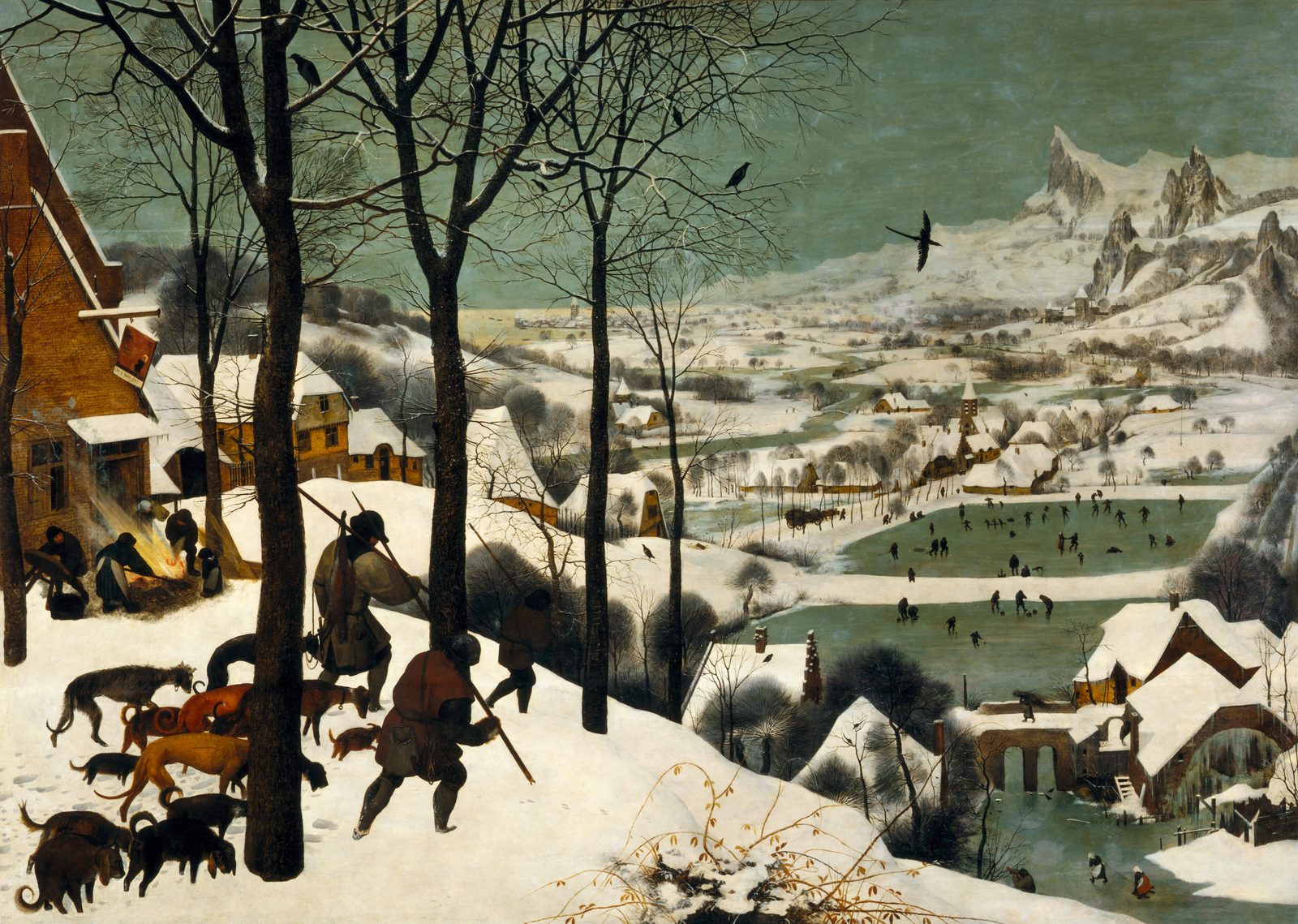
The Hunters in the Snow. Pieter Brueghel the Elder, 1565. Wikimedia Commons. Public domain.