
1 Peter 5:8 · Passage · Watchfulness
Be Sober-Minded and Alert
1 Peter 5:6 to 11 is the passage that closes the body of Peter's first letter, before his greetings.
The apostle who slept in Gethsemane when Jesus asked him to keep watch later told the churches to stay alert.
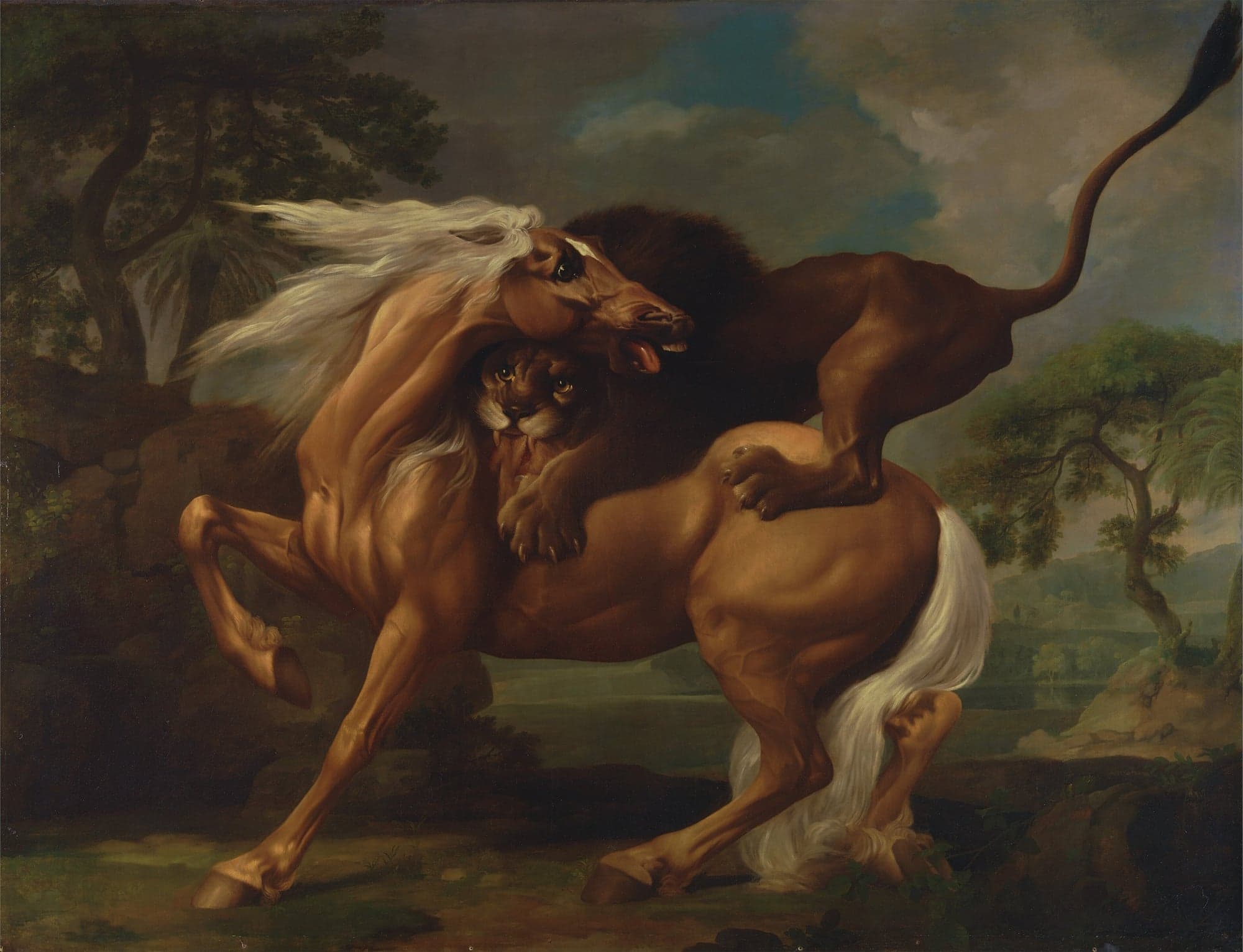
Be sober-minded and alert. Your adversary the devil prowls around like a roaring lion, seeking someone to devour.
- The passage
- 1 Peter 5:6 to 11, 1 Peter 1:13, 1 Peter 4:7
- Book
- 1 Peter
- Hold in memory
- 1 Peter 5:8, 1 Peter 5:7
Summary
Peter wrote to churches under trial, and near the end of his letter he asks them to stay sober and watchful, because an adversary prowls among them looking for prey. They are to resist him with a firm faith. Behind the warning stands the God of grace, whose promise closes the passage.
- Peter's word for the adversary, antidikos, names an opponent in a lawsuit.
- James 4:7 gives the same order, submission to God and then resistance to the devil, and adds that the devil will flee.
- The passage ends in praise of God's power forever (1 Peter 5:11).
Humble Yourselves First
Peter writes to the elders and to the young before he writes to the whole church.
Be Sober-Minded and Alert studies 1 Peter 5:6 to 11, written to the exiles of Pontus, Galatia, Cappadocia, Asia and Bithynia (1 Peter 1:1). It belongs to the value of watchfulness, because here the call to stay awake is joined to sobriety and set against the devil.
The question the study answers is what Peter asks of the churches and what he promises those who resist. The study gives the passage in its order and the three calls to sobriety in the letter. It gives the Greek words of 1 Peter 5:8 to 9, the teachers who have read them, and the two readings of the lion's attack.
Peter writes to the elders “as a fellow elder” (1 Peter 5:1), and then to all, “clothe yourselves with humility toward one another” (1 Peter 5:5). He grounds the command in Scripture, “God opposes the proud, but gives grace to the humble”, a line James also quotes (James 4:6).
Humble yourselves, therefore, under God’s mighty hand, so that in due time He may exalt you. Cast all your anxiety on Him, because He cares for you.The verses join humility to trust, so the watch that follows rests on God's care.
Jamieson, Fausset and Brown note that 1 Peter 5:7 alludes to the psalm that says, “Cast your burden upon the LORD and He will sustain you” (Psalm 55:22).
Three Calls to Sobriety
The same Greek verb for a sober mind stands at three points of the letter.
In 1 Peter a sober mind serves hope in the first chapter, prayer in the fourth and resistance to the devil in the fifth.
| Text | The Berean words | The Greek verbs | Joined to |
|---|---|---|---|
| 1 Peter 1:13 | “Be sober-minded. Set your hope fully on the grace to be given you at the revelation of Jesus Christ.” | nēphontes, a participle of nepho | Hope in the grace to come |
| 1 Peter 4:7 | “Therefore be clear-minded and sober, so that you can pray.” | sōphronēsate and nēpsate | Prayer |
| 1 Peter 5:8 | “Be sober-minded and alert.” | nēpsate and grēgorēsate | Resisting the devil |
The Adversary Who Prowls
Peter names the adversary and the beast he is like.
In the tagged Greek text both commands of 1 Peter 5:8 are aorist imperatives in the plural (V-AAM-2P). The adversary is antidikos (G476), and the verb rendered devour is katapino, “to drink down, i.e. gulp entire” in the gloss of Strong's.
Jamieson, Fausset and Brown set the devil's walking about beside Satan's answer to the LORD in Job: “From roaming through the earth,” he replied, “and walking back and forth in it” (Job 1:7).
Resist Him, Firm in the Faith
The verb for resisting is a verb of standing.
Resist renders anthistemi, whose gloss is “to stand against, i.e. oppose”. Beside it Peter sets stereoi, firm, joined to pistei, faith.
Resist him, standing firm in your faith and in the knowledge that your brothers throughout the world are undergoing the same kinds of suffering.Peter gives the readers a stand to hold against the lion, and he grounds it in faith.
The God of All Grace
Four verbs of 1 Peter 5:10 describe what God will do for those who suffer.
And after you have suffered for a little while, the God of all grace, who has called you to His eternal glory in Christ, will Himself restore you, secure you, strengthen you, and establish you.Peter sets this promise after the warning, so that God's work has the last word in the passage.
How Teachers Read the Call
Two readings, from the second century and the eighteenth, each under the line it teaches.
died 160 · Shepherd of Hermas
Shepherd of Hermas, Vision 3
Sloth and worldly care take hold where the believer has not cast his cares on the Lord.
The quotation1 quotation
“For, like elderly men who have no hope of renewing their strength, and expect nothing but their last sleep, so you, weakened by worldly occupations, have given yourselves up to sloth, and have not cast your cares upon the Lord. Your spirit therefore was broken, and ye grew old in your sorrows.”
Shepherd of Hermas · Shepherd of Hermas, Vision 3 · on 1 Peter 5:7Patristic
1703 to 1791 · John Wesley
Explanatory Notes upon the New Testament
Watching belongs with the casting of care on God, and Peter learned its cost.
The quotation1 quotation
“But in the mean time watch. There is a close connection between this, and the duly casting our care upon him. How deeply had St. Peter himself suffered for want of watching!”
John Wesley · Explanatory Notes upon the New Testament · on 1 Peter 5:8Evangelical
Persecution or Despair
Teachers differ on whether the lion's attack is outward persecution or an inward assault on the sleeping soul.
Outward persecutionAlbert Barnes
Albert Barnes, in his Notes, Explanatory and Practical, wrote on 1 Peter 5:8, “The particular thing referred to here, doubtless, is persecution, resembling in its terrors a roaring lion.”
The objection: Peter names the devil as the adversary and tells the readers to resist him, and persecution by men does not exhaust that.
Despair in the sleeping soulTheophylact of Ohrid
Theophylact of Ohrid, in his Commentary on 1 Peter, wrote that on those who sleep spiritually “the cunning beast of despair attacks”.
The objection: 1 Peter 5:9 ties the resistance to sufferings shared with believers throughout the world, which points to the outward trial that 1 Peter 4:12 calls a “fiery trial”.
Stand Firm in It
The letter ends with greetings after one more charge.
The watch of this passage is kept against a real enemy, by people who know whose grace holds them.
Through Silvanus, whom I regard as a faithful brother, I have written to you briefly, encouraging you and testifying that this is the true grace of God. Stand firm in it.Peter calls the whole letter the true grace of God, so the call to stand rests on that grace.
Sources
Scripture is the Berean Standard Bible.
- STEP Bible, Translators Amalgamated Greek New Testament, the tagged text (Tyndale House, Cambridge), CC BY 4.0.
- STEP Bible, Translators Brief lexicon of Extended Strongs for Greek (Tyndale House, Cambridge), CC BY 4.0, based on Abbott-Smith (1922)
- Robert Jamieson, A. R. Fausset and David Brown, Commentary Critical and Explanatory on the Whole Bible (1871), on 1 Peter 5:7 and 5:8.
- Albert Barnes, Notes, Explanatory and Practical, on the Old and New Testaments (1832 to 1869), on 1 Peter 5:8.
- Theophylact of Ohrid, Commentary on 1 Peter, on 1 Peter 5:8 to 9, in an English translation (cited under fifty words)
- The Shepherd of Hermas, book 1, vision 3, translated by F. Crombie, Ante-Nicene Fathers, volume 2 (Buffalo: Christian Literature Publishing, 1885)
- John Wesley, Explanatory Notes upon the New Testament (1755), on 1 Peter 5:8.