
1803 to today · The churches · Featured Study
The Restoration Movement
Barton Stone began it in Kentucky in 1803 and Thomas Campbell in 1809, and by 1906 it had divided.
On 28 June 1804 six ministers signed a will for their own presbytery: “We will, that this body die, be dissolved, and sink into union with the Body of Christ at large.”
- Began
- 1803 to 1809, in Kentucky and in the Christian Association of Washington, as Stone and the Declaration give it
- Bodies
- The Christian Church (Disciples of Christ), The Churches of Christ
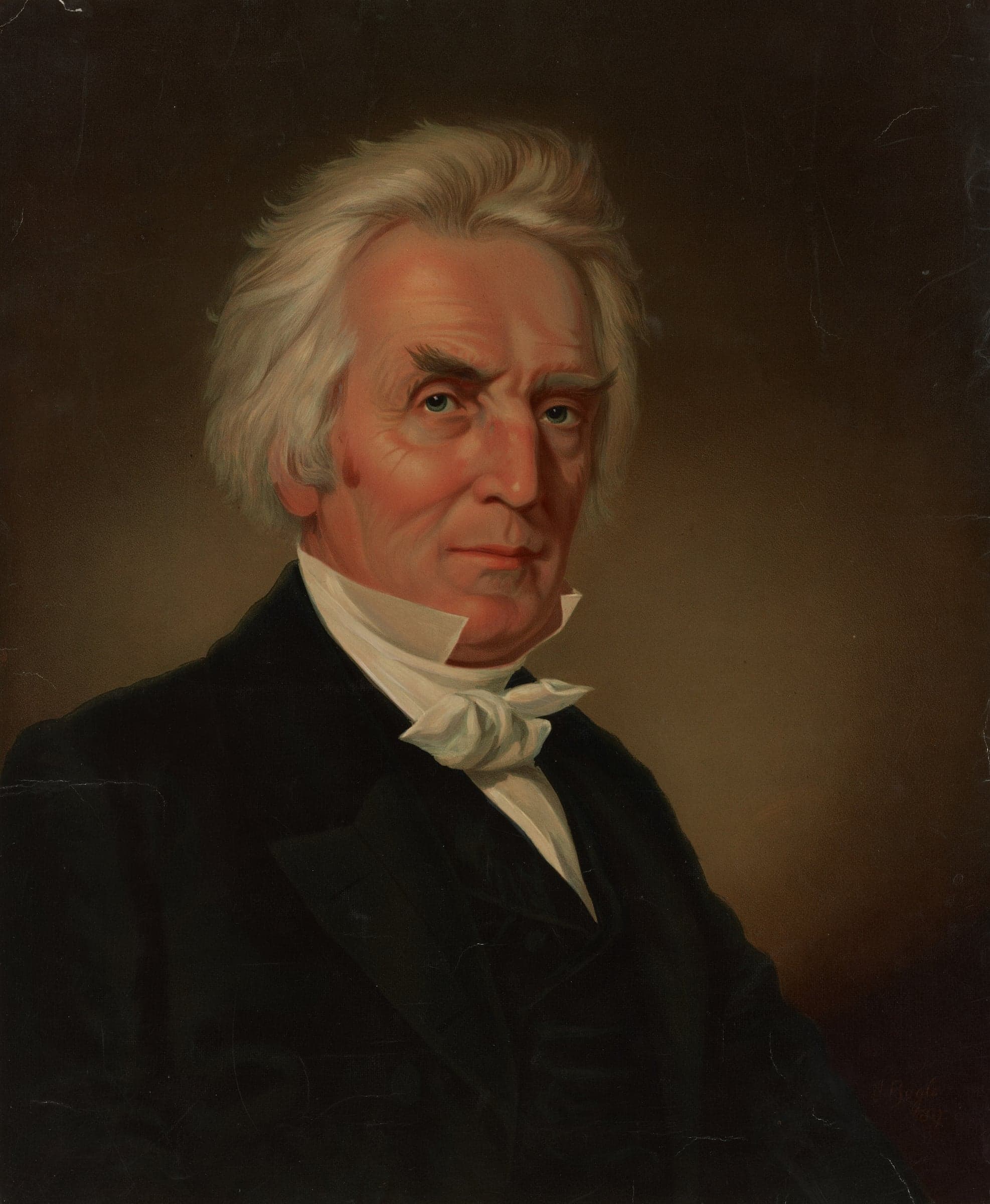
Colton, Zahm and Roberts, Alexander Campbell, 1872. Public domain.
that all of them may be one, as You, Father, are in Me, and I am in You. May they also be in Us, so that the world may believe that You sent Me.
Summary
The movement set out to join all Christians on the New Testament alone, with no creeds. Stone's people and the Campbells' joined in 1831 and 1832.
- Five ministers left the Synod of Kentucky in 1803 and formed a presbytery.
- In 1809 Thomas Campbell asked the churches to unite on the plain word of Scripture.
- Alexander Campbell was immersed in Buffalo Creek in 1812.
The Texts the Movement Stood On
The text comes from John 17.
The founding papers of 1804 and 1809 quote John 17, 1 Corinthians 1 and Ephesians 4 in the King James form, for the unity of all who belong to Christ.
The prayer for unity
that all of them may be one, as You, Father, are in Me, and I am in You. May they also be in Us, so that the world may believe that You sent Me.
The Declaration and Address quotes this prayer of Jesus in its appeal for unity.
John 17:21BSB
The Restoration Branch of the Family of Churches
The branch runs from the camp meeting of 1801 to the counts of 2021 and 2024.
Two streams met in 1832, and by 1906 the census recorded a withdrawal from the Disciples.
1801 to 1804
- The Cane Ridge meeting
- The Springfield Presbytery and its Last Will
1809 to 1812
- The Christian Association of Washington
- The Brush Run church and Campbell's immersion
1831 to 1832
- Stone's people
- Campbell's people
1849
- The American Christian Missionary Society
1906
- The Disciples of Christ
- The Churches of Christ, counted apart
2021 to 2024
- The Disciples' listed congregations
- The Churches of Christ's directory count
Each generation is dated from the record that names it.
The other families of the churches stand together with the dates on which each began.
How the Movement Began
Four witnesses tell of Kentucky in 1803 and 1804 and of the Declaration of 1809.
Barton W. Stone dates the camp meeting at Cane Ridge to the Thursday or Friday before the third Lord's day of August 1801.
The movement's own papers, a former member turned Shaker and two later memoirs tell the birth.
| Witness | What he wrote | His interest |
|---|---|---|
| The Last Will and Testament of Springfield Presbytery, 28 June 1804 | Signed by Robert Marshall, John Dunlavy, Richard M'Nemar, B. W. Stone, John Thompson and David Purviance. | The movement's own paper, as Stone prints it |
| Richard M'Nemar, The Kentucky Revival (Cincinnati, 1807) | He prints the minute by which five ministers “do now formally unite in a body as a Presbytery, known by the name of the Presbytery of Springfield,” and says the seceders “were distinguished by the name of Schismatics.” | A former member, writing after he had joined the Shakers |
| Barton W. Stone, his Biography (Cincinnati, 1847) | He prints the Last Will and tells the years that followed. | A memoir, written more than forty years after the events |
| Robert Richardson, Memoirs of Alexander Campbell (Philadelphia, 1868) | The Brush Run church was organized on “Saturday, the 4th of May,” a Saturday in 1811. | A Disciples biographer |
Thomas Campbell's Declaration and Address was agreed and ordered printed on 7 September 1809. The centennial reprint of 1908 is a zinc etching of the only original copy.
The Truth They Sought: One Church on the New Testament Alone
The Declaration of 1809 asks for one church, and a later rule speaks of the silence of Scripture.
The first proposition of the Declaration and Address holds the church of Christ on earth to be one in essence, in intention and in constitution.
I appeal to you, brothers, in the name of our Lord Jesus Christ, that all of you agree together, so that there may be no divisions among you and that you may be united in mind and conviction.The Declaration's second proposition takes its words from this verse.
The third proposition asks that nothing be required as a term of communion but what the word of God expressly teaches. The fifth speaks of commands and ordinances where Scripture is silent as to the time or manner of performance, and denies any human authority the power to supply the lack.
Robert Richardson, a Disciples biographer, reports in his Memoirs (1868) a rule as Thomas Campbell's words at the house of Abraham Altars, before the meeting of 17 August 1809. The rule reads, “where the Scriptures speak, we speak; and where the Scriptures are silent, we are silent.”
The rule is not in the Declaration and Address, and the earliest dated print of it found is Richardson's, fifty-nine years after 1809. The census of 1906 still took the rule as the movement's keynote.
Their Own Statements: the Last Will of 1804
Stone prints the will, and two of its items stand here.
There is one body and one Spirit, just as you were called to one hope when you were called;The Last Will of 1804 opens its first item with this verse.
The presbytery willed away its own name and its own power to make laws for the church.
| Item | The words |
|---|---|
| The name | “We will, that our name of distinction, with its Reverend title, be forgotten, that there be but one Lord over God's heritage, and his name one.” |
| The power to make laws | “We will, that our power of making laws for the government of the church, and executing them by delegated authority, forever cease; that the people may have free course to the Bible, and adopt the law of the Spirit of life in Christ Jesus.” |
The Movement's Bodies Today
A census of 1906 and two counts of the 2020s each name their counter.
The census of 1906 gave a total for the two bodies taken together, and the later counts are of congregations and adherents.
| Body | The count | Who counted, and how | Year |
|---|---|---|---|
| The Disciples of Christ and the Churches of Christ, together | 10,942 organizations; 1,142,359 communicants, as reported by 10,909 organizations | The United States Census Bureau, Religious Bodies: 1906, Part II (1910), page 236 | 1906 |
| The Christian Church (Disciples of Christ) | 2,887 congregations listed in its directory; 1,647 congregations reported statistics for 2023 | The Disciples' office, from its Yearbook reporting through ALEX | 2024 |
| The Churches of Christ in the United States | 11,875 congregations; 1,423,295 adherents, baptized and unbaptized | 21st Century Christian data, reported by Kent E. Fillinger in Christian Standard | 2021 |
Where the Movement Went
The record moves from Cane Ridge to Georgetown, Lexington and Cincinnati.
The record places the movement's turning points in Kentucky first, then at Cincinnati.
| Place | Year | The record |
|---|---|---|
| Cane Ridge | 1801 and 1804 | Stone's Biography; the Last Will, made sitting at Cane-ridge |
| The house of Abraham Altars, between Mount Pleasant and Washington | 1809 | Richardson's Memoirs |
| Brush Run | 1811 | Richardson's Memoirs |
| Buffalo Creek | 1812 | Richardson's Memoirs, on Campbell's immersion |
| Georgetown and Lexington | 1831 and 1832 | John Rogers, in Stone's Biography |
| Cincinnati | 1849 | The census of 1906, on the missionary society |
A Movement for Unity That Divided
Preachers went to the Shakers, and churches withdrew by 1906.
Stone writes that the Shakers' missionaries came among his people and that three of their preachers, Matthew Houston, Richard M'Nemar and John Dunlavy, joined the Shakers. M'Nemar and Dunlavy had signed the Last Will.
John Rogers, writing as one present, says the union of Stone's people with Campbell's came first at Georgetown, at a four-day meeting over Christmas 1831. The union followed at Lexington over New Year's Day 1832.
The census report Religious Bodies: 1906 says that certain churches once counted with the Disciples of Christ had since 1900 withdrawn and called themselves Churches of Christ. In their own account, it gives two causes: a missionary society with a “money basis” of membership, and “the use of instrumental music in church worship.”
The American Christian Missionary Society was formed in Cincinnati in 1849. The census says many of Campbell's followers “held firmly to the earlier position, quoting his own language” against such societies.
Instruments in worship: Briney's answer of 19141 paragraph
J. B. Briney, a party to the dispute, answered M. C. Kurfees's book against instruments in Instrumental Music in Christian Worship (1914), forty-four years after he had argued the other side. He wrote that the first leaders' rule “merely had reference to faith and ordinances,” and that “the New Testament permits the use of an instrument.”
Books to Read Next
The Biography of Eld. Barton Warren Stone, Written by Himself
Barton W. Stone, with additions by John Rogers · 1847
It is Stone's memoir, with John Rogers's additions on the union of 1832.
Free at the Internet ArchiveDeclaration and Address of the Christian Association of Washington
Thomas Campbell · 1809, reprinted 1908
It sets out the propositions on which the Association hoped to unite the churches.
Free at the Internet ArchiveMemoirs of Alexander Campbell, volume 1
Robert Richardson · 1868
Richardson tells the Campbells' story to the Brush Run church and after.
Free at the Internet ArchiveInstrumental Music in Christian Worship
J. B. Briney · 1914
Briney argues that the New Testament permits an instrument.
Free at the Internet ArchiveWhat the Movement Sought
The movement asked the churches to drop their names and their creeds and meet on the Bible alone. The rule of silence the census called its keynote became the ground on which its heirs parted over instruments.
Sources
Scripture is the Berean Standard Bible.
- The Holy Bible, Berean Standard Bible (read 2026)
- Barton W. Stone, The Biography of Eld. Barton Warren Stone, Written by Himself, with additions by John Rogers (Cincinnati, 1847), pages 51 to 53 and 342 to 343.
- Thomas Campbell, Declaration and Address of the Christian Association of Washington (1809), Propositions 1 to 3 and 5 and the closing appeal, centennial reprint (1908)
- Richard M'Nemar, The Kentucky Revival (Cincinnati, 1807; Albany reprint, 1808), the minute forming the Presbytery of Springfield.
- Robert Richardson, Memoirs of Alexander Campbell, volume 1 (Philadelphia: Lippincott, 1868), pages 234 to 237 and the accounts of 1811 and 1812.
- Internet Archive full-text search for the phrase where the scriptures speak, we speak, sorted by date (run 28 October 2026)
- United States Census Bureau, Religious Bodies: 1906, Part II (1910), pages 236 and 242.
- J. B. Briney, Instrumental Music in Christian Worship (Cincinnati: Standard Publishing, 1914), pages 184 to 185 and 191.
- Christian Church (Disciples of Christ), Listed, Reported, and Connected Congregations, 7 May 2024.
- Kent E. Fillinger, Noninstrumental Churches of Christ Facing Uncertain Future, Christian Standard, 13 October 2021.
Keep Studying
People and groups1
Church history2
Doctrines3