
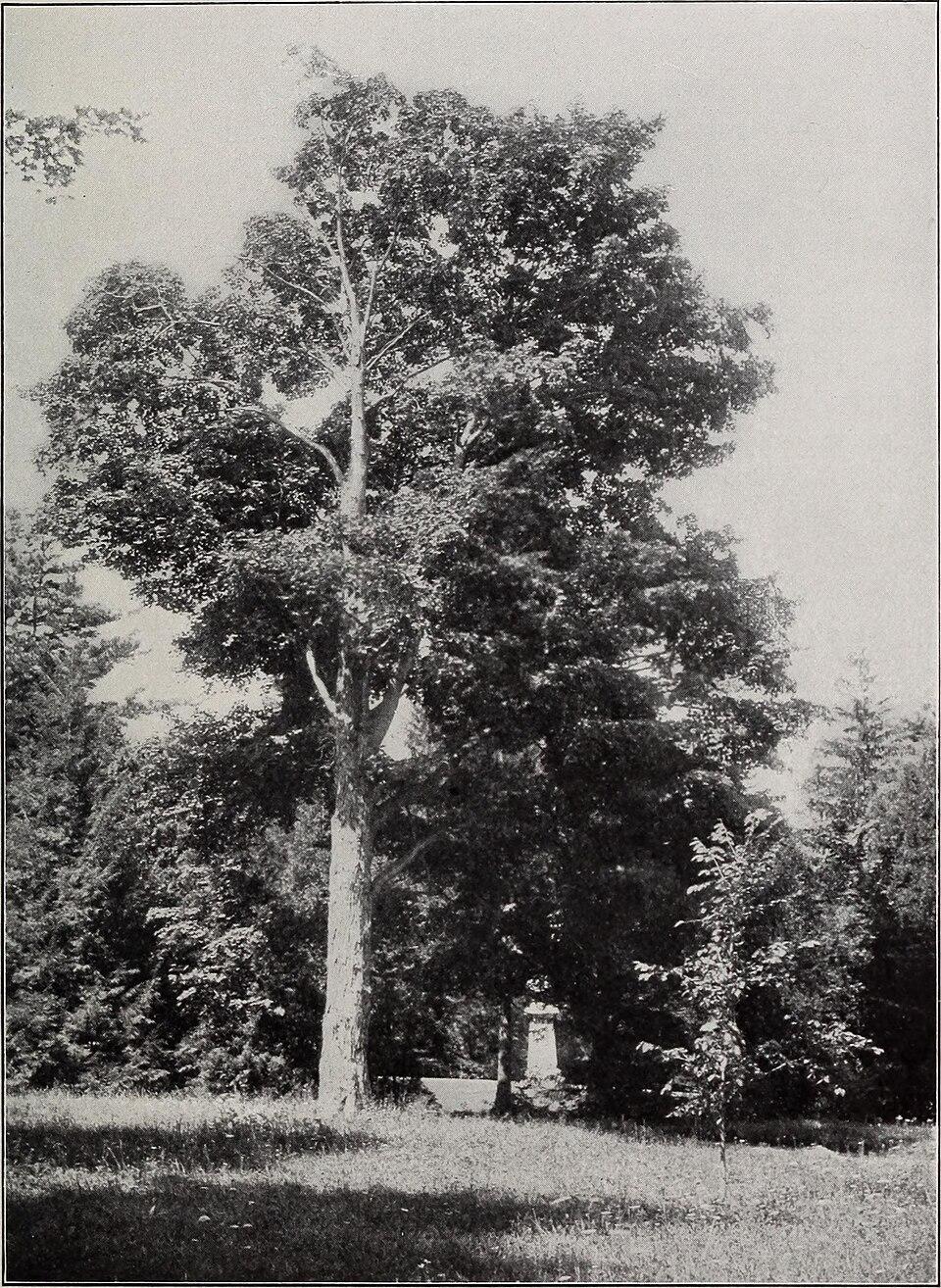
The haystack monument, in The One Hundredth Anniversary of the Haystack Prayer Meeting (1907), no known copyright restrictions
1806 to 1812 · The churches · Featured Study
The American Board and the Haystack
A student prayer meeting at Williams College and the mission board that four seminary students asked the Massachusetts churches to form.
Byram Green remembered that a thunderstorm drove five students from a grove to shelter under a haystack, where they prayed for Asia.
And He said to them, “Go into all the world and preach the gospel to every creature.
And He said to them, “Go into all the world and preach the gospel to every creature.
- Began
- 29 June 1810, at Bradford, Massachusetts
- Bodies
- The American Board of Commissioners for Foreign Missions, The Brethren of Williams College
Summary
The American Board was the first society in America to send missionaries overseas. Ministers meeting at Bradford set it up. Its first party sailed for India in February 1812.
- Samuel J. Mills led a group of students who met in the college fields to pray for missions.
- The Board first met at Farmington and agreed on its rules.
- Five men were ordained together at the Tabernacle in Salem.
- The Judsons became Baptists in India and left the Board.
The Text the Association Quoted
The committee at Bradford grounded its report on the command to preach to every creature.
The committee's report to the General Association quoted the command of Mark 16:15 as the special direction under which ministers serve. It advised the students to hold to their purpose.
And everyone who has left houses or brothers or sisters or father or mother or wife or children or fields for the sake of My name will receive a hundredfold and will inherit eternal life.The store files Ann Hasseltine's letter of 1810 on leaving home for the gospel under this promise.
From the Haystack to the Baptist Mission in Burma
The tree runs from the student meetings to the two boards the first party served.
The student circle at Williams led to the American Board and, through the Judsons, to a Baptist mission.
1806 to 1808
- The prayer meetings at Williams College
- The Brethren
1810
- The request at Bradford
- The American Board
1812
- The ordination at Salem
- The Judsons with the Baptists at Serampore
after 1812
- The Baptist mission in Burma
Each date is read from Tracy (1842) or Capen (1906).
The Congregational churches are the family whose Massachusetts association instituted the Board.
How the Board Began: The Haystack, the Brethren and Bradford
Green's account, Capen's booklet for the centenary and Tracy's history tell the steps.
Green names Mills, James Richards, Francis L. Robbins, Harvey Loomis and himself. They went first to a grove, and when a dark cloud rose in the west they moved under the haystack.
“The subject of conversation under the stack before and during the shower was the moral darkness of Asia. Mills proposed to send the Gospel to that dark and heathen land; and said that we could do it if we would.”
Byram Green · His account of the haystack meeting, in Edward Warren Capen, The Haystack Prayer Meeting, The Envelope Series, volume IX, number 1, pages 17 to 18Congregational
Five students signed the constitution of a secret society, the Brethren, in a lower room of the east college. Capen gives the day as 7 September 1808, and Tracy gives the spring of that year.
At Bradford on Thursday 28 June 1810, Judson, Samuel Nott, Mills and Samuel Newell asked the General Association whether they should look to an American society or to a European one. Tracy writes that the paper was drawn up by Judson.
The Call They Pressed: Young Men Devoted for Life
The students' paper and the committee's report put the call to missions before the churches.
The students wrote that they considered themselves devoted to the work for life, whenever God should open the way. The committee took their abiding impressions as a divine intimation of something good and great.
“Therefore, Voted, That there be instituted by this General Association, a Board of Commissioners for Foreign Missions, for the purpose of devising ways and means, and adopting and prosecuting measures, for promoting the spread of the gospel in heathen lands.”
The General Association of Massachusetts · The vote of 29 June 1810, in Joseph Tracy, History of the American Board of Commissioners for Foreign Missions, page 26Congregational
The Students' Questions and the Association's Answers
The paper of 28 June asked four things, and the votes of the next day answered them.
The Association answered each of the students' questions with a step.
| The students asked | The Association answered |
|---|---|
| Ought we to renounce missions as visionary? | They ought not to renounce the object of missions. |
| East or west? | They were to wait the openings and guidance of Providence. |
| An American society, or a European one? | A Board of Commissioners was instituted at once. |
| What should we do to prepare? | Earnest prayer, suitable studies, and the patronage and direction of the Board. |
The Board and Its First Party
Tracy counts the Board's commissioners and the men it sent first.
The Board began with nine commissioners and sent five men in 1812.
| Body | The count | What it was |
|---|---|---|
| The Board | 9 commissioners | Five to be chosen yearly by Massachusetts and four by Connecticut |
| The first missionaries | 5 men | Newell, Judson, Nott, Gordon Hall and Luther Rice, ordained at Salem |
| The students at Bradford | 4 names | Judson, Nott, Mills and Newell signed the paper |
From Williamstown to Calcutta
Each place stands with the date Tracy gives.
The first party went from Massachusetts to India within six years of the student meetings.
| Date | Place | What happened there |
|---|---|---|
| 29 June 1810 | Bradford, Massachusetts | The General Association instituted the Board. |
| 6 February 1812 | The Tabernacle, Salem | Five men were ordained before a crowded congregation. |
| 19 February 1812 | Salem | The Caravan sailed with the Judsons and the Newells. |
| 17 June 1812 | Calcutta | The Judsons and the Newells arrived. |
| September 1812 | Serampore | The Judsons were immersed after adopting the Baptists' views. |
In Their Own Words
Ann Hasseltine Judson (1789 to 1826)
letter of 8 September 1810, in Knowles's Memoir (1829)
Ann Hasseltine in 1810
“I feel willing, and expect, if nothing in providence prevents, to spend my days in this world in heathen lands.”
Baptist missionary
About this saying1 paragraph
In a letter of 8 September 1810, Ann Hasseltine wrote of her purpose to spend her days abroad.
Adoniram Judson (1788 to 1850)
The paper signed by Adoniram Judson, Samuel Nott, Samuel J. Mills and Samuel Newell to the General Association at Bradford, 28 June 1810, in Joseph Tracy, History of the American Board of Commissioners for Foreign Missions, page 26
The students' request
“They beg leave to state, that their minds have been long impressed with the duty and importance of personally attempting a mission to the heathen”
Baptist
About this saying1 paragraph
The paper Judson drew up for the General Association in June 1810 opens with the students' own account of their purpose.
Adoniram Judson
Letter to Luther Rice, 3 August 1816, in Edward Judson's life (1883), page 93
Judson to Luther Rice
“If they ask again, What prospect of ultimate success is there? tell them, As much as that there is an almighty and faithful God, who will perform His promises, and no more.”
Baptist
About this saying1 paragraph
In a letter of 3 August 1816, Judson wrote to Luther Rice, who had gone back to America after the two of them left the Board.
Which Haystack, and Who Came First
Tracy and Green tell the haystack differently, and Tracy weighs a claim made for Judson.
The two accounts differ on the year and the company.
| Question | Tracy (1842) | Green, in Capen (1906) |
|---|---|---|
| When? | The summer or autumn of 1807 | The summer of 1806, some unknown afternoon |
| Who? | Mills, Gordon Hall and James Richards | Mills, Richards, Robbins, Loomis and Green |
| What brought them there? | Mills led them to a distant meadow for a day of fasting and prayer | Rain from a dark cloud in the west sent them under the stack |
Tracy also judged that Judson's interest in missions began in the autumn of 1809 at the earliest, so the claim of some of his friends that he was the first mover cannot be sustained. He grants that Judson gave himself to the work before he knew what the others had done.
Books to Read Next
History of the American Board of Commissioners for Foreign Missions
Joseph Tracy · 1842
Tracy prints the Bradford paper and votes and follows the first party to India.
Free at the Internet ArchiveThe Haystack Prayer Meeting
Edward Warren Capen · 1906
Capen gives Byram Green's own account of the meeting.
Free at the Internet ArchiveWhat the Board Handed On
The Board handed on the first American foreign mission and, through the Judsons and Rice, the cause of a Baptist mission in Burma.
Sources
Scripture is the Berean Standard Bible.
- The Holy Bible, Berean Standard Bible (read 2026)
- Joseph Tracy, History of the American Board of Commissioners for Foreign Missions, second edition (New York: M. W. Dodd, 1842), pages 23 to 27 and 33 to 37.
- Edward Warren Capen, The Haystack Prayer Meeting, The Envelope Series, volume IX, number 1 (Boston: American Board, April 1906), pages 17 to 19.
- Ann Hasseltine Judson, letter of 8 September 1810, in James D. Knowles, Memoir of Mrs. Ann H. Judson (1829); Adoniram Judson, letter to Luther Rice, 3 August 1816, in Edward Judson's life of his father (1883), page 93.
Keep Studying
Read it1