
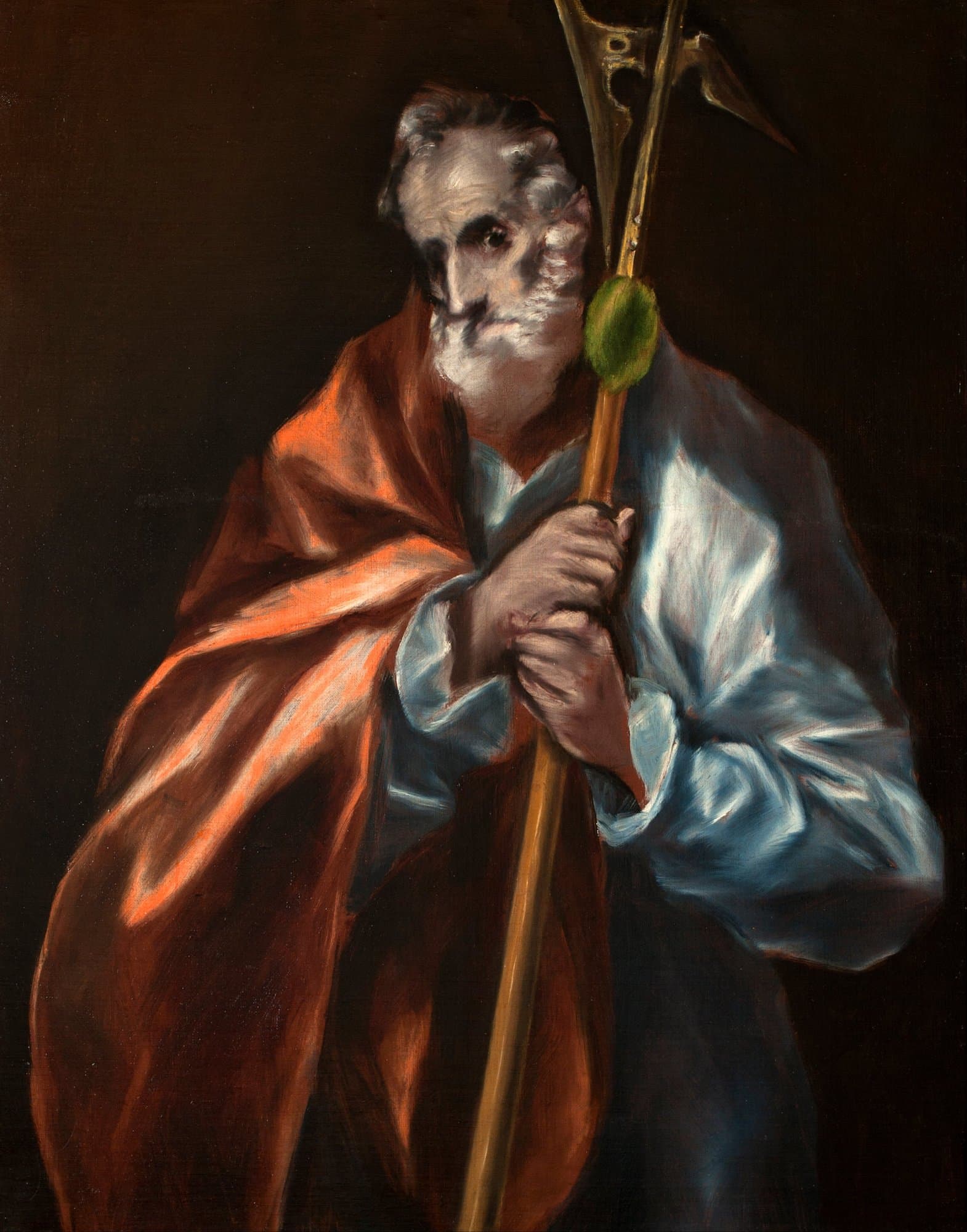
Jude 1:20 to 23 · Passage · Doubt
Mercy to Those Who Doubt
Jude 1:20 to 23 is the closing charge of Jude, set between the apostles' warning of scoffers and the doxology.
A letter that opens with a call to fight for the faith ends by asking its readers to be merciful to the wavering.
And indeed, have mercy on those who doubt;
- The passage
- Jude 1:17 to 25, Jude 1:1 to 4
- Book
- Jude
Summary
Jude wrote to warn a church about intruders who turned the grace of God into license. Near the end he turns to the faithful and tells them how to stand. They are to build themselves up in their faith, pray in the Holy Spirit, keep themselves in God's love and wait for the mercy of Christ. They are then to reach the people around them: mercy for those who doubt, rescue for those near the fire, and mercy held with fear for the defiled. The letter ends in praise of the God who can keep them from stumbling.
- The verb behind "those who doubt" in Jude 1:22 is diakrino, a verb that can also mean to dispute.
- The manuscripts of Jude 1:22 to 23 differ, and the King James Version reads two groups where the Berean text reads three.
- Clement of Alexandria and Jerome both received Jude, the brother of James, as the writer of the letter.
A Letter to Contend for the Faith
Jude meant to write about salvation and wrote instead about men who had slipped into the church.
Mercy to Those Who Doubt studies Jude 1:20 to 23, where the letter of Jude turns from its warning to the duties of the faithful. Jude 1:22 names doubt among believers and answers it with a command to show mercy.
The question it answers is what Jude asks of believers who stand firm, toward themselves and toward those who doubt. It lists what the four verses tell believers to do. It shows how the command to keep oneself rests on God's keeping, and it gives the two readings of a verse the manuscripts carry in different forms.
Jude felt it necessary to urge his readers "to contend earnestly for the faith entrusted once for all to the saints" (Jude 1:3). The reason was that "certain men have crept in among you unnoticed", men who "turn the grace of our God into a license for immorality" (Jude 1:4).
But you, beloved, remember what was foretold by the apostles of our Lord Jesus Christ when they said to you, “In the last times there will be scoffers who will follow after their own ungodly desires.” These are the ones who cause divisions, who are worldly and devoid of the Spirit.Jude turns from the intruders to the beloved by reminding them that the apostles had foretold such men, so their arrival need not shake anyone.
The Commands of Jude 1:20 to 23
Each action stands in the Berean words with the Greek form behind it.
Jude gives one command for the readers' own faith and three for their care of others.
| The action in the Berean words | The Greek word and form | It concerns |
|---|---|---|
| "building yourselves up in your most holy faith" | epoikodomountes, a participle | The readers |
| "praying in the Holy Spirit" | proseuchomenoi, a participle | The readers |
| "keep yourselves in the love of God" | teresate, a command | The readers |
| "as you await the mercy of our Lord Jesus Christ" | prosdechomenoi, a participle | The readers |
| "have mercy on those who doubt" | eleate, a command | Others |
| "save others by snatching them from the fire" | sozete, a command | Others |
| "to still others show mercy tempered with fear" | eleate, a command | Others |
Keep Yourselves in the Love of God
The first four actions concern the readers' own faith.
Building up, praying and awaiting are participles that hang on teresate, keep, so the building, the prayer and the waiting are the ways the readers keep themselves in God's love.
The verb tereo, to keep or protect, already stands in the letter's greeting, where the readers are "kept in Jesus Christ" (Jude 1:1). The doxology uses phylasso, to guard, for God's keeping of His people (Jude 1:24).
Jamieson, Fausset and Brown commented on Jude 1:21 in their Commentary Critical and Explanatory (1871). They wrote, "Man's need of watching is implied; at the same time he cannot keep himself, unless God in His love keep him."
Mercy on the Wavering
The first people the readers are sent to are fellow believers who waver.
The command of Jude 1:22 is eleate, from eleeo, which the STEP Bible lexicon renders "to have mercy" and which the New Testament uses 32 times. Jude gives the same command again in Jude 1:23, so mercy opens and closes his instructions about others.
Those who doubt are diakrinomenous, a form of diakrino, a verb that ranges in the New Testament from judging between two things to wavering in faith.
The rescue of Jude 1:23 is urgent, since harpazo means to seize, and the mercy shown to the third group is held with fear, "hating even the clothing stained by the flesh". Where a believer's doubt comes with depression or with fears that will not leave, mercy includes helping him to a physician or a counsellor, beside prayer and never in its place.
Jude, the Brother of James
The greeting and a teacher of Alexandria tell who the writer was.
Jude, a servant of Jesus Christ and a brother of James, To those who are called, loved by God the Father, and kept in Jesus Christ:The greeting names the writer by his master and by his brother, and it names the readers as called and loved.
Clement of Alexandria, in fragments kept in the Latin of Cassiodorus, wrote that Jude, "while knowing the near relationship of the Lord, yet did not say that he himself was His brother".
“Jude the brother of James, left a short epistle which is reckoned among the seven catholic epistles, and because in it he quotes from the apocryphal Book of Enoch it is rejected by many. Nevertheless by age and use it has gained authority and is reckoned among the Holy Scriptures.”
Jerome · De Viris Illustribus (On Illustrious Men), Section 4 · on Jude 1:1Patristic
Two Groups or Three in Jude 1:22 to 23
The manuscripts and the English versions read Jude 1:22 to 23 in two shapes.
The King James Version reads, "And of some have compassion, making a difference", and turns to a second group, whom it would save "with fear, pulling them out of the fire". The American Standard Version (1901) reads, "And on some have mercy, who are in doubt", and names two more groups after it.
Adam Clarke, in his Commentary on the Bible (1832), printed the participle as diakrinomenoi, which makes the readers the ones who distinguish. He reported that "many MSS., versions, and fathers" read otherwise, and he called the two verses "all confusion, both in the MSS. and versions".
The Greek text of the Tyndale House edition reads diakrinomenous, so the doubting are the ones shown mercy, and it opens three clauses with hous, some.
Three groups, the first those who doubtJohn Wesley (1755) and the American Standard Version (1901)
“Meantime watch over others, as well as yourselves, and give them such help as their various needs require. Some, that are wavering in judgment, staggered by others or by their own evil reasoning, endeavour more deeply to convince of the whole truth as it is in Jesus. Some snatch, with a swift and strong hand, out of the fire of sin and temptation.”
John Wesley · Explanatory Notes upon the New Testament · on Jude 1:22Evangelical
The objection is that Jude 1:9 uses the same middle participle for Michael, "when he disputed with the devil", so the people of Jude 1:22 may be those who dispute.
Two groups, the readers making a differenceThe King James Version (1611), Albert Barnes and Oecumenius
Albert Barnes, in his Notes on Jude 1:22, glossed the King James words as "Making a distinction between them". Oecumenius, in his Commentary on Jude, took the participle of those who "separate from you (for this is what 'to distinguish' means)".
The objection is that the Greek text the modern versions follow reads the participle as the object of mercy and names three groups.
To the Only God Our Savior
Jude closes the letter with praise to God through Jesus Christ.
Now to Him who is able to keep you from stumbling and to present you unblemished in His glorious presence, with great joy—The doxology turns the letter from warning to praise, so its commands end in worship.
The praise goes "to the only God our Savior" through Jesus Christ (Jude 1:25). The readers who build, pray, wait and show mercy give the glory for all of it to Him.
Sources
Scripture is the Berean Standard Bible.
- The Holy Bible, King James Version (1611)
- The Holy Bible, American Standard Version (1901)
- STEP Bible, Translators Amalgamated Greek New Testament, the tagged Greek text (Tyndale House, Cambridge), CC BY 4.0.
- STEP Bible TBESG lexicon of Extended Strongs for Greek (Tyndale House, Cambridge), CC BY 4.0, with the definitions of James Strong, Strong's Exhaustive Concordance of the Bible (1890)
- John Wesley, Explanatory Notes upon the New Testament (1755), on Jude 1:22.
- Robert Jamieson, A. R. Fausset and David Brown, Commentary Critical and Explanatory on the Whole Bible (1871), on Jude 1:21.
- Adam Clarke, Commentary on the Bible (1832), on Jude 1:22.
- Albert Barnes, Notes, Explanatory and Practical, on the Old and New Testaments (1832 to 1869), on Jude 1:22.
- Oecumenius, Commentary on Jude, on Jude 1:22 to 23 (a modern English translation, cited under fifty words)
- Jerome, De Viris Illustribus (On Illustrious Men), section 4.
- Clement of Alexandria, Fragments from the Latin translation of Cassiodorus, on Jude 1:1 (Ante-Nicene Fathers, volume 2)