
Forgiveness as an act of the will
She wrote that forgiveness is an act of the will, and that the will can act whatever the heart feels.[2]
Seen in Guideposts, November 1972
Voices and influences
1892 to 1983[1]
A Dutch watchmaker who hid Jews from the Nazis in her family's home in Haarlem, and later a Christian writer and speaker.[1]
Dutch Reformed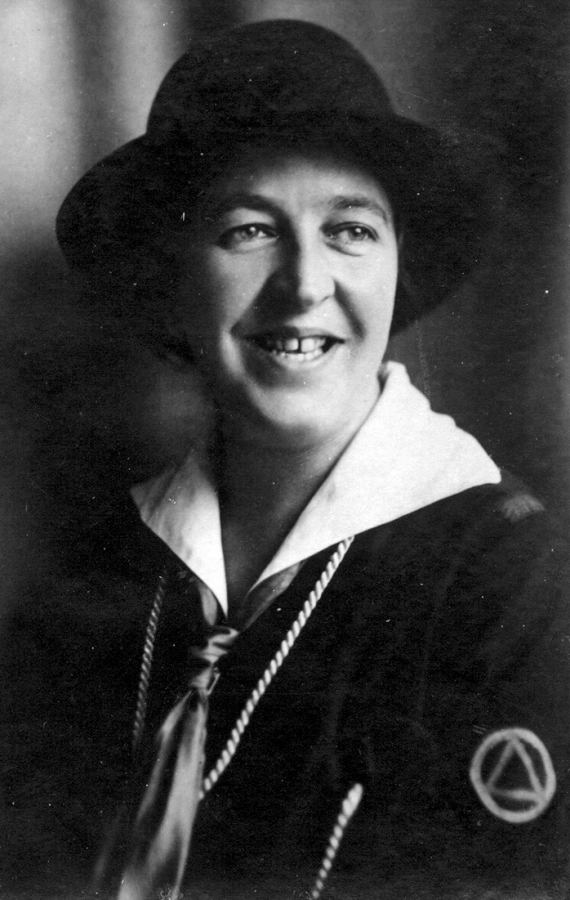
Cornelia Arnolda Johanna ten Boom was the youngest child of a jeweller and watchmaker and his wife, Cornelia Luitingh.[1] The family lived above the watch shop, in a house she called the Beje.[1] She trained as a watchmaker and also ran a club for teenage girls that gave religious teaching and classes in the performing arts, sewing and handicrafts.[1]
From May 1942 the family took in Jews and members of the Dutch resistance, and the resistance built a hiding room behind a false wall in her bedroom.[1] On 28 February 1944 an informant told the Nazis of their work and the whole family was arrested, but the six people hidden in the house were not found.[1] Her father died ten days later.[1]
She and Betsie were held at Scheveningen, at the camp at Vught and at Ravensbrück, where they held worship with a Bible they had smuggled in.[1] Betsie died there on 16 December 1944, and Corrie was released twelve days later; Wikipedia records that she was afterward told her release came from a clerical error.[1]
After the war she set up a rehabilitation centre in Bloemendaal and, by Wikipedia's count, spoke in more than 60 countries.[1] Wikipedia records that in 1946 she met and forgave two Germans who had worked at Ravensbrück; in her own account in Guideposts she forgave a former guard of the camp after speaking in a church in Munich in 1947.[1][2] She moved to California in 1977, and strokes in 1978 took her speech.[1]
She wrote that forgiveness is an act of the will, and that the will can act whatever the heart feels.[2]
Seen in Guideposts, November 1972
She taught that God's forgiveness comes with a prior condition, that we forgive those who have wronged us, and she gave the words of Jesus for it.[2]
Seen in Guideposts, November 1972
She wrote that in her home for victims of Nazi cruelty those who forgave their former enemies rebuilt their lives, and those who kept their bitterness stayed invalids.[2]
Seen in Guideposts, November 1972
The family's house in Haarlem is the Corrie ten Boom House, a museum seen by guided tour.[3]
The Hiding Place
She tells her family's work in the war and how she found and shared hope in God in the camp.
A Prisoner and Yet
Tramp for the Lord
1974 · Christian Literature Crusade
In My Father's House: The Years before The Hiding Place
1976 · F. H. Revell
Each New Day
1977 · World Wide Publications
Clippings from My Notebook: Writings and Sayings Collected
1984 · World Wide Publications
Every work cited on MannaFest is listed with its terms in the sources registry.
Pages that name Corrie ten Boom10
People and groups3
Church history1
Doctrines1
Values1