
Zechariah 5:11
in Zechariah 5“To build a house for it in the land of Shinar,” he told me. “And when it is ready, the basket will be set there on its pedestal.”
BSB
The same verse in ASV and KJV ▾
ASV
And he said unto me, To build her a house in the land of Shinar: and when it is prepared, she shall be set there in her own place.
KJV
And he said unto me, To build it an house in the land of Shinar: and it shall be established, and set there upon her own base.
⋯
This verse in Zechariah 5
Commentary
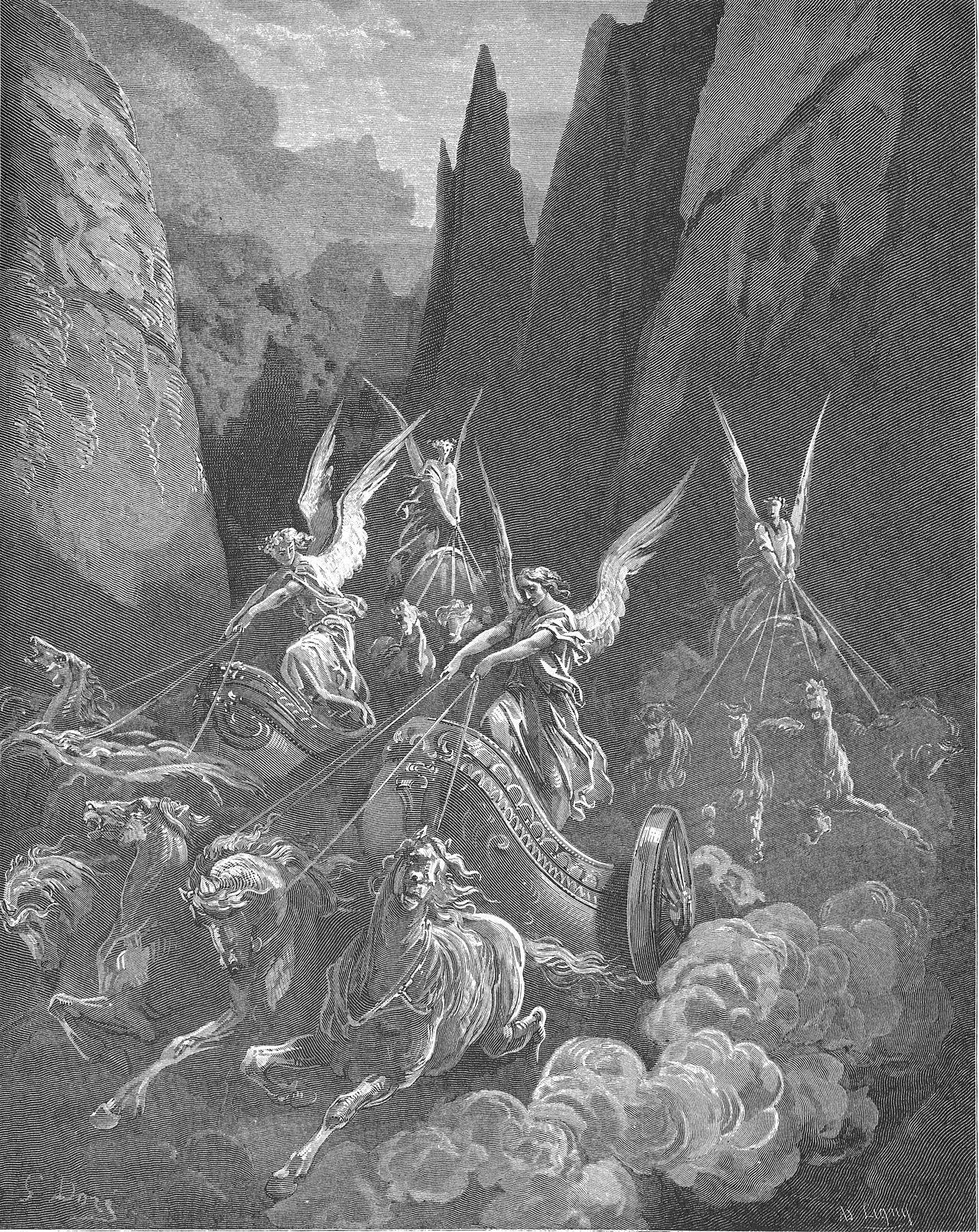
9 notes on this verse(Verse 9 and following) And I lifted up my eyes, and I saw, and behold, two women coming forth, and a spirit was on their wings, and they had wings like the wings of a kite, and they lifted up an amphora between the earth and the sky. And I said to the angel who spoke to me: Where are these taking the amphora? And he said to me: To build a house for it in the land of Shinar, and it will be established and placed there upon its base.
This site's exposition
two women approaching, with the wind in their wings
on Zechariah 5:9-11
Two women “with the wind in their wings”, wings like a stork's, “lifted up the basket between heaven and earth”. They carry it off to “build a house for it in the land of Shinar”. Shinar is the plain of Genesis eleven, the ground of the tower.
This site's exposition
in the land of Shinar
Shinar is the old name of the land of Babylon, where Genesis 11:2 settles the builders of Babel. Barnes heard in it the first empire against the LORD. Jamieson, Fausset and Brown read the verse as Wickedness removed from the land to dwell for good in its own house.
The record, by era
The Puritans and the Awakening3 voices
To build - Not in mercy, but in judgment. Of Shinar - Of Babylon whither many of the Jews fled, and others of them were forced by the Romans. Set there - There they shall be confined without hope of release.
And he gives him this account of it: I see a flying roll, and as near as he can guess by his eye it is twenty cubits long (that is, ten yards) and ten cubits broad, that is, five yards. The scriptures of the Old Testament and the New are rolls, in which God has written to us the great things of his law and gospel. Christ is the Master of the rolls.
And he said unto me, To build it an house in the land of Shinar,....
The Nineteenth Century2 voices
A commentator
Albert Barnes1798–1870
Notes, Explanatory and Practical, on the Old and New Testaments (1832-1869)
To build it an house in the land of Shinar - The name of Shinar, though strictly Babylonia, carries back to an older power than the world-empire of Babylon; which now too was destroyed. “In the land of Shinar” Gen 11:2 was that first attempt to array a world-empire against God, ere mankind was ye dispersed. And so it is the apter symbol of the antitheist or anti-Christian world, which by violence, art, falsehood, sophistry, wars against the truth.
A commentator
Jamieson, Fausset & Brown1802–1910
Commentary Critical and Explanatory on the Whole Bible (1871)
"Wickedness" being cast out of Judah, shall for ever dwell with the antichristian apostates (of whom Babylon is the type), who shall reap the fruit of it, which they deserve.
1 more voice on this verse
The Nineteenth Century1 voice
To build it a house in the land of Shinar - The land of Shinar means Babylon; and Babylon means Rome, in the Apocalypse. The building the house for the woman imprisoned in the ephah may signify, that there should be a long captivity under the Romans, as there was under that of Shinar or Babylon, by which Rome may here be represented. That house remains to the present day: the Jewish woman is still in the ephah; it is set on its own base - continues still as a distinct nation; and the talent of lead - God’s displeasure - is still on the top. O Lord, save thy people, the remnant of Israel!
How the passage was read
What the Jewish commentators add
and it will be prepared, and they shall place it there And the house shall be prepared, and the ephah shall be placed there with the wicked that are within it.
This section is reception history: how the passage was read and kept in the Jewish tradition. Where a reading parts from an essential of the Christian faith, the section says so at that point.
Texts and citation data: Sefaria; each excerpt follows its version’s licence. 6 further sources are cited on this chapter that carry no English text this site may quote or only restate the verse.
The words behind it
12 Hebrew wordsEvery Hebrew word of this verse in the order it stands, with what it means and the door to its own study. The last column counts the times a word stands in the whole Bible: the rarer the word, the more the places it appears belong together.
| Hebrew | Sound | Meaning | Word study | In the Bible |
|---|---|---|---|---|
| וַיֹּ֣אמֶר | vaiyomer | and he said | H559 → | 5305 times |
| אֵלַ֔י | ʾelai | to me | H413 → | 5510 times |
| לִבְנֽוֹת־ | livnot- | to build | H1129 → | 376 times |
| לָ֥הֿ | lah | for it | ||
| בַ֖יִת | vayit | a house | H1004 → | 2046 times |
| בְּאֶ֣רֶץ | beeretz | in [the] land of | H776 → | 2504 times |
| שִׁנְעָ֑ר | shinar | Shinar | H8152 → | |
| וְהוּכַ֛ן | vehukhan | and it will be prepared | H3559 → | |
| וְהֻנִּ֥יחָה | vehunichah | and it will be placed | H5117 → | |
| שָּׁ֖ם | sham | there | H8033 → | |
| עַל־ | ʾal- | on | H5921 → | 5755 times |
| מְכֻנָתָֽהּ׃ ס | mekhunatah | on own stand its | H4369 → |
וַיֹּ֣אמֶרand he said
vaiyomerH559 →5305 times
אֵלַ֔יto me
ʾelaiH413 →5510 times
לִבְנֽוֹת־to build
livnot-H1129 →376 times
לָ֥הֿfor it
lah
בַ֖יִתa house
vayitH1004 →2046 times
בְּאֶ֣רֶץin [the] land of
beeretzH776 →2504 times
שִׁנְעָ֑רShinar
shinarH8152 →
וְהוּכַ֛ןand it will be prepared
vehukhanH3559 →
וְהֻנִּ֥יחָהand it will be placed
vehunichahH5117 →
שָּׁ֖םthere
shamH8033 →
עַל־on
ʾal-H5921 →5755 times
מְכֻנָתָֽהּ׃ סon own stand its
mekhunatahH4369 →
A shaded row is a word that stands 400 times or fewer in the Bible.
The walk
8 stopsEach card is a verse this one points to, and under it the verses that one points to in turn. Where several paths arrive at the same place, that place is listed first: the text keeps returning to it.
Through
Genesis 10:10His kingdom began in Babylon, Erech, Accad, and Calneh, in the land of Shinar.
it leads to
- Genesis 11:2
And as people journeyed eastward, they found a plain in the land of Shinar and settled there.
Reached by 3 separate paths from here.
- Genesis 11:9
That is why it is called Babel, for there the LORD confused the language of the whole world, and from that place the LORD scattered them over the face of all the earth.
- Genesis 11:2
Through
Genesis 14:1In those days Amraphel king of Shinar, Arioch king of Ellasar, Chedorlaomer king of Elam, and Tidal king of Goiim
it leads to
- Genesis 10:10
His kingdom began in Babylon, Erech, Accad, and Calneh, in the land of Shinar.
Reached by 2 separate paths from here.
- Genesis 10:10
Through
Genesis 11:2And as people journeyed eastward, they found a plain in the land of Shinar and settled there.
it leads to
- Isaiah 11:11
On that day the Lord will extend His hand a second time to recover the remnant of His people from Assyria, from Egypt, from Pathros, from Cush, from Elam, from Shinar, from Hamath, and…
Reached by 3 separate paths from here.
- Genesis 14:1
In those days Amraphel king of Shinar, Arioch king of Ellasar, Chedorlaomer king of Elam, and Tidal king of Goiim
Reached by 2 separate paths from here.
- Daniel 1:2
And the Lord delivered into his hand Jehoiakim king of Judah, along with some of the articles from the house of God. He carried these off to the land of Shinar, to the house…
- Isaiah 11:11
Through
Daniel 1:2And the Lord delivered into his hand Jehoiakim king of Judah, along with some of the articles from the house of God. He carried these off to the land of Shinar, to the house…
it leads to
- 2 Chronicles 36:7
Nebuchadnezzar also took to Babylon some of the articles from the house of the LORD, and he put them in his temple in Babylon.
- Jeremiah 27:19–20
For this is what the LORD of Hosts says about the pillars, the sea, the bases, and the rest of the articles that remain in this city,
- 2 Chronicles 36:7
About Zechariah
Who and where
1 name in this verse with a page on the site.
This page draws on 9 works. Open the list of works
This page draws on Adam Clarke, Commentary on the Bible; Albert Barnes, Notes, Explanatory and Practical, on the Old and New Testaments (1832-1869); Carl Friedrich Keil, The Twelve Minor Prophets; Edward Bouverie Pusey, The Minor Prophets: A Commentary; Jamieson, Fausset & Brown, Commentary Critical and Explanatory on the Whole Bible; Jerome, Commentary on Zechariah; John Gill, Exposition of the Old Testament (1748-1763); John Wesley, Explanatory Notes upon the Old Testament and Matthew Henry, Commentary on the Whole Bible.