
Psalms 83:14
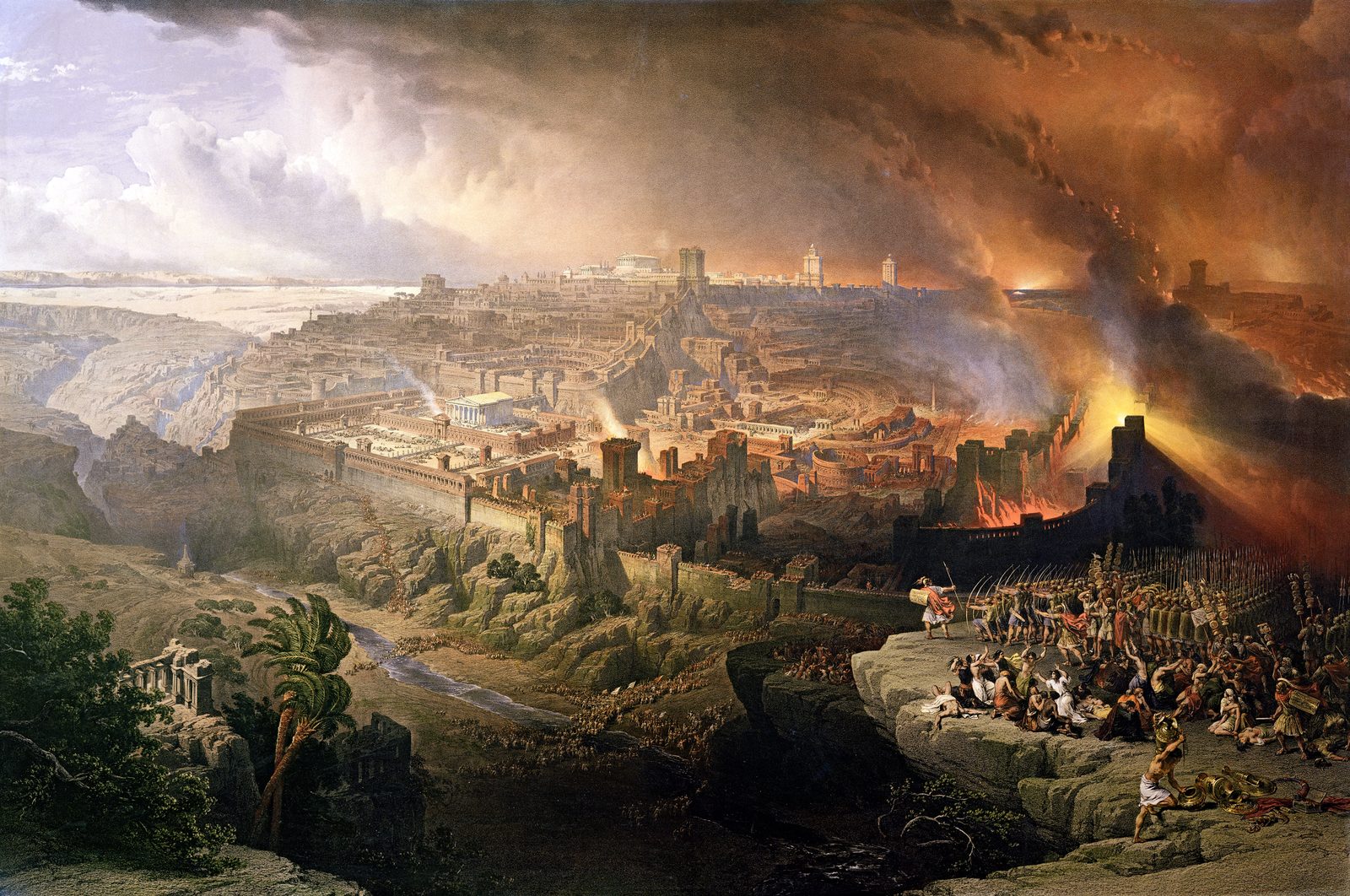
in Psalms 83As fire consumes a forest, as a flame sets the mountains ablaze,
BSB
The same verse in ASV and KJV ▾
ASV
As the fire that burneth the forest, And as the flame that setteth the mountains on fire,
KJV
As the fire burneth a wood, and as the flame setteth the mountains on fire;
⋯
This verse in Psalms 83
Commentary
12 notes on this verseAs fire that burns up a forest. He did not say "fruitful trees," but "forest," which has no fruit. If anyone, then, is stubble, and has no wheat; if anyone is a forest, and has no fruit — let this perish. As a flame burning up the mountains: let the pride in them perish.
This site's exposition
Make them like tumbleweed
on Psalms 83:13-16
The word behind tumbleweed is galgal, a wheel, used of dust whirled along by a wind. Fire in a forest and flame on the mountains give the picture of the pursuit asked for. The shame is asked for so that they seek His name.
This site's exposition
As fire consumes a forest
The fire picks up the chaff of verse 13. Matthew Henry noted that chaff blown by the wind may settle under a hedge, so the psalm asks that it be burned. Adam Clarke linked the burning mountains to threshing floors on the hills, where chaff was set alight after winnowing.
The record, by era
The Church Fathers2 voices
This levity, by which consent is easily given to what is evil, is followed by severe torment; therefore he proceeds:— "Like as the fire that burns up the wood, and as the flame that consumes the mountains" [Psalm 83:14]: "so shall You persecute them with Your tempest, and in Your anger shall disturb them" [Psalm 83:15]. Wood, he says, for its barrenness, mountains for their loftiness; for such are the enemies of God's people, barren of righteousness, full of pride. When he says, "fire" and "flame," he means to repeat under another term, the idea of God judging and punishing. But in saying, "with Your tempest," he means, as he goes on to explain, "Your anger:" and the former expression, "You shall persecute," answers to, "You shall disturb." We must take care, however, to understand, that the anger of God is free from any turbulent emotion; for His anger is an expression for His just method of taking vengeance: as the law might be said to be angry when its ministers are moved to punish by its sanction.
My God, set them like a wheel. Let them not be stable, but forever uncertain: that they may have no seat, and be forever rolled about unstably. For just as a wheel is not of itself stable, so also the heretics do not stand firm in their opinion, but forever change their doctrines. Like stubble before the face of the wind. Eleven punishments he asks against them, because they have denied the mysteries of the eleven apostles. But let the prudent reader say: How will you divide one verse into two? And you do violence to the Scripture: you say eleven apostles, when we know that the Lord and Savior had twelve disciples. For this reason, then, we set down the number eleven, because Judas the traitor, who had been the twelfth, departed from the number. My God, set them like a wheel. You have one plague: count therefore more carefully the rest that follow. Like stubble before the face of the wind: behold the second. Like fire which burns a forest: behold the third. Like a flame burning the mountains: the fourth. So will you pursue them in your tempest: the fifth. And in your anger you will confound them: the sixth. Fill their faces with shame: the seventh. And let them seek your name, O Lord: the eighth. Let them be ashamed and troubled forever and ever: the ninth. And let them be confounded and perish: the tenth. And let them know that your name is Lord: the eleventh. You alone are the Most High over all the earth. Thus far it is wrath: what follows is now mercy. And in your anger you will trouble them. He did not say, kill, but, trouble them, that they may return to you: behold the sixth. Fill their faces with shame: not with punishment, lest, shut out by death, they be unable to return to the Lord. Fill their faces with shame, not with punishment. Why then do you not kill them? The divine word explains: That they may seek your name, O Lord. […]
The Puritans and the Awakening3 voices
When the stubble is driven by the wind it will rest, at last, under some hedge, in some ditch or other; but he prays that they might not only be driven away as stubble, but burnt up as stubble.
This, in the singing of it, we may apply to the enemies of the gospel-church, all anti-christian powers and factions, representing to God their confederacies against Christ and his kingdom, and rejoicing in the hope that all their projects will be baffled and the gates of hell shall not prevail against the church.
As the fire burneth the wood,....
4 more voices on this verse
The Nineteenth Century4 voices
As the fire burneth a wood. Long years have strewn the ground with deep deposits of leaves; these being dried in the sun are very apt to take fire, and when they do so the burning in terrific. The underwood and the ferns blaze, the bushes crackle, the great trees kindle and to their very tops are wrapped in fire, while the ground is all red as a furnace. In this way, O Lord, mete out destruction to thy foes, and bring all of them to an end. The flame setteth the mountains on fire. Up the hill sides the hanging woods glow like a great sacrifice, and the forests on the mountain's crown smoke towards heaven. Even thus, O Lord, do thou conspicuously and terribly overthrow the enemies of thine Israel.
As the fire burneth a wood. Long years have strewn the ground with deep deposits of leaves; these being dried in the sun are very apt to take fire, and when they do so the burning in terrific. The underwood and the ferns blaze, the bushes crackle, the great trees kindle and to their very tops are wrapped in fire, while the ground is all red as a furnace. In this way, O Lord, mete out destruction to thy foes, and bring all of them to an end. The flame setteth the mountains on fire.
The flame setteth the mountains on fire - This may refer to the burning of the straw and chaff, after the grain was threshed and winnowed. And as their threshing-floors were situated often on the hills or mountains, to take the advantage of the wind, the setting the mountains on fire may refer to the burning of the chaff, etc., in those places. Let them be like stubble driven away by the wind, and burnt by the fire.
A commentator
Albert Barnes1798–1870
Notes, Explanatory and Practical, on the Old and New Testaments (1832-1869)
proposed
As the fire burneth a wood ... - The same idea is here presented under another form. No image of desolation is more fearful than that of fire raging in a forest; or of fire on the mountains. As trees and shrubs and grass fall before such a flame, so the prayer is, that they who had combined against the people of God might be swept away by his just displeasure.
How the passage was read
What the Jewish commentators add
My God, make them like thistles, like stubble which are driven away by the wind. Now what is גלגל? It is the tips of the thorns of the field, which are called chardons in French, thistles.
1 more on this passage, in their own words ▾
Who said These nations mentioned above: Edom, Ishmael, and all their allies.
This section is reception history: how the passage was read and kept in the Jewish tradition. Where a reading parts from an essential of the Christian faith, the section says so at that point.
Texts and citation data: Sefaria; each excerpt follows its version’s licence. 5 further sources are cited on this chapter that carry no English text this site may quote or only restate the verse.
The words behind it
6 Hebrew wordsEvery Hebrew word of this verse in the order it stands, with what it means and the door to its own study. The last column counts the times a word stands in the whole Bible: the rarer the word, the more the places it appears belong together.
| Hebrew | Sound | Meaning | Word study | In the Bible |
|---|---|---|---|---|
| כְּאֵ֥שׁ | keesh | like a fire | H784 → | 378 times |
| תִּבְעַר־ | tivar- | [which] it burns | H1197 → | 94 times |
| יָ֑עַר | yaar | a forest | H3293 → | 59 times |
| וּ֝כְלֶהָבָ֗ה | ukhelehavah | and like a flame | H3852 → | 19 times |
| תְּלַהֵ֥ט | telahet | [which] it sets ablaze | H3857 → | 11 times |
| הָרִֽים׃ | harim | mountains | H2022 → | 546 times |
כְּאֵ֥שׁlike a fire
keeshH784 →378 times
תִּבְעַר־[which] it burns
tivar-H1197 →94 times
יָ֑עַרa forest
yaarH3293 →59 times
וּ֝כְלֶהָבָ֗הand like a flame
ukhelehavahH3852 →19 times
תְּלַהֵ֥ט[which] it sets ablaze
telahetH3857 →11 times
הָרִֽים׃mountains
harimH2022 →546 times
A shaded row is a word that stands 400 times or fewer in the Bible.
The walk
8 stopsEach card is a verse this one points to, and under it the verses that one points to in turn. Where several paths arrive at the same place, that place is listed first: the text keeps returning to it.
Through
Malachi 4:1“For behold, the day is coming, burning like a furnace, when all the arrogant and every evildoer will be stubble; the day is coming when I will set them ablaze,” says the LORD of…
it leads to
- Isaiah 5:24
Therefore, as a tongue of fire consumes the straw, and as dry grass shrivels in the flame, so their roots will decay and their blossoms will blow away like dust; for they have rejected…
Reached by 3 separate paths from here.
- Malachi 3:2
But who can endure the day of His coming? And who can stand when He appears? For He will be like a refiner’s fire, like a launderer’s soap.
Reached by 2 separate paths from here.
- 2 Thessalonians 1:8
in blazing fire, inflicting vengeance on those who do not know God and do not obey the gospel of our Lord Jesus.
- 2 Peter 3:7
And by that same word, the present heavens and earth are reserved for fire, being kept for the day of judgment and destruction of ungodly men.
- Isaiah 47:14
Surely they are like stubble; the fire will burn them up. They cannot deliver themselves from the power of the flame. There will be no coals to warm them or fire to sit beside.
- Isaiah 5:24
Through
Nahum 1:10For they will be entangled as with thorns and consumed like the drink of a drunkard—like stubble that is fully dry.
it leads to
- Malachi 4:1
“For behold, the day is coming, burning like a furnace, when all the arrogant and every evildoer will be stubble; the day is coming when I will set them ablaze,” says the LORD of…
Reached by 2 separate paths from here.
- Micah 7:4
The best of them is like a brier; the most upright is sharper than a hedge of thorns. The day for your watchmen has come, the day of your visitation. Now is the time…
- Malachi 4:1
Through
Nahum 1:6Who can withstand His indignation? Who can endure His burning anger? His wrath is poured out like fire; even rocks are shattered before Him.
it leads to
- Jeremiah 10:10
But the LORD is the true God; He is the living God and eternal King. The earth quakes at His wrath, and the nations cannot endure His indignation.
- Jeremiah 10:10
About Psalms
This page draws on 10 works. Open the list of works
This page draws on Adam Clarke, Commentary on the Bible; Albert Barnes, Notes on the Book of Psalms; Albert Barnes, Notes, Explanatory and Practical, on the Old and New Testaments (1832-1869); Augustine of Hippo, Exposition on Psalm 83; Charles Spurgeon, The Treasury of David; Charles Spurgeon, The Treasury of David, Vol. 4; Jerome, Homily 15, on Psalm 82; Jerome, Homily 62, on Psalm 82 (Alternate Series); John Gill, Exposition of the Old Testament (1748-1763) and Matthew Henry, Commentary on the Whole Bible.