
Psalms 61:2
in Psalms 61From the ends of the earth I call out to You whenever my heart is faint. Lead me to the rock that is higher than I.
BSB
The same verse in ASV and KJV ▾
ASV
From the end of the earth will I call unto thee, when my heart is overwhelmed: Lead me to the rock that is higher than I.
KJV
From the end of the earth will I cry unto thee, when my heart is overwhelmed: lead me to the rock that is higher than I.
⋯
This verse in Psalms 61
Commentary
4 notes on this verseFrom the end of the earth will I cry unto thee. He was banished from the spot which was the centre of his delight, and at the same time his mind was in a depressed and melancholy condition; both actually and figuratively he was an outcast, yet he does not therefore restrain prayer, but rather finds therein a reason for the louder and more importunate cries.
This site's exposition
Hear my cry, O God
on Psalms 61:1-2
Barnes reads the ends of the earth as the far edge of the land, where David is cut off from the place of worship. From there he calls whenever his heart is faint, and asks to be led up to the rock that is higher. Spurgeon reads that rock as above the man's own reach.
The record, by era
The Puritans and the Awakening1 voice
The particular petition he put up to God when his heart was overwhelmed and he was ready to sink: Lead me to the rock that is higher than I; that is, 1. "To the rock which is too high for me to get up to unless thou help me to it. Lord, give me such an assurance and satisfaction of my own safety as I can never attain to but by thy special grace working such a faith in me." 2.
The Nineteenth Century1 voice
A commentator
Charles Spurgeon1834–1892
The Metropolitan Tabernacle Pulpit, Sermon No. 2728: “The High Rock” (lightly modernized text, CCEL edition) · Written before 1892.
IT is supposed by many that David wrote this Psalm at the time when he fled from his son Absalom. That trial was one of the most grievous of all the afflictions of David's greatly-checkered life. It was but a little thing for him to be hunted by Saul like a partridge upon the mountains. It was a small matter for him to have to take refuge with Achish, and to sojourn among the Philistines, an alien from his mother's children. No, all the afflictions of his preceding life were but light trials compared with the revolt of Absalom.
How the passage was read
What the Jewish commentators add
On the verses either side of this one
From the end of the earth although I am far from my men whom I send against my enemies in battle.
This section is reception history: how the passage was read and kept in the Jewish tradition. Where a reading parts from an essential of the Christian faith, the section says so at that point.
Texts and citation data: Sefaria; each excerpt follows its version’s licence. 4 further sources are cited on this chapter that carry no English text this site may quote or only restate the verse.
The words behind it
10 Hebrew wordsEvery Hebrew word of this verse in the order it stands, with what it means and the door to its own study. The last column counts the times a word stands in the whole Bible: the rarer the word, the more the places it appears belong together.
| Hebrew | Sound | Meaning | Word study | In the Bible |
|---|---|---|---|---|
| מִקְצֵ֤ה | miktzeh | from [the] end of | H7097 → | 97 times |
| הָאָ֨רֶץ׀ | haaretz | the earth | H776 → | 2504 times |
| אֵלֶ֣יךָ | ʾeleikha | to you | H413 → | 5510 times |
| אֶ֭קְרָא | ʾekra' | I call | H7121 → | 733 times |
| בַּעֲטֹ֣ף | baatof | when grows faint | H5848 → | 15 times |
| לִבִּ֑י | libi | heart my | H3820 → | 595 times |
| בְּצוּר־ | betzur- | on a rock | H6697 → | 78 times |
| יָר֖וּם | yarum | [which] it is high | H7311 → | 190 times |
| מִמֶּ֣נִּי | mimeni | more than me | H4480 → | 1188 times |
| תַנְחֵֽנִי׃ | tancheni | you will lead me | H5148 → | 39 times |
מִקְצֵ֤הfrom [the] end of
miktzehH7097 →97 times
הָאָ֨רֶץ׀the earth
haaretzH776 →2504 times
אֵלֶ֣יךָto you
ʾeleikhaH413 →5510 times
אֶ֭קְרָאI call
ʾekra'H7121 →733 times
בַּעֲטֹ֣ףwhen grows faint
baatofH5848 →15 times
לִבִּ֑יheart my
libiH3820 →595 times
בְּצוּר־on a rock
betzur-H6697 →78 times
יָר֖וּם[which] it is high
yarumH7311 →190 times
מִמֶּ֣נִּיmore than me
mimeniH4480 →1188 times
תַנְחֵֽנִי׃you will lead me
tancheniH5148 →39 times
A shaded row is a word that stands 400 times or fewer in the Bible.
The walk
8 stopsEach card is a verse this one points to, and under it the verses that one points to in turn. Where several paths arrive at the same place, that place is listed first: the text keeps returning to it.
Through
Psalms 18:2The LORD is my rock, my fortress, and my deliverer. My God is my rock, in whom I take refuge, my shield, and the horn of my salvation, my stronghold.
it leads to
- Psalms 144:2
He is my steadfast love and my fortress, my stronghold and my deliverer. He is my shield, in whom I take refuge, who subdues peoples under me.
- Psalms 62:7
My salvation and my honor rest on God, my strong rock; my refuge is in God.
- Proverbs 18:10
The name of the LORD is a strong tower; the righteous run to it and are safe.
- Psalms 19:14
May the words of my mouth and the meditation of my heart be pleasing in Your sight, O LORD, my Rock and my Redeemer.
- Psalms 144:2
Through
Deuteronomy 4:29But if from there you will seek the LORD your God, you will find Him if you seek Him with all your heart and with all your soul.
it leads to
- Psalms 119:2
Blessed are those who keep His testimonies and seek Him with all their heart.
- Jeremiah 29:12–14
Then you will call upon Me and come and pray to Me, and I will listen to you.
- 2 Chronicles 15:4
But in their distress they turned to the LORD, the God of Israel, and sought Him, and He was found by them.
- Isaiah 55:6–7
Seek the LORD while He may be found; call on Him while He is near.
- Psalms 119:2
About Psalms
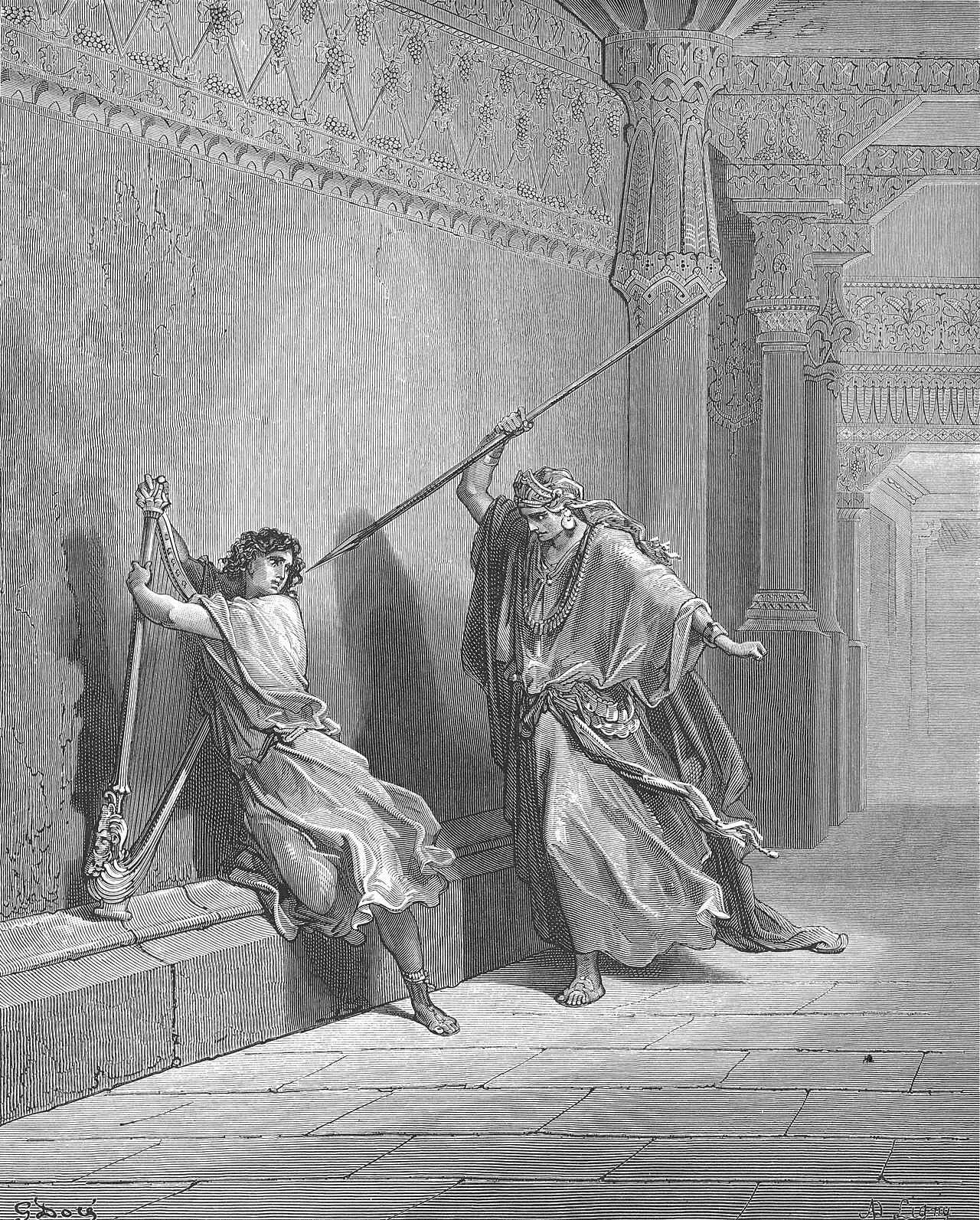
This page draws on Albert Barnes, Notes on the Book of Psalms; Charles Spurgeon, The Treasury of David, Vol. 3; Charles Spurgeon, The Treasury of David; Charles Spurgeon, The Metropolitan Tabernacle Pulpit, Sermon No. 2728: “The High Rock” (lightly modernized text, CCEL edition) and Matthew Henry, Commentary on the Whole Bible.