
Psalms 148:10
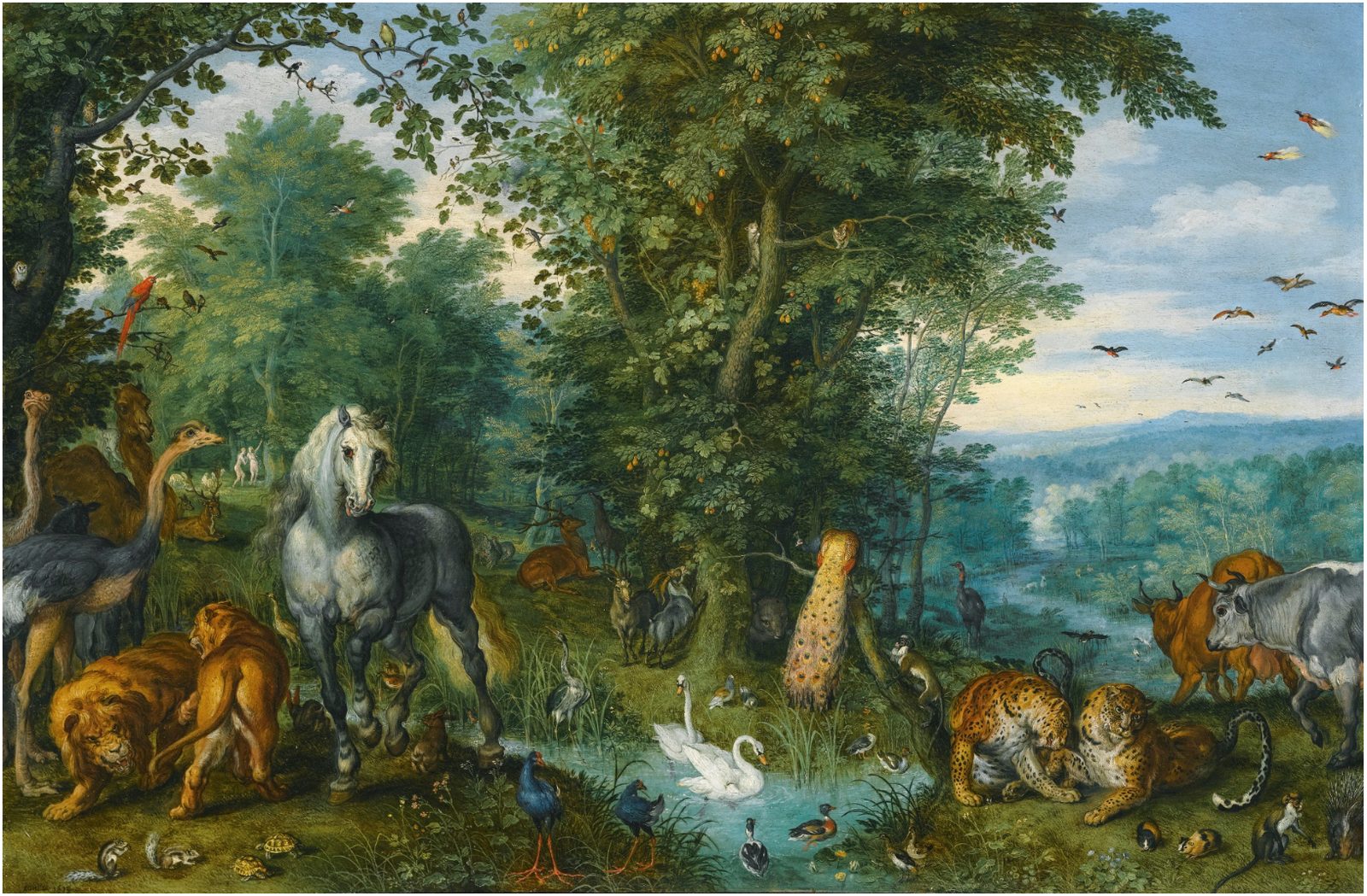
in Psalms 148wild animals and all cattle, crawling creatures and flying birds,
BSB
The same verse in ASV and KJV ▾
ASV
Beasts and all cattle; Creeping things and flying birds;
KJV
Beasts, and all cattle; creeping things, and flying fowl:
⋯
This verse in Psalms 148
Commentary
10 notes on this verseBeasts, and all cattle. Animals fierce or tame; wild beasts and domestic cattle; let all these show forth the praises of Jehovah. Those are worse than beasts who do not praise our God. More than brutish are those who are wilfully dumb concerning their Maker. Creeping things, and flying fowl. The multitudes that throng the earth and the air; insects of every form and birds of every wing are called upon to join the universal worship. No one can become familiar with insect and bird life without feeling that they constitute a wonderful chapter in the history of divine wisdom.
This site's exposition
Praise the LORD from the earth
on Psalms 148:7-10
Fifteen kinds are named in these four verses. The list starts at the bottom of the sea with the great sea creatures and the ocean depths, then climbs through lightning, hail, snow, clouds and wind to the mountains, the hills, the fruit trees and the cedars. Wild animals, cattle, crawling creatures and flying birds close it, and the wind alone carries a task, fulfilling His word.
The record, by era
The Church Fathers1 voice
Praise the Lord from the earth. Since the angels have praised, the heaven has praised: let the earth also praise. Let us see which things of the earth praise first. Dragons and all deeps: fire, hail, snow, ice, the spirit of storms, which do his word: mountains and all hills, fruit-bearing trees, and all cedars: beasts, and all cattle, serpents and feathered fowl. After such great things, what is said? After the dragons, after the serpents, after the fire, after the hail, after the beasts and all the cattle?
The Puritans and the Awakening3 voices
Beasts, and all cattle,....
When we see all so very strange, and all so very good, surely we cannot but acknowledge God with wonder and thankfulness. Much more those creatures that are dignified with the powers of reason ought to employ them in praising God: Kings of the earth and all people,
If we look up into the atmosphere we meet with a great variety of meteors, which, being a king of new productions (and some of them unaccountable), do in a special manner magnify the power of the great Creator. There are fiery meteors; lightning is fire, and there are other blazes sometimes kindled which may be so called.
The Nineteenth Century1 voice
A commentator
Jamieson, Fausset & Brown1802–1910
Commentary Critical and Explanatory on the Whole Bible (1871)
The call on the earth, as opposed to heaven, includes seas or depths, whose inhabitants the dragon, as one of the largest (on leviathan, see on Ps 104:26), is selected to represent. The most destructive and ungovernable agents of inanimate nature are introduced.
3 more voices on this verse
The Nineteenth Century3 voices
Beasts, and all cattle. Animals fierce or tame; wild beasts and domestic cattle; let all these show forth the praises of Jehovah. Those are worse than beasts who do not praise our God. More than brutish are those who are wilfully dumb concerning their Maker. Creeping things, and flying fowl. The multitudes that throng the earth and the air; insects of every form and birds of every wing are called upon to join the universal worship. No one can become familiar with insect and bird life without feeling that they constitute a wonderful chapter in the history of divine wisdom. The minute insect marvellously proclaims the Lord's handiwork: when placed under the microscope it tells a wondrous tale. So, too, the bird which soars aloft displays in its adaptation for an aerial life an amount of skill which our balloonists have in vain attempted to emulate. True devotion not only hears the praises of God in the sweet song of feathered minstrels, but even discovers it in the croaking from the marsh, or in the buzz of "the blue fly which singeth in the window pane." More base than reptiles, more insignificant than insects, are songless men.
Beasts - החיה hachaiyah, wild beasts of every kind. All cattle - בהמה behemah, all domestic animals; those used for the service of the house, and those for agricultural purposes. Creeping things - All the class of reptiles, from the boa constrictor, that can combat, kill, and swallow whole the royal tiger, to the cobra de manille, a poisonous reptile as small as a fine needle; with those still smaller animals that are found in water, and require the power of the microscope to bring them to view. In the production, preservation, habits, and properties of all these, there is a profusion of wisdom and economy that would require ages to exhibit. Flying fowl - The structure of fowls is astonishing; and the exact mathematical manner in which flying fowls swim the air, and steer their course wheresoever they will; the feathers, and their construction, with the muscles which give them motion; strike the observer of nature with astonishment and delight.
A commentator
Albert Barnes1798–1870
Notes, Explanatory and Practical, on the Old and New Testaments (1832-1869)
proposed
Beasts, and all cattle - Wild beasts and tame; those which roam the forest, and those which have been domesticated for the service of man. As fruitful trees and cedars might include all the trees, so the “beasts and cattle” here might include the whole of those that were wild and tamed. Creeping things, and flying fowl - Margin, as in Hebrew, Birds of wing. These are grouped together for a reason similar to that for which fruitful trees and cedars, and beasts and cattle, are grouped together, to embrace the whole. The expression embraces the loftiest and lowest; those which ascend farthest above the earth, and those which creep upon its surface. The word rendered creeping things would properly embrace the smaller animals which creep along upon the ground; both those which have four feet or more, as mice, lizards, crabs, etc., and those without feet, which glide or drag themselves upon the ground, as worms and serpents. (Gesenius, Lexicon) These, in their lowly condition, and in their humble way, are called on to unite in the general chorus of praise. Accomplishing the purpose for which they are made, they will, with the most lofty of created beings, contribute to proclaim the wisdom, the power, and the goodness of God.
The words behind it
6 Hebrew wordsEvery Hebrew word of this verse in the order it stands, with what it means and the door to its own study. The last column counts the times a word stands in the whole Bible: the rarer the word, the more the places it appears belong together.
| Hebrew | Sound | Meaning | Word study | In the Bible |
|---|---|---|---|---|
| הַֽחַיָּ֥ה | hachaiyah | O animal[s] | H2416 → | 498 times |
| וְכָל־ | vekhol | and all | H3605 → | 5413 times |
| בְּהֵמָ֑ה | behemah | livestock | H929 → | 190 times |
| רֶ֝֗מֶשׂ | remes | creeping thing[s] | H7431 → | |
| וְצִפּ֥וֹר | vetzipor | and bird[s] of | H6833 → | 40 times |
| כָּנָֽף׃ | kanaf | wing | H3671 → | 109 times |
הַֽחַיָּ֥הO animal[s]
hachaiyahH2416 →498 times
וְכָל־and all
vekholH3605 →5413 times
בְּהֵמָ֑הlivestock
behemahH929 →190 times
רֶ֝֗מֶשׂcreeping thing[s]
remesH7431 →
וְצִפּ֥וֹרand bird[s] of
vetziporH6833 →40 times
כָּנָֽף׃wing
kanafH3671 →109 times
A shaded row is a word that stands 400 times or fewer in the Bible.
The walk
8 stopsEach card is a verse this one points to, and under it the verses that one points to in turn. Where several paths arrive at the same place, that place is listed first: the text keeps returning to it.
Through
Psalms 150:6Let everything that has breath praise the LORD! Hallelujah!
it leads to
- Psalms 145:10
All You have made will give You thanks, O LORD, and Your saints will bless You.
Reached by 2 separate paths from here.
- Psalms 145:21
My mouth will declare the praise of the LORD; let every creature bless His holy name forever and ever.
- Revelation 5:13
And I heard every creature in heaven and on earth and under the earth and in the sea, and all that is in them, saying: “To Him who sits on the throne and to…
- Psalms 103:22
Bless the LORD, all His works in all places of His dominion. Bless the LORD, O my soul!
- Psalms 148:7–11
Praise the LORD from the earth, all great sea creatures and ocean depths,
- Psalms 145:10
Through
Psalms 103:22Bless the LORD, all His works in all places of His dominion. Bless the LORD, O my soul!
it leads to
- Isaiah 49:13
Shout for joy, O heavens; rejoice, O earth; break forth in song, O mountains! For the LORD has comforted His people, and He will have compassion on His afflicted ones.
- Isaiah 42:10–12
Sing to the LORD a new song—His praise from the ends of the earth—you who go down to the sea, and all that is in it, you islands, and all who dwell in them.
- Isaiah 49:13
Through
Ezekiel 17:23I will plant it on the mountain heights of Israel so that it will bear branches; it will yield fruit and become a majestic cedar. Birds of every kind will nest under it, taking…
it leads to
- Matthew 13:32
Although it is the smallest of all seeds, yet it grows into the largest of garden plants and becomes a tree, so that the birds of the air come and nest in its branches.”
- Matthew 13:32
Where this verse is studied
On this page
Studies1
About Psalms
This page draws on Adam Clarke, Commentary on the Bible; Albert Barnes, Notes, Explanatory and Practical, on the Old and New Testaments (1832-1869); Charles Spurgeon, The Treasury of David, Vol. 7; Jamieson, Fausset & Brown, Commentary Critical and Explanatory on the Whole Bible; Jerome, Homily 58, on Psalm 148; John Gill, Exposition of the Old Testament; John Gill, Exposition of the Old Testament (1748-1763) and Matthew Henry, Commentary on the Whole Bible.