
Psalms 120:5
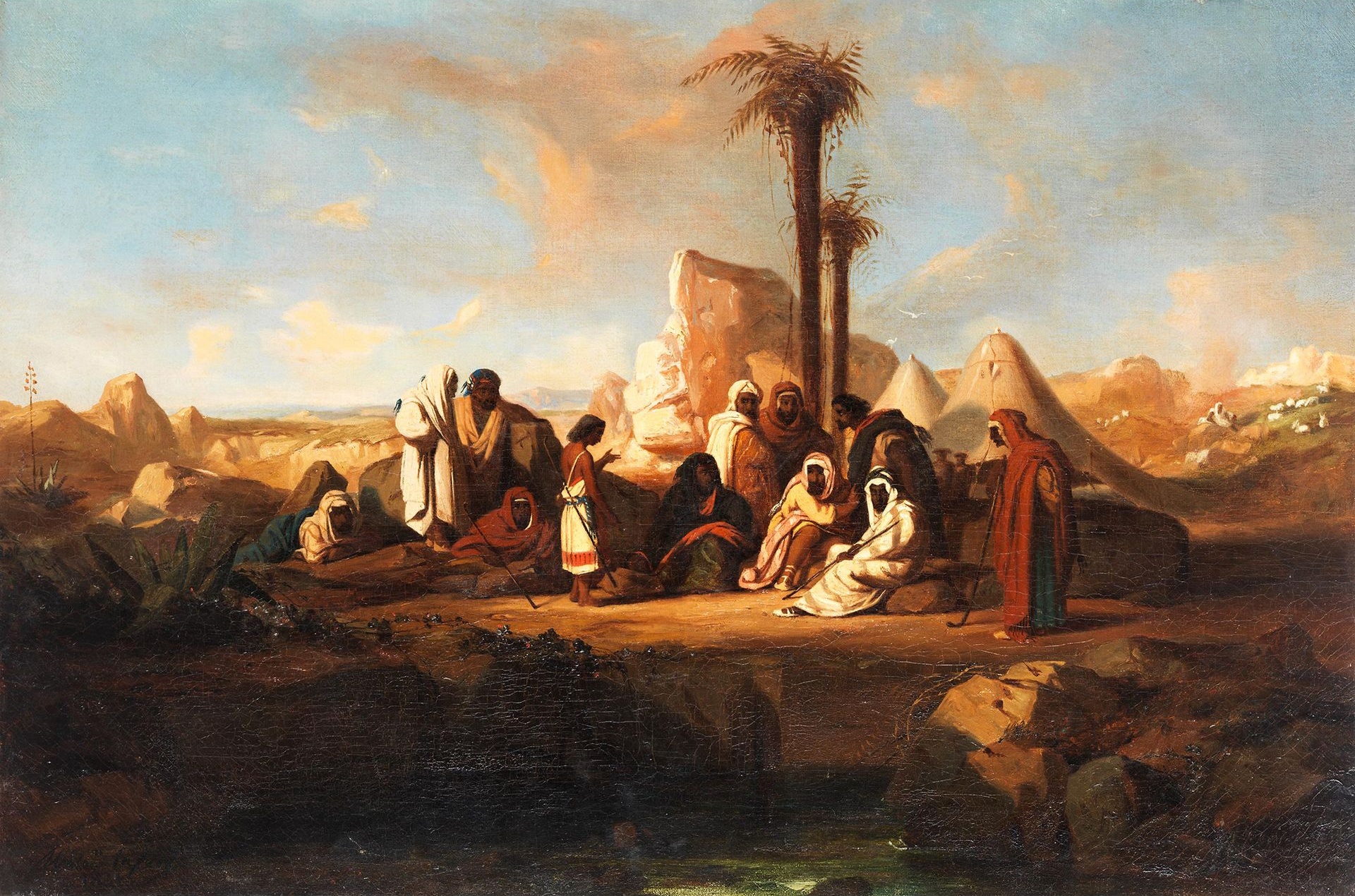
in Psalms 120Woe to me that I dwell in Meshech, that I live among the tents of Kedar!
BSB
The same verse in ASV and KJV ▾
ASV
Woe is me, that I sojourn in Meshech, That I dwell among the tents of Kedar!
KJV
Woe is me, that I sojourn in Mesech, that I dwell in the tents of Kedar!
⋯
This verse in Psalms 120
Commentary
13 notes on this verseWoe is me, that I sojourn in Mesech,.... Meshech was a son of Japheth, Gen 10:2; whose posterity are thought by some to be the Muscovites (z) and Scythians, a barbarous sort of people: Mesech is frequently mentioned with Tubal and his brother, and with Gog and Magog, Eze 38:2; the Targum here calls them Asiatics.
This site's exposition
Woe to me that I dwell in Meshech
on Psalms 120:5-7
The first verb is garti, the word for living somewhere as a stranger, and the second is dwelling among the tents of Kedar. The complaint is length: too long among people who hate peace. He speaks for peace and they answer with war.
The record, by era
The Church Fathers3 voices
But why should that be hard to bear which we must one day ourselves endure? And why do we grieve for the dead? We are not born to live forever. Abraham, Moses and Isaiah, Peter, James and John, Paul, the "chosen vessel," and even the Son of God have all died; and are we vexed when a soul leaves its earthly tenement? Perhaps he is taken away, "lest wickedness should alter his understanding … for his soul pleased the Lord; therefore he hastened to take him away from the people"—lest in life's long journey he should lose his way in some trackless maze. We should indeed mourn for the dead, but only for one whom Gehenna receives, whom Tartarus devours and for whose punishment the eternal fire burns. But we who, in departing, are accompanied by an escort of angels and met by Christ, should rather grieve that we have to tarry yet longer in this tabernacle of death. For "while we are at home in the body, we are absent from the Lord." Our one longing should be that expressed by the psalmist: "Woe is me that my pilgrimage is prolonged, that I have dwelled with them who dwell in Kedar, that my soul has made a far pilgrimage." Kedar means darkness, and darkness stands for this present world (for, we are told, "the light shines in darkness; and the darkness comprehends it not"). Therefore we should congratulate our dear Blaesilla, that she has passed from darkness to light, and has in the first flush of her dawning faith received the crown of her completed work. Had she been cut off (as I pray that none may be) while her thoughts were full of worldly desires and passing pleasures, then mourning would indeed have been her due, and no tears shed for her would have been too many. As it is, by the mercy of Christ she, four months ago, renewed her baptism in her vow of widowhood, and for the rest of her days spurned the world and thought only of the religious life.
"Alas, that my sojourning has become far off!" [Psalm 120:5]. It has departed far from You: my pilgrimage has become a far one. I have not yet reached that country, where I shall live with no wicked person; I have not yet reached that company of Angels, where I shall not fear offenses. But why am I not as yet there? Because sojourning is pilgrimage. He is called a sojourner who dwells in a foreign land, not in his own country. And when is it far off? Sometimes, my brethren, when a man goes abroad, he lives among better persons, than he would perhaps live with in his own country: but it is not thus, when we go afar from that heavenly Jerusalem. For a man changes his country, and this foreign sojourn is sometimes good for him; in travelling he finds faithful friends, whom he could not find in his own country. He had enemies, so that he was driven from his country; and when he travelled, he found what he had not in his country. Such is not that country Jerusalem, where all are good: whoever travels away from thence, is among the evil; nor can he depart from the wicked, save when he shall return to the company of Angels, so as to be where he was before he travelled. There all are righteous and holy, who enjoy the word of God without reading, without letters: for what is written to us through pages, they perceive there through the Face of God. What a country! A great country indeed, and wretched are the wanderers from that country.
Woe is me, that my sojourning is prolonged. This the holy man says, who does not desire the body, who does not seek the earth, who longs for heaven. Woe is me, that my sojourning is prolonged. When we are sick, when we are feverish, when we suspect we are dying, when we throw about our arms, when we are afraid, when we beg for a respite, we cannot say this little verse. This man was healthy, he was not sick, and what does he say? Woe is me, that my sojourning is prolonged.
The Puritans and the Awakening1 voice
Mesech - Mesech and Kedar are two sorts of people often mentioned in scripture, and reckoned amongst the barbarous nations. But their names are here to be understood metaphorically.
The Nineteenth Century1 voice
A commentator
Charles Spurgeon1834–1892
The Metropolitan Tabernacle Pulpit, Sermon No. 2780: “The Sojourn in Mesech” (lightly modernized text, CCEL edition) · Written before 1892.
MESECH was the son of Japheth, from whom, according to history, were descended the men who inhabited that most barbarous of all regions, according to the opinion of the ancients, the northern parts of Muscovy or Moscow and Russia. The inhabitants of the tents of Kedar were the descendants of one of the sons of Abraham who had taken to nomadic habits and were continually wandering about over the deserts. They were thought to have and doubtless were, guilty of plundering travelers and were by no means the most respectable of mankind.
6 more voices on this verse
The Nineteenth Century6 voices
A commentator
Jamieson, Fausset & Brown1802–1910
Commentary Critical and Explanatory on the Whole Bible (1871)
A residence in these remote lands pictures his miserable condition. While those who surrounded him were maliciously hostile, he was disposed to peace. This Psalm may well begin such a series as this, as a contrast to the promised joys of God's worship.
Woe is me, that sojourn in Mesech, that I dwell in the tents of Kedar! Gracious men are vexed with the conversation of the wicked. Our poet felt himself to be as ill at ease among lying neighbours as if he had lived among savages and cannibals. The traitors around him were as bad as the unspeakable Turk. He cries "Woe is me!" Their sin appalled him, their enmity galled him. He had some hope from the fact that he was only a sojourner in Mesech; but as years rolled on the time dragged heavily, and he feared that he might call himself a dweller in Kedar. The wandering tribes to whom he refers were constantly at war with one another; it was their habit to travel armed to the teeth; they were a kind of plundering gypsies, with their hand against every man and every man's hand against them; and to these he compared the false hearted ones who had assailed his character. Those who defame the righteous are worse than cannibals; for savages only eat men after they are dead, but these wretches cat them up alive.
Woe is me, that sojourn in Mesech, that I dwell in the tents of Kedar! Gracious men are vexed with the conversation of the wicked. Our poet felt himself to be as ill at ease among lying neighbours as if he had lived among savages and cannibals. The traitors around him were as bad as the unspeakable Turk. He cries "Woe is me!" Their sin appalled him, their enmity galled him.
A commentator
Charles Spurgeon1834–1892
The Metropolitan Tabernacle Pulpit, Sermon No. 2780: “The Sojourn in Mesech” (lightly modernized text, CCEL edition) · Written before 1892.
proposed
MESECH was the son of Japheth, from whom, according to history, were descended the men who inhabited that most barbarous of all regions, according to the opinion of the ancients, the northern parts of Muscovy or Moscow and Russia. The inhabitants of the tents of Kedar were the descendants of one of the sons of Abraham who had taken to nomadic habits and were continually wandering about over the deserts. They were thought to have and doubtless were, guilty of plundering travelers and were by no means the most respectable of mankind. We are to understand, then, by this verse, that the people among whom the Psalmist dwelt were, in his esteem, among the most barbarous, the most fierce and the most graceless of men. And, therefore, it is that he cries, "Woe is me, that I sojourn in Mesech, that I dwell in the tents of Kedar!" He felt a woe in his heart because of that evil companionship in which he was compelled to abide. This has been the cry of the children of God in all ages. Lot had his ears vexed with the filthy conversation of the men of Sodom. Many of the woes of Micah sprang from those men who were sharper than a thorn hedge—every one of them ready to tear and scratch his neighbor. David's deepest griefs came from the men who surrounded him—on the one hand, the unfriendly sons of Zeruiah, who were too strong for him and, on the other hand, Shimei and the sons of Belial, who made a reproach of every word he uttered and every deed he did.
That I sojourn in Mesech - The Chaldee has it, “Wo is me that I am a stranger with the Asiatics, (אוסאי useey), and that I dwell in the tents of the Arabs.” Calmet, who understands the Psalm as speaking of the state of the captives in Babylon and its provinces, says, “Meshec was apparently the father of the Mosquians, who dwelt in the mountains that separate Iberia from Armenia, and both from Colchis. These provinces were subjugated by Nebuchadnezzar; and it is evident from 2Ki 17:23, 2Ki 17:24; 2Ki 18:11; 2Ki 19:12, 2Ki 19:13, that many of the Jews were held in captivity in those countries. As to Kedar, it extended into Arabia Petraea, and towards the Euphrates; and is the country afterwards known as the country of the Saracens.”
A commentator
Albert Barnes1798–1870
Notes, Explanatory and Practical, on the Old and New Testaments (1832-1869)
proposed
Woe is me - My lot is a sad and pitiable one, that I am compelled to live in this manner, and to be exposed thus to malignant reproaches. It is like living in Mesech or in Kedar. That I sojourn - The word used here does not denote a permanent abode, but it usually refers to a temporary lodging, as when one is a traveler, a pilgrim, a stranger, and is under a necessity of passing a night in a strange land on his way to the place of his destination. The trouble or discomfort here referred to is not that which would result from having his home there, or abiding there permanently, but of feeling that he was a stranger, and would be exposed to all the evils and inconveniences of a stranger among such a people. A man who resided in a place permanently might be subject to fewer inconveniences than if he were merely a temporary lodger among strangers. In Mesech - The Septuagint and Vulgate render this, “that my sojourning is protracted.” The Hebrew word - משׁך meshek - means, properly “drawing,” as of seed “scattered regularly along the furrows” Psa 126:6; and then possession, Job 28:18. The people of Meshech or the Moschi, were a barbarous race inhabiting the Moschian regions between Iberia, Armenia, and Colchis. Meshech was a son of Japheth, Gen 10:2; 1Ch 1:5. The name is connected commonly with “Tubal,” Eze 27:13: “Tubal and Meshech they were thy merchants.” Eze 39:1: “I am against ... the chief prince of Meshech and Tubal,” Herodotus (iii. 94; vii. 78) connects them with the Tibarenes. The idea here is, that they were a barbarous, savage, uncivilized people. They dwelt outside of Palestine, beyond what were regarded as the borders of civilization; and the word seems to have had a signification similar to the names Goths, Vandals, Turks, Tartars, Cossacks, in later times. […]
How the passage was read
What the Jewish commentators add
Woe is to me says the congregation of Israel, for I have already suffered in many exiles. Behold I sojourned in Meshech with the sons of Japheth in the kingdom of Persia, Greece, and Meshech.
1 more on this passage, in their own words ▾
Sharpened arrows of a mighty man Behold you kill in a distant place like an arrow.
This section is reception history: how the passage was read and kept in the Jewish tradition. Where a reading parts from an essential of the Christian faith, the section says so at that point.
Texts and citation data: Sefaria; each excerpt follows its version’s licence. 2 further sources are cited on this chapter that carry no English text this site may quote or only restate the verse.
The words behind it
9 Hebrew wordsEvery Hebrew word of this verse in the order it stands, with what it means and the door to its own study. The last column counts the times a word stands in the whole Bible: the rarer the word, the more the places it appears belong together.
| Hebrew | Sound | Meaning | Word study | In the Bible |
|---|---|---|---|---|
| אֽוֹיָה־ | ʾoyah- | woe! | H190 → | |
| לִ֭י | li | to me | ||
| כִּי־ | ki- | that | H3588 → | 4482 times |
| גַ֣רְתִּי | garti | I have sojourned | H1481 → | 97 times |
| מֶ֑שֶׁךְ | meshekh | Meshech | H4902 → | |
| שָׁ֝כַ֗נְתִּי | shakhanti | I have dwelt | H7931 → | 129 times |
| עִֽם־ | ʾim- | with | H5973 → | 1050 times |
| אָהֳלֵ֥י | ʾoholei | [the] tents of | H168 → | 345 times |
| קֵדָֽר׃ | kedar | Kedar | H6938 → |
אֽוֹיָה־woe!
ʾoyah-H190 →
לִ֭יto me
li
כִּי־that
ki-H3588 →4482 times
גַ֣רְתִּיI have sojourned
gartiH1481 →97 times
מֶ֑שֶׁךְMeshech
meshekhH4902 →
שָׁ֝כַ֗נְתִּיI have dwelt
shakhantiH7931 →129 times
עִֽם־with
ʾim-H5973 →1050 times
אָהֳלֵ֥י[the] tents of
ʾoholeiH168 →345 times
קֵדָֽר׃Kedar
kedarH6938 →
A shaded row is a word that stands 400 times or fewer in the Bible.
The walk
8 stopsEach card is a verse this one points to, and under it the verses that one points to in turn. Where several paths arrive at the same place, that place is listed first: the text keeps returning to it.
Through
Ezekiel 27:13Javan, Tubal, and Meshech were your merchants. They exchanged slaves and bronze utensils for your merchandise.
it leads to
- Isaiah 66:19
I will establish a sign among them, and I will send survivors from among them to the nations—to Tarshish, Put, and the archers of Lud; to Tubal, Javan, and the islands far away who…
Reached by 2 separate paths from here.
- Genesis 10:2
The sons of Japheth: Gomer, Magog, Madai, Javan, Tubal, Meshech, and Tiras.
- Isaiah 66:19
Through
Genesis 10:2The sons of Japheth: Gomer, Magog, Madai, Javan, Tubal, Meshech, and Tiras.
it leads to
- Ezekiel 38:2
“Son of man, set your face against Gog of the land of Magog, the chief prince of Meshech and Tubal. Prophesy against him
- Ezekiel 38:2
Through
Song of Solomon 1:5I am dark, yet lovely, O daughters of Jerusalem, like the tents of Kedar, like the curtains of Solomon.
it leads to
- Luke 15:22
But the father said to his servants, ‘Quick! Bring the best robe and put it on him. Put a ring on his finger and sandals on his feet.
- Song of Solomon 2:14
O my dove in the clefts of the rock, in the crevices of the cliff, let me see your face, let me hear your voice; for your voice is sweet, and your countenance is…
- Song of Solomon 5:16
His mouth is most sweet; he is altogether lovely. This is my beloved, and this is my friend, O daughters of Jerusalem.
- 2 Corinthians 5:21
God made Him who knew no sin to be sin on our behalf, so that in Him we might become the righteousness of God.
- Song of Solomon 5:8
O daughters of Jerusalem, I adjure you, if you find my beloved, tell him I am sick with love.
- Luke 15:22
Where this verse is studied
On this page
About Psalms
This page draws on 12 works. Open the list of works
This page draws on Adam Clarke, Commentary on the Bible; Albert Barnes, Notes, Explanatory and Practical, on the Old and New Testaments (1832-1869); Augustine of Hippo, Exposition on Psalm 120; Charles Spurgeon, The Metropolitan Tabernacle Pulpit, Sermon No. 2780: “The Sojourn in Mesech” (lightly modernized text, CCEL edition); Charles Spurgeon, The Treasury of David, Vol. 6; Franz Delitzsch, Biblical Commentary on the Psalms; Jamieson, Fausset & Brown, Commentary Critical and Explanatory on the Whole Bible; Jerome, LETTER 39.3; Jerome, Homily 41, on Psalm 119; John Gill, Exposition of the Old Testament (1748-1763); John Wesley, Explanatory Notes upon the Old Testament and Matthew Henry, Commentary on the Whole Bible.