
Ezekiel 2:9
in Ezekiel 2Then I looked and saw a hand reaching out to me, and in it was a scroll,
BSB
The same verse in ASV and KJV ▾
ASV
And when I looked, behold, a hand was put forth unto me; and, lo, a roll of a book was therein;
KJV
And when I looked, behold, an hand was sent unto me; and, lo, a roll of a book was therein;
⋯
This verse in Ezekiel 2
Commentary
4 notes on this verse(Verse 9.) In which was a wrapped book, and he unfolded it before me, and it was written inside and outside: and there were written in it lamentations, and a song, and woe. And he said to me: Son of man, whatever you find, eat. Concerning the wrapped book, the seventy chapters of the book were translated. In the hand of the Lord sitting on the throne, which was sent and extended. Concerning which it is also said in the Psalms: In the chapter of the book it is written about me (Psalm 39:8). Chapter, let us understand the beginning.
This site's exposition
open thy mouth, and eat
on Ezekiel 2:8-10
The prophet is warned against the very sin he is sent to condemn, told not to be rebellious like that rebellious house, before he is given the sign that will make obedience visible: a hand holding out a roll for him to eat. The scroll is written on both sides, an unusual detail commentators read as a message with no blank space left for anything but the appointed words, front and back given over to lamentations, mourning and woe. Henry observes that the book's contents are named before it is eaten, so the prophet knows exactly what bitter message he is about to take into himself in the chapter that follows.
The record, by era
The Puritans and the Awakening1 voice
Roll - Their books were not like ours, but written in parchment and in the length of it, and so one piece fastened to another, 'till the whole would contain what was to be written, and then it was wrapped or rolled about a round piece of wood, fashioned for that purpose.
The Nineteenth Century1 voice
A commentator
Albert Barnes1798–1870
Notes, Explanatory and Practical, on the Old and New Testaments (1832-1869)
Was sent - Rather, was put forth. A roll of a book - The book was one of the ancient kind written on skins rolled up together. Hence, our English volume Psa 40:7. The writing was usually on one side, but in this case it was written within and without, on both sides, the writing as it were running over, to express the abundance of the calamities in store for the devoted people. To eat the book signifies to be thoroughly possessed with its contents (compare Eze 3:10; Jer 15:16).
How the passage was read
What the Jewish commentators add
On the verses either side of this one
before and behind That which existed from the beginning and that which is destined to be in the end.
This section is reception history: how the passage was read and kept in the Jewish tradition. Where a reading parts from an essential of the Christian faith, the section says so at that point.
Texts and citation data: Sefaria; each excerpt follows its version’s licence. 4 further sources are cited on this chapter that carry no English text this site may quote or only restate the verse.
The words behind it
9 Hebrew wordsEvery Hebrew word of this verse in the order it stands, with what it means and the door to its own study. The last column counts the times a word stands in the whole Bible: the rarer the word, the more the places it appears belong together.
| Hebrew | Sound | Meaning | Word study | In the Bible |
|---|---|---|---|---|
| וָאֶרְאֶ֕ה | vaereh | and I saw | H7200 → | 1300 times |
| וְהִנֵּה־ | vehineh- | and there! | H2009 → | 843 times |
| יָ֖ד | yad | a hand | H3027 → | 1618 times |
| שְׁלוּחָ֣ה | sheluchah | [was] stretched out | H7971 → | 845 times |
| אֵלָ֑י | ʾelai | to me | H413 → | 5510 times |
| וְהִנֵּה־ | vehineh- | and there! | H2009 → | 843 times |
| ב֖וֹ | vo | [was] in it | ||
| מְגִלַּת־ | megilat- | a scroll of | H4039 → | 21 times |
| סֵֽפֶר׃ | sefer | a document | H5612 → |
וָאֶרְאֶ֕הand I saw
vaerehH7200 →1300 times
וְהִנֵּה־and there!
vehineh-H2009 →843 times
יָ֖דa hand
yadH3027 →1618 times
שְׁלוּחָ֣ה[was] stretched out
sheluchahH7971 →845 times
אֵלָ֑יto me
ʾelaiH413 →5510 times
וְהִנֵּה־and there!
vehineh-H2009 →843 times
ב֖וֹ[was] in it
vo
מְגִלַּת־a scroll of
megilat-H4039 →21 times
סֵֽפֶר׃a document
seferH5612 →
A shaded row is a word that stands 400 times or fewer in the Bible.
The walk
8 stopsEach card is a verse this one points to, and under it the verses that one points to in turn. Where several paths arrive at the same place, that place is listed first: the text keeps returning to it.
Through
Ezekiel 3:1“Son of man,” He said to me, “eat what you find here. Eat this scroll, then go and speak to the house of Israel.”
it leads to
- Revelation 10:9–10
And I went to the angel and said, “Give me the small scroll.” “Take it and eat it,” he said. “It will make your stomach bitter, but in your mouth it will be as…
- Ezekiel 3:17–21
“Son of man, I have made you a watchman for the house of Israel. Whenever you hear a word from My mouth, give them a warning from Me.
- Ezekiel 2:8–9
And you, son of man, listen to what I tell you. Do not be rebellious like that rebellious house. Open your mouth and eat what I give you.”
- 1 Timothy 4:15
Be diligent in these matters and absorbed in them, so that your progress will be evident to all.
- Revelation 10:9–10
Through
Ezekiel 8:3He stretched out what looked like a hand and took me by the hair of my head. Then the Spirit lifted me up between earth and heaven and carried me in visions of God…
it leads to
- Deuteronomy 32:16
They provoked His jealousy with foreign gods; they enraged Him with abominations.
- Deuteronomy 32:16
Through
Daniel 10:10Suddenly, a hand touched me and set me trembling on my hands and knees.
it leads to
- Jeremiah 1:9
Then the LORD reached out His hand, touched my mouth, and said to me: “Behold, I have put My words in your mouth.
- Revelation 1:17
When I saw Him, I fell at His feet like a dead man. But He placed His right hand on me and said, “Do not be afraid. I am the First and the Last,
- Daniel 8:18
While he was speaking with me, I fell into a deep sleep, with my face to the ground. Then he touched me, helped me to my feet,
- Jeremiah 1:9
Where this verse is studied
On this page
Studies1
About Ezekiel
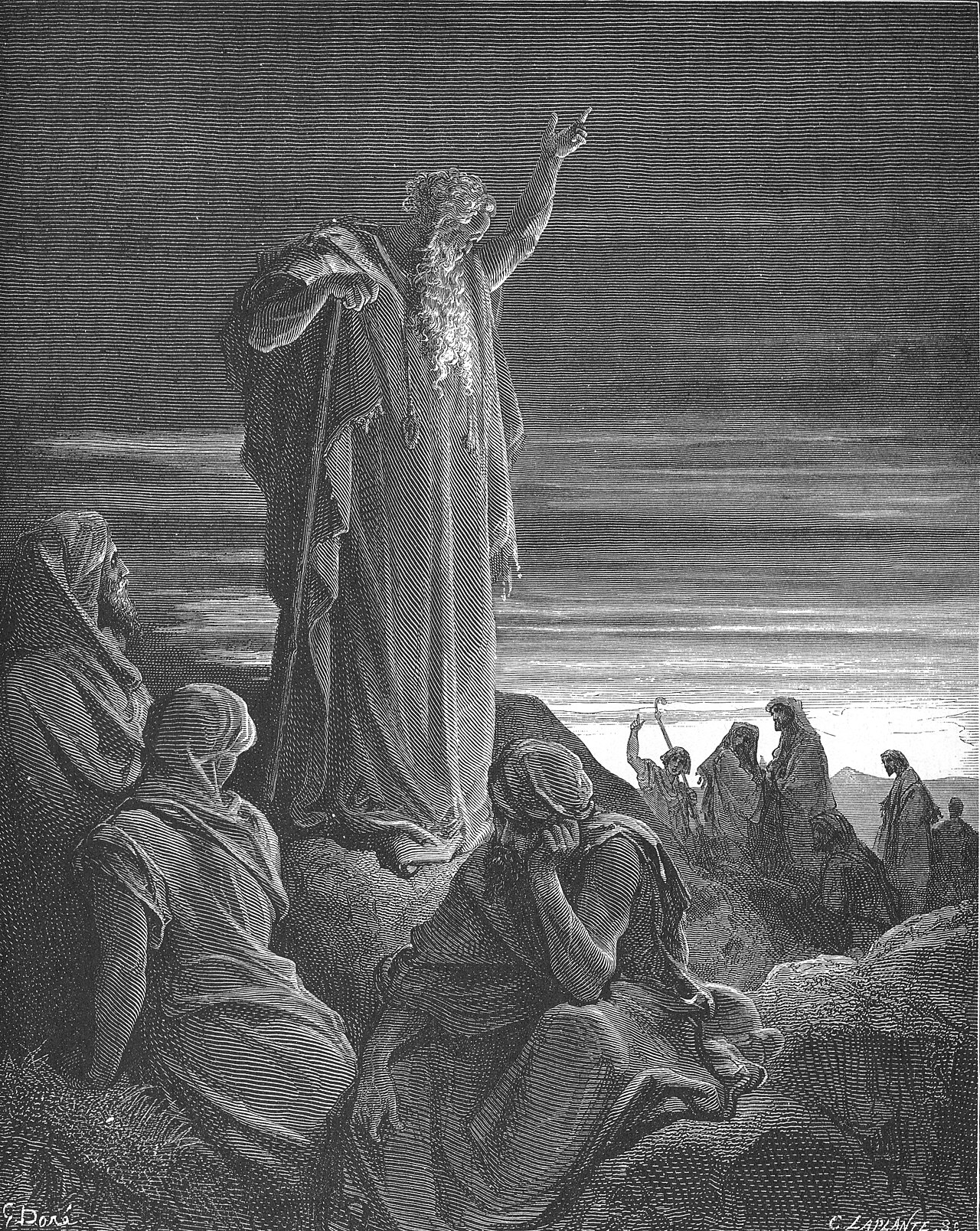
This page draws on Albert Barnes, Notes, Explanatory and Practical, on the Old and New Testaments (1832-1869); Carl Friedrich Keil, Biblical Commentary on the Prophecies of Ezekiel; Jerome, Commentary on Ezekiel; John Wesley, Explanatory Notes upon the Old Testament and Matthew Henry, Commentary on the Whole Bible.