
Psalm 73
28 verses · Wisdom psalm
Surely God is good to Israel, to those who are pure in heart.
Introduction
Asaph, the Prosperity of the Wicked, Book 3: The crisis of the throne, Poetry, Psalms Overview.
Headed for Asaph, one of the singers David set over the music of the sanctuary, this psalm tells of the year a faithful man nearly gave up. He had kept himself clean and watched dishonest men grow rich and comfortable, and he began to think his obedience had been wasted. He tells the story from the far side, with the verdict first and the struggle after it. Listen for the moment he walks into God's house and sees the matter whole, and for the change in his voice when he stops talking about God and speaks to Him. It opens the third book of the Psalter.
Context
- Who
- Israelites who could watch dishonest men prosper and wanted to know why
- What
- A wisdom psalm in which a faithful man tells how the ease of the wicked nearly overturned his faith.
- Where
- The sanctuary of God, which the psalm speaks of as standing and in use.
- When
- The date is unstated; the psalm opens Book III and the eleven psalms headed for Asaph.
- Why
- To answer the envy of dishonest men who prosper with the sight of their end and the nearness of God.
Historical context
The heading names Asaph, and eleven psalms in a row carry that name, Psalms 73 to 83, opening the third of the Psalter's five books. The psalm gives no date and names no king, and the one place it names is the sanctuary of God, spoken of as a place a man could walk into. The occasion is private: a man who kept his heart pure watched men who did not, and found them well fed, spared the burdens others carry and untroubled in their dying. A first hearer read those marks as wealth on show, worn as openly as a necklace. A temple singer who said such doubts aloud would have handed them to the whole congregation.
Significance
The psalm let a worshipper say the doubt out loud inside the place of worship, in the mouth of a man whose name stands over eleven psalms of the temple's music. It admitted that obedience can look unpaid and answered that the ground under the prosperous is slick, and the last thing it holds is God Himself, the strength of the heart and the portion forever.
This chapter in Jewish lifeWhat this chapter is in Jewish life and reading.
How it is read
Psalm 73 opens Book III of the Psalter and the collection of eleven Asaph psalms that runs to Psalm 83. Rashi sets the whole chapter under the troubles of the nation, and reads the first line as the answer given before the complaint. God is good to Israel, and the evil He brings on them is "for their own good, in order to give them merit in the life of the world to come" (Rashi on Psalms 73:1:1). The ease of the wicked is then reported without softening. Radak says the wicked stand outside the trouble the rest of the people live in, and that the afflictions which fall on everyone else pass them by (Radak on Psalms 73:5:1). At verse 4, on the wicked who die without pangs, Rashi gives the plain sense and then the reading of the rabbis. They take the word as an abbreviation meaning that the wicked are neither frightened nor saddened by the day of death, citing Shabbat 31b (Rashi on Psalms 73:4:1). The danger the psalm names is that the people will copy them, which Rashi finds in verse 10 (Rashi on Psalms 73:10:1). The turn at verse 17 he reads by a particular event. Asaph came to the sanctuaries in Jerusalem and saw what happened to Sennacherib, and from that he understood the end of the wicked (Rashi on Psalms 73:17:1). The sleep without awakening in verse 20 is the same night, the camp of Assyria struck by the angel at Isaiah 37:36 (Rashi on Psalms 73:20:1). Sefaria holds no linked commentary beyond Rashi and Radak for this chapter. Rashi is quoted here from the Judaica Press complete Tanach with Rashi, translated by A. J. Rosenberg, under CC-BY. Radak is quoted from the Sefaria Community Translation under CC0.
What the rabbis say
The corpus records forty places where the Midrash and the Talmud draw on this psalm, cited here by reference. Midrash Tehillim treats it at 73:2, and cites its verses again at 1:2, 4:16 and 147:1. Verse 9, on the mouth set against heaven, is drawn into the Babylonian Talmud at Arakhin 15b in three places, 15b:11, 15b:23 and 15b:24. Verse 17, the turn in the sanctuary, stands at Bava Metzia 86a:2. Verse 7 is read at Bekhorot 38b:9 and verse 27 at Sanhedrin 106b:16. Verse 25, that there is none in heaven or earth besides God, is carried into Pesikta DeRav Kahana 4:9, Devarim Rabbah 2:32 and Midrash Tanchuma Buber, Chukat 27:2.
Sources: Rashi, Rashi on Psalms 73:1 to 73:24, the Judaica Press complete Tanach with Rashi, translated by A. J. Rosenberg, CC-BY, 1040 to 1105; Radak, Radak on Psalms 73:5:1 and 73:9:1, Sefaria Community Translation, CC0, 1160 to 1236; Babylonian Talmud, Shabbat 31b, Arakhin 15b:11, 15b:23 and 15b:24, and Bava Metzia 86a:2, cited by reference; Midrash Tehillim, 73:2, 1:2 and 4:16, cited by reference; The Sefaria corpus, scripts/data/sources/sefaria/psalms/73.json, fetched 2026-09-19, 2026; MannaFest, the shape of the Psalter, src/components/book/dossier-content/psalms-structure.ts, 2026.
Psalms 73:1-3
God is good to Israel: The conclusion comes first, that God is good to Israel and to the pure in heart. The psalmist's feet had almost stumbled and his steps had nearly slipped, and what tripped him was envy at the prosperity of the wicked. He gives the answer before the trouble.
ConnectionsPsalms 73:28
my feet had almost stumbled: Barnes noted that the Hebrew opens with the psalmist himself, set against verse 1, where God is good to the pure in heart. Spurgeon heard him doubt that he was among the pure in heart. His feet had almost stumbled.
I envied the arrogant: Barnes gave prosperity as literally peace, the ease of the wicked more than their wealth. Augustine confessed that the wicked had the very peace he had asked God to give him. Envy begins there.
Psalms 73:4-6
no struggle in their death: The ease of the wicked is described from outside: no pangs at death, a well-fed body, none of the burdens other men carry. Pride is worn where a necklace is worn, and violence is worn as clothing. Both are on the outside for anyone to see.
They are free of the burdens others carry: Barnes gave the line as in the burdens of man they are not, free of what other men carry. Gill took the burdens as the labor for bread that the afflicted must carry and these men escape. He compared Job 21:9.
pride is their necklace: Clarke noted that chains of gold were worn at the neck as marks of office. Pride is the necklace these men wear, and violence covers them like a garment. Therefore ties this to the ease of verse 5.
Psalms 73:7-9
From their prosperity proceeds iniquity: Prosperity is what the iniquity comes out of, and their hearts imagine whatever they please. They mock, speak with malice, and threaten oppression, their mouths set against the heavens and their tongues strutting across the earth. The contempt is aimed up and aimed out.
They mock and speak with malice: Barnes held that the Hebrew verb means to mock. He gave the second line as speaking oppression from on high, with arrogance above other men. Augustine noted that they speak with malice in the hearing of all.
their tongues strut across the earth: Barnes read the first line as setting their mouths in the heavens, as if they spoke for heaven. Their tongues then strut across the whole earth. Henry said no man is safe from such a tongue, however great or good.
Psalms 73:10-12
their people return to this place: Verse 10 is the hardest line in the psalm. The people come back to this place and drink their fill, either drawn again to the wicked or arriving as the wicked's own followers. Then the wicked ask how God can know, while they stay carefree and increase their wealth.
The Berean gives the question to the wicked. Albert Barnes held that God's own people speak here, driven to ask it as they return to the puzzle of verse 10. Matthew Henry answered that the Most High sees everything because he is Most High.
always carefree as they increase their wealth: Behold calls the hearer to look straight at the wicked. Jamieson, Fausset and Brown gave carefree as literally at ease forever, and Spurgeon called that ease the riddle of providence. The wicked increase their wealth and stay carefree.
Psalms 73:13-14
in vain I have kept my heart pure: The complaint bottoms out in a verdict against himself, that keeping his heart pure and washing his hands in innocence bought him nothing. Their ease stands against his own affliction all day long and punishment every morning. Obedience has been answered with trouble.
Connectionstopics/doubt
punished every morning: Every morning answers the carefree wicked of verse 12. Spurgeon said the psalmist was afflicted anew each morning, crowns for the wicked and crosses for the righteous. Henry added that what the eye sees must be answered by faith.
Psalms 73:15-16
I would have betrayed Your children: He keeps the complaint to himself, since saying it would have betrayed God's children. Trying to work it out by thinking left him troubled in his own sight. The problem outlasted his reasoning.
When I tried to understand all this: Henry said the puzzle cannot be solved since only a life after this one reconciles the prosperity of the wicked with the justice of God. John Gill set it beside Ecclesiastes 8:17. The sanctuary of verse 17 supplies the missing light.
until I entered God’s sanctuary: This is where the psalm turns. The Hebrew is plural, the sanctuaries of God, the holy places of his house, and there the psalmist saw where the wicked end. The answer came in the sanctuary.
Psalms 73:18-20
You set them on slick ground: What the sanctuary showed is that the firm ground under the wicked is slick, and God is the one who set them on it. The fall is sudden, a laying waste and a sweeping away by terrors. Their form goes the way a dream goes at waking.
How suddenly they are laid waste: How suddenly is an exclamation of wonder at their end, Spurgeon said. The pride worn as a necklace in verse 6 cannot keep them from being swept away. Augustine likened the wicked to smoke that rises and is gone.
awaken and despise their form: Spurgeon took God's patience as the sleep. When He rises to judge, the pomp of the proud melts like a dream at waking. Wesley read their form as all their felicity and glory, a mere shadow in the end.
Psalms 73:21-22
my heart was grieved: The honesty turns on the psalmist himself. The Hebrew word behind pierced within is the one for the kidneys, which Hebrew idiom uses for the inward seat of feeling. He calls himself senseless, ignorant, a brute beast before God.
I was a brute beast before You: Barnes gave before You as literally with You, so the psalmist was senseless in the very presence of God. Verse 23 answers with the same words, always with You. The place of his shame becomes the place of his comfort.
Psalms 73:23-24
You hold my right hand: Against his own confessed foolishness stands God's grip, the hand held and the counsel given. The last clause reaches past this life, that God will later receive him in glory. God held him through it.
later receive me in glory: Charles Spurgeon heard a man done with choosing his own way, who puts his hand into the Father's and asks to be led. The hand of verse 23 now leads. Matthew Henry joined the two halves: those God guides here he receives into glory hereafter.
Psalms 73:25-26
Whom have I in heaven: The psalm's summit is a preference: nothing in heaven and no one on earth beside God. Flesh and heart may fail, and God stays the strength of the heart and the portion forever. What he is left with is God himself.
God is the strength of my heart: Adam Clarke gave strength as literally rock, and heard in portion the division of the promised land. Matthew Henry noticed the arithmetic: flesh and heart both fail, and God strengthens the heart alone. That is enough.
Psalms 73:27-28
Those far from You will surely perish: The verdict from the sanctuary is restated: those far from God perish, and the unfaithful are destroyed. A theodicy is a defence of God's justice, and this one ends in drawing near to God. He makes the Lord GOD his refuge and proclaims his works.
it is good to draw near to God: But as for me repeats the words of verse 2, where his feet nearly slipped. Matthew Henry said the Hebrew can carry both senses, that he draws near to God and that God draws near to him. The good of verse 1 becomes his own.
How this psalm is built
The form: A wisdom psalm, teaching rather than petitioning, on the prosperity of the wicked, as Gunkel classes it.
The patterns in this chapter
| Device | What it does | Where to see it |
|---|---|---|
| The word that opens the verdict, the complaint and the answer | The Berean text opens verses 1, 13 and 18 with the same word, Surely. It stands over the verdict that God is good, over the complaint that a pure heart was kept for nothing, and over the sight of the wicked on slick ground. Spurgeon reads the first of the three as only, so that God is only good to those He has covenanted with.Charles Spurgeon, The Treasury of David, Vol. 3, 1872, on Psalm 73:1. | Psalm 73:1, Psalm 73:13, Psalm 73:18 |
| Good at the first line and good at the last | The psalm begins with God being good to Israel and ends with the good of drawing near to God. Henry reads the closing line as naming the chief good a man should pursue and secure in this life. The word travels from a statement about God to a decision the psalmist makes.Matthew Henry, Commentary on the Whole Bible, 1710, on Psalm 73:28. | Psalm 73:1, Psalm 73:28 |
| The list of what the wicked are spared | Verses 4 to 9 set the ease of the wicked down item by item. There is no struggle at death, the bodies are well fed, the burdens other men carry are absent, pride is worn where a necklace is worn and violence is worn as clothing. Spurgeon reads verse 5 as their escape from the killing toils which afflict the mass of mankind.Charles Spurgeon, The Treasury of David, Vol. 3, 1872, on Psalm 73:5. | Psalm 73:4, Psalm 73:5, Psalm 73:6, Psalm 73:9 |
| The turn from talking about God to talking to Him | Through verses 4 to 12 the wicked are they, God is spoken of in the third person, and at verse 11 they ask how God can know. From verse 18 the psalm speaks to God directly, and the slick ground is something You set them on. Spurgeon reads verse 18 as the moment the psalmist sees the divine hand purposely placing these men in prosperous and eminent circumstances.Charles Spurgeon, The Treasury of David, Vol. 3, 1872, on Psalm 73:18. | Psalm 73:11, Psalm 73:18, Psalm 73:20 |
| Flesh and heart fail, and God is the strength of the heart | Verse 26 puts a failing pair beside a lasting one, flesh and heart against strength and portion. Spurgeon holds that flesh and heart had failed him already and would fail him at death, while God would fail him neither as protection nor as joy. The line settles what the psalm had been asking since verse 13.Charles Spurgeon, The Treasury of David, Vol. 3, 1872, on Psalm 73:26. | Psalm 73:26 |
In the New Testament
5 more paragraphs on the patterns
This lane's material carries no New Testament quotation of Psalm 73. Jamieson, Fausset and Brown read verse 8 beside Revelation 13:6, where blasphemy is spoken against heaven, and beside Job 21:7 to 14. Henry reads verse 20 of the day of the great judgment, when those awakened out of their graves rise to shame and everlasting contempt.
Inside the psalm
The envy of verse 3 is answered by the portion of verse 26. What the psalmist wanted while he looked at the wicked was their ease, and what he holds at the end is God Himself. Spurgeon marks the sharpest pair in the psalm at verses 22 and 23, where the man calls himself a brute beast and says in the next line that he is continually with God.
Where it stands in the Psalter
Psalm 72:20 closes the prayers of David son of Jesse, and Psalm 73 begins Book III with a new name at the head of the page. The eleven psalms of Asaph run from here to Psalm 83. The sanctuary where this psalm found its answer at verse 17 is the sanctuary Psalm 74 sees burned.
Keep studying
Studies6
Sources for this chapter
The summary
Jamieson, Fausset & Brown, Commentary Critical and Explanatory; John Calvin, Commentaries; John Wesley, Notes on the Old Testament and Matthew Henry, Complete Commentary.
The form and classifications
Ambrose of Milan, Interrogation of Job and David, Book 3, Chapter II, 397, on Psalm 73:1; Charles Spurgeon, The Treasury of David, Vol. 3, 1872, on Psalm 73:2 and Hermann Gunkel, Einleitung in die Psalmen, 1933, as set out for students in C. Hassell Bullock, Encountering the Book of Psalms, 2001; the type this site publishes for Psalm 73.
The exposition
Adam Clarke, Commentary on the Bible; Albert Barnes; Augustine of Hippo, Exposition on Psalm 73; Charles Spurgeon; Franz Delitzsch, Biblical Commentary on the Psalms; Jamieson, Fausset & Brown, Commentary Critical and Explanatory on the Whole Bible; John Gill; John Wesley, Explanatory Notes upon the Old Testament and Matthew Henry, Commentary on the Whole Bible.
The painting
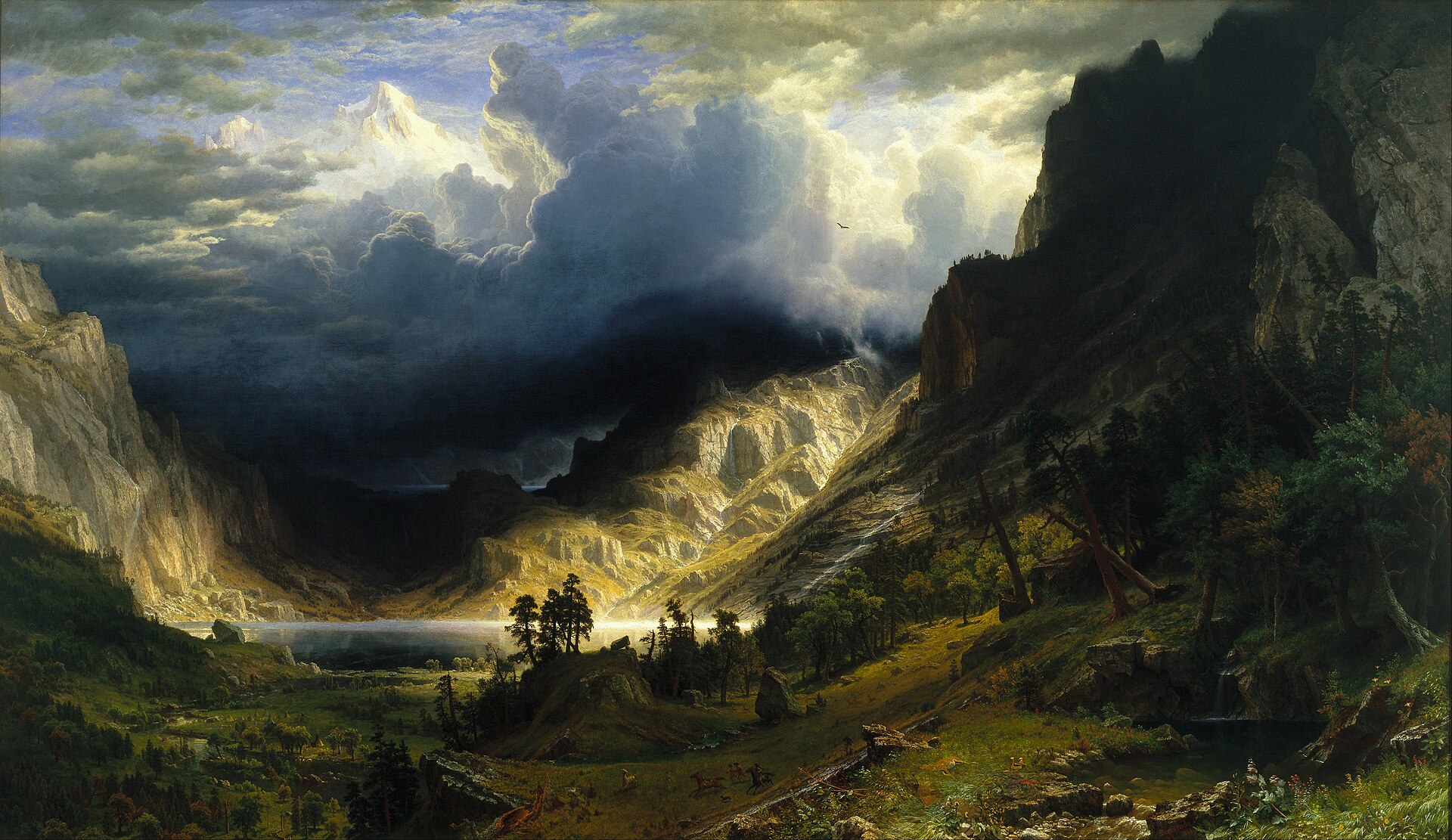
A Storm in the Rocky Mountains, Mt. Rosalie. Albert Bierstadt, 1866. Wikimedia Commons. Public domain.